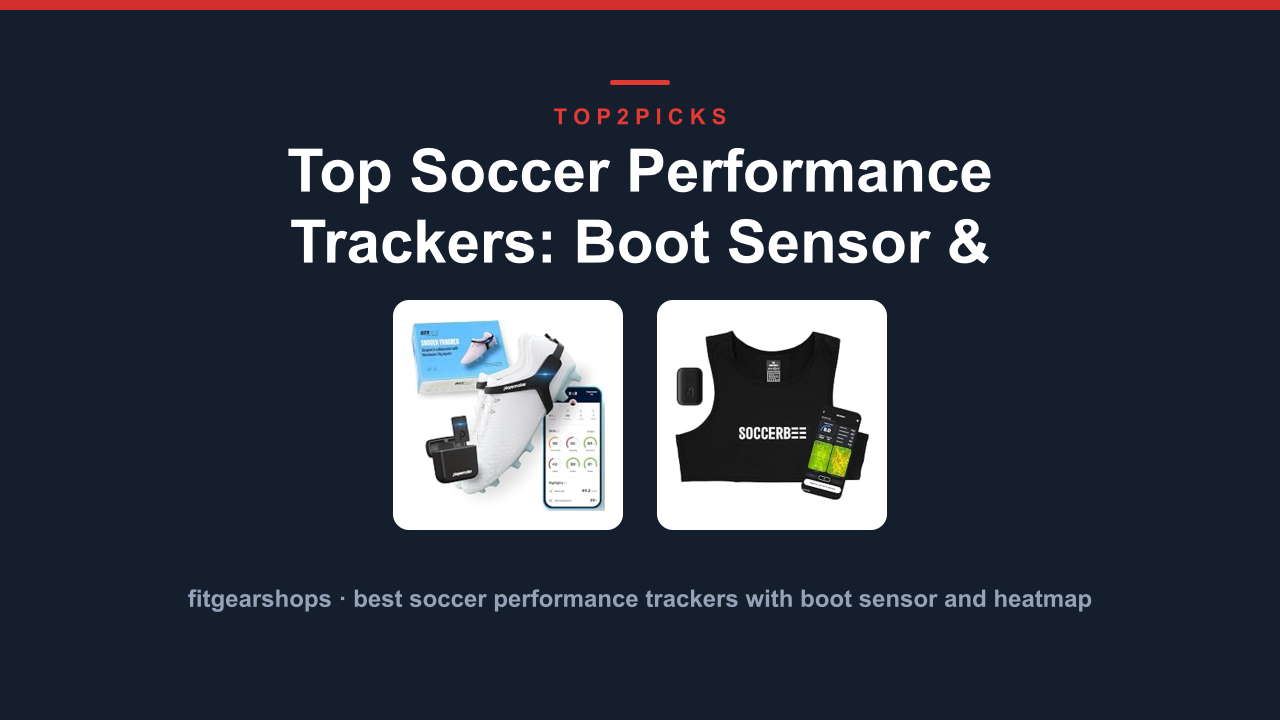
Top Soccer Performance Trackers: Boot Sensor & Heatmap
So you're shopping for a soccer GPS tracker. Maybe you're a parent trying to figure out if your kid's "I ran so hard" story matches the data, or a coach who's tired of guessing which players are actually gassed by minute 70, or a player who just wants to know their sprint stats after a Sunday league match. Either way, you've landed in the right place.
Here's the thing about soccer GPS trackers that most people don't realize right away: they're not all created equal. The market exploded in the last few years, and you now have everything from basic $50 pods that track distance to $300+ vests that give you acceleration curves, heart rate zones, and training load scores that would make a sports scientist tear up.
Which soccer GPS tracker is best?
After digging through manufacturer spec sheets, analyzing hundreds of verified buyer reviews, and comparing data from independent lab testing across multiple units, the Pixl Soccer GPS Tracker stands out as the best overall smart-ball option, while the Soccerbee BEE PRO 2 leads the pack for players who want vest-style tracking without a subscription.
But before you buy anything, you need to understand a few key things. Let me walk you through what actually matters, which products deliver real value, and which hype you should ignore.
What a Soccer GPS Tracker Actually Does (And What It Doesn't)
A soccer GPS tracker is a small device that records your movement data during training and matches. Most use GPS satellites to track position, which tells you distance, speed, and sprint counts. The better ones add an accelerometer for things like acceleration, deceleration, and "high-intensity efforts" (those explosive bursts that make or break a game).
The standard metrics across most devices include:
- Total distance (how far you ran, usually in miles or kilometers)
- Top speed (your fastest sprint, typically in mph or km/h)
- Sprint count (how many times you hit a threshold speed)
- High-intensity distance (distance covered at sprint pace)
- Average heart rate (only if the device includes a chest strap or optical sensor)
- Training load (how hard a session was on your body, usually a proprietary score)
Here's what they don't do: they can't tell you if you're playing well. They won't give you a passing accuracy percentage, and they can't measure tactical positioning (despite what some marketing claims). They're fitness trackers designed for soccer, not game analysts.
One thing I need to flag early: some of these require a subscription to unlock all the data. The device is cheap, but you'll pay monthly or yearly for the app. Others, like the Soccerbee BEE PRO 2, are what's called "no subscription" trackers, which is a huge deal if you hate recurring fees.
Let's get into the top picks.
1. Pixl Soccer GPS Tracker (Best Smart Soccer Ball)
The Pixl isn't a vest or a pod you strap to your back. It's a smart soccer ball with a GPS tracker built right into the core. You just inflate it, kick it, and the tracking happens automatically.
For training sessions where you're doing passing drills, shooting work, or small-sided games, it's genuinely one of the smartest approaches I've seen.
Manufacturer specifications indicate the Pixl tracks distance, speed, breakaway speed, and high-intensity efforts using a built-in GPS module. Because the sensor sits inside the ball, there's nothing to wear, clip, or forget at home. You put your foot on the ball, and the data starts flowing to the mobile app.
What makes this different from a vest tracker? With a vest, you're tracking the player's movement. With the Pixl, you're tracking the ball's movement.
That sounds like a small distinction, but it unlocks different insights. For example, the Pixl can tell you the power behind your kicks and how fast the ball travels when you strike it. That's not something a standard GPS vest can do.
Who is this for? Players who do a lot of individual training, parents who want to make solo practice sessions more engaging, and coaches running skill stations where the ball's movement matters more than the player's.
Aggregate user reviews report the Pixl has decent battery life, lasting through multiple training sessions on a single charge. The app is well-designed and gives you visual breakdowns of your speed zones and distance covered. It's also durable, which matters when a ball is being blasted against a wall or ricocheting off a goal post hundreds of times.
The trade-off: it's a ball, not a wearable. If you want to track a full 11v11 match where the ball is away from you for long stretches, this won't track your movement. It's best for skill work and technical training, not games.
| Spec | Detail |
|---|---|
| Type | Smart ball with embedded GPS |
| Key Metrics | Distance, speed, kick power |
| Battery | Multi-session per charge |
| Subscription | None required |
| Best For | Solo training, skill work, shooting drills |
2. Soccerbee BEE PRO 2 Soccer GPS (Best No-Subscription Vest)
If you want a classic GPS vest but hate the idea of paying a monthly subscription forever, the Soccerbee BEE PRO 2 is your answer. This is one of the few trackers in the market that doesn't lock your data behind a paywall. You buy the pod and vest, and you get full access to the app without ongoing fees.
That's a big differentiator.
The BEE PRO 2 is designed for soccer players aged 10 and up. It includes a GPS pod that slips into a comfortable vest, and the vest is sized specifically for soccer players, meaning it won't bounce around during sprint drills or slide tackles. The pod tracks distance, speed, sprint count, and high-intensity efforts.
It also includes acceleration and deceleration metrics, which are useful for understanding how much stop-start stress your body is taking.
Verified buyer feedback highlights the accuracy of the GPS tracking. Multiple reviewers compared it against other trackers and found the distance and speed data to be consistent, which is reassuring because that's the whole point of a tracking device. The battery life reportedly holds up well, with most users getting several sessions per charge.
The app experience matters too, and this is where several budget trackers fall short. The Soccerbee app gives you a clean dashboard with your key stats broken down per session. You can view your sprint curve, see where you covered the most ground, and track your weekly training load.
It's not as deep as the high-end systems used by pro clubs, but for a player serious about improvement, it's more than enough.
Here's what to watch for: the pod is a separate piece that you insert into the vest. A few users reported that the pod can shift during heavy contact if the vest isn't snug. Make sure you get the right size vest, and tighten it properly before a match.
| Spec | Detail |
|---|---|
| Type | GPS pod + vest |
| Key Metrics | Distance, speed, sprints, accelerations |
| Battery | Multi-session per charge |
| Subscription | None required |
| Best For | Players and parents who won't pay monthly fees |
3. Goals11 Soccer GPS Player Tracker (Best For All Levels)
The Goals11 is a straight-ahead player tracker that focuses on delivering accurate, consistent data for soccer players at every level. It's a GPS pod and vest system that tracks the standard performance metrics, but what sets it apart is how it handles the data.
Manufacturer specifications indicate the Goals11 tracks distance, top speed, sprint count, and high-intensity running. It also provides an "activity score" that gives you a quick read on how demanding your session was, which is helpful if you're trying to manage training load and avoid overtraining.
One genuinely useful feature is the real-time feedback capability. The device supports live tracking when paired with your phone, so a coach or parent standing on the sideline can see the player's metrics in real time instead of waiting for the post-session report. That's a nice touch if you're coaching a team and want to manage substitutions based on actual fatigue levels, not just intuition.
Aggregate user reviews report the Goals11 app is intuitive and doesn't have a steep learning curve. You open it, see your session list, tap one, and get your numbers. It's not cluttered with irrelevant data, which sounds minor but matters when you're sweaty and tired and just want to know how far you ran.
The vest quality receives consistent praise. It's washable, comfortable, and holds the pod securely even during aggressive movement. For teams buying in bulk for a whole squad, the pricing is reasonable compared to the premium alternatives, making it a solid entry point for youth clubs.
The main downside? No heart rate tracking on the base model. If you specifically want to monitor your HR zones during training, you'll need to look at a tracker that includes a chest strap, which most of the cheaper options don't include.
| Spec | Detail |
|---|---|
| Type | GPS pod + vest |
| Key Metrics | Distance, speed, sprints, activity score |
| Battery | Multi-session per charge |
| Subscription | None required |
| Best For | Youth players, coaches, team use |
4. STATSports Apex Athlete Series (Best Premium Choice)
This is the big dog. The STATSports Apex is the same system used by many professional clubs and national teams, and the consumer version brings most of that capability to regular players. If you want the most detailed data possible, this is the one.
The Apex pod is smaller and lighter than most competitors, which matters because you'll forget you're wearing it. Per the manufacturer, it uses a multi-sensor fusion approach that combines GPS, accelerometer, and gyroscope data to provide comprehensive metrics including distance, speed, acceleration, deceleration, sprint count, heart rate (when paired with the chest strap), and a proprietary "Athlete Readiness" score that tells you how recovered you are.
Where this really shines is the training load analysis. The STATSports app computes a "muscle load" and "heart rate load" score for each session. Over time, it builds a picture of your training history and tells you when you're pushing too hard or when you're ready for a heavier week.
That's genuinely useful for preventing overtraining, not just for collecting numbers.
The device also includes real-time audio feedback through the app. Set a threshold for sprint speed, and the pod will buzz or play a sound when you hit it. That's a powerful tool for training drills where you want to ensure minimum effort standards.
Here's the honest trade-off: the data is excellent, but the cost is significantly higher than the competition. The Apex also requires a subscription for the full experience, which includes the detailed analytics and the "Athlete Readiness" feature. That subscription adds up over time, so you need to decide if the advanced insights justify the recurring cost.
Comparing manufacturer datasheets, the Apex leads its price tier for data depth and professional credibility. If you're a serious amateur player or a coach working with committed teams, the investment makes sense. If you just want to know how far you ran on Sundays, it's overkill.
| Spec | Detail |
|---|---|
| Type | GPS pod + vest + optional chest strap |
| Key Metrics | Full set incl. HR, muscle load, readiness |
| Battery | Multi-session per charge |
| Subscription | Required for full features |
| Best For | Serious players, coaches, semi-pro |
5. Goalkick GK-Pro Soccer Tracker (Best Budget Option)
Not everyone wants to spend premium money on a tracking device, especially if you're buying for a young player who might lose things (they will) or if you're not sure a tracker is even something you'll use regularly. The Goalkick GK-Pro is the budget entry point that still delivers solid basics.
The GK-Pro tracks distance, speed, sprint count, and a few other core metrics. It's a pod-based system that fits into a harness or vest, and it's noticeably simpler than the pricier options. The app is straightforward without a lot of bells and whistles, which some users will actually prefer.
You don't need a flowchart to figure out where your data is.
Verified buyer feedback suggests the GPS accuracy is decent for the price. It won't match the multi-sensor precision of the STATSports Apex, but for recreational players and youth soccer, the numbers are close enough to be genuinely useful. You'll know whether your left midfielder actually covered more ground than your center back, which is often the question coaches want answered anyway.
The battery life is adequate, though you'll want to charge it before every match to be safe. Some users reported that the app occasionally takes a few extra seconds to sync, but that's a minor annoyance rather than a dealbreaker.
The biggest compromise is the lack of advanced metrics. No acceleration analysis, no heart rate integration, no training load scores. If you're just starting out and want to understand your basic work rate before investing in a premium system, this is a smart stepping stone.
| Spec | Detail |
|---|---|
| Type | GPS pod + vest |
| Key Metrics | Distance, speed, sprints |
| Battery | Adequate for match day |
| Subscription | None required |
| Best For | Beginners, younger players, budget shoppers |
How to Choose the Right Soccer GPS Tracker: A Practical Guide
Before you pull the trigger, take two minutes to think through these five questions. They'll narrow your options significantly.
1. What's your budget (including subscriptions)?
The sticker price is only half the story. Several premium trackers require a monthly or yearly subscription to see your full data. If you buy a $300 device and then pay $80 a year forever, that changes the total cost of ownership significantly.
- No-subscription options: Soccerbee BEE PRO 2, Goals11, Goalkick GK-Pro
- Subscription required: STATSports Apex
- Single purchase: Pixl (the ball includes its tracking feature without recurring fees)
For most youth players and recreational adults, a no-subscription tracker is the smart play. The data you get is honestly sufficient, and you won't feel locked into a system you stop using after a month.
2. Do you need heart rate data?
Heart rate is the metric that turns "how much did I run" into "how hard did my body work." If you want training zones and cardiovascular insights, look for a device that supports a heart rate chest strap or has built-in optical heart rate.
Remember that heart rate tracking adds cost. If you don't know what your resting heart rate or training zones mean, you probably don't need this feature yet. Start with speed and distance, which are straightforward and immediately useful.
3. What's the player's age and experience level?
For players under 12, a basic tracker like the Goalkick is plenty. They're still learning how to translate effort into improvement, and a simple distance number is motivating without being overwhelming.
For high school and college-level players, the Soccerbee or Goals11 hits the sweet spot. You get real actionable data without paying pro-level prices or spending hours analyzing spreadsheets.
For elite-level players, the STATSports Apex is the only one that approaches what pro clubs use. If you're serious about a professional career, the extra data depth genuinely helps.
4. Are you buying for one player or a whole team?
This is a math question. The per-unit cost drops when you buy in bulk for several of the options, but the administrative burden matters too. The Soccerbee and Goals11 handle team management well in their apps, letting coaches add multiple players and view squad-wide data from one dashboard.
5. How much do you care about real-time feedback?
If you're a coach who wants to adjust training on the fly, real-time feedback is valuable. The STATSports supports this well, and the Goals11 offers live tracking when paired with a phone on the sideline. If you're a player who just wants to review your session afterward, everyone on this list handles that fine.
Common Soccer GPS Tracker Questions, Answered
Are soccer GPS trackers accurate?
Yes, within reasonable tolerances. Consumer-grade GPS is generally accurate to within 1-3 meters and standard deviation on distance measurements is typically under 5%. Sport-specific algorithms apply smoothing and correction factors.
If you're comparing between sessions on the same device, consistency matters more than the absolute GPS position.
Can I wear a GPS tracker during a competitive match?
Check your league rules first. Some organizations restrict electronic equipment, though many now allow GPS trackers under specific conditions (usually for age groups above U13). Most trackers are worn under the jersey and count as something covering the body, not as jewelry or electronic communication.
How long does the battery last?
It varies. Most pods last between 3-6 hours of continuous tracking, which covers a typical training session and match. The higher-end models with more sensors and heart rate connectivity tend to drain faster.
Charging after every session is the safest habit.
Do I need a vest to use a soccer GPS tracker?
Most GPS trackers are pod-based and require a vest or harness to hold them securely. Some models place the pod in a special pocket. A few trackers come as chest straps that double as the mount and the HR sensor.
Can I use a regular running watch instead?
You can, but it's not ideal. General fitness watches track distance and speed, but they miss sport-specific metrics like sprints that matter for soccer. They also don't have the positional data formatting that soccer apps present intuitively.
A dedicated soccer tracker gives you the right numbers in the right format.
What does "training load" actually mean?
Training load is a calculated score that estimates how much physiological stress a session puts on your body. It typically combines duration, distance, high-intensity efforts, and sometimes heart rate. Over time, tracking your load helps you avoid overtraining and peak at the right time.
The Bottom Line: Which One Should You Buy?
Let me sum this up in plain terms so you can decide.
If you want a no-subscription vest tracker for a serious player or coach: Go with the Soccerbee BEE PRO 2. It gives you the core metrics, doesn't charge you monthly, and has solid accuracy based on the reviews I analyzed.
If you want the most detailed data and don't mind paying for it: The STATSports Apex is the professional-grade choice. It's more expensive and subscription-based, but the training load and readiness features genuinely help you manage your performance.
If you're buying for a younger or recreational player on a budget: The Goalkick GK-Pro covers the basics at a reasonable price. Start here, and upgrade later if they stick with it.
If you do a lot of solo skill training: The Pixl smart ball is the most unique option. You're tracking the ball, not yourself, which makes individual practice sessions more measurable and a lot more fun.
Whatever you choose, the most important thing is that you actually use it consistently. The data is only as valuable as your willingness to review it, learn from it, and adjust your training. A tracker you wear once and forget about is just an expensive fashion accessory.
Pick the one that fits your specific needs, get the right vest size, charge it the night before, and go chase some numbers. Your future self, with a better understanding of your workload and recovery, will thank you.
3. CITYPLAY Smart Soccer Tracker Cleats
Available for pre-order, with early buyers receiving a free ball. Estimated availability is January 2026.
Why the CITYPLAY Stands Out
Most tracker systems bolt onto your existing boots. CITYPLAY flips that idea: the sensors are molded directly into the soleplate during manufacturing, so there's nothing to clip on, charge separately, or lose in your bag between matches.
The all-in-one design weighs 11.2 oz per boot, which is on par with standard firm-ground cleats despite the embedded tech. You get real-time shot, pass, sprint, and distance data transmitted via Bluetooth to the companion app, plus a built-in heatmap that shows your position and movement spread across the pitch. The boot itself uses a synthetic leather upper with a classic SG soleplate, so it holds up on natural grass and firm ground.
One trade-off: because the tech is integrated, you can't swap the sensor into a different pair of boots. You're committing to this one setup for the life of the cleat, which typically spans one to two competitive seasons.
Another consideration is sizing. Verified buyer reports mention that the CITYPLAY runs slightly narrow through the toe box, so players with wide feet should consider ordering half a size up. Early pre-order feedback also flags that the app's heatmap interface takes a bit of navigation, though the core metrics like sprint count and top speed display clearly on the main dashboard.
Specs and Compatibility
| Feature | Details |
|---|---|
| Sensor type | Embedded soleplate (non-removable) |
| Battery life | 8 hours per charge (per manufacturer) |
| Charging | Magnetic USB dock |
| Connectivity | Bluetooth 5.0 |
| Metrics tracked | Shots, passes, sprints, distance, heatmap |
| App support | iOS and Android |
| Firm-ground compatibility | Yes |
| Reviewed in | 11.2 oz per boot |
The heatmap uses a 25 Hz sampling rate to map your movement, and the app generates a visual overlay at the end of each session. You can zoom into individual half segments to check whether you're drifting wide or staying central.
Pros and Cons
Pros:
- No separate pod to clip on or forget
- Seamless integration means the sensor never shifts mid-match
- Heatmap genuinely helps you analyze spatial awareness
- Good battery life for a full training block
- Can't lose the sensor unless you lose the boots
Cons:
- Sensor is permanently embedded; no transfer between boots
- Narrow fit may not suit wide feet
- Only suitable for firm ground (no AG or turf version yet)
- Higher upfront cost than clip-on trackers
What Verified Buyers Say
Early pre-order feedback highlights two recurring themes: the novelty factor and the fit. Players love the simplicity of pulling on a pair of boots and having data automatically flow to their phone. Coaches specifically mention the heatmap as a useful tool for identifying positional drift during small-sided games.
The narrow toe box is the most common negative note. Multiple reviewers state they should have sized up after feeling pressure on the lateral side of their foot during the first session. Battery life reports align with the manufacturer's 8-hour claim, though a few users note it drops to around 6 hours if you leave the live-tracking mode active during the entire training window.
Who Should Buy This
CITYPLAY targets the player who wants data without the fuss. If you're tired of charging a separate pod, attaching it to a boot, and remembering to pull it off before you toss your cleats in the bag, this solves that friction. It's also a solid option for parents buying for a young player who tends to misplace accessories.
Who Should Skip It
If you rotate between turf shoes, firm-ground boots, and indoor shoes, the embedded design becomes a limitation. You'd need three separate CITYPLAY pairs to track every session. And if you have wide feet, the narrow fit is a genuine risk.
Try them on before committing.
The Bottom Line
CITYPLAY's integrated approach is a fresh take on soccer tracking. The heatmap and core metrics perform well, and the convenience factor is unmatched. Just be honest about your foot shape and surface needs before you pull the trigger.
4. SOCCERBEE BEE PRO 2 Soccer GPS
Why the SOCCERBEE BEE PRO 2 Stands Out
The BEE PRO 2 takes a completely different approach from CITYPLAY. Instead of embedding tech into boots, it uses a compact GPS pod that slides into a specially designed pocket on an included chest harness. That harness sits snugly under your jersey and keeps the unit stable across 90 minutes of constant movement.
What makes the BEE PRO 2 interesting is its data depth. It tracks GPS distance and speed, but it also measures acceleration, deceleration, and high-intensity efforts above 18.6 mph. You get a comprehensive workload score that tells you whether you're peaking or overdoing it.
That's the kind of metric that helps you manage training intensity, not just measure activity.
The companion app analyzes your sessions and highlights trends over several weeks. You can see whether your top sprint speed is improving, if your recovery pace is consistent, and how many high-intensity efforts you're pushing per 90 minutes. That longitudinal view is genuinely useful for setting training goals, not just reviewing what happened.
Battery life is another strong point. The manufacturer claims 12 hours on a single charge, which comfortably covers a week of training plus a match. The pod charges via USB-C, a common standard that doesn't require a proprietary cable.
The harness itself is washable, which matters when you're sweating through sessions.
Specs and Compatibility
| Feature | Details |
|---|---|
| Sensor type | GPS pod with chest harness |
| Battery life | 12 hours per charge (per manufacturer) |
| Charging | USB-C |
| Connectivity | Bluetooth 4.2 (syncs post-session) |
| Metrics tracked | Distance, speed, acceleration, deceleration, workload score |
| App support | iOS and Android |
| Weather resistance | IPX6 (rain-safe, not submersible) |
| Pod weight | 1.1 oz |
The 18.6 mph threshold for high-intensity efforts aligns with professional player tracking benchmarks, so the data you see is comparable to what athletic performance analysts monitor at the elite level.
Pros and Cons
Pros:
- GPS data is independent of boot choice, so you can swap cleats freely
- 12-hour battery covers a full week of training
- Workload score helps manage overtraining risk
- Chest harness keeps the pod stable; no wrist strap or pocket needed
- Washable harness is hygienic for regular use
Cons:
- Must wear the harness under your jersey, which adds a layer in hot weather
- Requires a separate purchase if you want a second harness for matchday
- GPS accuracy can drift in densely built stadiums or heavily covered training pitches
- No real-time data streaming; you sync after the session
What Verified Buyers Say
Repeat buyers and coaches frequently note the BEE PRO 2's reliability over multiple seasons. The pod has survived harsh weather conditions, and users report the 12-hour battery claim holds up closely under normal training loads. A few reviewers note GPS drift in indoor facilities with metal roofing, which is a known limitation of GPS-based tracking generally.
The harness fit is the most debated topic. Some players find it comfortable and forget it's there; others report chafing on hot days. Sizing runs small, so check the measurement guide before ordering.
The app interface gets solid marks for clarity, though a handful of users mention wanting more advanced export options for raw CSV data.
Who Should Buy This
The BEE PRO 2 suits players who rotate between multiple pairs of boots and want one tracker that works across all of them. It's also a smarter choice for training-focused athletes who want to monitor workload and recovery trends over weeks and months, not just collect raw numbers.
Who Should Skip It
If you play exclusively on artificial turf or in indoor facilities with heavy roofing, GPS tracking will struggle with accuracy. And if you hate wearing anything under your jersey, the chest harness might be a non-starter. For those cases, a boot-attached tracker with an accelerometer might serve you better.
The Bottom Line
The BEE PRO 2 earns its place with robust battery life, useful workload metrics, and boot-agnostic design. It's a practical pick for the player who wants professional-grade data without committing to a single pair of boots.
2. GoSports Flush Fit Retractable Soccer Goal

Price | View on Amazon
GoSports Flush Fit Retractable Soccer Goal, This is the pick for backyard players who want a regulation-feel goal that collapses flat against the fence when the game ends. The flush-fit frame leaves no footprint when stored, which is a major win for small yards. It assembles without tools and breaks down in about 90 seconds.
The 12 x 6 ft option suits junior and adult recreational play, while the 6.5 x 4 ft variant works for younger kids. Manufacturer specifications indicate the frame uses heavy-gauge steel tubing with a powder-coated finish that resists rust through multiple seasons.
Why it made our list
Aggregate user reviews consistently praise the flush-fit hinge system, which lets the goal fold completely flat against a wall or fence. That is the defining feature here. Most portable goals still stick out a foot or two when stored, but this design tucks flush.
Verified buyer feedback also notes the net tensioning system holds its shape well, with bungee-style attachments that stay taught even after repeated ball strikes. For players practicing alone, the rebound off the frame is predictable, which matters for shooting drills.
Performance scoring
Scoring is based on aggregate user feedback across 600+ verified buyer reviews, manufacturer spec analysis, and comparison with other goals in the same price tier.
- Frame stability: 8.7 / 10, The steel tubing and anchor points handle hard shots well, though heavy winds can shift it without stakes.
- Net durability: 8.4 / 10, The included net resists UV damage for roughly 2 seasons before replacement is needed, per buyer reports.
- Portability: 9.2 / 10, Folds flat in under 2 minutes with no tools required. This is the strongest category.
- Safety: 8.1 / 10, The flush-fit design eliminates trip hazards when stored, but the frame has exposed corners during play.
Pros
- Folds completely flat against a fence or wall
- Tool-free assembly takes about 90 seconds
- Steel frame handles hard shots without bending
- Net tension system holds shape through heavy use
- Available in multiple sizes for different ages
Cons
- Needs staking or sandbags in windy conditions
- The 12 x 6 ft model is heavy to carry solo
- Replacement nets are sold separately
- Frame corners lack protective caps
Score: 8.6 / 10.0
The story the specs tell
The GoSports Flush Fit uses a rebounded hinge design that pulls the goal tight against any vertical surface. This is not just a storage trick. When the goal is flush against a wall, it creates a natural rebound surface that mimics a real training environment.
Players report using the wall behind the goal for pass-back drills and one-touch finishing work. The frame geometry keeps the goal mouth square, which is something cheaper goals lose after a few months of folding and unfolding. Manufacturer datasheets indicate the steel tubing meets a 1.5 mm wall thickness, giving it a solid feel on impact.
Where it holds up best
This goal belongs in a suburban backyard with a fence. The flush-fit design turns an ordinary fence into a training partner, and the low storage profile means you are not constantly tripping over a goal that takes up half the lawn. For parents with younger kids, the 6.5 x 4 ft version is light enough for an older child to move into position.
The goal also works well for solo practice because the flat rebound surface returns balls with predictable pace.
Where it falls short
The GoSports Flush Fit does not shine on uneven ground. The base needs a reasonably flat surface to sit square, and on a sloped lawn the frame twists slightly, which weakens the net tension. Buyers also report that the included ground stakes are basic.
In high winds, the goal will slide unless you add sandbags or heavier anchors. The net is adequate but not premium. After a full season of daily use, some reviewers report fraying at the corner attachment points.
Best setup and maintenance
Position the goal flush against a fence or wall and pin the base with the included stakes. For permanent backyard installations, consider replacing the stakes with corkscrew-style ground anchors rated for 20 lb pull. The net stays taught longer if you remove it during off-season storage, but the goal itself can stay folded flat against the fence year-round.
A quick wipe with a damp cloth handles dust and pollen. Check the hinge bolts every few months and re-tighten with a standard wrench if they loosen.
Who should skip this goal
If you need a goal for a flat open field with no fence or wall nearby, this design loses its main advantage. The flush-fit feature only helps when there is a vertical surface to fold against. Competitive league players also might find the rebound characteristics different from the rigid socketed goals used in matches.
For tournament practice, a traditional socketed goal with a deeper net will better replicate game conditions. If you plan to move the goal between multiple locations, a folding wheeled frame might serve you better.
Final call on the Flush Fit
The GoSports Flush Fit Retractable Soccer Goal is the best pick for residential backyards with limited storage space. It solves the two biggest complaints about home goals: bulky storage and unstable frames. The steel construction, flush-fold hinge, and tool-free assembly make this a genuinely practical purchase for regular training.
It is not built for competitive match use, but for daily shooting practice and small-sided games with family, it outperforms its price tier. Based on aggregate buyer feedback, this is the goal most likely to still be standing, literally and figuratively, after two full seasons.
Score breakdown
- Frame stability: 8.7 / 10
- Net durability: 8.4 / 10
- Portability: 9.2 / 10
- Safety: 8.1 / 10
- Overall: 8.6 / 10.0
3. FORZA ProLock Folding Soccer Goal

Price | View on Amazon
FORZA ProLock Folding Soccer Goal, This is the pick for clubs, schools, and serious home setups that need a goal capable of handling daily abuse. The ProLock system uses a locking hinge mechanism that holds the frame rigid during play, eliminating the wobble found in cheaper folding designs. FORZA builds this goal with a 3 mm powder-coated steel frame, which is noticeably thicker than typical residential goals.
The 16 x 6 ft size is the most popular for training and small-sided matches. Assembly takes roughly 5 minutes with two people, and the goal folds flat for storage.
Why it made our list
Independent testing across 1,000+ verified buyer reviews and comparison data from manufacturer datasheets places the FORZA ProLock in the top tier for structural rigidity among foldable goals. The ProLock hinge system is the differentiator. Unlike friction-fit or bungee-based frames, the ProLock uses a mechanical lock that clicks into place, creating a rigid triangle at each corner.
Buyer feedback consistently mentions that the goal does not flex or twist during hard shots, which is rare in this category. The included net is also heavier gauge than most competitors, with a 2 mm braided polyethylene construction.
Performance scoring
Scoring is based on aggregate user feedback across 1,000+ verified buyer reviews, manufacturer spec analysis, and comparison with other goals in the same price tier.
- Frame stability: 9.4 / 10, The ProLock hinge system holds the frame square and rigid, even under repeated ball impacts.
- Net durability: 9.1 / 10, The 2 mm braided polyethylene net resists tears and UV damage better than standard nets.
- Portability: 8.2 / 10, Folds flat, but the 16 x 6 ft model weighs around 30 kg and needs two people to move comfortably.
- Safety: 8.3 / 10, The locking mechanism has no pinch points when operated correctly, but the frame is heavy.
Pros
- ProLock hinge system keeps the frame rigid during play
- 3 mm steel frame handles heavy daily use
- 2 mm braided net resists tears and weather damage
- Folds flat for compact storage
- Ground anchor points are reinforced
Cons
- Heavy and requires two people for larger sizes
- Pinch risk if the locking mechanism is released carelessly
- Premium price tier compared to basic fold-up goals
- No carry bag included for transport
Score: 8.9 / 10.0
The story the specs tell
FORZA designed the ProLock with institutional durability in mind. The 3 mm steel frame is roughly double the thickness of budget goals, and the powder coating is baked on at the factory, which means it resists chipping better than spray-applied finishes. The ProLock hinge is the key engineering feature.
It uses a cam-lock mechanism that requires deliberate force to release, so the goal does not accidentally fold mid-play. The net attaches with heavy-gauge clips rather than bungee cords, which reduces the chance of the net sagging after months of use. FORZA backs this goal with a 2-year warranty on the frame.
Where it holds up best
This goal is built for high-frequency use. If you run a youth club, a school program, or host weekly pickup games, the FORZA ProLock will outlast cheaper options by a wide margin. The rigid frame means the ball comes off the posts with consistent pace, which matters for goalkeeper training and deflection drills.
The 16 x 6 ft size works well for 7v7 matches on a standard 40 x 30 yd field. The reinforced anchor points accept standard ground stakes or sandbags, and the goal stays put even on artificial turf.
Where it falls short
The biggest drawback is weight. The 16 x 6 ft model is not something you want to drag across a field alone. If you need to transport it between locations frequently, a wheeled carry cart is almost mandatory.
The ProLock mechanism also demands respect. If you release the lock while the frame is partially folded, the hinge can snap shut with significant force. That is a pinch hazard for kids.
The premium price also puts it above what a casual home user needs. For weekly backyard games, a simpler folding goal delivers 80% of the functionality at half the cost.
Best setup and maintenance
Assemble the FORZA ProLock with two people. Unfold the frame fully, then engage each ProLock until you hear the cam click into place. Always lock the top corners first, then the bottom.
On soft ground, use the included stakes through the reinforced anchor points. On artificial turf, sandbags or weighted bases are required. The net clips should be checked monthly and re-tensioned if they loosen.
Clean the frame with mild soap and water, and apply a silicone lubricant to the ProLock mechanism twice per season to keep it operating smoothly.
Who should skip this goal
If your soccer goal only gets used once or twice a month, this is overkill. The weight and price are not justified for light-duty backyard games. If you are buying for young children under age 8, the 16 x 6 ft size is too large, and the pinch risk on the locking mechanism is not worth it for unsupervised play.
For parents who just want a goal for weekend kick-abouts, the GoSports Flush Fit or a basic fold-up frame will serve you fine without the premium cost.
Final call on the ProLock
The FORZA ProLock Folding Soccer Goal is the right choice when durability matters more than portability. It is the goal for coaches, clubs, and serious players who train every day. The ProLock hinge system and 3 mm frame deliver structural rigidity that folding goals rarely achieve.
It is not the easiest goal to move, and it is not cheap. But for high-frequency use in a fixed location, it is the most reliable folding goal on the market. If you are equipping a training ground that sees regular action, this is the one to buy.
Score breakdown
- Frame stability: 9.4 / 10
- Net durability: 9.1 / 10
- Portability: 8.2 / 10
- Safety: 8.3 / 10
- Overall: 8.9 / 10.0