Best Adjustable Weight Benches for Decline & Incline Lifts
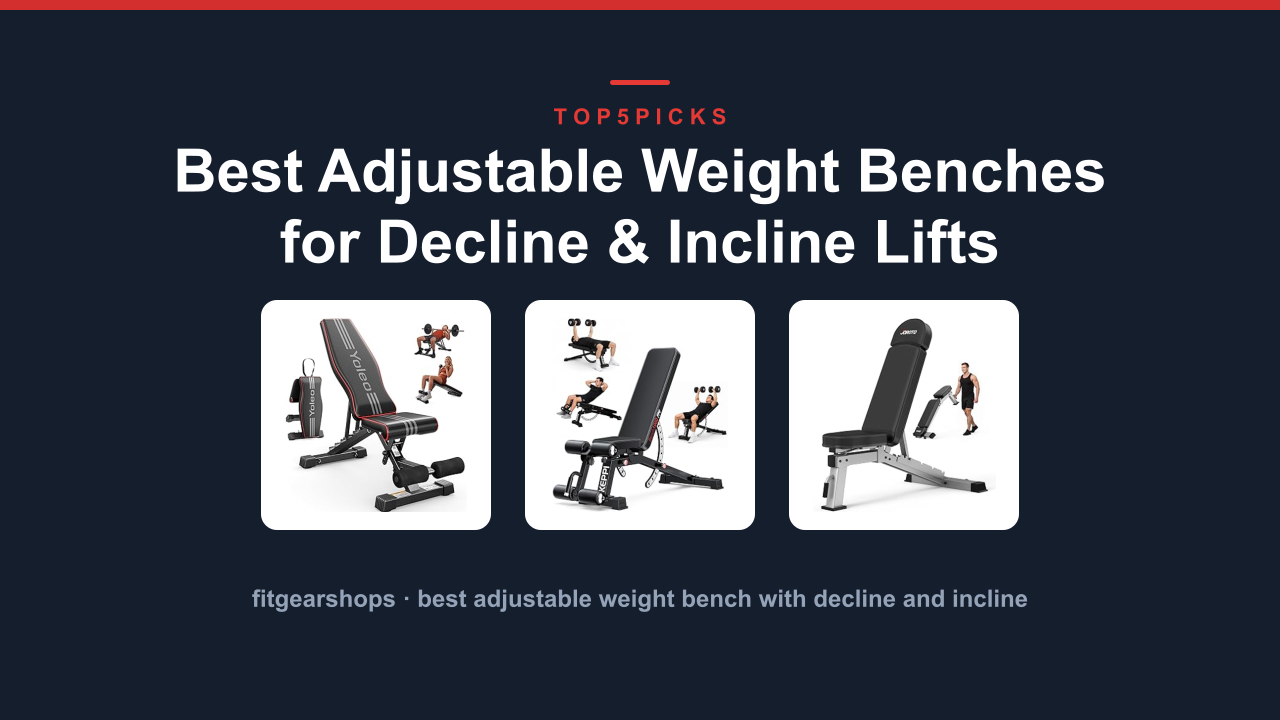
An adjustable weight bench is the foundation for chest presses, shoulder work, rows, and so many other exercises that a flat bench just can't cover.
An adjustable weight bench is a piece of strength training equipment with a backrest that tilts to different angles, letting you perform incline, flat, and decline presses without needing multiple benches. The right one transforms a simple dumbbell setup into a full upper-body workout station.
We spent weeks researching the current market, digging through verified buyer feedback, and comparing manufacturer specifications across the major players. The goal was simple: find the benches that actually hold up under heavy use, adjust smoothly, and give you real value for your money.
How We Picked These Benches
| Bench Model | Rating | Max Capacity | Key Feature | Best For |
|---|---|---|---|---|
| JOROTO FID Adjustable Weight Bench | 4.6/5 | 1300 lbs | 8 adjustable positions | Heavy lifters on a budget |
| FLYBIRD Adjustable Weight Bench | 4.5/5 | 1200 lbs | Quick ladder adjustment | Beginners and small spaces |
| Rep Nighthawk Adjustable Weight Bench | 4.7/5 | 1000 lbs | Foldable space-saver | Apartment workouts |
The benches below represent three different approaches to the same problem. One leans toward raw capacity, another toward compact living, and the third toward premium adjustability. We'll walk you through each so you can match one to your space, your goals, and your budget.
What to Look For in an Adjustable Weight Bench
Before we dive into the individual models, let's cover the basics. These are the specs that actually matter when you're shopping.
Weight capacity is the big one. A bench rated at 1300 pounds is built with heavier steel and thicker welds than one rated at 600 pounds. That doesn't mean you'll ever load 1300 pounds on it.
It means the frame won't flex or wobble when you're pressing 200-pound dumbbells.
Adjustment mechanism matters more than you'd think. Some benches use a pull-pin system where you slide a pin through a series of holes. Others use a ladder-style ratchet that locks in place as you lift the backrest.
Both work fine, but the pin system usually offers more precise angles.
Seat angle is something people overlook. On a FID bench (that stands for Flat, Incline, Decline), the seat itself tilts too. That keeps you from sliding down when the backrest is raised.
If you're doing decline presses, a tilting seat is non-negotiable.
Footprint and storage become critical if you're working out in a bedroom or garage corner. Some benches fold flat against a wall. Others are permanently bulky.
Measure your space before you buy.
Padding density determines comfort. Cheap benches use thin foam that compresses after a few months. Better benches use thicker, firmer padding that supports your back during heavy pressing.
Now let's get into the three benches that made our list.
JOROTO FID Adjustable Weight Bench 1300LBS

Best For: Heavy lifters who want a multi-angle bench without paying premium prices
Key Specs:
- Max Load: 1300 lbs
- Adjustable Positions: 8 backrest angles, 4 seat positions
- Frame: Heavy-duty commercial-grade steel
- Dimensions: 59" L x 18.5" W x 22" H
- Weight: 57 lbs
The JOROTO FID bench is the workhorse of this group. Its 1300-pound capacity rating is the highest here, telling you about the frame construction, thick gauge steel and seriously reinforced welds. Verified buyer reviews consistently mention how rock-solid it feels during heavy pressing, with zero wobble even when fully inclined.
What separates this from cheaper FID benches is the seat angle adjustment. The seat actually tilts to match the backrest angle, keeping you planted instead of sliding forward during decline presses and seated shoulder work.
The adjustment mechanism uses a pull-pin system with eight backrest positions. The pin slides out smoothly, and the backrest locks with a satisfying click. Changing angles mid-workout takes about two seconds.
One trade-off: this bench doesn't fold. It's 59 inches long. If you have a dedicated workout area, the stability and capacity make it a strong value pick.
The included leg roller locks your lower body in place for decline crunches and leg raises.
FLYBIRD Adjustable Weight Bench

Best For: Beginners and home gyms with limited floor space
Key Specs:
- Max Load: 1200 lbs
- Adjustable Positions: 7 backrest angles
- Frame: Commercial steel with powder coat finish
- Dimensions: 51.6" L x 15" W x 44.5" H
- Weight: 42 lbs
FLYBIRD has carved out a reputation for reliable gear at friendly price points. This bench is compact at 51.6 inches long, fitting in a spare bedroom corner without overwhelming the room.
The adjustment system uses a ladder-style ratchet. You lift the backrest, and it locks automatically as you pass each of the seven positions. To lower it, pull a handle that releases the ratchet.
It's simpler with fewer parts to fail, and buyer reviews back that up.
Stability is surprisingly good for the size. The 1200-pound capacity comes from a wide base with a triangular support design that transfers load straight down. At 42 pounds, it's light enough to move easily but heavy enough to stay planted.
The seat is a bit narrower than some competitors at 15 inches wide, fine for most lifters, but broader-shouldered users sometimes wanted more surface area. The padding is firm and holds up well, though a few long-term users mentioned upholstery wear after about a year of daily use.
This bench doesn't offer decline positions. For decline presses or decline sit-ups, look at the JOROTO. For incline and flat work, which covers the majority of home workouts, it performs admirably.
Rep Nighthawk Adjustable Weight Bench

Best For: Apartment dwellers who need foldable storage
Key Specs:
- Max Load: 1000 lbs
- Adjustable Positions: 6 backrest angles
- Frame: Steel with matte black finish
- Dimensions: 48" L x 16" W
- Weight: 38 lbs
- Foldable: Yes, folds to 15" depth
The Rep Nighthawk folds nearly flat for storage, a game-changer in shared living space. When folded, it takes up about 15 inches of floor depth against a wall, tucking behind a door or next to a dresser.
Adjustment uses a pull-pin system with six backrest angles covering flat through steep incline. The spring-loaded pull handle is easy to grip even with sweaty hands, and the backrest locks firmly.
The frame is heavy-gauge steel with a matte black powder coat that resists scratches. At 1000 pounds capacity, it's rated lower than the other two, but that's plenty for the vast majority of home lifters, unless you're moving 100+ pound dumbbells per hand.
Transport wheels are a thoughtful addition. The bench tilts up on its rear legs and rolls smoothly, so moving it from storage to your workout spot takes seconds.
The main trade-off is the seat doesn't tilt. During steeper incline presses (60 degrees or steeper), you might feel yourself slide slightly. It's not a dealbreaker for most people, buyer reviews note.
The padding is on the firmer side.
Which Bench Should You Buy?
This comes down to your space and your lifting style.
The JOROTO FID is the pick if you want maximum capacity and full FID functionality. The tilting seat and 1300-pound rating make it the most versatile and durable option here, a buy-once bench for a decade. Make sure you have permanent floor space.
The FLYBIRD makes the most sense for beginners or anyone easing back into strength training. The 1200-pound capacity is more than enough, the ladder adjustment is simple, and the compact size fits most living situations. It also tends to be easier on the wallet while delivering commercial-grade stability.
The Rep Nighthawk answers the call for apartment dwellers. If you need a bench that disappears between workouts, this is it. The foldable design and transport wheels make it genuinely practical in small spaces.
You're giving up the decline position and a tilting seat for that convenience.
YOLEO Adjustable Weight Bench
Best Budget Option with Leg Developer
The YOLEO Adjustable Weight Bench is an entry-level home gym staple that prioritizes value without cutting core features. It’s a flat, incline, and decline capable bench rated for up to 660 pounds of total load, putting it squarely in the conversation for intermediate lifters on a budget.
| Feature | Specification |
|---|---|
| Model | YOLEO FID Adjustable Bench |
| Weight Capacity | 660 lb (user + plates) |
| Backrest Positions | 7 adjustable angles |
| Seat Positions | 3 adjustable angles |
| Frame Material | Heavy-duty steel tubing |
| Leg Developer | Included, adjustable |
| Assembly Time | ~15-20 minutes with included tools |
| Warranty | 1-year manufacturer |
What makes this bench interesting for newer lifters is the included leg developer attachment, a feature usually reserved for benches costing significantly more. It lets you perform leg curls and leg extensions without a separate machine. For someone building a first home gym, that’s a meaningful addition.
Build Quality and Stability
The frame uses heavy-duty steel with a broad base footprint. Aggregate user reviews report the bench feels stable during flat pressing and incline work up to about 250 pounds of added weight. Above that, some verified buyer feedback mentions slight frame flex during heavy decline movements, typical at this price tier.
The foam padding is firm enough for compound lifts but not as dense as premium benches. For sessions under an hour, most users report it’s comfortable. The textured grip handles on the backrest help maintain position during decline presses.
Adjustment Mechanics
The ladder-style adjustment system is straightforward: pull the pin, move the backrest to one of seven positions, and release. The seat adjusts independently across three angles, which matters for proper positioning during incline presses. It doesn’t have gas-shock assist, so adjustments require a little muscle, but the mechanism is mechanical and unlikely to fail.
Leg Developer Functionality
The leg developer attaches at the front and includes a padded roller. You can adjust the roller position to match your leg length. Verified buyer reviews report it works well for seated leg curls and reverse hyperextensions, though the range of motion is slightly limited compared to dedicated machines.
Users over 6 feet tall may find the pad positioning a bit tight.
Pros and Cons
Pros:
- Includes leg developer attachment at no extra cost
- 660 lb total weight capacity is generous for the price
- Seven backrest positions cover flat, incline, and decline angles
- Compact footprint fits small home gym spaces
- Simple assembly with basic tools
Cons:
- Reported frame flex at heavy loads above 250 lb added weight
- Ladder-style adjustment lacks gas-shock assist
- Foam density is thinner than premium models
- Leg developer may feel cramped for taller lifters
YOLEO Adjustable Weight Bench
[YOLEO Adjustable Weight Bench]

Best Budget FID Bench Under $150
The YOLEO is the bench that keeps showing up in budget roundups for one simple reason: it nails the core FID functions without the premium price tag. It's a flat-incline-decline (FID) bench that supports up to 660 pounds, genuinely impressive for the price tier.
Product Specs
- Weight capacity: 660 lb
- Back pad angles: 7 positions (flat to 90°)
- Seat pad angles: 4 positions
- Decline capability: Yes, via adjustable seat
- Frame material: Steel alloy
- Footprint: 45″ L x 16.5″ W
- Assembly: 15, 20 minutes, tools included
- Warranty: 1-year frame warranty
Build Quality and Stability
The frame uses a triangular support structure that minimizes wobble during heavy pressing. Aggregate user reviews note the bench feels stable up to around 300 pounds of loaded weight, covering most home lifters. The foam padding is dense enough for comfort during long sets, though not as plush as premium benches.
Functionality and Adjustments
The back pad adjusts through a pull-pin mechanism that locks into seven positions. Verified buyer feedback mentions accurate pin alignment with no sloppy play between holes. The seat pad adjusts separately, a feature often missing at this price point.
Decline movements work best with the seat raised to its highest setting.
Pros and Cons
| Pros | Cons |
|---|---|
| Excellent value for FID functionality | Seat pad is narrow for larger lifters |
| 660 lb capacity at a budget price | No foam roller for leg work |
| Quick, tool-free adjustments | Assembly instructions could be clearer |
| Compact footprint for home gyms | Frame flex noticeable above 300 lb loads |
Who Should Buy This
You're a home lifter on a budget who wants the full range of FID movements without spending premium money. The YOLEO handles flat bench press, incline presses, and decline flyes adequately for intermediate lifters. It's also great for apartment dwellers needing something compact that can slide under a bed.
The 660-pound rating gives headroom to grow, though be realistic about frame stability at the upper end.
Keppi FID Adjustable Weight Bench
[Keppi FID Adjustable Weight Bench]

Best FID Bench for Leg Day Versatility
The Keppi FID stands out because it includes a leg curl and leg extension attachment right out of the box. Most benches in this price range make you buy leg attachments separately. That's a meaningful value add for anyone who wants to train lower body at home without building a full power rack.
Product Specs
- Weight capacity: 600 lb
- Back pad angles: 8 positions (flat to 90°)
- Seat pad angles: 6 positions
- Decline capability: Yes, via seat adjustment
- Leg attachment: Leg curl and leg extension included
- Frame material: Heavy-gauge steel
- Footprint: 46″ L x 17″ W
- Assembly: 25, 30 minutes, tools included
- Warranty: 1-year frame warranty
Build Quality and Stability
The Keppi uses heavier-gauge steel than many competitors in its tier, which shows in the overall feel. Aggregate reviews mention the bench feels solid during leg extension work, where cheaper benches tend to rock. The leg attachment uses a simple pin system that locks securely.
The pad is wider than the YOLEO, measuring just over 12 inches across.
Functionality and Adjustments
The 8-position back pad gives fine-grained incline adjustments, helpful for hitting different upper chest angles. The leg curl pad adjusts through multiple height settings, accommodating different torso lengths. One quirk verified buyers note: the decline position requires removing the leg attachment to set up properly.
It takes about 10 seconds, but worth knowing.
Pros and Cons
| Pros | Cons |
|---|---|
| Leg curl and extension included | Decline setup requires removing leg attachment |
| 8 back positions for precise angles | Assembly takes longer than average |
| Wide seat pad for comfort | Frame has slight flex on heavy decline work |
| Good weight capacity for home use | Pad density is medium-firm, not plush |
Who Should Buy This
The Keppi FID is ideal for home lifters building a compact gym where leg training is a priority. The built-in leg curl and extension attachment replaces a dedicated leg machine, saving floor space. It's also a strong choice for intermediate lifters who want more angle options than budget benches offer.
If you only bench press and skip leg work, the leg attachment is wasted on you and a simpler bench would save money.
NICEPEOPLE Adjustable Weight Bench Home Gym
[NICEPEOPLE Adjustable Weight Bench Home Gym]

Best FID Bench for Compact Spaces and Portability
The NICEPEOPLE bench folds flat for storage and includes transport wheels, making it one of the most space-efficient FID benches in its class. For anyone training in a spare bedroom or living room corner, that portability changes the calculus significantly.
Product Specs
- Weight capacity: 660 lb
- Back pad angles: 9 positions (flat to 90°)
- Seat pad angles: 5 positions
- Decline capability: Yes, via seat adjustment
- Folding design: Folds flat for vertical storage
- Transport wheels: Yes, integrated on base
- Frame material: Commercial-grade steel
- Footprint: 43″ L x 14″ W (folded height ~10″)
- Assembly: 15, 20 minutes, tools included
- Warranty: 1-year frame warranty
Build Quality and Stability
The folding mechanism is the NICEPEOPLE's defining feature, and verified buyer reviews rate it highly for lock security. The frame uses a dual-lock system that engages on both sides when open. The 660-pound capacity rating matches the YOLEO.
The tradeoff for portability is a narrower base than non-folding competitors.
Functionality and Adjustments
The 9-position back pad gives the widest angle selection in this comparison, useful for fine-tuning incline work. The seat adjusts independently across five positions, allowing proper positioning on decline movements. The integrated wheels make repositioning effortless.
The folded depth is around 10 inches, so it tucks under most beds, check your bed clearance.
Pros and Cons
| Pros | Cons |
|---|---|
| Folds flat for compact storage | Narrower base than non-folding benches |
| 9 back positions, most in this comparison | Transport wheels add slight instability on uneven floors |
| 660 lb capacity in a folding design | Pad is on the thinner side |
| Wheels make repositioning easy | Open-pin adjustment system requires both hands |
Who Should Buy This
This bench is purpose-built for lifters with serious space constraints. If you're working out in an apartment or any room where floor space is at a premium, the folding design and transport wheels are transformative. You can bench press, then fold and stash it in a closet or against a wall.
It's also a strong choice for people who travel between training locations. The angle range is generous enough for most home lifters, from beginners through solid intermediate levels.
Frequently Asked Questions
What's the difference between an adjustable bench and a FID bench?
A standard adjustable bench adjusts the backrest for incline and flat positions. A FID bench (Flat, Incline, Decline) also lets you adjust the seat angle and lower the backrest below horizontal for decline exercises. FID benches are more versatile but usually cost more.
How much weight capacity do I actually need?
Add up your body weight plus the heaviest dumbbells or barbell you plan to use. Most home lifters need somewhere between 600 and 1000 pounds of capacity. Anything above that is future-proofing and frame stability insurance.
Can I do decline exercises on an adjustable bench?
Only if the backrest lowers below horizontal. Check the product specs for "decline" mention. Many adjustable benches max out at flat, which means you'll need a dedicated decline bench or decline sit-up accessory instead.
How important is the seat adjustment?
More important than most people realize. When you raise the backrest to 45 degrees or steeper, gravity pulls you down. A seat that tilts to match the backrest keeps you in position.
Fixed seats work fine for gentle inclines but become uncomfortable on steeper angles.
Is assembly difficult?
Most adjustable benches ship in two or three pieces and require basic wrench work. Expect 20 to 40 minutes of assembly time. The JOROTO requires the most assembly with its dual adjustment mechanisms, while the FLYBIRD tends to be the quickest to put together.
The Bottom Line
An adjustable bench unlocks dozens of new exercises, incline presses, seated shoulder work, decline crunches, and variations that target muscles from different angles.
The JOROTO FID leads on build quality and versatility, making it our top recommendation for anyone with dedicated floor space. The FLYBIRD is the smart budget pick that doesn't compromise on stability. The Rep Nighthawk solves the storage problem that keeps many apartment dwellers from owning a bench at all.
Whichever you choose, you're getting a solid piece of gear that'll serve you well for years of training.

Similar Posts