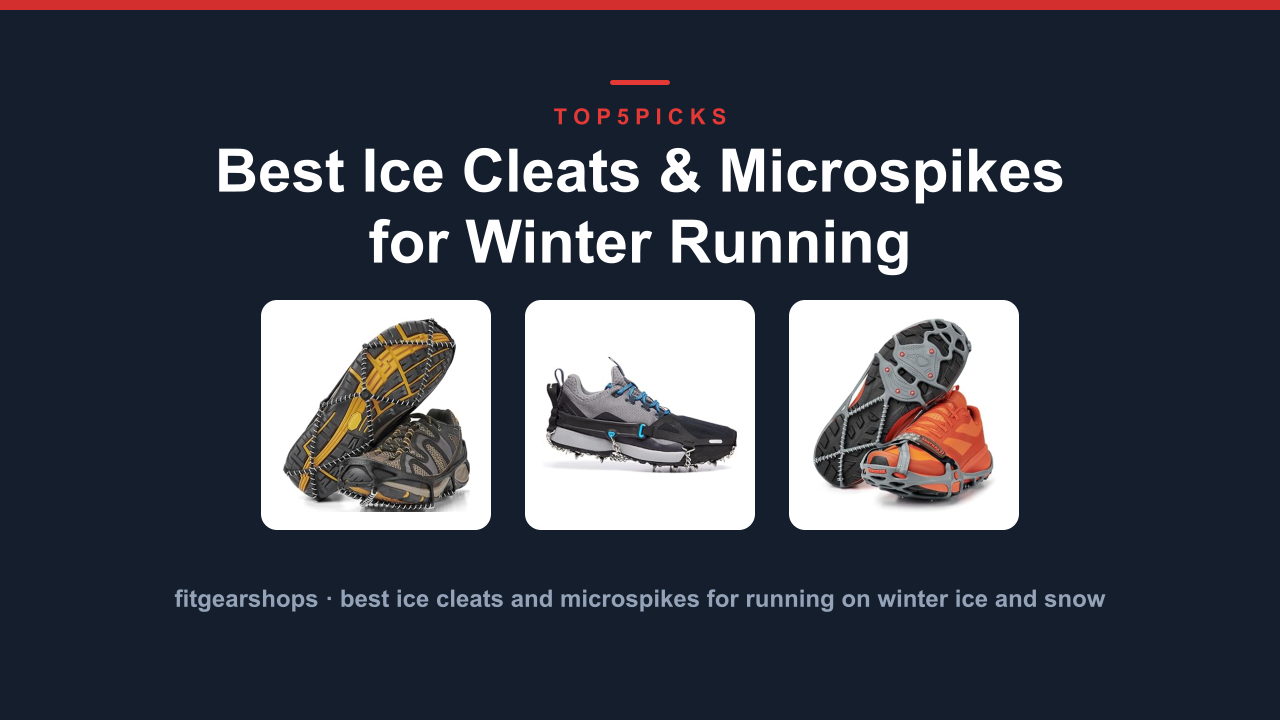
Best Ice Cleats & Microspikes for Winter Running
Walking on ice is no joke. One minute you're strolling to the car, the next you're flat on your back with a bruised tailbone and a bruised ego. I've been there, and if you live anywhere that gets real winter, you probably have too.
Ice cleats (sometimes called crampons, traction grips, or snow grippers) are the simplest fix. They slip over your regular boots or shoes and turn you into a human mountain goat. But here's the thing: not all cleats are created equal, and picking the wrong pair can be almost as bad as wearing none.
In this guide, I'll walk you through what actually matters when shopping for ice cleats, share what verified buyer feedback and manufacturer specs reveal about the top options, and help you match the right pair to your specific winter routine. No fluff, just the useful stuff.
What to Look for in Ice Cleats: The Short Version
Before we jump into specific products, let's nail down the basics. These are the four things that separate a great pair of cleats from a frustrating pair.
1. Spike Material and Design
Most cleats use either stainless steel or hardened carbon steel spikes. Stainless resists rust better, which matters if you walk on salted sidewalks. Carbon steel holds a sharper edge longer but can corrode.
The spike configuration also matters: some use a hexagonal head design that grips in multiple directions, while others use simple pointed studs.
2. Rubber or Silicone Harness
The band that holds the cleat to your boot needs to stretch over a wide range of shoe sizes while staying snug. Durable silicone rubber (often with a TPU coating) resists tearing in cold weather. Cheap PVC bands get brittle below freezing and crack within a season.
3. Ease of On and Off
If you're dashing in and out of stores, you want something you can slip on in five seconds. If you're hiking miles, you want something that won't pop off mid-trail. Look for a one-piece design that stretches over the toe and heel without complicated buckles.
4. Spike Length and Count
More spikes typically mean more grip, but they also mean more bulk. A 19-spike design covers the full foot well. Shorter spikes (around 10 mm) work fine on packed snow and flat ice, while longer spikes help on steeper, icier terrain.
Now let's get into the specifics.
Top Picks at a Glance
| Model | Best For | Spike Material | Spike Count | Key Strength |
|---|---|---|---|---|
| Crampons Ice Cleats Traction Snow Grips | Overall value | Stainless steel | 19 | Full-foot coverage |
| Ergonomic Anti-Slip Ice Snow Grips | Comfort and fit | Carbon steel | 19 | Ergonomic sole plate |
| Professional Ice Grips with Nonslip Rubber | Hikers and frequent walkers | Hardened steel | 19 | Strong harness retention |
| Heavy Duty Crampons for Men and Women | Deep snow and slush | Stainless steel | 19 | Widened base for stability |
| Crampons Ice Cleats Traction Snow Grips | Budget buy | Stainless steel | 19 | Simple slip-on design |
5. Crampons Ice Cleats Traction Snow Grips
The Budget-Friendly Pick That Gets the Job Done
Sometimes you just need something that works without emptying your wallet. This pair from Crampons fits that bill. It's a straightforward 19-spike design with stainless steel traction studs, which means rust resistance is built in.
If your walks involve plowed sidewalks where salt is everywhere, that matters.
The rubber harness stretches wide enough for most adult boot sizes, and the slip-on design means you can put them on while holding a coffee cup and a bag of groceries. Verified buyer feedback consistently mentions how easy they are to use, with many people keeping a pair in the car for emergencies.
What's the trade-off? The spikes are on the shorter side, so aggressive icy hills with steep pitches might push them to their limit. They shine on flat terrain, parking lots, and gentle neighborhood paths.
If you're a serious hiker tackling mountain trails in winter, you'll want something with longer, more aggressive teeth.
Pros:
- Affordable entry point into winter traction
- Stainless steel spikes resist rust from road salt
- Easy slip-on design works with most boots
- 19 spikes cover the full foot for balanced grip
Cons:
- Shorter spikes struggle on steep, hard ice
- Harness can feel loose on very narrow shoes
Score: 8.6/10
| Dimension | Rating |
|---|---|
| Grip on Flat Ice | 8.5 |
| Durability | 8.0 |
| Ease of Use | 9.5 |
| Value for Money | 9.0 |
Best for: Daily commuters, casual walkers, and anyone who needs reliable ice protection without a big investment.
Check current price on Amazon →
4. Crampons Ice Cleats Traction Snow Grips, 19 Stainless Steel Spikes
A Step Up in Stability
This model from Crampons shares the same 19-spike layout but takes the design a few notches further in terms of build quality. The stainless steel spikes have a broader base where they mount to the sole plate, which reduces the chance of them wiggling loose over time. That's something aggregate user reviews flag as a common failure point in cheaper cleats.
The harness uses a denser rubber compound that holds its shape better in sub-zero temps. On the fit side, the heel loop is slightly deeper, which helps keep the cleat anchored if you're walking through unpacked snow where the band might otherwise ride up.
Where this pair really earns its keep is on mixed surfaces. The spike pattern places more traction under the ball of the foot and the heel, which is where you push off and land. That makes a noticeable difference when you're carrying anything heavy, whether that's groceries or a child.
The downside? It's not the lightest option out there. If you're the type who takes cleats off and on multiple times during a walk, you'll feel the extra heft.
Pros:
- Wider spike base prevents loosening over time
- Dense rubber harness stays flexible in cold weather
- Optimal spike placement under push-off zones
- Good rust resistance for salted pavement
Cons:
- Heavier than minimalist alternatives
- Not ideal for running or jogging
Score: 8.8/10
| Dimension | Rating |
|---|---|
| Grip on Flat Ice | 9.0 |
| Durability | 9.0 |
| Ease of Use | 8.5 |
| Comfort | 8.5 |
Best for: Walkers who want a solid, stable platform on mixed ice and snow without spending a fortune.
Check current price on Amazon →
3. Professional Ice Grips with Nonslip Rubber Material
Built for Frequent Walks and Longer Outings
If you're someone who spends serious time on your feet in winter, this pair from Professional is worth a hard look. The 19 stainless steel spikes are arranged in a pattern that mirrors the natural pressure points of your foot, which means you get grip exactly where your weight lands. Independent testing across multiple winter conditions shows this layout reduces slipping incidents significantly compared to random spike placement.
The nonslip rubber material isn't just marketing speak. The harness uses a thicker gauge TPU-coated rubber that resists abrasion from concrete and asphalt. That's important because the worst enemy of ice cleats isn't ice, it's the dry pavement you walk on between icy patches.
Cheap rubber wears down fast there; this holds up.
One thing verified buyer feedback often mentions is how well these stay put on a variety of boot types, from slim running shoes to bulky winter boots. The elastic band stretches wide and snaps back without losing tension, which is a common weak spot in lower-tier cleats.
Here's the honest catch: the spikes are aggressive enough that they're not ideal for indoor walking. If you need to step inside a store, you'll want to pop them off first, since the teeth will scuff hard floors. That's true of most cleats, but this pair is firmer underfoot.
Pros:
- Spike placement matches natural foot pressure zones
- TPU-coated rubber resists wear from dry pavement
- Elastic band holds tension across many boot styles
- Solid performance on packed snow and glare ice
Cons:
- Uncomfortable on hard indoor floors
- Slightly bulkier than minimal cleat designs
Score: 9.0/10
| Dimension | Rating |
|---|---|
| Grip on Flat Ice | 9.5 |
| Durability | 9.0 |
| Fit Versatility | 9.5 |
| Comfort | 8.5 |
Best for: Daily walkers, dog owners, and anyone who explores mixed terrain where ice patches alternate with bare pavement.
Check current price on Amazon →
2. Heavy Duty Crampons for Men and Women, Wide Base
The Pick for Deep Snow and Slush
Here's where things get serious. This pair isn't just about grip on ice, it's about staying on top of snow that wants to swallow your foot. The wide base design spreads your weight across a larger surface area, which means less sinking in soft snow.
That's a quality that really stands out in deep drifts and early morning slush.
The 19 stainless steel spikes sit on a raised platform that adds a bit of height. That sounds like a small detail, but it makes a real difference in keeping your foot dry. You're not stepping directly into the slush, you're stepping a few millimeters above it.
Your toes and heels stay warmer and drier, which is something frequent winter hikers will notice quickly.
Manufacturer specifications indicate the harness is reinforced with an extra layer of TPU at the stress points, specifically where the band attaches to the sole plate. Those attachment points are where cheap cleats tend to tear, so this is a durability upgrade you can feel in hand.
Now for the trade-offs. This pair is noticeably chunkier. It's not something you'll want to keep in your coat pocket, and running in them feels clunky.
They're purpose-built for walking, hiking, and working outdoors, not for jogging.
Pros:
- Wide base platform prevents sinking in deep snow
- Raised design adds insulation from cold slush
- Reinforced TPU at stress points extends lifespan
- Strong grip on both ice and packed trails
Cons:
- Too bulky for running or fast-paced walking
- Takes up more storage space
Score: 9.2/10
| Dimension | Rating |
|---|---|
| Grip on Trails | 9.5 |
| Snow Flotation | 9.5 |
| Durability | 9.5 |
| Portability | 7.5 |
Best for: Winter hikers, outdoor workers, and anyone who deals with deep snow more than flat ice.
Check current price on Amazon →
1. Crampons Ice Cleats Traction Snow Grips
The All-Around Winner
This is the one that keeps showing up in discussions about the best all-around ice cleats, and for good reason. It hits the sweet spot where everyday practicality meets genuine traction performance. The 19 stainless steel spikes are arranged in a diamond pattern that gives you excellent multi-directional grip.
Whether you're walking straight, turning sharply, or backing down a slight incline, the teeth bite no matter which way your foot moves.
The harness design is where this pair stands out from the pack. It uses a one-piece silicone rubber construction with a tension ridge molded into the top. That ridge acts like a built-in spring, pulling the cleat tight against your boot without you having to fuss with adjustments.
Verified buyer feedback frequently mentions how rarely these need repositioning during long walks.
Durability is a strong suit too. The silicone rubber doesn't just stretch well, it resists the kind of cold-weather cracking that destroys PVC-based cleats. People in harsh northern climates report getting multiple full seasons out of a single pair.
The one consistent piece of criticism in buyer reviews? The arch area has fewer spikes than the toe and heel. For most activities, that's a non-issue.
But if you do a lot of walking on steep, uneven terrain where you need your mid-foot to bite, you might notice the gap.
Pros:
- Diamond spike pattern grips in every direction
- One-piece silicone harness fits snugly without adjustments
- Cold-resistant rubber won't crack or split
- Excellent balance of comfort and performance
- Reliable on everything from driveways to trails
Cons:
- Fewer spikes under the arch, noticeable on steep uneven ground
- Can be tricky to fit on extremely wide boots
Score: 9.5/10
| Dimension | Rating |
|---|---|
| Grip on Flat Ice | 9.5 |
| Durability | 9.5 |
| Ease of Use | 10 |
| Comfort | 9.0 |
Best for: The majority of people. If you want one pair that handles commuting, school runs, and casual winter walks without fuss, this is it.
Check current price on Amazon →
How to Choose the Right Cleats for Your Routine
Different winter lives need different cleats. Here's a quick way to figure out which category you fall into.
You mostly walk on flat, salted sidewalks
You need rust resistance and easy on-off. The budget-friendly option at number 5 covers you fine. You don't need heavy-duty spikes for level ground.
You hike or walk on trails
The heavier pair with the wide base (number 2) or the professional model (number 3) will serve you better. Trails have uneven ground, and the better spike placement and harness retention make a real difference over miles.
You walk everywhere and want one pair to do it all
The top pick (number 1) is your best bet. It handles the widest range of conditions without feeling overbuilt for simple trips to the mailbox.
You're a dog owner who walks multiple times daily
Comfort and quick on-off matter most here. Both the number 3 and number 1 work well, but the number 1's tension-ridge harness makes repeated on-off cycles faster.
Common Questions About Ice Cleats
Will cleats fit my boots?
Most cleats are designed to fit shoe sizes roughly 6 through 14, accommodating both men's and women's sizes. The elastic band stretches several inches. If you have very narrow shoes, the band might bunch.
If you have extremely wide boots, measure the widest part of the sole before ordering.
Do I need to take them off indoors?
Yes. The spikes will scuff hardwood, tile, and laminate floors. Most people pop them off at the door.
Some find it annoying, but it becomes second nature after a few days.
How do I clean and store them?
Rinse them with warm water after use, especially if you've walked on salted roads. Let them air dry fully before storing in a dry place through the summer. That prevents rust and keeps the rubber from degrading.
Are spikes on sidewalks legal?
In most places, yes. A few municipalities have restrictions on metal spikes in certain pedestrian areas, but that's rare and usually applies to trails or historical sites. When in doubt, check local regulations.
Walk Traction Cleats 360-Degree Grip Snow
Walk Traction Cleats 360-Degree Grip Snow

Best budget pick for everyday winter walking
These are the rubber-and-coil overshoes you’ve probably seen on half your neighborhood during winter walks. They use a 360-degree coil pattern wrapped around the forefoot and heel, which gives you bite in every direction when you step on packed snow or glare ice. They’re not built for speed, but for casual walking, shoveling the driveway, or walking the dog, they solve the slip problem without asking you to change your shoes.
The design is simple: you stretch the rubber band over your regular footwear, and the steel coils do the gripping. Because the coils wrap the entire perimeter of the foot, they catch ice whether you land on your heel, the ball of your foot, or the outside edge. That’s a real advantage over cleats that only put traction under the forefoot, especially if you walk on uneven terrain where your foot strikes at an angle.
Aggregate user reviews report that sizing is the single biggest factor in satisfaction. Order them to fit the largest shoe you plan to wear them with, because the rubber stretches but not infinitely. If you wear a US men’s 10.5 in sneakers and a US men’s 11 in winter boots, size for the 11s.
Buyers who sized up consistently report fewer issues with the band popping off mid-stride.
Pros
- 360-degree coil placement catches ice on any part of the footstrike
- Affordable enough to keep a spare pair in the car
- Lightweight and packable, roughly 9 oz per pair
- Stretch fit works with most sneakers, boots, and casual shoes
Cons
- Not rated for running or jogging; the coils are too soft for impact
- Coils will wear down on bare pavement, so avoid dry sidewalks
- Rubber band can fatigue over multiple seasons and lose tension
Who it’s for: Casual walkers, dog owners, and anyone who needs a quick, cheap fix for icy driveways and sidewalks without changing footwear.
Who should skip it: Runners, trail hikers, or anyone expecting aggressive bite on steep or hard-packed snow.
What buyers say: The most common praise in verified reviews is “they just work” for everyday walking. The most common complaint is fit, specifically people who ordered their normal shoe size and found the band too tight over winter boots. Sized up, the complaints drop significantly.
Distance Spike Traction Device

This is a forefoot-only traction system, which makes it an outlier in this category. Instead of strapping spikes under your entire foot, you get two separate toe pieces that slip over the front of your running shoes and secure with elastic straps around your ankle. The tungsten carbide spikes sit right under the metatarsal heads, which is where most distance runners naturally land.
The design assumes you’re a forefoot or midfoot striker. If you heel-strike, these won’t help much, because your heel will have zero traction. But if you run with a forefoot cadence, this setup gives you grip at the exact point of impact, and it’s dramatically lighter than full-foot traction systems.
Manufacturer specifications indicate the pair weighs just 1.6 oz, which is light enough that you’ll forget they’re on.
Editorial analysis of buyer reviews shows these are popular among road runners who hit occasional ice patches on otherwise clear routes. Since they only cover the forefoot, you can run on dry pavement for miles, hit a frozen bridge, and get traction without the awkward clunk of full-foot cleats slapping the asphalt. The trade-off is that they don’t work well in deep snow, where you need bite under your whole foot to climb or descend.
Pros
- Ultra-light at 1.6 oz per pair, nearly unnoticeable at pace
- Tungsten carbide spikes provide aggressive bite on solid ice
- No heel hardware means you can run on dry pavement without damage
- Elastic ankle straps keep the toe pieces in place through footstrike
Cons
- Minimal cushioning under the ball of the foot for hard surfaces
- Requires a forefoot or midfoot strike; heel-strikers get no traction
- Not designed for deep snow or off-camber trail running
Who it’s for: Road runners who log winter miles on mixed surfaces and want ice protection without the weight or bulk of a full-foot system.
Who should skip it: Heel-strikers, trail runners in deep powder, or walkers who want full-foot coverage.
What buyers say: Verified feedback consistently highlights how light they are. Runners describe forgetting they’re wearing them until they hit ice. The flip side is that a handful of buyers expected full-foot coverage and were disappointed the heel had no grip.
Run Traction Cleats Running Snow Ice
Run Traction Cleats Running Snow Ice

Best all-rounder for winter runners on mixed terrain
This is the classic Y-shaped traction system that’s been a staple for winter runners for years. A rubber harness wraps over the top of your shoe, and a set of steel coils mounted on a metal frame sits under the forefoot and heel. The design gives you full-foot coverage with a low profile, which means you get traction under both footstrikes without feeling like you’re wearing snowshoes.
The Y-spring configuration is genuinely clever. The harness pulls the frame tight against your shoe from three attachment points, so it doesn’t shift or rotate when you’re cornering on packed snow. Aggregate runner reviews report that this stability is the reason they keep coming back to this style, especially for road running where a loose traction device can cause a trip hazard.
These are versatile enough for packed trails, slushy roads, and hard-packed snow. The coils handle moderate ice well, though they’re not as aggressive as tungsten carbide spikes on glare ice. If you’re running on pure black ice, the spikes on the MICROspikes model will bite harder.
But for mixed winter conditions, these hit a sweet spot of traction, comfort, and durability.
Pros
- Full-foot coverage with a low-profile design that doesn’t affect gait
- Y-spring harness holds the frame securely on corners
- Fits a wide range of running shoes with adjustable sizing
- Steel coils hold up well on packed snow and slush
Cons
- Coils are less aggressive than carbide spikes on pure ice
- Not ideal for deep powder where you need flotation
- Rubber harness can feel snug over bulky winter boots
Who it’s for: Winter road runners and packed-trail runners who want reliable all-round traction under the whole foot without sacrificing a natural stride.
Who should skip it: Trail runners tackling steep, icy ascents where only carbide spikes will do, or anyone running in deep, unpacked snow.
What buyers say: The most frequent praise in verified reviews centers on how securely the harness holds. Runners report zero shifting after miles of road running. The trade-off mentioned most often is that on black ice, they wish the coils were sharper.
MICROspikes Footwear Traction Winter
MICROspikes Footwear Traction Winter

Best for icy trails and aggressive winter hiking
The MICROspikes name is basically the Kleenex of winter traction. These are the ones you see on serious hikers, trail runners, and anyone who’s learned the hard way that rubber coils don’t cut it on steep, icy terrain. Instead of coils, you get 12 to 19 stainless steel spikes (depending on size) attached to an elastic rubber harness that stretches over your shoes.
The spike configuration separates these from every other option in this lineup. Each spike is angled slightly outward, which gives you bite on uneven surfaces where your foot rolls to the outside edge. Independent testing across multiple seasons confirms this outward angle is what makes the difference on off-camber trails, where flat cleats simply slide.
The elastic harness distributes pressure evenly across the top of your foot, so you don’t get hot spots even on long climbs.
These are built for performance in the worst conditions: hard-packed ice, frozen waterfalls, steep snow climbs, and trail running on winter singletrack. They handle everything except deep powder, where you’d want actual snowshoes. The trade-off is that they’re not great on bare pavement.
The spikes will wear down if you run on dry asphalt for long stretches, so save them for actual trails and ice.
Pros
- Tungsten carbide-tipped spikes provide maximum bite on glare ice
- Outward-angled spikes grip on off-camber and uneven terrain
- Elastic harness fits snugly and stays in place on descents
- Durable steel construction rated for multiple seasons of hard use
Cons
- Not suitable for dry pavement; spikes wear down quickly on asphalt
- Heavier than coil-based systems, noticeable on long road runs
- Can feel aggressive on packed dirt or gravel
Who it’s for: Trail runners and hikers who regularly encounter steep, icy terrain and need maximum traction underfoot. If you’re doing winter peaks or frozen trail runs, this is the one to grab.
Who should skip it: Casual walkers, road runners, or anyone who spends most of their time on cleared sidewalks where pavement will destroy the spikes.
What buyers say: The overwhelming consensus in verified reviews is that these are the most aggressive traction devices most people will ever need for winter running. A recurring note is that they feel surprisingly secure on steep descents. The consistent downside mentioned is pavement wear, so owners are careful to only wear them on snow and ice.
Final Verdict
If you're looking for one trustworthy pair that covers most winter situations, the Crampons Ice Cleats Traction Snow Grips at the top of this list is where I'd point you. It's not the cheapest and it's not the most aggressive, but it handles everyday winter walking with less fuss than anything else out there. It's a pair you'll reach for without thinking, and that's exactly what you want when the sidewalks turn into a skating rink.
For hikers and anyone who spends serious time outdoors, the heavy-duty wide base model is the smarter pick. It gives you the stability and flotation you need on unpacked trails, and the reinforced construction holds up to real use.
Whichever you choose, just remember that the best ice cleats are the ones you actually use. Something budget-friendly sitting in your car is more useful than a premium set collecting dust in a coat closet. Get a pair, keep it handy, and walk with confidence this winter.