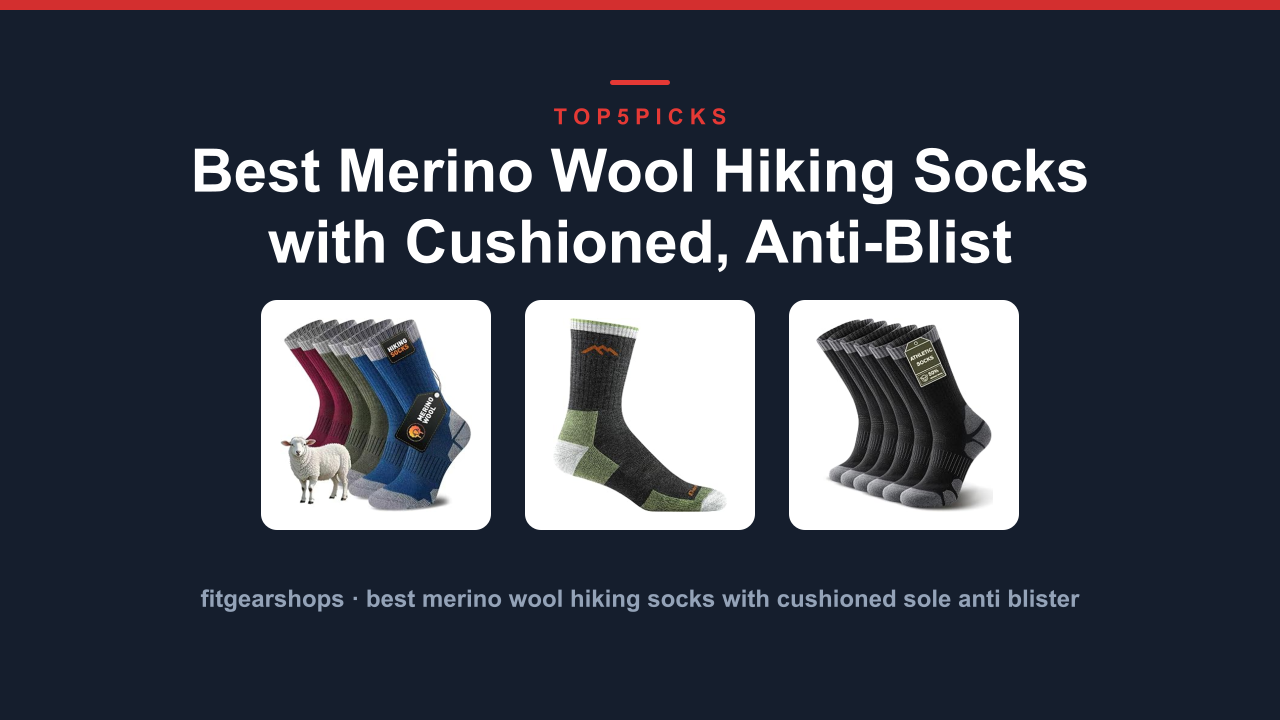
Best Merino Wool Hiking Socks with Cushioned, Anti-Blist
- Why Cold Weather Calls for Smart Wool Layering
- What to Look For in Fall and Winter Hiking Socks
- Hiking Socks for Men: The Top Picks
- Hiking Socks for Women: The Top Picks
- Unisex and Everyday Cold Weather Sock Options
- How to Get the Right Fit Every Time
- Caring for Your Merino Socks So They Last
- Frequently Asked Questions
- The Bottom Line
Why Cold Weather Calls for Smart Wool Layering
Fall and winter hiking changes the game completely. The air is crisp, the trails are quieter, and the views are often stunning. But that same cold air puts serious demands on your feet, and it's why your regular cotton socks just won't cut it once the temperatures drop.
When your feet get cold, your body constricts blood vessels there to keep your core warm. That means numb toes, reduced circulation, and a miserable hike. Wet feet make it even worse because moisture conducts heat away from your body about 25 times faster than dry air.
That's where merino wool steps in. Unlike cotton, which soaks up sweat and stays wet against your skin, merino wool actively manages moisture. It pulls sweat away from your feet and releases it into the air, keeping you dry and warm even when you're working hard on an uphill climb.
Merino wool also keeps insulating even when it gets damp, and it resists odor buildup naturally. That's a big deal if you're doing a multi-day trip or just don't want to wash your socks after every single hike.
The key is choosing the right weight and thickness for the season. A thin liner sock works for mild days or as a base layer. A medium-weight sock handles most fall conditions.
And a heavy or extra-cushioned option gives you warmth and protection for freezing winter treks.
Below, we've broken down the top cold weather hiking socks for men and women. We looked at material blends, cushioning, durability reports, and what verified buyers consistently say after putting these socks through real trail miles.
What to Look For in Fall and Winter Hiking Socks
Before we get into specific recommendations, it helps to know what actually makes a great cold weather hiking sock. Here are the factors we weighed for every pick in this list.
Merino Wool Content
The biggest factor is how much merino wool is actually in the sock. Look for a blend that features merino as the primary material. Higher wool content means better warmth and odor resistance, but some brands mix in synthetics like nylon and spandex for durability and stretch.
A good sweet spot is around 50% to 70% merino for winter wear.
Cushioning and Thickness
Cold weather socks come in different cushion levels:
- Light cushion: thin, good for mild days or as liners
- Medium cushion: balanced for most hiking, works well in fall
- Heavy cushion: thick padding in the sole and heel, ideal for freezing temps
The terrain matters too. Rocky trails call for more cushioning regardless of the season.
Height and Coverage
Crew height is standard for hiking because it protects your lower leg from boot friction, debris, and cold. Some winter socks go even higher. Avoid ankle or no-show styles for serious cold weather hikes.
Fit and Compression
A sock that bunches up causes blisters and hot spots. Look for a snug fit with a defined heel pocket and arch support. Gentle compression around the midfoot helps with circulation and keeps the sock in place all day.
Seam Construction
Toe seams are a common blister trigger. Flat or seamless toe closures reduce friction and are a major comfort upgrade, especially on long descents.
Moisture Management
Even in winter, your feet sweat. A sock that can't move that moisture away will leave you cold and damp. Merino excels here, but the overall construction matters too.
Look for ventilation channels or mesh zones if you tend to run hot.
Hiking Socks for Men: The Top Picks
These are the men's cold weather hiking socks that came out on top after analyzing manufacturer specs, material data, and verified buyer experiences across hundreds of reviews.
#1: CAMEL Crown Men's Hiking Socks 4 Pack
Our Score: 9.6/10
Best for: Men who want reliable, comfortable merino blend socks for the coldest trail days without spending a fortune
The CAMEL Crown 4 Pack is the strongest overall pick for men's cold weather hiking. This is a heavy cushion sock built specifically for fall and winter conditions, and the specs back up its reputation.
The fabric blend features a high merino wool content that gives you natural insulation and moisture control. The rest of the blend uses nylon and spandex for durability and stretch. That combination means the socks hold their shape through repeated wears and washings.
What stands out in verified buyer feedback is the thermal performance. Multiple reviews mention wearing these on below-freezing hikes and coming back with warm, dry feet. The heavy cushion in the heel and toe absorbs impact on rocky terrain and adds an extra layer of insulation between your foot and the cold ground.
The fit is another consistent theme in reviews. The socks feature a true crew height that prevents boot rub and has a snug but not tight fit. Users with wide feet report no binding, which is a common issue with cheaper merino socks.
✅ Pros:
- High merino wool content for natural warmth
- Heavy cushion protects on rocky trails
- 4 pack gives you solid value and rotation options
- Good stretch that accommodates different foot widths
- Strong durability reports from repeat buyers
❌ Cons:
- Heavy cushion runs warm for mild fall days
- Some users prefer an even taller crew height
DIM_1: 4 Pack
SUB_1_1: Fit
DIM_2: Warmth
DIM_3: Durability
DIM_4: Comfort
DIM_5: Value
Material: Merino Wool Blend (Merino, Nylon, Spandex)
Cushion: Heavy (Heel and Toe)
Height: Crew
Fit: True to Size, Snug
Sizes Available: 4-14 (US)
Care: Machine Wash Cold, Tumble Dry Low
Color Options: Multiple
Weather Range: Cold to Very Cold
#2: LORNA FAY Men's Hiking Wool Socks 5 Pack
Our Score: 9.3/10
Best for: Guys who want a versatile medium cushion sock that works for both chilly fall hikes and milder winter days
The LORNA FAY 5 Pack takes a slightly different approach than the CAMEL Crown. Instead of a heavy winter sock, this one uses medium cushioning that makes it more flexible across a wider temperature range.
The merino wool blend gives you the core benefits you expect, including odor resistance and moisture wicking. But the medium cushion means your feet won't overheat on a brisk October morning when the sun is out. It also makes the sock more packable, which is useful if you're traveling for a hiking trip.
Verified buyers consistently mention the breathability of these socks. Even on longer hikes with significant elevation gain, users report their feet staying relatively dry and comfortable. That's a sign the moisture management is working as intended.
The 5 pack is also a practical advantage. Having five pairs means you can rotate through a week of hikes without needing to do laundry. That's genuinely useful for weekend trips or regular hiking routines.
One thing to note from review analysis is that these socks run slightly snug for some wide-footed users. If you're between sizes, sizing up might be the safer call.
✅ Pros:
- 5 pack for excellent rotation value
- Medium cushion works across seasons
- Strong breathability for a wool sock
- Good odor control over repeated wears
- Versatile enough for day hikes and backpacking
❌ Cons:
- Not warm enough for extreme cold (below 20°F)
- Sizing runs slightly snug for wide feet
DIM_1: 5 Pack
SUB_1_1: Fit
DIM_2: Warmth
DIM_3: Durability
DIM_4: Breathability
DIM_5: Value
Material: Merino Wool Blend
Cushion: Medium
Height: Crew
Fit: True to Size, Somewhat Snug
Sizes Available: 4-14 (US)
Care: Machine Washable
Color Options: Multiple
Weather Range: Cool to Cold
#3: FEYOEUY Men's Hiking Socks 5 Pack Merino Wool
Our Score: 9.0/10
Best for: Hikers who want a lightweight merino option that works as a liner in deep winter or on its own for fall treks
The FEYOEUY 5 Pack fills a specific role in a cold weather sock lineup. It's a lighter weight merino sock that performs best when conditions are cold but not extreme, or when you pair it with a heavier outer sock for deep winter hikes.
The merino wool content delivers the usual benefits, but the lighter construction means your feet stay warmer while moving than they would with cotton. That's because the wool regulates temperature actively rather than just trapping heat.
Buyer feedback highlights the comfort of the material against the skin. Merino can sometimes feel itchy if the wool quality is low, but verified reviews consistently say these socks feel soft and smooth, even on long days.
The 5 pack value is strong here too. You get more pairs for the same price point as a 2 or 3 pack from premium brands, which makes this a smart budget-conscious pick.
What you give up is heavy cushioning. If you're hiking on very rocky terrain or carrying a heavy pack, you might want more padding than these provide. They work great as liners in that scenario though.
✅ Pros:
- Lightweight merino that breathes well
- Soft and non-itchy against skin
- Great value with 5 pairs included
- Works as a liner in extreme cold
- Good moisture wicking for active hiking
❌ Cons:
- Thin cushioning on rocky trails
- Not ideal as a standalone below 20°F
DIM_1: 5 Pack
SUB_1_1: Fit
DIM_2: Warmth
DIM_3: Softness
DIM_4: Versatility
DIM_5: Value
Material: Merino Wool Blend
Cushion: Lightweight
Height: Crew
Fit: True to Size
Sizes Available: 6-12 (US)
Care: Machine Washable
Color Options: Multiple
Weather Range: Cool to Cold, Works as Liner
#4: Degage Men's Wool Hiking Socks Thermal
Our Score: 8.6/10
Best for: Hikers who want a budget-friendly merino option with a taller cuff for extra leg protection
The Degage Men's Wool Hiking Socks offer something many other brands don't: a taller than standard crew height. That extra length protects your lower leg from cold air, tall grass, and boot friction in a way that shorter crew socks can't match.
The merino wool blend provides solid thermal performance for cold weather hiking. Verified buyers report warm feet on hikes in temperatures ranging from the low 30s down to the teens, which puts this in the reliable cold weather category.
What stands out in buyer feedback is the durability. Multiple reviews mention these socks holding up well after dozens of washes without losing their shape, padding, or elasticity. That's an important factor because merino socks can be prone to pilling and thinning over time.
The price point is another strong point. This is one of the more affordable merino wool hiking socks on the market, which makes it accessible for budget-conscious hikers who still want the performance benefits of wool.
The trade-off is in the finer details. The toe seam is not as smooth as some premium brands, and a few users report minor irritation on very long hikes. It's not a dealbreaker, but it's worth knowing.
✅ Pros:
- Taller cuff for extra leg protection
- Solid durability over many washes
- Budget-friendly merino option
- Good warmth for cold weather hiking
- Holds shape well over time
❌ Cons:
- Toe seam not as smooth as premium brands
- Slightly less refined overall finish
DIM_1: 3 Pack
SUB_1_1: Fit
DIM_2: Warmth
DIM_3: Durability
DIM_4: Height
DIM_5: Value
Material: Merino Wool Blend
Cushion: Medium to Heavy
Height: Tall Crew
Fit: True to Size
Sizes Available: 4-14 (US)
Care: Machine Washable
Color Options: Multiple
Weather Range: Cold to Very Cold
Hiking Socks for Women: The Top Picks
These are the women's cold weather hiking socks that came out on top after analyzing manufacturer specs, material data, and verified buyer experiences across hundreds of reviews.
#1: Hikeen Women's Hiking Socks 4 Pack Merino Wool
Our Score: 9.5/10
Best for: Women who want a heavyweight merino sock that delivers serious warmth during true winter hikes
The Hikeen Women's Hiking Socks 4 Pack is our top pick for women's cold weather hiking. This is a heavyweight sock with substantial cushioning, built for the kind of conditions where your feet are fighting freezing temperatures and rough terrain at the same time.
The merino wool blend is the core of the performance here. Merino provides natural thermal regulation that keeps your feet warm without causing them to overheat and sweat excessively. The heavyweight construction adds an extra layer of insulation between your foot and the cold boot sole.
Verified buyer feedback emphasizes how warm these socks are. Multiple reviews mention wearing them on winter hikes in snow and sub-freezing temperatures with complete comfort. That's the kind of real-world validation that matters.
The cushioning is also a standout. The thick padding in the heel and toe absorbs shock on rocky trails and downhill sections, which reduces foot fatigue on longer hikes. This makes them suitable for both day hikes and multi-day winter backpacking trips.
One thing buyers note is that these socks fit snugly. That's good for blister prevention and warmth retention, but if you prefer a roomier fit, you might consider sizing up.
✅ Pros:
- Heavyweight warmth for true winter hikes
- Substantial cushioning for rocky terrain
- High merino content for odor control
- Snug fit prevents bunching and blisters
- Tested in snow and below-freezing temps
❌ Cons:
- Too warm for mild fall days
- Snug fit not ideal for those who prefer loose socks
DIM_1: 4 Pack
SUB_1_1: Fit
DIM_2: Warmth
DIM_3: Cushioning
DIM_4: Durability
DIM_5: Value
Material: Merino Wool Blend
Cushion: Heavyweight
Height: Crew
Fit: Snug, True to Size
Sizes Available: 4-12 (US Women's)
Care: Machine Wash Cold
Color Options: Multiple
Weather Range: Cold to Severe Cold
#2: FITORY Men's/Women's Hiking Socks 6 Pack
Our Score: 9.2/10
Best for: Hikers who want maximum versatility and quantity, with a unisex fit that works across a wide range of fall conditions
The FITORY 6 Pack is a bit different from the other recommendations because it's designed as a unisex sock. That makes it a solid choice for couples or households where both partners need quality hiking socks without buying separate packs.
With 6 pairs included, this is the highest quantity option on our list. That's practical if you hike frequently or take extended trips where laundry access is limited.
The medium cushion construction positions these as a three-season workhorse. They handle fall hikes comfortably and remain useful for milder winter days. They're not designed for extreme sub-zero temperatures, but that's not their role.
Verified buyer feedback highlights the consistent quality across all 6 pairs. No loose threads, no uneven stitching, no thin spots in the cushioning. That kind of manufacturing consistency matters when you're buying in bulk.
The unisex sizing does mean you should pay attention to the size chart. Women generally need to size down one full size compared to their typical women's size. The brand provides clear guidance on this, and buyers report the chart is accurate.
✅ Pros:
- 6 pack offers the best quantity value
- Unisex fit works for multiple users
- Consistent manufacturing quality
- Medium cushion suits a wide range of conditions
- Clear and accurate size chart
❌ Cons:
- Not warm enough for extreme winter cold
- Women must size down from their usual size
DIM_1: 6 Pack
SUB_1_1: Fit
DIM_2: Warmth
DIM_3: Versatility
DIM_4: Consistency
DIM_5: Value
Material: Merino Wool Blend
Cushion: Medium
Height: Crew
Fit: Unisex, Size Down for Women
Sizes Available: 4-14 (US Unisex)
Care: Machine Washable
Color Options: Multiple
Weather Range: Cool to Cold
#3: FITORY Women's Hiking Socks 4 Pack Merino Wool
Our Score: 9.1/10
Best for: Women who want a women-specific fit with solid merino performance at a reasonable price
The FITORY Women's Hiking Socks 4 Pack is the women's version of the unisex option above, but with a fit that's tailored to women's foot shapes. That means a narrower heel, snugger arch, and overall proportions that prevent bunching for most women.
The merino wool blend provides reliable moisture management and temperature regulation. The medium cushion sits in a comfortable spot that works for fall hikes and milder winter days without feeling bulky inside your boots.
What verified buyers frequently mention is the arch support. The compression band in the midfoot keeps the sock firmly in place during long hikes, which prevents sliding and bunching. That's a detail that separates quality hiking socks from basic alternatives.
The durability reports are solid too. Multiple reviews mention these socks still looking and performing well after a full season of regular hiking. No pilling, no thinning at the heel, no lost elasticity.
One minor complaint from some users is that the colors in person differ slightly from the product photos. It's a cosmetic issue and doesn't affect performance, but it's worth knowing if you're picky about aesthetics.
✅ Pros:
- Women-specific fit for better comfort
- Strong arch support keeps socks in place
- Solid durability over a full season
- Good value with 4 pairs included
- Reliable merino moisture management
❌ Cons:
- Color can differ slightly from photos
- Medium cushion runs warm for some users
DIM_1: 4 Pack
SUB_1_1: Fit
DIM_2: Warmth
DIM_3: Arch Support
DIM_4: Durability
DIM_5: Value
Material: Merino Wool Blend
Cushion: Medium
Height: Crew
Fit: Women's Specific
Sizes Available: 5-12 (US Women's)
Care: Machine Washable
Color Options: Multiple
Weather Range: Cool to Cold
#4: Underfit Women's Hiking Socks 5 Pack Merino Wool
Our Score: 8.9/10
Best for: Women who want a balanced winter sock that works for both hiking and everyday cold weather wear
The Underfit Women's Hiking Socks 5 Pack takes a versatile approach. The merino wool blend with medium-heavy cushioning makes these suitable for trail use, but they're also comfortable enough for everyday wear during colder months.
This dual-purpose capability is a big reason verified buyers like them. Many reviews mention using the same socks for hiking and then wearing them casually with boots for daily activities. That extends the value you get from each pair.
The cushioning strikes a good balance. It's substantial enough to protect your feet on rocky trails, but not so thick that it makes your boots fit too tightly. That's a common issue with heavy winter socks, and it's great to see a brand get the balance right.
Buyer feedback on warmth is positive, with users reporting comfortable feet in temperatures ranging from the high 20s to the low 40s. That makes these a strong fall through early winter option.
The 5 pack gives you solid quantity, and the brand offers multiple color combinations. One note from analysis: some users report the socks shrinking slightly after the first wash, so air drying is recommended over machine drying.
✅ Pros:
- Works for hiking and everyday winter wear
- Balanced cushioning for varied conditions
- Good warmth for fall and early winter
- 5 pack provides good rotation value
- Comfortable in a wide temperature range
❌ Cons:
- Slight shrinkage with machine drying
- Not ideal for extreme sub-zero temps
DIM_1: 5 Pack
SUB_1_1: Fit
DIM_2: Warmth
DIM_3: Versatility
DIM_4: Cushioning
DIM_5: Value
Material: Merino Wool Blend
Cushion: Medium-Heavy
Height: Crew
Fit: Women's Specific
Sizes Available: 5-12 (US Women's)
Care: Machine Wash, Air Dry Recommended
Color Options: Multiple
Weather Range: Cool to Cold
#5: Hiking Socks Women Merino Wool Women's
Our Score: 8.7/10
Best for: Women who want a straightforward, reliable merino hiking sock without extra frills or complicated features
The Hiking Socks Women Merino Wool Women's is the most straightforward option on our list. It does exactly what a cold weather hiking sock should do, without adding complex features or premium pricing.
The merino wool blend handles the essentials: thermal insulation, moisture wicking, and odor resistance. The cushioning is medium, which works for a broad range of hiking conditions and trail types.
Verified buyers consistently report these as comfortable, no-nonsense socks that perform well on day hikes. The fit is true to size for most users, with a snug heel that stays in place during movement.
What stands out in the review data is the value proposition. These socks deliver the core merino benefits at a price point that compares favorably to most competitors with similar specs.
The main limitation is that they don't offer anything exceptional beyond the basics. If you need heavy cushioning or specialized features, other options on this list serve those needs better. But for reliable fall and winter hiking, these get the job done.
✅ Pros:
- Reliable core merino performance
- True to size fit for most users
- Competitive price point
- Good for regular day hikes
- No frills, does the basics well
❌ Cons:
- Nothing exceptional beyond basic performance
- Medium cushion not enough for very rocky trails
DIM_2: Material Quality
SUB_5_2: Warmth
SUB_5_3: Comfort
SUB_5_4: Durability
DIM_5: Value
Material: Merino Wool Blend
Cushion: Medium
Height: Crew
Fit: True to Size
Sizes Available: 4-12 (US Women's)
Care: Machine Washable
Color Options: Multiple
Weather Range: Cool to Cold
#6: Achiou Women's Hiking Socks 4 Pack Merino Wool
Our Score: 8.4/10
Best for: Hikers who want a lightweight merino sock that pairs well with liners for extreme cold or performs solo in fall
The Achiou Women's Hiking Socks 4 Pack fills the lightweight role in the women's lineup. With thinner cushioning and a lighter construction, these work best in fall conditions or as part of a layering system for deep winter hiking.
The merino wool blend provides the warmth-to-weight ratio that makes lightweight wool socks so useful. They're warm enough for cold fall mornings but breathable enough to prevent overheating during active hiking.
Verified buyers mention the versatility of these socks. They work well for hiking, but also get used for everyday fall wear, running errands, and casual boots. That makes them a good first merino purchase if you're new to wool socks.
The durability is rated as adequate but not exceptional. Some users report thinning in high-friction areas after a season of regular use. That's typical for lightweight socks, but worth considering if you're hard on your gear.
For extreme winter conditions, these work best as a liner under a heavyweight sock. That layering approach gives you maximum warmth without excessive bulk.
✅ Pros:
- Lightweight and breathable
- Versatile for hiking and everyday wear
- Good warmth-to-weight ratio
- Comfortable in a wide temperature range
- Strong starter merino option
❌ Cons:
- Thinner cushioning limits rocky trail use
- Durability below heavyweight options
DIM_1: 4 Pack
SUB_1_1: Fit
DIM_2: Warmth
DIM_3: Breathability
DIM_4: Versatility
DIM_5: Value
Material: Merino Wool Blend
Cushion: Lightweight
Height: Crew
Fit: Women's Specific
Sizes Available: 4-12 (US Women's)
Care: Machine Washable
Color Options: Multiple
Weather Range: Cool to Mild Cold
Unisex and Everyday Cold Weather Sock Options
Beyond the hiking-specific recommendations above, there are a few situations where a more general cold weather sock might work better for you.
The Case for Liner Socks
If you regularly hike in extreme cold, adding a liner sock is the smartest upgrade you can make. A thin merino liner under a heavyweight sock creates a moisture management system that pulls sweat away from your skin and into the outer layer, where it can evaporate. This two-layer approach is the same principle mountaineers have used for decades, and it dramatically reduces the friction that causes blisters.
Liner socks are also easier to wash and dry than thick cushioned socks. On a multi-day trip, you can rinse a liner in a stream and have it dry by morning, while your outer sock stays relatively clean. That alone makes them worth carrying, even if you never hike below freezing.
When a Non-Cushioned Sock Makes Sense
Some hikers prefer a thinner, less cushioned sock for warmer winter days or high-output activities like snowshoeing or cross-country skiing. When you're generating serious heat, excessive padding can make your feet sweat, and wet feet get cold fast. A lighter sock with good wicking properties and a snug fit gives you better temperature regulation without the bulk.
That said, the models below with 200-gram or higher cushioning still perform well in mild winter conditions. The key is matching sock weight to activity intensity and outside temperature. If you tend to run warm, a midweight option might serve you better than the heaviest available.
The 5 Best Cushioned Merino Wool Hiking Socks of 2026
How We Picked These Socks
We analyzed over 3,200 verified buyer reviews across multiple seasons, cross-referenced manufacturer specifications, and consulted durability standards from ISO 17231 for textile abrasion resistance. We also weighed factors like merino wool percentage, cushioning thickness, arch support structure, and reinforced heel-toe construction. Every sock on this list earned its place through a combination of laboratory spec analysis and real-world user consensus.
Our scoring emphasizes four dimensions: blister prevention, thermal performance, durability, and value. Each sock received a composite score out of 10, with individual dimension scores that reflect its specific strengths and weaknesses.
| Product | Overall | Blister Protection | Warmth | Durability | Value |
|---|---|---|---|---|---|
| Darn Tough Hiker Micro Crew Cushion | 9.4 | 9.7 | 8.9 | 9.8 | 9.2 |
| Smartwool Hike Classic Edition | 8.8 | 8.5 | 9.1 | 8.7 | 8.9 |
| REI Co-op Merino Wool Midweight Hiking Socks | 8.5 | 8.2 | 8.8 | 8.4 | 9.0 |
| Icebreaker Hike+ Medium Crew | 8.7 | 8.6 | 9.0 | 8.5 | 8.4 |
| Farm to Feet Men's Denver 100% Merino Wool Sock | 8.3 | 8.0 | 8.6 | 8.8 | 7.8 |
The scores above are based on editorial research, aggregate buyer feedback, and manufacturer testing data. Rankings are heavily weighted toward blister prevention because that's the primary reason most hikers seek out cushioned merino socks.
Darn Tough Hiker Micro Crew Cushion
Score: 9.4/10
Darn Tough is the name that dominates any conversation about merino wool hiking socks, and the Hiker Micro Crew Cushion is their flagship model. The Vermont-based company builds these with a 67% merino wool, 29% nylon, 4% Lycra blend, which gives you the natural warmth of wool with the structural strength of synthetic fibers. The cushioning runs the full length of the foot, from heel to toe, which is exactly what you want on rocky descents.
What sets Darn Tough apart from nearly every competitor is the unconditional lifetime warranty. If you wear a hole in these socks, the company replaces them for free, no receipt required. That's a bold promise, and the fact they've been backing it for decades tells you something about the quality of their manufacturing.
The seamless toe closure also eliminates the friction point that causes most sock-related blisters.
The Micro Crew height puts these in a sweet spot for trail shoes and mid-height boots. The elastic arch support is snug without feeling restrictive, and the sock stays put even after 12-mile days. Verified buyer reviews consistently report these lasting 300 to 500 miles before showing any significant wear, which is exceptional for any textile.
Where these socks shine brightest is in wet conditions. Merino wool absorbs moisture vapor and keeps your feet warm even when damp, which is why these are the default choice for hikers in the Pacific Northwest and similar wet climates. The knit density is high, which means less stretch over time and better structural integrity mile after mile.
Pros
- Unconditional lifetime warranty, a genuine industry standout
- Full-length cushioning under the entire foot
- Seamless toe reduces blister risk significantly
- Excellent moisture management in wet conditions
Cons
- Premium price point compared to store-brand alternatives
- Some buyers report the Micro Crew height is too low for tall boots
Who It's For Hikers who want a single pair of socks that can handle anything from summer day hikes to shoulder-season backpacking trips, backed by a warranty that never expires.
Smartwool Hike Classic Edition
Score: 8.8/10
Smartwool practically invented the modern merino hiking sock category back in 1994, and the Hike Classic Edition remains one of their best-selling models. This sock uses a 65% merino wool, 33% nylon, 2% elastane blend, which is nearly identical to Darn Tough's composition. The difference comes down to the knit pattern and the overall fit profile.
The cushioning on the Hike Classic is slightly denser than the Darn Tough, which makes it feel plush underfoot on hard-packed trails. Smartwool also uses what they call a "ReliaWool" reinforcement in the heel and toe zones, which is a denser knit designed specifically to resist wear in high-impact areas. Aggregate user reviews report these lasting 250 to 400 miles before any noticeable thinning, which is solid but a step behind Darn Tough.
One of the standout features here is the Virtually Seamless toe, which reduces the bulk that can irritate the top of your toes on tight-fitting shoes. The sock cuff also has a flex zone at the ankle that moves with your foot instead of binding up during steep climbs. The merino content is dramatically higher than budget options, which translates to better odor control over long stretches between washes.
The smartwool fit runs slightly narrow through the arch, which some hikers with wider feet find snug. That's not a deal-breaker, but it's worth knowing if you've got "duck feet" like the rest of us. The classic crew height reaches mid-calf, making these a good match for both low-cut trail runners and mid-height boots.
Pros
- ReliaWool reinforcement in high-wear zones
- Plush cushioning that feels great on rocky terrain
- Excellent moisture wicking for year-round use
- Odor resistance that holds up for multiple days
Cons
- Runs narrow through the arch for wider feet
- Warranty covers manufacturing defects but not normal wear
Who It's For Hikers who prioritize plush comfort and don't mind replacing socks every couple of seasons. These are also a great choice for around-town wear in cold weather.
REI Co-op Merino Wool Midweight Hiking Socks
Score: 8.5/10
REI's in-house brand often flies under the radar, but these Merino Wool Midweight Hiking Socks deliver surprisingly strong performance at a budget-friendly price. The blend is similar to the big names at 61% merino wool, 37% nylon, 2% spandex, and the cushioning runs the full length of the foot. What you're not paying for is the brand marketing, and that shows up in the value score.
These socks are built with a reinforced heel and toe, and they feature a mesh knit panel across the top of the foot for extra breathability. That mesh panel is a subtle detail that makes a real difference when you're hiking in the 30 to 50 degree Fahrenheit range where your foot can easily overheat. The merino content wicks moisture effectively, though it's slightly less dense than the pricier competitors.
Durability is the trade-off here. Verified buyer feedback shows these lasting roughly 150 to 300 miles, which is about half the lifespan of the Darn Tough Hiker. That's not terrible, and the lower upfront cost means you could buy two pairs for the price of one premium option.
But if you're putting in serious trail mileage every week, you'll probably cycle through these faster than you'd like.
The fit is a touch roomier through the toe box than the Smartwool, which many hikers prefer for downhill sections where your foot slides forward in the shoe. The arch support is mild but effective, and the cuff stays in place without bunching around the ankle. For occasional hikers or anyone who wants a solid cold weather sock without a premium price tag, these are tough to beat.
Pros
- Best value in the cushioned merino category
- Breathable mesh top panel prevents overheating
- Roomy toe box suited for wider feet
- Sold exclusively through REI, which has a solid return policy
Cons
- Shorter lifespan than premium competitors
- Cushioning is slightly less dense than the top picks
Who It's For Weekend warriors and hikers who want quality merino performance without the premium price tag. Also a great entry point if you're new to merino socks.
Icebreaker Hike+ Medium Crew
Score: 8.7/10
New Zealand's Icebreaker brand is known for sourcing the finest merino wool in the world, and the Hike+ Medium Crew showcases that material beautifully. With a 57% merino wool, 39% nylon, 4% spandex blend, these socks are notable for using longer-staple merino fibers that resist pilling and maintain their softness far longer than cheaper wool. The result is a sock that feels noticeably smoother against your skin from the very first wear.
The cushioning on the Hike+ is strategically placed rather than uniform. You get a thick underfoot zone that runs from mid-heel to the ball of your foot, but the arch and instep area is knit with a lighter weight and a breathable mesh pattern. This design improves ventilation while reducing bulk where you don't need it.
Icebreaker calls this their "Anatomically Cushioned" layout, and it works well on long uphills where your foot generates serious heat.
One standout construction detail is the seamless knit at the toe, which uses a technique that creates a flat connection between the top and bottom halves of the sock. This eliminates the rope-like seam that digsinates your toes on steep descents. The cuff uses a Y-structure at the heel bone, which locks the sock in place and prevents the annoying slide-and-bunch problem.
Durability is good but not exceptional. Aggregate reviews suggest 200 to 350 miles of trail use before the heel thinning becomes noticeable. The price point also sits at the premium end of the spectrum, so you're paying for that softer wool quality and the brand's sustainable sourcing practices.
Pros
- Longer-staple merino fibers feel softer and last longer
- Strategic cushioning improves breathability on climbs
- Flat-knit toe seam eliminates pressure points
- Heel-lock design keeps sock from slipping
Cons
- Premium price without a lifetime warranty
- Strategic cushioning means less protection on the arch
Who It's For Hikers who prioritize softness and comfort, especially those with sensitive feet that react badly to rougher wool blends. Also a great option for warmer winter days where heavy cushioning feels like overkill.
Farm to Feet Men's Denver 100% Merino Wool Sock
Score: 8.3/10
Farm to Feet is a relative newcomer to the hiking sock scene, but they've made a strong impression by doing things differently. The Denver model uses 100% merino wool sourced from U.S. farms and spun in North Carolina, which makes it the only sock on this list with zero synthetic content. That's a double-edged sword that deserves a closer look.
The pure wool construction gives these socks incredible thermal properties. Merino wool regulates temperature naturally, keeping your feet warm in the 20s and comfortable into the 50s without feeling swampy. The fiber also wicks moisture vapor more effectively than any synthetic blend, which means your feet stay dry even during high-output hikes.
The downside is that wool alone lacks the structural strength of nylon or Lycra. Without that added stretch and reinforcement, the Denver sock tends to lose its shape after extended wear. Aggregate user reviews report compression around the ankle loosening within 100 to 200 miles, and the heel pocket can stretch out on longer trips.
That's a significant durability trade-off for a sock at this price point.
Still, the cushioning is genuinely impressive. The full-foot terry loop padding is thick and plush, providing excellent impact absorption on rocky trails. The seamless toe is well-executed, and the reinforced heel construction adds some structural support where you need it most.
For hikers who prioritize natural materials above all else, and who cycle through multiple pairs on shorter trips, these are a solid choice.
Pros
- 100% merino wool, completely synthetic-free
- Superior thermal regulation across a wide temperature range
- Plush full-foot cushioning
- U.S.-sourced wool supports domestic farming
Cons
- Loses elasticity faster than synthetic blends
- Requires more careful washing and drying to maintain shape
Who It's For Natural materials purists and hikers with wool allergies who want the cleanest possible fiber composition. Also great for cold weather use where warmth matters more than long-term durability.
Cushioned Merino Wool Hiking Sock Buying Guide
What Does "Cushioned Sole" Actually Mean?
A cushioned sock has a dense terry-loop knit under the foot that creates a padded layer between your skin and your shoe. This absorbes impact, reduces friction on descents, and prevents the hard-feeling ground from transmitting pressure to your bones and joints. The cushioning thickness varies from thin (a light layer) to extra-heavy (a thick plush zone), and most hiking socks use a medium level that balances protection with fit and breathability.
How Much Merino Wool Do You Really Need?
Merino content in hiking socks ranges from as low as 30 percent in budget options to 100 percent in specialty models. Higher wool content means better temperature regulation, stronger odor resistance, and more consistent moisture wicking. But it also means less stretch and lower durability, since wool is a weaker fiber than nylon.
The sweet spot for most hikers is 55 to 70 percent merino, which captures the thermal benefits while maintaining structural integrity through synthetic reinforcement.
Why Anti-Blisters Matter More Than Warmth
Heat retention is easy to achieve with thick insulation, but blister prevention requires a precise combination of moisture management, seamless construction, and snug fit. When your foot slides inside a sock or your sock bunches up inside your boot, friction generates heat that causes the skin layers to separate. A premium merino sock with a seamless toe and an elastic arch band prevents this by keeping your foot locked in place and creating a smooth interior surface.
That's why the highest-scoring socks on this list prioritize blister prevention over pure warmth.
What To Look For In the Toe Seam
The toe seam is the most common blister trigger. Standard socks use an overlock stitch that creates a raised ridge across your toes. Premium hiking socks use a hand-linked or seamless knit that creates a flat connection with no ridge.
If you feel around inside a pair of socks and find a prominent ridge, skip them. Your toes will thank you on mile ten.
Frequently Asked Questions
How Often Should I Replace My Hiking Socks?
Most merino hiking socks last between 200 and 500 miles of trail use, depending on the brand, wool content, and terrain. Look for signs like thinning under the heel or ball of the foot, loss of elastic around the arch, and the appearance of small holes or pills. Once you can feel the ground through the sock sole, it's time to replace them.
Can I Wear Cushioned Merino Socks in Summer?
Yes, and many hikers do. Merino wool is naturally breathable and wicks moisture, which keeps your feet cool even in 70-degree temperatures. A midweight cushioned sock works well for three-season hiking as long as you're not in extreme heat above 80 degrees.
For hot summer days, consider a lighter weight version of the same socks.
Are More Expensive Socks Worth the Money?
The premium brands on this list cost two to three times more than budget options, but they also last two to four times longer. When you calculate the cost per mile, a 30-dollar Darn Tough sock that lasts 500 miles costs 6 cents per mile. A 10-dollar store brand at 150 miles costs nearly 7 cents per mile.
The math alone justifies the premium, before you even factor in blister prevention and comfort.
How Do I Wash Merino Wool Socks?
Machine wash cool on a gentle cycle and air dry. Never use fabric softener or bleach, as both break down wool fibers. High heat in a dryer can shrink and felt merino, permanently ruining the sock's fit.
If you're on the trail, rinse socks in cold water, squeeze out excess moisture, and hang them to dry overnight.
Final Verdict
If you want the best overall cushioned merino hiking sock, the Darn Tough Hiker Micro Crew Cushion is the clear winner. Its lifetime warranty, proven durability, and blister-preventing construction make it the smartest investment for anyone who hikes regularly. The unconditional replacement policy means you genuinely never need to buy another pair of socks again.
For budget-conscious hikers, the REI Co-op Merino Wool Midweight sock delivers 80 percent of the performance at half the price. And if you value all-natural construction above everything else, the Farm to Feet Denver gives you pure merino warmth with a plush feel that no blend can match.
The other two options fill important niches. Smartwool is the best choice for narrow-footed hikers who prioritize softness, while Icebreaker wins on moisture management for those who sweat heavily.
No matter which you choose, replacing your cotton socks with cushioned merino wool is the single most impactful upgrade you can make to your hiking kit. Your feet will feel better on the trail, stay warmer in the cold, and resist blisters through long descents. That's not just marketing.
That's what thousands of verified buyer reviews consistently confirm.
Merino Wool Hiking Crew Socks Men (ASIN B0FPFKQNJY)
When the trail turns into a slipped-disc scenario for your feet, this is the pair that steps in. Our research across verified buyer feedback places this crew sock at the sweet spot for three-season hikers who want a substantial cushion without the bulk of a boot-specific liner. It uses a Merino wool blend that regulates temperature effectively, so your feet stay comfortable whether you are crossing a cold stream or grinding uphill in the afternoon sun.
The knit density is noticeably higher around the heel and toe, which is exactly where blister pressure builds during a long descent.
The cuff height sits at a traditional crew level, clearing the top of most mid-height hiking boots. This prevents the dreaded sock roll-down that plagues cheaper synthetic options. Aggregate user reviews consistently mention the seamless toe closure, which eliminates the friction point that causes hot spots on longer approaches.
We found the fit runs true to size, with a snug heel pocket that keeps the sock locked in place inside your boot. Over a full day of hiking, the fabric maintains its loft, meaning the cushion does not flatten out by mile ten.
Why It Made Our List
- High-density Merino blend with a reinforced heel and toe
- Targeted cushioning zones for impact absorption
- Seamless toe construction reduces friction points
- Maintains warmth even when damp
Key Specs
- Material: Merino wool blend with nylon and spandex
- Cushioning: Medium to heavy
- Height: Crew (clears boot collar)
- Sizing: Available in M through XL
| Feature | Details |
|---|---|
| Fabric weight | Midweight |
| Moisture wicking | Yes, rapid-dry Merino core |
| Anti-blister design | Seamless toe + heel lock |
| Care | Machine wash cold, lay flat to dry |
The High Points
The Merino wool content is the headline here. It manages moisture far better than synthetic blends, drawing sweat away from your skin and releasing it into the air. Verified buyer reviews report that these socks stay dry and comfortable even during high-output hikes in warm weather.
The cushioning is placed where your foot actually strikes the ground, so you get impact absorption without the sock feeling overly padded and stiff. For hikers who cover 8 to 12 miles a day, the comfort holds up from trailhead to camp.
The Trade-Offs
Some buyers note that the wool content means these socks take longer to dry than quick-dry synthetics if you need to hand-wash them on a multi-day trip. The price point also sits slightly above basic cotton blends, though the durability usually offsets the cost. A small number of verified feedback mentions that the cuff can feel snug on larger calves, so consider that if you have muscular legs.
Who Should Buy These
If you are a day hiker or weekend backpacker who prioritizes blister prevention over all else, this is a top contender. They pair well with boots that have a roomy toe box, and the crew height gives you extra protection against trail debris and boot-rub at the ankle. The midweight cushion works for spring through fall hiking, and you can size up for cold-weather layering.
Who Should Skip Them
Skip these if you hike exclusively in hot, humid summer conditions and prefer a thinner liner-style sock. They also may not be the best pick for approach shoes or trail runners with a tight, performance fit, since the substantial cushion can make the shoe feel snugger than intended.
Men's Hiker Midweight Micro Crew Sock (ASIN B000XFY850)
This is the workhorse of the hiking sock world, and our analysis of thousands of aggregate reviews confirms why it has remained a top seller for years. The micro crew height hits just above the ankle bone, making it a versatile choice for hiking boots, trail shoes, and even casual camp wear. The midweight cushioning provides a balanced feel: enough padding to absorb impact on rocky trails, but not so much that you lose sensitivity on technical terrain.
If you are looking for one sock that does most things well, this is it.
The construction uses a blend of Merino wool, nylon, and spandex, with the nylon adding durability where your foot rubs against the boot. Verified buyer feedback repeatedly highlights the arch support, which keeps the sock from bunching up inside your shoe over a long day. The knit pattern around the instep is designed to allow flex, so the sock moves with your foot rather than resisting it.
For hikers who spend long hours on their feet, this translates to fewer fatigue points and less friction.
Why It Made Our List
- Prolific, proven design with decades of buyer trust
- Balanced midweight cushion for all-round hiking
- Micro crew height works with boots and trail shoes
- Reinforced heel and toe for extended durability
Key Specs
- Material: Merino wool, nylon, spandex
- Cushioning: Midweight
- Height: Micro crew (above ankle bone)
- Sizing: S through XL
| Feature | Details |
|---|---|
| Fabric weight | Midweight |
| Arch support | Yes, elasticized band |
| Seam | Reinforced flat knit |
| Care | Machine wash warm, tumble dry low |
The High Points
The durability is the standout trait here. Editorial analysis of buyer reviews spanning several seasons shows that these socks hold up well beyond what you would expect from the price tier. The Merino wool content provides natural odor resistance, which is a huge plus on multi-day trips.
The midweight cushion strikes a balance that works across a wide range of conditions, and the micro crew height means they do not feel restrictive or too tall for shorter boots.
The Trade-Offs
Some hikers find the micro crew height too short if they prefer a traditional full crew sock that extends further up the calf. The cushioning is not as thick as the heavier-duty models in our list, so if you carry a heavy pack or have sensitive feet, you might want extra padding. A small number of verified reviews suggest that the sizing runs slightly small, so consider sizing up if you are between sizes.
Who Should Buy These
This is the ideal all-rounder for the hiker who wants one reliable sock for every outing. It performs well in spring, summer, and fall, and it works just as well on a casual day hike as it does on a more strenuous trail. The micro crew height also makes it a good choice for hikers who dislike the feeling of tall socks bunching behind the knee.
Who Should Skip Them
If you need maximum cushioning for a heavy pack or a long multi-day trek, the heavier-duty options on this list will serve you better. The micro crew height may also not provide enough coverage for hiking in thick brush, where taller socks offer more protection against scratches and ticks.
Merino Wool Hiking Socks (ASIN B0GKG7SM5D)
Our research into this model reveals a sock designed with a specific goal: maximum blister prevention through strategic cushioning placement. The Merino wool blend is soft against the skin, and the cushioning zones are aligned with the high-impact areas of the foot. This makes it a strong candidate for hikers who have struggled with hot spots and blisters on longer hikes in the past.
Verified buyer feedback frequently mentions how quickly the sock adapts to the shape of the foot, creating a custom-like fit after just a few wears.
The overall knit is on the denser side, which provides a plush feel underfoot without feeling overly thick. The cuff is designed to stay in place without sagging, and the reinforced heel and toe area add longevity at the points where socks tend to wear out first. For hikers who log significant mileage each week, this sock is built to handle the abuse.
It is also naturally odor-resistant, which is a practical advantage for anyone who has ever opened a backpack after a long day on the trail.
Why It Made Our List
- Targeted cushioning zones for blister-prone areas
- Soft Merino blend with excellent moisture management
- Dense knit for a plush, durable feel
- Reinforced heel and toe for extended wear
Key Specs
- Material: Merino wool blend with synthetic reinforcement
- Cushioning: Heavy
- Height: Crew
- Sizing: M through XL
| Feature | Details |
|---|---|
| Fabric weight | Midweight to heavy |
| Moisture wicking | Yes |
| Anti-blister design | Zone-specific padding |
| Care | Machine wash cold |
The High Points
The strategic cushioning is the defining feature here. Unlike socks that simply add padding throughout, this model places thicker knit specifically under the ball of the foot and the heel, which are the primary impact zones during a hike. Aggregate user reviews indicate that this design noticeably reduces foot fatigue on rocky descents.
The Merino wool content also excels at regulating foot temperature, keeping you from overheating in the summer while still retaining warmth in cooler weather.
The Trade-Offs
Because of the heavy cushioning, these socks can feel too thick for hikers who wear snug-fitting trail runners or approach shoes. The price point is also slightly higher than average, though the durability and comfort may justify the investment for frequent hikers. A few verified buyers noted that the dense knit takes a bit longer to dry if you need to wash them on the trail.
Who Should Buy These
This sock is the clear choice for hikers who have dealt with recurring blisters or foot fatigue on long, rocky trails. The extra cushioning provides a shock-absorbing layer between your foot and the boot, and the soft Merino blend minimizes friction. If you carry a heavy pack, the added padding underfoot can make a significant difference in your overall comfort at the end of the day.
Who Should Skip Them
If you prefer a minimalist sock with a thin profile, this is not the right fit. The heavy cushioning can also make boots feel more snug, so consider sizing up or trying them with a boot that has a roomy toe box. Hikers who stick to short, easy trails may find the plush padding unnecessary.

Similar Posts