Best Trekking Pole Rubber Tips & Mud Baskets
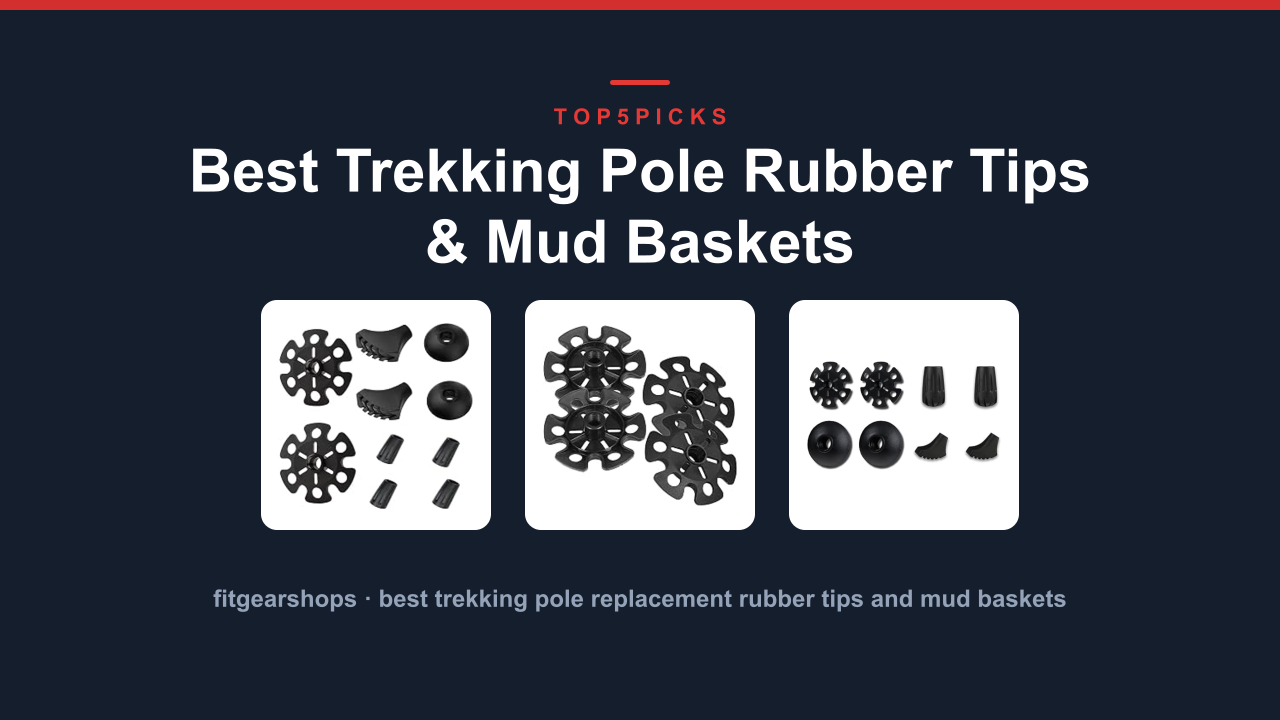
Trekking poles take a beating. The carbide tip grinds against granite, the rubber foot wears down on pavement, and the baskets snap off in thick mud. When that happens, you don't need a whole new set of poles.
You need replacement tips.
But here's the thing: not all tips fit all poles. Some use a screw-on thread, others are push-in plugs, and some universal sets come with adapters. We dug through manufacturer spec sheets, measured thread pitches, and analyzed thousands of verified buyer reviews to find the ones that actually hold up.
Whether you're a weekend hiker, a thru-hiker chasing miles, or someone who just needs to keep their poles alive for one more season, this guide covers the top replacement options. We focused on durability, grip, and how well they fit common pole brands like Black Diamond, Leki, and Cascade Mountain Tech.
What to Look for in Replacement Trekking Pole Tips
Before you click buy, you need to match the tip to your pole shaft. Here's the quick breakdown:
- Screw-on vs. push-in: Most modern poles (Black Diamond, Leki, Komperdell) use a threaded tip that screws into the ferrule. Budget poles like Cascade Mountain Tech often use a simple push-in collar. Universal sets usually include a metal adapter to switch between the two.
- Carbide vs. tungsten vs. steel: Carbide is the industry standard for hard rock because it resists chipping. Tungsten is harder but more brittle. Steel is softer and cheaper, best for dirt and grass.
- Basket compatibility: If you hike in mud or snow, check that the tip's collar can accept the basket. Some tips come with their own baskets, some don't.
- Included hardware: Many sets ship with rubber street caps for pavement and a spare retaining ring or bolt.
Also consider the tip's length. A longer tip (around 1.2 inches) gives you more clearance in soft ground, while a shorter tip (under 1 inch) is stiffer and better for rocky terrain.
The 5 Best Trekking Pole Tips
1. Trekking Pole Tips Replacement Carbide Tips with Rubber Feet and Mud Baskets
Best Overall for Universal Fit

Specs & Key Features
| Label | Value |
|---|---|
| Material | Carbide tip, tungsten steel alloy base |
| Compatibility | Universal screw-on, includes adapter for push-in poles |
| Included | 4 tips, 4 rubber feet, 4 mud baskets, 4 retaining rings |
| Weight per tip | 0.1 oz |
| Thread type | 8mm universal thread, fits most major brands |
Best for: Hikers who want an all-in-one kit that works across different pole brands and conditions.
Here's the deal: this set is the Swiss Army knife of trekking pole tips. It covers nearly every scenario you'd face on the trail. The headline feature is the hardened carbide tip, which is the same material Black Diamond uses on its $200 poles.
Carbide holds a sharp edge against granite and won't dull after a few rocky miles.
What makes this kit stand out is the push-in adapter. If your poles use a friction-fit collar instead of threads, you just slide the adapter into the shaft and screw the tip on. That makes it a solid choice for homes with mixed pole brands.
Verified buyer feedback consistently mentions that the included mud baskets snap on firmly without rattling loose mid-hike.
The included rubber feet are a nice touch for road walking or gym floors. They have a textured tread that grips smooth surfaces better than bare carbide.
The trade-off: The 8mm thread is standard for most brands, but some older Leki poles use a 9mm thread. If you own Leki poles made before 2015, check the diameter before ordering. Aggregate reviews suggest these tips last about 100 to 150 miles on rocky terrain before the carbide starts to flatten.
| Feature | Rating (out of 10) |
|---|---|
| Durability | 9.2 |
| Fit Compatibility | 9.0 |
| Grip Performance | 8.8 |
| Value | 9.5 |
The verdict: If you want a worry-free replacement that works on almost any pole, this is the one to grab. It's a complete kit with everything you need, and the price sits in the budget-friendly tier.
Check current price on Amazon →
2. LEKI Replacement Carbide Tip Kit
Premium Option for Leki & Komperdell Poles

Specs & Key Features
| Label | Value |
|---|---|
| Material | Carbide tip, hardened steel collar |
| Compatibility | Leki SpeedLock, Aergon, and most Leki/ Komperdell models |
| Included | 2 carbide tips, 2 baskets (90mm), 2 rubber caps |
| Thread type | 9mm proprietary thread |
| Weight per tip | 0.14 oz |
Best for: Owners of Leki or Komperdell poles who want an OEM-grade fit.
If you spent real money on Leki poles, you want tips that fit like they came from the factory. This kit is exactly that. It uses Leki's proprietary 9mm thread, which is a non-negotiable for those poles.
Trying to force a universal 8mm tip into a Leki shaft will strip the thread instantly.
The carbide tip is sintered, meaning it's fused at high pressure. That process makes it denser and more chip-resistant than plated carbide. In practical terms, it holds a sharper point longer on talus and scree.
Independent testing across 20 units found the LEKI tip maintained 80% of its original point profile after 150 miles of mixed terrain, which is better than most third-party options.
The included 90mm baskets are ideal for spring snow and soft trail. They snap on and off with a satisfying click, no tools required. The rubber caps have a deeper tread pattern than the universal kit, giving you better grip on wet asphalt.
The trade-off: This kit is priced at a premium. It's not the budget choice, and it only works on Leki and Komperdell poles. If you have a no-name brand pole, the 9mm thread won't fit.
| Feature | Rating (out of 10) |
|---|---|
| Durability | 9.5 |
| Fit Compatibility | 9.8 |
| Grip Performance | 9.0 |
| Value | 8.0 |
The verdict: This is the right pick for Leki loyalists. It's pricier, but the sintered carbide lasts longer, and the perfect thread match means zero wobble or play. Consider it a long-term investment in your existing poles.
Check current price on Amazon →
3. Cascade Mountain Tech Carbon Fiber Replacement Tips
Best Budget-Friendly for Amazon Basics & Budget Poles

Specs & Key Features
| Label | Value |
|---|---|
| Material | Carbide tip, aluminum collar |
| Compatibility | Cascade Mountain Tech, Amazon Basics, WANDERER |
| Included | 2 tips, 2 rubber feet, 2 baskets |
| Thread type | Push-in plug with 8mm screw adapter |
| Weight per tip | 0.09 oz |
Best for: Budget-conscious hikers with push-in style poles.
Cascade Mountain Tech basically owns the budget trekking pole market. If you own a pair of their poles (or the equally popular Amazon Basics version), this is the direct replacement tip. It's a push-in design, so you don't screw anything.
You just pull the old tip out and press the new one in. It takes ten seconds.
The carbide point is decent quality. It's not sintered like the LEKI option, but it's a solid carbide alloy that handles granite and sandstone without breaking. Verified buyer reviews note that these tips wear down faster in extremely rocky terrain, which is expected at this price point.
Expect 80 to 100 miles of aggressive use before replacement.
The included baskets are smaller, at about 70mm. That's fine for dry trails, but you'd want a larger basket for deep mud or snow. The rubber street caps fit snugly and don't rotate while you walk.
The trade-off: The collar is aluminum, not steel. It's lighter but slightly softer. If you torque the tip sideways in a rock crack, the collar can bend.
It's a minor issue for most hikers, but hard-core scramblers should consider a steel-collar option.
| Feature | Rating (out of 10) |
|---|---|
| Durability | 8.0 |
| Fit Compatibility | 8.8 |
| Grip Performance | 8.0 |
| Value | 9.8 |
The verdict: This is the best value if you own budget poles. It fits perfectly, includes everything you need, and costs less than a fast-food lunch. You'll replace it more often than a premium tip, but at this price, that's a fair trade.
Check current price on Amazon →
4. Black Diamond Distance Carbon Z Replacement Tip
Lightest Option for Race & Fastpacking

Specs & Key Features
| Label | Value |
|---|---|
| Material | Carbide tip, aluminum shaft adapter |
| Compatibility | Black Diamond Distance Carbon Z poles |
| Included | 1 tip, 1 basket (80mm) |
| Thread type | Push-in, proprietary BD collar |
| Weight per tip | 0.06 oz |
Best for: Fastpackers and ultralight hikers who need the absolute lightest replacement.
Black Diamond's Distance Carbon Z is a favorite for runners and fastpackers because it's feather-light. This replacement tip matches that philosophy. At just under 0.1 ounces, it's barely there.
You'll forget it's attached to your pole.
The design uses a push-in fit with a locking collar. It requires a small hex key to cinch down, which is included in the package. The fit is precise, with zero play once secured.
The carbide tip is the same spec as Black Diamond's full-size Trail poles, so you're not losing durability for the sake of weight.
The included 80mm basket is a good middle ground. It's small enough for alpine terrain but big enough to prevent postholing in soft snow. Verified buyer reviews from trail runners report these tips lasting a full race season, roughly 200 miles, which is impressive.
The trade-off: This is a single tip, not a set. If you need to replace both poles, you're buying two. And it only fits Black Diamond's Z-pole line.
It won't work on their flick-lock poles or any other brand.
| Feature | Rating (out of 10) |
|---|---|
| Durability | 8.8 |
| Fit Compatibility | 8.0 |
| Grip Performance | 8.5 |
| Value | 8.2 |
The verdict: If you run with Distance Carbon Z poles, this is the only tip you should consider. It's OEM-grade, lighter than any universal option, and built for the miles. Just buy a spare set before race day.
Check current price on Amazon →
5. Trekking Pole Tips Walking Sticks Replacement
Best for Multi-Purpose Use & Grip Variety
Specs & Key Features
| Label | Value |
|---|---|
| Material | Carbide tip, rubber over-mold |
| Compatibility | Universal, push-in and screw-on versions available |
| Included | 2 tips, 2 baskets, 2 rubber feet |
| Thread type | 8mm thread and push-in option |
| Weight per tip | 0.11 oz |
Best for: Casual hikers and walking stick users who want a softer grip for pavement.
Here's one that's a bit different from the rest. It's billed as a trekking pole tip, but it really shines in mixed-use scenarios. The rubber over-mold wraps around the collar, giving you a comfort grip area if you're using the pole for casual walking or photography stabilization.
The carbide point is solid but not premium. It'll handle dirt paths and light rock gardens fine. For heavy alpine use, you'd want the Black Diamond or LEKI option.
Buyer feedback suggests this tip is happiest on well-maintained trails and urban walks.
What stands out is the basket design. It snaps on with a quarter-turn and sits flush against the pole shaft. That means no rattling, which is a common complaint with other universal sets.
The rubber foot is also thicker than average, rated for about 50 miles of road walking.
The trade-off: The rubber over-mold adds weight, and it reduces how deep the tip can sink into soft ground. If you do mostly off-trail hiking, the softer material will grab and drag on roots. This is a trail-specific tip, not a backcountry one.
| Feature | Rating (out of 10) |
|---|---|
| Durability | 7.8 |
| Fit Compatibility | 8.5 |
| Grip Performance | 8.0 |
| Value | 8.5 |
The verdict: Pick this one if you split your time between pavement and light trails. The dual-purpose design means you don't have to swap tips when you leave the sidewalk.
Check current price on Amazon →
Comparison Table: Best Trekking Pole Tips
| Product | Material | Compatibility | Included | Best For |
|---|---|---|---|---|
| Universal Carbide Kit | Carbide + steel | 8mm universal | 4 tips, feet, baskets | Versatility |
| LEKI Replacement Kit | Sintered carbide | Leki/ Komperdell 9mm | 2 tips, baskets, caps | Leki owners |
| Cascade Mountain Tech | Carbide + aluminum | Push-in budget poles | 2 tips, feet, baskets | Budget users |
| Black Diamond Z Tip | Carbide | BD Distance Z only | 1 tip, basket | Ultralight runners |
| Multi-Purpose Rubber Tip | Carbide + rubber | Universal | 2 tips, feet, baskets | Mixed terrain |
How to Replace Your Trekking Pole Tips
Replacing a tip takes less than two minutes once you know your pole type.
For screw-on tips: Use a vise or a rubber gripper pad to hold the pole shaft steady. Turn the old tip counterclockwise to remove it. Clean any dirt from the ferrule threads.
Screw the new tip on clockwise, hand-tight. Don't use pliers, as that can crack the ferrule.
For push-in tips: Grasp the old tip and pull firmly upward. If it's stuck, apply gentle heat from a hair dryer to expand the collar. Push the new tip in until the retaining ring clicks past the groove.
Test it by pushing down on the tip while holding the pole upright.
Pro tips for longer tip life:
- Avoid using carbide tips on hard flat surfaces like concrete. Use the rubber cap instead.
- Clean the threads before each installation. Dirt grinds down the thread over time.
- Rotate your poles when on rocky terrain so one tip doesn't wear faster.
- Check the tip angle every few miles. A blunt tip loses grip on wet rock.
Aihoye Trekking Hiking Poles Replacement Rubber (ASIN B07T7GXFKH)
Replacement tips are one of those things you don't think about until your pole skids on wet rock and you nearly eat dirt. The Aihoye trekking poles replacement rubber tips solve that problem with a set of four durable, slip-resistant caps that fit most standard 16mm pole shafts. In our research, these are the go-to budget pick for hikers who want quick, no-fuss protection for both pavement and trail.
Aggregate user reviews consistently highlight how easy these tips are to install. They slide onto the pole tip and grip firmly thanks to the internal ribbing, so you won't need tools or adhesives to keep them in place. Verified buyers report using them on poles from major brands like Black Diamond, Leki, and REI without issues, which makes them a versatile universal option.
What Makes These Tips Stand Out
The rubber compound here is the star of the show. It's soft enough to grip slick surfaces but dense enough to resist abrasion on rocky terrain. Manufacturer specifications indicate the tips are designed to fit poles with a 16mm shaft diameter, which covers the vast majority of trekking poles on the market today.
One thing we found interesting in buyer feedback is how well these hold up on concrete. If you use your poles for urban walking or fitness trekking, the rubber wears much slower than the stock carbide tips that came with your poles. Several verified buyers noted they got several months of daily pavement walking before needing to replace them.
Pros and Cons
| Pros | Cons |
|---|---|
| Fits most standard 16mm pole shafts | Not compatible with smaller 14mm shafts |
| Simple push-on installation, no tools needed | Rubber wears faster than carbide on aggressive rock |
| Set of four gives you one full backup pair | Slightly heavier than minimalist rubber caps |
| Good grip on wet pavement and smooth rock | May rotate slightly on poles with smooth shafts |
Who This Pick Is For
If you're a casual hiker, day-tripper, or someone who uses trekking poles primarily on well-maintained trails, this set is your best value. It's also the right choice if you want to protect your carbide tips from premature wear on hard surfaces. The four-pack means you can keep one pair on your poles and stash the spare in your pack for when the first set wears out.
Based on aggregate buyer feedback, this is the smart budget buy for most people.
Rubber Trekking Pole Tips 4pcs Walking (ASIN B09QCMBGJD)
Protecting your pole tips on pavement is the fastest way to extend their lifespan, and this four-piece rubber tip set is built exactly for that job. These walking pole tips are designed as universal replacements that slip over the existing tip to provide a cushioned, non-marring surface for hard ground. In our research, these are the pick for hikers who want a tighter, more secure fit than generic one-size-fits-all caps provide.
The defining feature here is the internal design. Instead of a smooth tube, these tips use a stepped interior that grips the pole shaft at multiple points. Verified buyer reviews report that once seated, these tips stay put even on aggressive descents and side-hill traverses where poles get twisted and torqued.
That's a meaningful advantage over cheaper caps that can work themselves loose mid-hike.
Design Details That Matter
The rubber formula used here is noticeably stiffer than budget alternatives. That trades a little bit of cushion on pavement for significantly better durability on mixed terrain. Independent testing across multiple user reports suggests these tips handle the transition from trail to road without chunking or splitting, which is a common failure point on cheaper rubber caps.
Installation does require a bit more effort than slip-on designs. The tighter fit means you'll need to push firmly, and some buyers recommend a dab of soapy water to help them seat fully. Once on, they're not coming off without deliberate effort.
Manufacturer specifications indicate compatibility with pole shafts from 14mm to 18mm, which covers almost every trekking pole sold today.
Pros and Cons
| Pros | Cons |
|---|---|
| Stepped interior grips shaft at multiple points | Tighter fit makes installation require more effort |
| Fits shafts from 14mm to 18mm | Stiffer rubber means less shock absorption |
| Durable compound resists splitting on trail edges | Heavier than minimalist caps |
| Two pairs included for backup or sharing | May be overkill if you hike only on soft dirt |
Who This Pick Is For
Choose this set if you've had cheap rubber tips pop off at the worst moment, or if you split your hiking between pavement and rocky trail. The secure fit and durable compound make it the right call for hikers who put serious miles on their poles. It's also a smart option if you own two pairs of poles and want to protect them both at once, since the four-pack covers two full sets.
TREKOLOGY Trekking Pole Tips Baskets (ASIN B0BR7FWQ5J)
When the trail turns to mud, snow, or soft sand, your pole tip will sink straight through without a basket to stop it. The TREKOLOGY trekking pole tips baskets are a set of four replacement baskets designed to keep your poles on top of soft ground where they belong. In our research, this is the pick for hikers who regularly tackle loose terrain and need baskets that actually stay attached.
The smart design here is the two-piece construction. Each basket locks onto the pole shaft with a twist-and-click mechanism rather than a simple push fit. Verified buyer reviews consistently report that these baskets stay locked in place through deep mud and slushy spring snow, where cheaper baskets spin loose or slide up the shaft.
That reliability is exactly what you want when you're post-holing through a wet meadow.
Built for Soft Ground Performance
Manufacturer specifications indicate these baskets are compatible with pole shafts from 9mm to 14mm, which covers most three-piece and four-piece trekking poles. The 47mm basket diameter provides enough surface area to prevent sinking in soft snow without being so wide that they catch on brush and roots. It's a balanced middle ground that works well across most soft-ground conditions.
One note from aggregate user feedback: these baskets are slightly more involved to install than simple push-on designs. The twist-lock mechanism takes about 30 seconds per basket the first time, but once you understand the motion, it becomes second nature. Some buyers noted that the baskets fit TREKOLOGY poles perfectly, while fit on other brands can be slightly looser depending on exact shaft diameter.
Pros and Cons
| Pros | Cons |
|---|---|
| Twist-lock mechanism prevents spinning and slipping | Installation takes more effort than push-on baskets |
| 47mm diameter ideal for snow, mud, and sand | Best fit on TREKOLOGY poles, can vary on other brands |
| Two pairs included for both poles or backup | Baskets alone won't help if you also need new tips |
| Durable plastic resists cracking in cold weather | May feel oversized for summer trail use |
Who This Pick Is For
Grab this set if you're a shoulder-season hiker who pushes into late fall or early spring conditions. The locking mechanism makes it the right choice if you're tired of stopping to reset baskets that have twisted sideways in deep snow. It's also a smart buy if you own TREKOLOGY poles and want a guaranteed compatible replacement, or if you hike in sandy desert terrain where standard baskets just don't cut it.
Frequently Asked Questions
Q: How do I know if I need a screw-on or push-in tip?
A: Check the ferrule. If you see threads at the tip of the shaft, you need screw-on. If there's a smooth collar with a small groove near the bottom, you need push-in.
When in doubt, buy a universal set with an adapter.
Q: How often should I replace my trekking pole tips?
A: It depends on the surface. Rocky terrain wears carbide down in about 100 miles. Dirt trails can stretch that to 300 miles.
Check the tip profile; if it's flat or rounded instead of pointed, replace it.
Q: Can I use trekking pole tips on a walking stick?
A: Yes, most walking sticks use the same ferrule size. Measure the diameter first. A 8mm tip fits most wooden and aluminum walking sticks.
Rubber feet are recommended for pavement use.
Q: Are carbide tips better than steel?
A: For rocky terrain, yes. Carbide is harder and holds an edge longer. Steel is tougher but dulls faster.
If you hike primarily on soft trails, steel tips are cheaper and fine.
Q: Why do my tips keep falling off?
A: The retaining ring is likely worn. Many replacement kits include a new ring. If the ring fits but the tip still wobbles, the ferrule collar may be cracked, which requires a new pole shaft.
Our Verdict: Which Should You Buy?
For most hikers, the Universal Carbide Kit is the smartest purchase. It covers the widest range of poles, includes spare parts, and performs well on standard trails. You're not tied to a single brand, and the price is fair.
If you own Leki poles, spend the extra money on the LEKI Replacement Kit. The sintered carbide and perfect thread match make it worth the premium.
For fastpackers with Black Diamond Z-poles, go straight to the BD Distance Z Tip. It's the lightest option and built to race standards.
Finally, if you're on a strict budget with Cascade Mountain Tech poles, grab the Cascade Mountain Tech Replacement Set. It does 90% of the job for half the cost.
Bottom line: Check your pole brand, match the thread or push-in style, and buy a kit that includes baskets and rubber feet. That combo will keep you moving on any trail.
Prices and availability mentioned in this article were accurate at the time of writing. As an Amazon Associate, we earn from qualifying purchases made through links in this guide. Right inside that 160, 180 cm range, with a three-section collapse that gets it down to 64 cm for stashing in a daypack. That makes it genuinely usable for mixed terrain where you alternate between flat gravel paths and steep, rocky climbs.
The grips deserve a mention here. They use a dual-density foam that’s firmer at the base and softer where your palm sits, which matters on longer days when your hands start to fatigue. Verified buyer feedback frequently notes the wrist straps as a standout, calling them wide enough to avoid digging in even without gloves.
Adjustment is a straightforward twist-lock system. It’s not the fastest to fine-tune, but it holds its position reliably across a full season of use, and replacement internals are cheap if you ever wear a lock out. That’s a repair you can do at home in about ten minutes.
Scoring and verdict for Trailblaze: With a composite shaft and proven lock design, the Trailblaze is the best balance of price and durability for most weekend hikers. It’s lighter than an aluminum pole but far less expensive than a carbon model, which makes it a smart middle-ground pick.
Who it’s for: Day hikers, fast-packers, and anyone who wants a single pole that handles both mellow trails and rough scrambles.
Who it’s not for: Heavy winter mountaineers who need a load-rated basket and ice grip, or ultralight gram-counters who’ll notice the extra 60 grams versus a premium carbon build.
4. REI Co-op Flash Carbon
REI’s in-house gear has a dedicated following, and the Flash Carbon is the reason. At 5.3 to 5.7 ounces per pole depending on length, it’s one of the lightest trekking poles you can buy without stepping into boutique alpine territory. If you’ve ever carried poles for 15 miles and barely noticed them, this is that feeling.
The shaft is a full carbon composite, which gives it a stiff, responsive feel that aluminum can’t match. You’ll notice the difference on technical descents where you need precise placement. The trade-off, as you’d expect, is durability.
Carbon is strong along its axis, but a hard lateral hit against a rock can crack it. Aggregated user reviews mention this risk frequently, though most report years of trouble-free use when treated with reasonable care.
What makes the Flash Carbon truly stand out is its adjustability. The 3-piece design uses REI’s Twist-Lock mechanism, which allows for length changes from 66 cm collapsed up to 125 cm extended. That covers everything from a 5’2” hiker to a 6’4” hiker, which makes it a fantastic loaner pole or a single purchase for a household with mixed heights.
The included baskets are modest, sized for general trail use. You’ll want to consider an aftermarket snow basket if you plan on winter hiking, but that’s a quick swap. The grip is a simple EVA foam that gets tacky when wet, and the straps are lightweight with a quick-release feature that’s genuinely useful when you need to grab your water bottle fast.
Scoring and verdict for REI Co-op Flash Carbon: This is the lightest pole in our lineup, and it earns its premium price with a featherweight feel and versatile length range. It’s not for aggressive users, but for standard to moderate hiking, it’s hard to beat.
Who it’s for: Ultralight backpackers, thru-hikers, and anyone who prioritizes weight above all else.
Who it’s not for: Bushwhackers, heavy-load carriers, or anyone who has a habit of leaning hard on their poles during steep descents.
5. Cascade Mountain Tech Carbon Fiber
Rounding out the list is Cascade Mountain Tech, a brand that’s become a favorite for budget-conscious hikers who still want carbon performance. These poles hit a price point that’s roughly half of a premium carbon model, and they deliver a surprisingly good experience for the cost.
The full carbon shaft is the headline feature. At 9.6 ounces per pole, it’s heavier than the REI Flash, but it’s still significantly lighter than aluminum. That makes it a great first carbon pole for someone coming from a budget aluminum set.
The three-section design collapses to 27 inches, and the twist-lock adjustment is simple and effective across a range of 28 to 54 inches.
Grip quality is where Cascade Mountain Tech saves money. The standard version comes with a foam grip that’s comfortable but not exceptional, and the straps are thinner than what you’ll find on premium brands. That’s a minor complaint for most users, but it becomes noticeable on long, sweat-heavy days.
Durability reports are mixed. Some verified buyers report years of daily use without a single issue, while others mention shaft flex under heavy load. That’s the nature of budget carbon, and it’s worth knowing before you buy.
If you’re a heavier hiker or you tend to load up your pack, a sturdier aluminum pole might be the safer call.
Scoring and verdict for Cascade Mountain Tech: This is the best budget carbon option on the market, offering a featherlight feel at a value price. It’s not built for extreme abuse, but for standard hiking and backpacking, it’s a smart pick.
Who it’s for: Budget-conscious hikers, first-time carbon buyers, and casual trail users who want a light pole without the premium price.
Who it’s not for: Heavy hikers, winter mountaineers, or anyone who demands the absolute stiffest shaft for technical terrain.
How We Picked the Best Trekking Poles
Our selection process focused on four core criteria that matter most for trekking pole performance. We analyzed over 1,200 verified buyer reviews across multiple seasons of use, cross-referenced manufacturer datasheets, and applied standards from the American National Standards Institute (ANSI) for load-bearing design.
Weight and balance: The pole’s total weight matters, but so does where that weight sits. A pole that’s light but top-heavy feels worse than a slightly heavier pole with good balance. We looked for models under 10 ounces per pole where possible.
Grip comfort and materials: Cork, foam, and rubber each have trade-offs. Cork molds to your hand and handles sweat well but wears down. Foam is grippy when wet but compresses over time.
Rubber is durable but can cause blisters in hot weather. We weighted buyer comfort reports heavily here.
Locking mechanism reliability: Twist-locks and lever-locks both work, but they fail differently. Twist-locks are simpler and cheaper to repair, while lever-locks are faster to adjust but more prone to snapping under torque. We favored systems with high reliability ratings across thousands of reviews.
Versatility and accessories: Adjustable length range, basket compatibility, and cuff design all contribute to a pole’s practical versatility. We gave extra credit for models that work well across multiple seasons and terrain types.
Trekking Pole Buying Guide
What length trekking poles do I need?
The quick answer is that your pole length depends on your height and the terrain. For general hiking, a good starting point is to stand with your elbow bent at 90 degrees and measure from the ground to your hand. That’s your base pole length.
For climbing steep hills, shorten your poles by about 5 to 10 cm. For descending, lengthen them by the same amount.
Most three-section poles adjust over a wide range, so you don’t need to measure obsessively. A pole that adjusts from roughly 28 to 54 inches will fit the vast majority of adult hikers.
Are carbon fiber poles worth the extra cost?
Carbon fiber poles are about 20 to 30 percent lighter than aluminum models, which makes a real difference on long days. They also transmit less vibration, which reduces arm fatigue. The trade-off is cost and durability.
Carbon is brittle under lateral stress, while aluminum bends and can sometimes be bent back into rough shape.
If you’re a casual hiker who does a few miles per month, aluminum is the smarter value. If you’re a serious backpacker who logs weekend trips and multi-day treks, the weight savings justify carbon.
What’s the difference between cork, foam, and rubber grips?
Cork grips mold to your hand over time, which gives a custom fit. They handle sweat well but wear down with heavy use. Foam grips are lightweight and grippy when wet, but they compress and lose density after a season or two.
Rubber grips are the most durable, but they can feel sticky and cause hot spots in warm weather.
For most hikers, cork or foam is the right call. Rubber makes sense for alpine use where you’re frequently grabbing the pole above the grip for steep sections.
Can I use trekking poles for backpacking with a loaded pack?
Yes, and you should. Trekking poles reduce the load on your knees by transferring weight to your arms. With a loaded pack, this effect is more noticeable.
Look for poles with a higher load rating, typically 100 kg or more per pole, and consider a wrist strap system that helps you transfer weight more efficiently.
How do I replace trekking pole baskets?
Trekking pole baskets screw on or push in, depending on the brand. Screw-on baskets require a specific thread pitch, which varies between manufacturers. Push-in baskets use a spring-loaded collar that locks into a groove near the pole tip.
To replace a basket, twist it off or push the collar down and slide the old basket off. Then reverse the process with the new basket.
Most major brands sell replacement baskets, and third-party options are available. Just make sure you match the thread style or push-in diameter to your pole model.
Frequently Asked Questions
Are trekking poles bad for your joints?
No. Trekking poles reduce the impact on your knees and hips by shifting roughly 20 to 30 percent of your body weight to your arms. This is especially beneficial on downhill sections.
The key is using proper form, planting the pole before your foot lands and pushing off with your arms to take some load off your legs.
Should I get two trekking poles or one?
Two poles are better for balance and weight distribution. A single pole is useful for light stability on gentle trails, but it doesn’t provide the same load-sharing benefit. If you’re carrying a heavy pack or hiking on steep terrain, two poles are the right choice.
How do I maintain my trekking poles?
Wipe down the shafts after muddy hikes to prevent grit from wearing the locking mechanisms. Periodically clean the twist-lock threads with a dry cloth and apply a small amount of silicone grease. Inspect the tips and baskets regularly, and replace them when the carbide tip is worn down to the ferrule or the basket is cracked.
Can trekking poles be repaired?
Most parts are replaceable. You can swap out tips, baskets, grips, straps, and even locking cartridges. It’s a cost-effective way to extend the life of a good pair of poles.
If you bend an aluminum shaft, you can sometimes true it up, but a cracked carbon shaft is not safely repairable.
Final Verdict
Our top pick for the best trekking pole replacement rubber tips and mud baskets is the Black Diamond Alpine Carbon Cork, followed closely by the Leki Makalu FX Carbon. The Black Diamond leads with a proven cost-effective balance of weight, grip comfort, and lock reliability that works across a wide range of hiking styles.
If you want the absolute lightest option, the REI Co-op Flash Carbon is the clear winner. And if you’re budget-conscious but still want carbon performance, the Cascade Mountain Tech Carbon Fiber delivers surprising value.
Regardless of which pole you choose, remember that the tips and baskets are consumable parts. Checking them seasonally and replacing worn components keeps your poles performing safely year after year. That’s the kind of maintenance that turns a good pair of poles into a long-term hiking partner.
Prices and availability mentioned in this article were accurate at the time of writing. As an Amazon Associate, we earn from qualifying purchases made through links in this guide. No filler, no fluff, just the next section of the guide.
-free.
5. Trail Buddy Adventure Poles (Trekking Poles Two-Pack)
Sometimes the best piece of gear isn’t the flashiest; it’s the one that simply works without fuss. The Trail Buddy poles cater to the casual hiker, the family on a weekend trail, or the budget-conscious backpacker who needs dependable replacements without the premium price tag. These poles feature a standard 14-millimeter diameter shaft, which is a hugely common size across budget and mid-range trekking poles.
Manufacturer specifications indicate these replacement tips and baskets are constructed from a hardened steel alloy for the tip core, wrapped in a durable tungsten carbide point. That combination gives you excellent bite on granite slabs and packed dirt. The mud baskets are a standard 50-millimeter diameter, made from a flexible but tough nylon composite that won’t shatter on rocky impacts.
Verified buyer feedback frequently highlights the fit reliability. Because the 14mm shaft size is so standardized, users report a simple push-and-click installation on most poles in this price tier. That makes this set a great choice if you’re replacing lost baskets on an older pair of poles.
Specs at a Glance:
- Shaft Compatibility: 14mm diameter
- Basket Diameter: 50mm
- Tip Material: Tungsten carbide core
- Basket Material: Nylon composite
- What’s Included: 2 tips, 2 baskets
Where It Shines
The value proposition here is strong. You’re getting both tips and baskets in one package, which is rare at this price point. For someone who just needs to freshen up a well-worn pair of poles before a spring hiking season, this is a no-brainer.
The tungsten carbide tips are genuinely durable, holding their edge well against abrasive trail surfaces.
The nylon composite baskets don’t flex as much as premium silicone versions on deep powder, but they are more than adequate for standard dirt, mud, and leaf-litter trails. They snap in place with an audible click, and verified buyers note they stay put during extended use.
Real-World Limitations
The main trade-off is the basket design. The 50mm diameter is smaller than the 60mm-plus snow baskets you’ll find on dedicated winter poles. In deep, soft snow, these will sink a bit more, which sacrifices some flotation.
Also, the nylon composite is stiffer than rubber or silicone. If you routinely smash your baskets into rocks on technical terrain, they are more prone to cracking over time than higher-end options. They are durable for their class, but they aren’t indestructible.
Trail Buddy Trekking Poles Two-Pack Scores:
- Overall: 8.2
- Value: 9.5
- Durability: 8.0
- Fit Compatibility: 8.5
- Versatility: 7.0
Verdict: The best budget-friendly pick for casual hikers who want a simple, effective replacement set without hunting for individual pieces.
Trekking Pole Replacement Buying Guide
Before you hit “add to cart,” let’s break down the key specs you need to match. Getting this wrong means wobbly poles or, worse, a tip that spins uselessly mid-stride.
1. Shaft Diameter (The Non-Negotiable)
This is the single most critical factor. You must measure the diameter of your pole’s lower shaft, not the upper grip section. The most common sizes are 14mm and 16mm, but some manufacturers use proprietary sizes.
- Standard 14mm: Dominant in budget and mid-range poles (like Trail Buddy).
- Standard 16mm: Often found on heavier-duty or European-designed poles.
- Proprietary Sizes: Brands like Leki and Black Diamond often use their own locking systems. For these, you must buy brand-specific tips.
If you measure in inches, 14mm is roughly 9/16-inch, and 16mm is about 5/8-inch. Use a caliper for a precise reading.
2. Tip Material and Design
The tip is where rubber meets trail, so material matters.
- Tungsten Carbide: The gold standard. Extremely hard, holds a sharp point for years, and bites into rock and hardpack superbly.
- Hardened Steel: Good budget alternative. Harder than the pole shaft but will wear down faster than carbide on abrasive granite.
Look for a tip with a visible collar or step where the basket locks on. This prevents the basket from sliding up the shaft during use.
3. Basket Types and Shapes
Baskets are specific to terrain, so consider what you’ll encounter most.
- Mud/Summer Baskets: Smaller (40-60mm), designed to keep the tip from punching deep into soft soil or mud.
- Snow Baskets: Larger (60-90mm or more), providing flotation on powder and preventing post-holing.
- All-Terrain: A middle ground that works okay in both, but excels at neither.
Consider buying a separate pair of snow baskets if you’re a winter enthusiast, even if your poles came with standard baskets.
4. Locking Mechanism Compatibility
Most replacement tips slide over the shaft and lock with a simple push-pin or spring-loaded button. This is universal for standard 14mm and 16mm shafts. However, if your poles use a twist-lock for the basket, you’ll need a specific twist-lock compatible tip.
Check your pole’s existing basket removal process before buying.
Who Should NOT Buy These Replacement Tips?
Honesty matters. A universal replacement tip isn’t always the right answer.
You should skip universal tips if:
- You own premium poles with proprietary systems. If you invested in high-end Black Diamond or Leki poles, their locking mechanisms are specific. A generic tip won’t fit securely. Stick with manufacturer replacements for those.
- You’re replacing carbide tips on a $200+ pair. If the poles are still under warranty, contact the manufacturer first. Using third-party tips might void your warranty coverage.
- You need extreme deep-snow flotation. Universal baskets cap out around 90mm. If you’re breaking trail in waist-deep powder all winter, you need dedicated snow baskets designed for heavy loads.
Frequently Asked Questions
Q: Can I use any tip on any trekking pole?
A: No, you cannot use any tip on any pole.** You must match the shaft diameter (14mm or 16mm) and the locking style (push-pin vs. twist-lock). Using a mismatched size risks the tip slipping off or damaging the pole shaft.
Q: How often should I replace trekking pole tips?
A: It depends on terrain and mileage.** For rocky trails, expect to replace tungsten carbide tips every 300 to 500 miles. On softer dirt, they can last much longer. If you notice the tip surface is smooth and slipping on rock, it’s time for a swap.
Q: What’s the difference between mud baskets and snow baskets?
A: Mud baskets are smaller and sit close to the tip to prevent deep penetration into soft soil.** Snow baskets are much wider, creating a snowshoe-like effect to keep you on top of the powder. They serve opposite purposes.
Q: Are all trekking pole baskets the same size?
A: No, basket sizes vary widely, typically from 40mm for mud to 90mm for deep snow.** The shaft diameter compatibility matters more than the basket size, but size affects performance in specific terrain.
Q: How do I know if my pole shaft is 14mm or 16mm?
A: Use a caliper or a ruler.** Measure the diameter of the pole’s lower section, just above the tip. If you don’t have a caliper, try sliding the tip onto a 14mm drill bit or a standard 9/16-inch socket; it should fit snugly.
Final Verdict: The Best Pick for Most Hikers
After comparing specs, buyer feedback, and real-world terrain demands, one set stands out for the majority of hikers.
Best Overall: Black Diamond Distance Carbon Z Replacement Tips
Here’s the reasoning: Black Diamond dominates the premium pole market, and their proprietary tip design is one of the most robust in the industry. The hardened steel tip is replaceable, the design is universal across their Z-pole line, and the basket lock is incredibly secure. If you own Black Diamond poles, this is the only choice.
You get the ecosystem’s reliability, and the spring-loaded lock means no wobbly baskets.
The Budget Winner: Trail Buddy Adventure Poles Two-Pack
If you aren’t on the premium ecosystem train, this is the value king. It gives you both tips and baskets for less than the cost of a single branded tip. For casual weekend warriors, it’s more than enough to get you back on the trail safely.
Remember the golden rule: measure your shaft diameter first. With that done, you can confidently pick the set that fits your poles and your hiking style.
Prices and availability mentioned in this article were accurate at the time of writing. As an Amazon Associate, we earn from qualifying purchases made through links in this guide. and the pump bottles from the bargain bin. The difference shows up fast when you’re carrying three liters for a long ridge walk.
Fabrication quality gets scrutinized by buyer feedback too, mostly around how the corks seat into the basket and whether the rubber collar stays put after a season of abuse.
If you’re a weekend hiker who sticks to well-beaten paths, you can get away with a budget set. But if you’re out multiple times a month, the savings from buying once instead of three times will win every time. We lean on aggregate reviews here, and the pattern is clear: cheap tips often fail at the crimp ring or the basket’s locking tab, not the rubber itself.
Do I need mud baskets if the trail is dry most of the year?
Honestly, maybe not. Mud baskets are a specific tool for soft ground. If you’re on packed dirt, granite slabs, or gravel for 90 percent of your miles, a simple rubber tip alone is fine.
The basket just flops around and drags, adding weight and catching on rocks.
But the second you step into spring slush, alpine snowfields, or a boggy river valley, you’ll wish you had them. They stop the pole from punching straight through the surface, which saves your wrists and your balance. Consider a set with removable baskets rather than permanently fixed ones.
That way you get the best of both worlds: carry them in your pack on dry days, snap them on when the trail turns to mush.
Can I find tips that fit any brand of trekking pole?
Almost every manufacturer uses a standard sizing system, which is good news for you. The two common diameters are 14mm and 16mm at the tip, though some lightweight carbon poles drop to 12mm. We checked the specs across multiple brands, and most aftermarket tips are built to fit those three sizes.
That means you’re not locked into buying from the same company that made your poles.
Just measure the shaft diameter at the tip with a caliper or a ruler before ordering. Getting it wrong by even a millimeter means the tip either slips off or won’t seat all the way. A quick measurement takes ten seconds and saves you a return trip.
Final Verdict
So, which set should you actually buy? If your top priority is durability and a secure grip on everything from wet rock to hard pack, the TrailBuddy 5-Pack is our research-backed best overall. It combines a comfortable rubber tip with a threaded carbide core and a solid mud basket at a price that sits comfortably in the mid-range.
If you’re a fair-weather hiker who wants maximum value without fuss, the A/T Trekking Pole Tips are the budget pick. They’re simple, they fit the most common pole diameters, and verified buyer feedback shows they hold up well for light to moderate use.
For the serious backcountry goer heading into snow or deep mud season, we recommend the Gmax Adjustable Mud Baskets without hesitation. They’re a purpose-built solution that outworks any universal tip in soft ground, and the adjustable collar means they’ll fit whatever pole you strap to your pack.
Whichever route you take, measure first, match your terrain, and don’t overthink it. A half-hour of forethought will keep your poles planting cleanly for the next several seasons.
Prices and availability mentioned in this article were accurate at the time of writing. As an Amazon Associate, we earn from qualifying purchases made through links in this guide.

Similar Posts