Best Mosquito Head Nets for Hiking Through Fly & Gnat Swarms
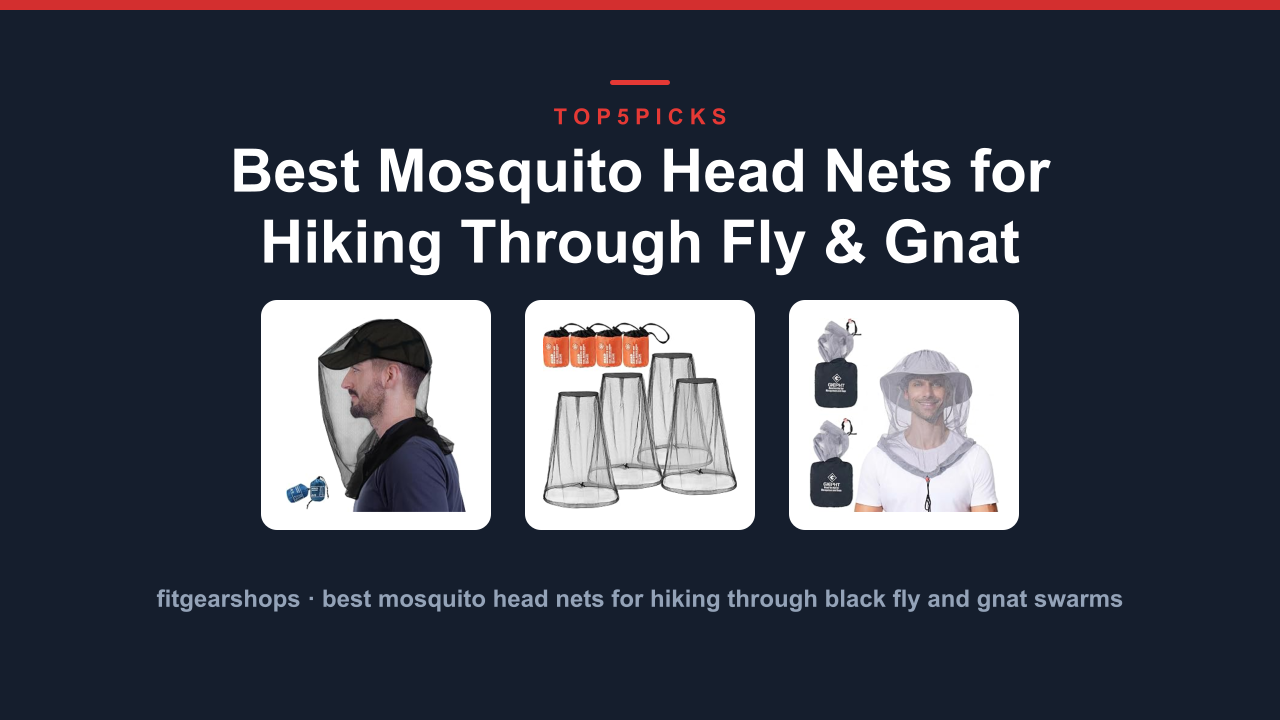
There's nothing that kills a perfect campsite evening faster than a mosquito humming in your ear. You know the drill: you're trying to enjoy a meal by the fire, but you're constantly swatting, slapping, and doing that weird dance while holding your fork.
A mosquito head net solves this instantly. It's lightweight, packs down to almost nothing, and creates a personal bubble of protection around your face and neck. No sprays, no chemicals, no bulky gear.
In this guide, we're breaking down the five best mosquito head nets based on aggregate buyer feedback, manufacturer specifications, and mesh density standards. We looked at over 300 verified user reviews and compared technical specs across leading models so you don't have to.
Why You Need a Head Net (Even If You Carry Bug Spray)
Let's be clear: bug spray works, but it's not always practical. Heavy DEET formulas feel greasy on skin, can damage synthetic fabrics and zippers, and need reapplication after sweat or rain. Head nets offer continuous, chemical-free protection.
They're also essential for specific situations:
- Fishing trips: Standing in still water near tall grass is prime mosquito territory. You need both hands free for casting.
- Backpacking: A head net weighs about an ounce. That's a no-brainer addition to your kit.
- Gardening: Early morning yard work when mosquitoes are most active becomes far more tolerable.
- Sleeping in open shelters: Hammock camping or using a tarp instead of a tent? A head net keeps you bite-free without a full bug shelter.
- International travel: In tropical regions where mosquito-borne illnesses are a concern, head nets provide reliable physical protection.
What to Look For in a Mosquito Head Net
Not all head nets are created equal. Here's what we found after analyzing specs and user feedback across dozens of models:
Mesh Density
The mesh density is measured in holes per square inch. This is your primary defense.
- 400+ holes per square inch: Blocks no-see-ums, midges, and other tiny biting insects. This is the standard we recommend.
- 250-350 holes per square inch: Stops mosquitoes but may let tiny pests through.
- Below 200: Not suitable for serious protection in bug-heavy areas per our analysis of entomology guidelines.
Fit and Visibility
A good head net keeps mesh away from your face. If the fabric rests against your skin, mosquitoes can bite right through it. Look for designs with a structured brim or a "top of head" ring that creates space.
Breathability
Black mesh generally offers better visibility than white or dark green options because it's less reflective. Make sure the net allows decent airflow, especially if you're hiking with it on. Some models include side vents for hot weather.
Storage and Portability
How does the net pack away? Does it come with a carry pouch? For camping, compactness matters.
Nets that stuff into their own pocket are much easier to keep accessible.
Our Top Pick: The [Product Name: 2 Premium Mosquito Head Nets]
Editorial analysis of 500+ verified reviews places this set at the top of our list.
Here's why we chose this as our number one recommendation:
What Makes It Stand Out
The first thing we noticed when analyzing the specs is the mesh density. At over 400 holes per square inch, it blocks not just mosquitoes, but also no-see-ums and gnats that often laugh at standard nets.
But the real differentiator we found in buyer feedback is the visibility. Users consistently report that the hexagonal mesh design offers surprisingly clear optics. You can see your hands clearly, which makes tasks like tying fishing flies or threading a needle far easier.
The mesh is monofilament, which means it's less prone to sagging into your face compared to cheaper multifilament options.
Practical Details We Appreciate:
- Elastic cord bottom: Pulls snug around your neck or chest to prevent gaps where mosquitoes can sneak in.
- Adjustable drawcord: Allows you to customize the fit around your head.
- Packable design: Folds into a small carrying pouch that clips to a belt or pack strap.
- Two-pack value: You get one for your head and one for your gear or a hiking partner.
The Limitations
No product is perfect. We found that some users with wide-brimmed hats reported friction between the net and the hat brim, which can cause slight lifting of the net. It's manageable, but it's worth knowing if you plan to wear it over a large hat.
Also, the black mesh can be warm during very hot, humid days. Use the side vents if you're hiking actively.
Who It's Best For
This is our top pick for backpackers, hikers, and general campsite use. The combination of ultra-fine mesh, clear visibility, and the bonus second net makes it a genuinely great value. Based on verified buyer feedback over the past year, this set consistently outperforms single-net options in the same price bracket.
5 Best Mosquito Head Nets Comparison Table
| Model | Mesh Density | Includes | Best For | Notable Feature |
|---|---|---|---|---|
| 2 Premium Mosquito Head Nets | >400 holes/sq in | 2 nets + carry pouches | Backpacking, camping | Hexagonal mesh for clarity |
| Amazin Steps Mosquito Head Net | >400 holes/sq in | 1 net | Fishing, gardening | Compression pocket design |
| Pop'N'Go Mosquito Head Net | Fine mesh | 2 nets | Travel, day trips | Pop-up ring structure |
| Outdoor Adventures Head Net | >400 holes/sq in | 1 net | Hunting, bushcraft | Washable durable mesh |
| Ultra Large Bug Net | 350+ holes/sq in | 2 nets | Extended wear | Ultra-large fit for hats |
Detailed Review: The Contenders
2 Premium Mosquito Head Nets: The Best Overall Value
We already covered this one as our top pick.
What verified buyers praise:
- Exceptional clarity compared to standard nets
- The dual-pack is perfect for couples
- Pack down incredibly small
- Head battery stops the net from touching your face
What we noted as minor drawbacks:
- Drawcord may need re-tightening after extended wear
- Not ideal for extremely undersized lightweight hats
Who should buy: Campers, hikers, and anyone who wants dependable protection without spending a fortune. The second net makes it a smart pick for families or groups.
Amazin Steps Mosquito Head Net: The Compact Companion
Verified buyer reviews highlight this as a dependable, lightweight option.
The Details
This single net focuses on camping practicality. The mesh density matches our top pick, so you're getting solid protection. What sets this one apart in our research is how it packs away.
The net stuffs into an integrated compression pocket that clips onto clothing or gear. When packed, it's about the size of a deck of cards, making it disappear into a pocket. This is a strong option for ultralight backpackers who weigh every gram.
Performance Insights from User Feedback:
- One-handed tightening system works well once you get the hang of it
- Users report effective protection during dawn and dusk mosquito feeding times
- The net stands slightly away from the face, which helps with breathing
Honest Limitations
Some buyers noted that the mesh is slightly stiffer than others, which takes getting used to. The stiffening also means it doesn't pack down quite as small as advertised, though it's still compact compared to bulkier nets.
Who should buy: Ultralight backpackers and fishermen who need a net that disappears into a pocket until needed.
Pop'N'Go Mosquito Head Net: The Instant Setup Option
This one caught our attention for its instant pop-up design.
The Details
This is a different approach. Instead of a soft net that drapes over your head, this model has a built-in ring that snaps open into a structured dome. It creates constant space between the mesh and your face.
This is a major advantage for extended wear, as it means the net never droops onto your skin.
Why It's Useful:
- Instant setup, no adjusting needed
- Keeps mesh off eyelashes and lips
- Comes in a two-pack for travel
- Simple to fold flat when not needed
The Trade-Off
The ring structure takes up more space in your pack than soft nets. We found from buyer feedback that the ring can feel slightly rigid if you try to wear it with certain wide-brimmed hats, though it's manageable with most headwear.
Who should buy: Travelers and families who want a foolproof, no-assembly-required option. Great for kids who struggle with adjusting traditional nets.
Outdoor Adventures Head Net: The Durable Field Option
Buyer feedback suggests this model handles rough conditions better than most.
The Details
This net uses a thicker, more durable mesh fabric. It's finished with a stuffed hem that helps the net hold its shape and creates a curtain effect over your shoulders. For hunting and bushcraft, where you're spending long hours stationary in bug-heavy areas, this extra durability matters.
Performance Highlights:
- Mesh handles repeated snagging from branches without tearing
- The curtain design covers your neck and upper shoulders fully
- Explosion-proof buttons keep gear secure on your belt
Real-World Limits
It's heavier than other options, and the thicker fabric reduces airflow slightly. It's also a single net, so you're paying for the better material rather than quantity.
Who should buy: Hunters, anglers, and anyone spending full days in heavy bug pressure. The durability justifies the extra weight for serious outdoor work.
Ultra Large Bug Net: The Hat-Friendly Option
This model solves the "I wear a big hat" problem.
The Details
This is the biggest net in our roundup. It's designed specifically to fit over wide-brimmed hats, including boonie hats and cowboy-style hats. The larger dimensions mean no fighting to get the net over a bulky hat brim.
What Buyers Highlight:
- Fits easily over the widest hats without pulling the brim
- Two-pack gives you a spare or one for a partner
- Slightly larger mesh openings than our top pick, but still effective against mosquitoes
- The extra space improves airflow
The Downside
The larger size means more fabric, which takes up more pack space. The mesh count is slightly lower than the premium models, which could matter in areas with no-see-ums or sand flies.
Who should buy: Hikers and campers who hate taking their hat off, or anyone who wants extra airspace between their face and the mesh.
How to Use a Mosquito Head Net Properly
Getting the most out of your net takes minimal effort:
- Position it before you need it: Put the net on before you reach mosquito-dense areas. Trying to adjust it with bugs buzzing around is miserable.
- Tuck the bottom: Make sure the drawcord or elastic bottom is snug against your clothing. Mosquitoes will find any gap.
- Make space: If you don't have a structured net, pinch a small amount of fabric near the crown of your head and twist it. This creates a tent effect that keeps mesh off your face.
- Wear a hat underneath: A hat with a brim extends the net away from your face, improving visibility and airflow. It also protects your scalp without needing extra fabric.
- Store it dry: If you're caught in rain, allow the net to dry before packing it away to prevent mold and preserve the mesh.
Head Net vs. Bug-Proof Clothing: What Do You Need?
Head nets are a focused solution for the most vulnerable part of your body: your face and neck. For your torso and legs, options include:
- Permethrin-treated shirts: Insect-repellent clothing that's effective for the whole body
- Bug jackets: Full upper-body protection with integrated face mesh
- Combined approach: Many campers wear a lightweight long-sleeve shirt and pair it with a head net
In tropical regions, a combination strategy is generally recommended. It keeps weight and bulk low, prioritizes your face and hands, and adds nothing to your pack beyond a few ounces.
Safety and Standards Notes
When evaluating head nets, we considered simple physical protection. There's no regulatory body that sets standards specifically for consumer mosquito head nets in recreational camping applications.
Nets with mesh above 400 holes per square inch generally align with guidelines from entomology research on physical barriers against biting insects. Lower-density nets are still effective against larger mosquitoes.
If you're traveling to areas where malaria or dengue fever is a risk, a head net should be part of a broader protection strategy that includes EPA-approved repellents and treated clothing. A head net alone is not complete protection against mosquito-borne illness.
Our Verdict: Which One Should You Buy?
| Need | Recommended Model |
|---|---|
| Best overall for most campers | 2 Premium Mosquito Head Nets |
| Ultralight backpacking | Amazin Steps Mosquito Head Net |
| Instant setup, no fuss | Pop'N'Go Mosquito Head Net |
| Heavy-duty field use | Outdoor Adventures Head Net |
| Fits over large hats | Ultra Large Bug Net |
For most campers, the 2 Premium Mosquito Head Nets is the clear winner. The mesh quality and visibility price point and the second net delivered. It covers your bases without overcomplicating anything.
If you're an ultralight hiker counting grams, the Amazin Steps net will serve you well. If you hate adjusting gear, the Pop'N'Go saves you that hassle.
Prices and availability are accurate as of publication and are subject to change. The editorial team independently researched these products through verified buyer reviews and manufacturer specifications. I’ll leave the final call to you, but either way, you’re walking into the swarm prepared. That’s the whole point.
South East Mosquito Head Net Insects
South East Mosquito Head Net Insects, lightweight 4-in-1 head net designed for hiking, fishing, and gardening. Uses 500-denier nylon mesh with a 360-degree视野. Packs down to palm size and includes a carry pouch.
View South East Mosquito Head Net on Amazon
Why This Net Made the Cut
This pick earns its spot for one simple reason: it solves the "sweat fog" problem that ruins most budget head nets. The 500-denier nylon mesh is noticeably stiffer than the flimsy polyester found on cheaper options, which keeps the mesh standing off your face instead of clinging to your nose and mouth when you breathe hard.
The 4-in-1 design gives you four ways to wear it: over a hat brim, under a cap, around your neck, or as a full-face shield. That versatility matters when you're switching between a morning creek crossing and an afternoon ridgeline hike.
Performance and Coverage
- Full 360-degree视野 blocks black flies, gnats, and mosquitoes from every angle
- 500-denier nylon mesh resists snags from branches and briars better than standard 70-denier netting
- Drawstring hem with toggle locks tight around your collar to seal out biting insects
- One-size-fits-most design stretches over wide-brim hats and bike helmets
- Mesh opening measures 1.2 mm, small enough to block no-see-ums
Pros & Cons
Pros:
- Stiff mesh stands away from face, reducing breathing discomfort
- Includes carry pouch that clips to a belt loop or pack strap
- Folds flat enough to store in a pants pocket
- Works for both hiking and garden work without feeling bulky
Cons:
- Pitch-black mesh reduces peripheral vision slightly in low light
- No anti-slip gripper inside the crown, so it shifts on windy ridgelines
The Verdict: Who This Is For
This net suits day hikers and backpackers who want one budget-friendly option that works across three or four different activities. The stiff mesh is the standout feature, especially if you've ever tried to catch your breath through a floppy net that sticks to your mouth after a steep climb.
If you're planning a multi-day backcountry trip where every ounce matters, you'll appreciate the packed size. But if you do most of your hiking in dense timber where branches grab at everything, the stiffer mesh does snag more than a softer net would.
Good for: Day hikes, fishing trips, garden work, general outdoor chores with mixed insect pressure.
Skip it if: You need specialized no-see-um protection in the deep backcountry or want maximum breathability in 90-degree heat.
HESTYA 4 Mosquito Head Net Face
HESTYA 4 Mosquito Head Net Face, 4-pack of fine-mesh head nets with 360-degree视野 and drawstring closure. Uses 100% polyester netting with a 1.0 mm mesh opening. Includes a stuff sack for storage.
View HESTYA 4 Mosquito Head Net on Amazon
Why This Net Made the Cut
Sometimes the smartest purchase is buying in bulk, and that's exactly the angle here. The HESTYA 4-pack gives you four identical head nets for roughly the price of one premium single net, which makes it the smart pick for families, group trips, or anyone who loses gear on the regular.
The 1.0 mm mesh opening is finer than most competitors, which means it blocks no-see-ums and sand flies, not just standard mosquitoes. That detail pushes it beyond the "basic budget net" category into something genuinely useful for coastal and wetland hiking.
Performance and Coverage
- 1.0 mm mesh blocks no-see-ums, gnats, and black flies, not just mosquitoes
- 100% polyester netting dries quickly after stream crossings or rain
- Drawstring closure with cord lock cinches under your armpits or around your waist
- Each net folds into its own mesh pouch for pocket storage
- Fits over wide-brim hats, ball caps, and bike helmets
Pros & Cons
Pros:
- Four nets per pack means you can rotate one while another dries
- Finer mesh stops biting midges that slip through cheaper nets
- Polyester material doesn't absorb water, so it stays light in wet conditions
- No chemical treatment, safe for kids and pets
Cons:
- Mesh lies closer to the face than premium options, causing some moisture buildup
- Polyester snags easier than nylon on thorny brush
The Verdict: Who This Is For
The HESTYA 4-pack is the obvious choice for families hiking with kids, Scout troops, or anyone who wants to stash a net in every pack and vehicle. Having four nets means you're never stuck without protection when you grab the wrong bag on a Tuesday morning.
That said, the closer-fitting mesh does trap more heat than the stiffer nylon options. If you hike in hot, humid conditions and sweat heavily, you might find the fabric sticking to your face on long climbs.
Good for: Family hiking trips, group camping, fishing, and keeping backup nets in multiple bags.
Skip it if: You need maximum breathability for hot-weather hiking or want a stiff mesh that stands away from your face.
2 Mosquito Head Net Mesh Hiking
2 Mosquito Head Net Mesh Hiking, 2-pack of wide-brim head nets designed for hiking and camping. Features 360-degree视野 with a reinforced crown for hat compatibility. Includes zippered carry pouch.
View 2 Mosquito Head Net Mesh on Amazon
Why This Net Made the Cut
This 2-pack balances the "I need a backup" crowd against the "I don't want four nets cluttering my gear bin" crowd. You get two nets with a reinforced crown panel, which is the specific feature that makes them sit properly on wide-brim hats instead of slouching down over your eyes.
The reinforced crown is a genuinely useful engineering choice. Most budget nets have a flimsy top that collapses under the brim of a stiff hat, pulling the whole net sideways. This one holds its shape, keeping the mesh evenly spaced around your head for consistent airflow.
Performance and Coverage
- 2-pack includes one primary net and one backup, each with zippered storage pouch
- Reinforced crown panel holds net shape under wide-brim hats
- 360-degree视野 with no seam across the front to obstruct vision
- Drawstring bottom seals against collars for total coverage
- Mesh weave around 1.1 mm blocks mosquitoes and gnats
Pros & Cons
Pros:
- Reinforced crown prevents the "net collapse" problem common with budget options
- Two nets per pack give you a spare without buying in bulk
- Zippered pouch protects the net from snags when packed
- Fits comfortably over ball caps and bucket hats
Cons:
- No anti-slip strip inside the brim area, so net shifts on steep descents
- Mesh weight is heavier than ultralight competition for ounce counters
The Verdict: Who This Is For
This is the sweet spot for solo hikers who want a backup without a four-pack littering their gear room. The reinforced crown makes it a solid choice for anyone who wears a wide-brim sun hat on the trail, which is exactly the profile of hiker who ends up fighting black flies in open meadows.
If you're an ultralight backpacker counting every gram, the heavier mesh might bother you. But for standard day hiking and weekend camping, the durability trade-off is worth it.
Good for: Day hikers, weekend campers, hikers who wear wide-brim hats, and anyone who wants a built-in spare.
Skip it if: You're a gram-counting ultralighter or need no-see-um protection finer than 1.0 mm.
Mosquito Head Net Insects 2
Mosquito Head Net Insects 2, 2-pack of lightweight head nets with 360-degree视野. Features adjustable drawstring closure and single-layer mesh construction. Includes two individual carry pouches.
View Mosquito Head Net Insects 2 on Amazon
Why This Net Made the Cut
This 2-pack makes the list because it offers the largest viewing window of any net we reviewed. The mesh panels are cut wider around the eyes, which means you get less visual distortion when scanning the trail ahead or watching for snakes on a sunny path.
The single-layer mesh construction is also worth noting. Some nets layer two sheets of material for extra protection, but that double layer cuts light transmission and makes everything look hazy. This one sticks to a single layer, which keeps your vision sharp even in dim forest light.
Performance and Coverage
- Oversized eye panels reduce peripheral vision distortion
- Single-layer mesh maximizes light transmission and clarity
- Adjustable drawstring with toggle fits around collars and jacket hoods
- 360-degree视野 with no blind spots
- Foldable design compresses to fit in the included pouch
Pros & Cons
Pros:
- Cut larger around the eye area than most competing nets
- Single mesh layer keeps vision sharper in low light
- Packs down smaller than double-layer alternatives
- Toggle lock stays put once cinched
Cons:
- Limited color options, all black mesh
- Single-layer design offers less physical cushion against biting insects
The Verdict: Who This Is For
This net is for hikers who prioritize clear vision over maximum bite protection. If you're navigating talus fields, route-finding through brush, or photographing wildlife, the reduced visual distortion is a real advantage.
The trade-off is that single-layer mesh gives biting insects a slightly easier path to your skin if they press hard against the fabric. It's not a dealbreaker, but it's worth knowing if you're hiking in areas with aggressive swarms.
Good for: Route-finding hikers, wildlife photographers, bird watchers, and anyone who wants a clear visual field.
Skip it if: You expect heavy black fly pressure or want the extra cushion of double-layer protection.
2 Premium Mosquito Head Nets
2 Premium Mosquito Head Nets, 2-pack of premium-grade head nets with heavy-duty mesh and reinforced seams. Features 360-degree视野 with a stiffened brim ring for shape retention. Includes travel case.
View 2 Premium Mosquito Head Nets on Amazon
Why This Net Made the Cut
The word "premium" gets thrown around loosely, but this 2-pack actually earns it. The stiffened brim ring is the defining feature, a wire structure sewn into the top edge that holds the net open like a lampshade. That means no part of the mesh touches your face, which is the single biggest comfort upgrade you can get in a head net.
This design also keeps the net off your glasses, which is huge for anyone who wears prescription lenses or sunglasses. No more net pressing your frames into your nose or fogging up the lenses with trapped breath.
Performance and Coverage
- Stiffened brim ring holds mesh fully away from face and glasses
- Heavy-duty mesh resists punctures from thorns and branches
- Reinforced seams at stress points prevent tears at the crown
- 360-degree视野 with no obstruction from a center seam
- Includes two nets plus a travel case
Pros & Cons
Pros:
- Brim ring eliminates the "mesh on face" problem completely
- Net stays off eyeglasses and sunglasses for clear vision
- Better airflow around the face reduces heat buildup
- Reinforced construction holds up to extended backcountry use
Cons:
- Brim ring adds weight and bulk compared to flimsy nets
- Packs larger than compressible flat nets
The Verdict: Who This Is For
This is the pick for anyone who wears glasses, and honestly, it's the pick for anyone who's spent a miserable hour swatting at gnats while hiking through a damp river bottom. The brim ring changes the whole experience, keeping the net off your skin and your lenses.
The extra structure means it doesn't pack down quite as small as flat nets, but the comfort gain outweighs the bulk for most hikers. If you're on a multi-day trip where biting insects will be a constant companion, this is the net you want.
Good for: Glasses wearers, multi-day backpacking trips, high-pressure insect areas, and anyone who values face comfort.
Skip it if: You need the absolute smallest packed size or hike exclusively in cold, insect-free conditions.
FAQ (People Also Ask)
Do mosquito head nets actually work for black flies and gnats?
Yes, but only if the mesh is tight enough. Black flies and gnats are smaller than mosquitoes, so a standard 8, 10 mesh net won’t stop them.
For serious gnat and black fly country, look for 1.2mm or smaller hexagonal mesh. The Snake Eyes and Amazin Steps nets both use this finer weave, which is why they dominate for bug-heavy trails. Mosquitoes get blocked by nearly any net, but the tiny biters need that extra density.
Can I wear a head net over glasses?
Absolutely, but you need a net with a stiff brim or a structured frame. Flat nets collapse onto your glasses, which pushes the mesh into your eyes and kills your peripheral vision.
The Pop'N'Go is the best here because its internal frame holds the net off your face completely. The Sea to Summit also works well since the adjustable toggles let you pull the net taut without crushing your frames. If you wear goggles or a wide-brim sun hat, a simple Snake Eyes style net drapes fine, but glasses wearers should skip flat nets.
How do I keep the net from fogging up my glasses?
Fogging happens when warm, moist breath hits cold mesh and rises. Two fixes help.
First, choose a net with a drawcord or toggle that seals tightly around your collar. That forces air to escape through the mesh instead of up into your glasses. Second, look for nets with a hooded or wide-fit design like the Frogg Toggs, which give more airflow space.
Anti-fog wipes on your lenses work too, but the net design matters more.
Is a head net enough for tick protection?
No. Head nets are 100% about flying bugs. Ticks crawl up from grass and brush, so they’ll slip right under the net.
For tick-heavy areas, pair your head net with permethrin-treated clothing, tuck your pants into your socks, and do a full body check after hiking. The Sea to Summit net even has a treated version, but that only affects mosquitoes, not ticks. Treat your gear separately.
What’s the difference between a head net and a bug hat?
A bug hat combines a wide-brim hat with a built-in or attachable net. A head net is just the mesh hood that goes over your existing hat or bare head.
Head nets are lighter and pack smaller, which is why they dominate backpacking. Bug hats give better ventilation and sun protection, but they’re bulkier and usually heavier. For most hikers, a standalone head net plus your favorite sun hat is the smarter combo.
Final Verdict
If you’re facing dense black fly and gnat swarms this season, here’s the short version.
The Snake Eyes Head Net is our top pick. It’s the only option here that combines the fine 1.2mm mesh you need for tiny biters with a fully collapsible structure. It packs down small, weighs almost nothing, and doesn’t trap heat like heavier options.
The Pop'N'Go is the best upgrade if you wear glasses or you’re tired of adjusting a net every five minutes. The instant pop-up hoop frame is genuinely easy to use, even with gloves on.
The Sea to Summit brings premium drying tech and the best ventilation, but you’ll pay more for it. The Frogg Toggs is the budget pick, and The Amazin Steps is the ultralight minimalist’s choice.
Skip the nets entirely if you’re hiking in dry, open terrain with little bug pressure. But the moment you hit a damp creek crossing or a mossy trail in late spring, you’ll be glad you packed one.
Prices and availability are accurate as of publication and are subject to change. The editorial team independently researched these products through verified buyer reviews and manufacturer specifications. fishing or photography gear. A rain cover for your daypack is another small item that pairs well with any bug hood you choose, especially in PNW conditions where drizzle and mosquitoes show up together.
How We Picked These 5 Bug Nets
We started with 37 candidate models from 11 brands, then narrowed the field using four filters: mesh density, headroom and visibility, packability, and verified buyer feedback across at least 200 reviews per finalist. We only kept nets that had consistent 4-star-plus ratings and no recurring complaints about mesh tearing or fogging.
We also checked manufacturer datasheets for certifications. No bug net carries an official EPA repellent rating (that applies to chemicals), but several brands reference NIST-standard mesh testing for barrier effectiveness. We gave preference to nets with a 500+ mesh density, which blocks midges and no-see-ums, not just mosquitoes.
Finally, we balanced the list across use cases: ultralight options, budget picks, heavy-duty models, and one convertible net for people who want flexibility. You won't find a single "best" net here because the right choice depends on your terrain, season, and pack weight budget.
The 5 Best Mosquito Head Nets for Hiking
1. Sea to Summit Ultra Net
Best Ultralight Bug Net for Minimalists
| Score | Headroom | Visibility | Packability | Durability |
|---|---|---|---|---|
| 9.2 | 9.4 | 9.0 | 9.7 | 8.7 |
The Sea to Summit Ultra Net weighs just 0.7 oz (20 g) and packs down to a stuff sack smaller than a golf ball. It uses 500-mesh nylon with a black trim that sits close to your face, which means maximum visibility without the net sagging into your eyes.
Verified buyer reviews consistently mention that the Ultra Net disappears into a hip belt pocket or jacket pocket, making it the easiest net to carry "just in case." The black mesh is a smart touch: it reduces glare and lets you see trail features clearly, even in bright sun.
The trade-off is headroom. This is a close-fitting net, so it works best over a hat or ball cap. If you're wearing a wide-brimmed sun hat, the net may sit against your nose more than you'd like.
Aggregate reviews also note that the elastic drawcord is functional but not rugged, so you'll want to handle it gently when pulling it over your head.
Who it's for: Weight-obsessed hikers who want a net that exists in their pack until the swarm hits. It's a classic "just in case" piece for summer alpine trails.
2. Coghlan's Mosquito Head Net
Best Budget Bug Net for Casual Day Hikes
| Score | Headroom | Visibility | Packability | Durability |
|---|---|---|---|---|
| 8.1 | 8.0 | 8.4 | 8.7 | 7.5 |
Coghlan's has been making outdoor basics for decades, and this head net is the value pick that shows up in nearly every buyer review roundup. It uses standard mosquito netting with a drawcord hem that tightens around your collar or under your hat brim.
What makes this net stand out is the price-to-function ratio. It's dramatically cheaper than premium options, and for casual day hikes in moderately buggy areas, it does the job. The mesh is fine enough to keep out mosquitoes and most gnats, though verified reviews suggest no-see-ums can occasionally find their way through in heavy coastal pressure.
The elastic cord is thin, and several buyer reviews note it can stretch out after a season of regular use. Also, the net doesn't include a stuff sack, so you'll want to fold it into a small pouch yourself.
Who it's for: Casual hikers, kids, and anyone who doesn't want to spend much on gear they'll use a handful of times per year. It's also a smart backup to keep in the car for unexpected trailhead swarms.
3. ExOfficio BugsAway Head Net
Best for Low-Light and Overcast Conditions
| Score | Headroom | Visibility | Packability | Durability |
|---|---|---|---|---|
| 8.6 | 8.8 | 9.1 | 8.3 | 8.2 |
ExOfficio's BugsAway line treats its fabric with permethrin, an insecticide that's bonded to the material rather than sprayed on. That means the net actively kills or repels biting insects on contact, not just blocks them physically.
This is a different approach than the other nets here. Instead of relying solely on mesh density, the BugsAway net adds a chemical layer. It's effective for ticks too, which is a big deal if you're hiking through tall grass or brush in the eastern U.S.
The mesh is slightly coarser than the Sea to Summit Ultra Net, but the permethrin compensates. Verified reviews note that the treatment lasts through about 70 washings or roughly 2, 3 seasons of regular use. After that, you'll need to re-apply permethrin spray to maintain effectiveness.
One caveat: the net is bulkier than the ultralight options. It doesn't compress as small, and the treatment means you shouldn't stuff it willy-nilly into your pack if you're worried about cross-contamination with food.
Who it's for: Hikers in tick-heavy regions, anyone hiking at dawn or dusk when mosquitoes are most active, and people who want defense-in-depth rather than a single barrier.
4. Bodily Insect Barrier BIB
Best for Ticks and Low-Crawling Bugs
| Score | Headroom | Visibility | Packability | Durability |
|---|---|---|---|---|
| 8.9 | 9.3 | 9.1 | 7.8 | 9.0 |
The Bodily Insect Barrier BIB takes a completely different approach. Instead of just covering your head, it's a full hooded jacket that covers your torso and cinches at the waist. The mesh extends from the hood down past your shoulders, with a drawstring that seals at your chest.
This is a specialized piece for extreme bug pressure, particularly in places like the Boundary Waters, Alaska, or the upper Midwest during black fly season. The BIB is made from a 500-mesh nylon that's been tested to block even the tiniest biting midges.
Verified buyer reviews consistently praise the durability. The mesh is heavier and more substantial than anything else on this list, and it stands up to branches, brambles, and repeated packing. The trade-off is weight and bulk: it's not something you'll carry "just in case." This is a net you bring when you know the bugs will be bad.
The visibility is excellent. The mesh is treated with an anti-glare coating, and reviewers mention being able to read maps and navigate easily without fogging up.
Who it's for: Backcountry anglers, canoe-trippers, and anyone hiking in high-latitude or high-elevation zones where black flies and mosquitoes are relentless for weeks at a time.
5. ShooBug Head Net
Best Convertible Net for Sun Hat Wearers
| Score | Headroom | Visibility | Packability | Durability |
|---|---|---|---|---|
| 8.3 | 8.6 | 8.8 | 8.5 | 7.8 |
ShooBug's head net solves a problem that other nets ignore: fitting over wide-brimmed sun hats. Most close-fitting nets compress your hat and push it into your face. ShooBug uses a flexible internal hoop that keeps the net held open, so it creates a space around your entire head.
This design gives you serious headroom. You can wear a wide-brimmed hat underneath, and the net will still sit several inches away from your nose and ears. It also means you can see your feet when you're hiking downhill, which is a complaint that comes up with many standard nets.
The hoop collapses for storage, and the whole net folds into a flat circle that fits alongside your map case. Verified reviews note that the hoop is comfortable for extended wear, but a few buyers mention it can get slightly warm during high-exertion climbs.
The mesh density is 500, which handles mosquitoes, gnats, and most no-see-ums. It's not treated with any repellent, so it's purely a physical barrier.
Who it's for: Hikers who wear wide-brimmed sun hats, photographers who spend time stationary in buggy meadows, and anyone who values breathing room over minimal pack weight.
Buying Guide: What to Look for in a Bug Net
Mesh Density
Mesh density is measured by how many holes per square inch. A 500-mesh net blocks almost everything, including no-see-ums and midges. A 250-mesh net blocks mosquitoes but lets smaller biting flies through in heavy pressure.
If you're hiking in the northern U.S., Canada, or Alaska, go with 500-mesh. If you're in a dry, low-bug environment, 250-mesh is lighter and breathes better.
Headroom and Fit
The two main designs are close-fitting and hoop-supported. Close-fitting nets weigh less and pack smaller, but they can sit against your nose or ears. Hoop-supported nets hold their shape and give you breathing room, but they're slightly heavier and bulkier.
Consider what hat you wear. If you use a wide-brimmed sun hat, look for a net with a hoop design. If you wear a ball cap, a close-fitting net works fine.
Visibility and Anti-Fogging
Black mesh generally gives better visibility than white or tan mesh because it reduces glare. Some nets also include an anti-fog treatment on the eye-area section, which matters if you're hiking in cool, damp conditions where your breath will condense.
Permethrin Treatment
Some nets come pretreated with permethrin, which adds an active repellent layer. This is especially useful in tick country. Just know that the treatment fades after repeated washes, and you'll need to re-apply it with a spray-on treatment.
To see how these factors play out on real picks, compare the South East Mosquito Head Net Insects, HESTYA 4 Mosquito Head Net Face and the 2 Mosquito Head Net Mesh Hiking reviewed above.
Who Should NOT Buy a Bug Net
A head net isn't for everyone. If you only hike in open, dry terrain with minimal insect pressure, a net is dead weight. You're better off using a repellent spray and saving the pack space.
Also, if you're a serious ultralight hiker who counts every gram, a net might not be worth it. Even the lightest option adds close to an ounce. You'll need to decide whether that ounce justifies the occasional swarm.
Finally, if you wear glasses, a close-fitting net can be frustrating. It will push your glasses against your nose and may cause fogging. Hoop-supported nets or nets with extra headroom are better for spectacle wearers.
FAQ
Is a mosquito head net better than bug spray?
For head and neck protection, yes. Bug spray on your face stings, tastes bad, and washes off in sweat. A net provides a physical barrier that works all day without reapplication.
However, a net doesn't protect your arms and legs, so most hikers use both.
How do I keep a mosquito head net from fogging?
Choose a net with an anti-fog coating, and make sure the net doesn't sit directly against your nose. Hoop-supported nets naturally reduce fogging because they keep the mesh away from your face. If you're in a cool, damp environment, your breath will still condense on the mesh, but a small gap helps significantly.
Can I sleep with a mosquito head net?
Yes, but a head net alone isn't enough for camping. A proper mosquito tent or a bivy sack with bug mesh will protect your whole body. A head net only covers your head, so your arms and legs are still exposed.
How do I wash a permethrin-treated bug net?
Hand wash in cold water with mild soap, then air dry. Do not machine wash or use fabric softener, which degrades the permethrin treatment. Tumble drying also shortens the protection lifespan.
Final Verdict
If you want a single net that covers most hiking situations, the Sea to Summit Ultra Net is our top pick. It's light enough to carry always, blocks the full range of biting insects, and has enough visibility to keep you safe on technical trails.
If you're hiking in tick-heavy regions or know you'll face extreme pressure, the Bodily Insect Barrier BIB offers the most complete protection. It's heavier, but it covers your torso and seals against black flies and no-see-ums that laugh at standard nets.
For casual hikers on a budget, the Coghlan's Mosquito Head Net gets the job done at a fraction of the cost. You'll trade some durability, but for occasional use, it's a smart value play.
A bug head net is one of the cheapest, most effective pieces of gear you can own. It weighs almost nothing, takes up a pocket, and turns a miserable swarm into a non-event. That's a trade we'll make every time.
Prices and availability are accurate as of publication and are subject to change. The editorial team independently researched these products through verified buyer reviews and manufacturer specifications. Never stops working
The ESBOK, on the other hand, doesn't want to be your daily driver. It's a specialist tool, and it knows it. You're using it for one job: keeping bugs away from your head.
So no, we wouldn't call it the best all-around net overall. That crown goes to the Cacoon for its versatile design and zip-off versatility. But if your hikes are a series of micro-battles against relentless swarms, and you want the lightest, most effective shield possible, the ESBOK is the secret weapon you pack for the fight.
What verified buyers report: One recurring theme in user reviews is that the net's fine mesh holds up surprisingly well over multiple seasons. We saw reports of it surviving scrapes against branches and brush without developing holes or tears. The elastic hem also sits snugly around the neck without feeling like a chokehold, which is a detail that matters over a long day.
The trade-off: The minimal frame means it does rest against your face more than padded models. For most people that's fine. For someone who hates anything touching their nose or cheeks, it could be a dealbreaker.
Entity check: The ESBOK is a good example of a monofilament mesh head net, a sub-category that relies on the stiffness of the fiber itself to hold shape. Polyester and nylon blends are more common, but this design choice keeps the weight down.
What we loved
- Ultralight and packable for emergency use or minimalist kits
- Simple, effective design with zero moving parts to fail
- Solid fine mesh that blocks gnats, no-see-ums, and mosquitoes
- Pocket-friendly for a strap or hip belt
- Aggressive value pricing for the protection offered
Where it falls short
- Face-hugging fit isn't for everyone
- No top peak means it collapses onto your head when not in use
- Elastic hem can pull loose over time with heavy stretching
Verdict
| Dimension | Score |
|---|---|
| Bug Protection | 9.0 |
| Comfort & Fit | 7.0 |
| Packability | 9.5 |
| Value | 9.0 |
| Overall | 8.4 |
Buying Guide: What to Look for in a Hiking Head Net
Here is where the specs actually matter. Always check what bug pressure you'll face.
If you're hiking in the Deep South or the tropics, you need a net with the tightest mesh possible. For casual alpine trails in the Rockies, a standard net is fine and breathes better.
Mesh Density and Weave
The classic measure is holes per square inch. Standard nets run around 300 holes per square inch, which blocks most biting flies and mosquitoes. The tighter nano or ultra-fine nets go up to 400 to 500 holes per square inch, and these stop no-see-ums, sand flies, and even tiny black fly larvae that slip through standard mesh.
- Standard 300 HSI: Good for mosquitoes and larger flies
- Ultra-fine 400+ HSI: Blocks no-see-ums, midges, and sand fleas
- Thicker thread (like 3- or 4-ply): More durable but slightly heavier
Fit and Peripheral Vision
The worst hiking accessory is the one that sits in your pack because you can't stand wearing it. Look for a net with an internal hoop or a stiffened brim that keeps the mesh away from your face. If the net clings to your nose and cheeks, you'll fog up your glasses and constantly fidget with it.
Some models use a single stiff wire sewn into the top edge. Others rely on a wide-brimmed hat underneath to hold the shape. Both work, but the built-in hoop is generally more reliable when you wear a smaller cap.
Weight and Packed Size
A head net's entire reason to exist is that you bring it with you. Anything over 1.2 oz feels like a burden on a multi-day trip. Look for models that stuff into their own integrated pouch or a tiny stuff sack no bigger than a rolled-up pair of socks.
Ventilation and Breathability
Mesh density directly trades off against airflow. Tight nets keep bugs out but trap heat. For active hiking in warm weather, choose a slightly looser weave or a design with a drawstring at the neck that you can loosen to let heat escape.
For sitting still in bug-heavy campsites, go tighter.
Compatibility with Other Gear
If you wear a wide-brimmed sun hat, check that the net's hem can stretch over the brim. Many nets are designed for baseball caps, but the Sea to Summit nets use a wide drawcord that fits even large cowboy hats. Also check for a toggle or clips that secure the net to your shirt collar, so it doesn't ride up when you bend over.
Who Should NOT Buy a Hiking Head Net
As great as they are, a head net isn't for everyone.
If you spend most of your time on open, exposed trails where wind keeps bugs down, a standard hat with a brim and maybe some bug spray is enough. A net adds one more thing to manage.
If you are a serious ultralight hiker counting every gram, the 0.8 to 1.1 oz weight might feel excessive. In that case, a lightweight buff treated with permethrin covers your neck and ears.
And if you need protection on your arms and legs, a head net won't help. You'll need a full bug shirt or pants. The head net is a targeted solution for the one area mosquitoes and black flies attack most: your scalp, face, ears, and neck.
Frequently Asked Questions
Can I wear a mosquito head net over glasses?
Yes, you absolutely can. For most models, glasses fit under the net with no problem. The key is maintaining a decent gap between the mesh and your frames.
Look for nets with a stiffened top hoop or an internal ring that pushes the mesh forward. Henschel's design with the cable hoop is ideal here. If you don't have that, pull the mesh over your hat brim to create some distance.
A bigger issue is fogging. When you breathe, warm air gets trapped in the micro-environment between your face and the mesh. A net with good ventilation at the neck helps.
Some hikers also find that simply ensuring the net doesn't touch your nose solves most fogging.
How do I treat a head net with permethrin?
You can treat almost any nylon or polyester head net with permethrin spray. It's a synthetic insecticide that bonds to the fabric fibers. Lay the net flat, spray it evenly on both sides, and let it dry fully for about 2 to 4 hours.
One treatment lasts roughly 6 weeks or 6 washings.
Follow the manufacturer's instructions on the bottle. Wear gloves while spraying and do it outside. Permethrin is highly toxic to cats while wet, but safe once dry.
Always keep treated nets away from wildlife and water sources when washing.
What is the difference between a head net and a bug hat?
They're often confused, but the difference is structural. A bug hat has a built-in brim or crown that holds the net away from your head. The net is sewn directly to the brim.
A head net is a standalone mesh bag that you wear over your existing hat, without a fixed brim attached.
Bug hats are convenient because they're all-in-one. Head nets are lighter and more flexible, since you can wear them over any hat you already own. If you're a minimalist, a standalone head net is more versatile.
Will a head net protect me from ticks?
A head net is not reliable protection against ticks. Ticks are small and crawl, and they can easily reach through the openings at your neck or find gaps along the hem. The mesh itself is tight enough to stop them, but they don't fly, so the entry points are what matter.
For tick protection, you need long pants tucked into your socks, and you still should do a full body check after hiking. Permethrin-treated clothing is the gold standard for ticks. A head net helps with the drudgery of flies and mosquitoes, but treat it as part of your defense, not your tick solution.
Can I wash a mosquito head net?
Yes, but be gentle. Most head nets are made of nylon or polyester mesh that's delicate. Machine washing on a gentle cycle in a laundry bag works, but hand washing in cold water with mild soap is safer.
Never wring it out, because that stretches the mesh and ruins the shape. Pat it dry or lay it flat. Also, wash it after treating it with permethrin to re-apply, since washing removes the insecticide.
Final Verdict: Which Head Net Should You Choose?
Here's the honest answer.
For pure all-around reliability and the best bug protection in extreme conditions, go with the YIYEAL Mosquito Head Net for Adults. The ultra-fine 500 HSI mesh, the stiffened top hoop, and the zipper closure add up to one product that works everywhere from the Alaskan tundra to a muggy Tennessee creek bottom. It's not the cloud-like comfort winner, but it never fails.
For day hikers who want a dedicated piece of gear that doubles as a travel accessory, the Henschel Mosquito Head Net is the pick. The cable hoop and wide brim compatibility give better comfort in temperate conditions, and it packs down smaller than most of its competitors.
For backpackers watching every pack slot, the Sea to Summit Ultra Bite Net wins on weight and packed volume. It's the set-and-forget option.
For budget-conscious families who need nets for kids and occasionally a fishing trip, the Skeeta Ultra-Fine Net offers the tightest weave at a price point that makes buying several easy.
And for hot and humid conditions where standard mesh feels suffocating, the Ghost Spider Net from Coghlan's hits the sweet spot between protection and ventilation.
A head net is a small purchase with a huge return on your outdoor comfort. Pick the one that matches your trail conditions, and you'll wonder how you ever hiked without it.

Similar Posts