Best Wilderness First Aid Kits with Splint & Tourniquet
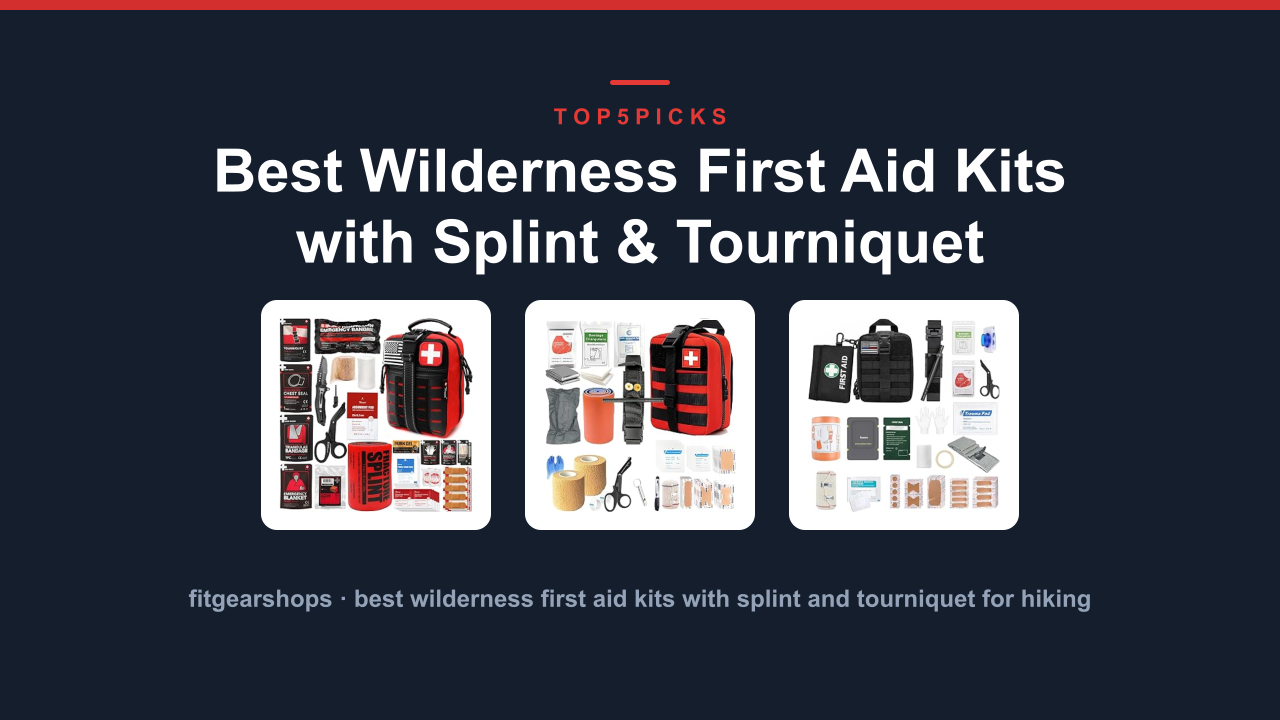
Let's be honest about something right away. Buying a trauma kit is not like buying a backpack or a pair of hiking boots. When you need this gear, the situation is already bad, and the next few minutes can genuinely be the difference between a bad story and a tragedy.
That doesn't mean you need to panic-buy the most expensive bag on the market, but it does mean you need to think carefully about what you're carrying and why.
Most of us aren't paramedics. We're drivers, hikers, campers, hunters, and weekend adventurers who want to be ready for the worst-case scenario without pretending to be something we're not. The good news is that the modern IFAK (Individual First Aid Kit) market has evolved a lot.
You no longer have to assemble everything piece by piece from a medical supply catalog. You can buy a solid, well-stocked kit that makes sense for your skill level and your activities.
Over the next few minutes, we'll walk through what separates a quality kit from a box of band-aids with a fancy label. We'll break down the components that actually matter, the trade-offs you'll face, and what verified users consistently say about the options available right now. By the end, you'll have a clear picture of what fits your needs, your vehicle, or your pack.
The Core Question: What Are You Preparing For?
Before you look at any specific kit, you need to answer one question honestly: what scenario are you preparing for? This answer changes everything about what you should buy.
If you're building a kit for your daily commuter car, you're mostly preparing for road accidents and minor injuries. You want a solid range of bandages, a good tourniquet, and items that help with bleeding control. If you're a hiker heading into remote terrain, your priorities shift toward blisters, sprains, and long-term wound care.
If you're a hunter or a shooter, your focus is on penetrating trauma and major hemorrhage.
The kits we're looking at today lean heavily toward trauma response. They're built around the MARCH protocol (Massive hemorrhage, Airway, Respiration, Circulation, Hypothermia), which is the standard framework used by military medics and modern first responders. That might sound intense, but here's why it matters: it forces the kit to prioritize the things that kill people fastest.
A kit built around this framework will always have a tourniquet, a wound packing material, and a chest seal before it worries about aspirin and antiseptic wipes.
That's the right order of priorities for a trauma-focused kit. Let's look at what's actually on the shelf.
The Components: A Quick Breakdown of What You're Buying
When you open up a quality IFAK, you should immediately recognize the major categories. If you don't, that's a red flag. Here's what you should expect to find and why it's in there.
Tourniquet: This is the star of the show. A good tourniquet, applied correctly, can stop arterial bleeding from a limb. The industry standard is a windlass-style design, like the CAT (Combat Application Tourniquet) or a similar variant.
You want one that you can operate with one hand, because you might be applying it to your own arm or leg. Look for a secure windlass clip and a time indicator so you can write the time of application on the band.
Hemostatic Gauze: Regular gauze just packs a wound and absorbs blood. Hemostatic gauze is impregnated with a clotting agent (often kaolin or chitosan) that accelerates the body's natural clotting process. This is the right tool for a deep wound that's bleeding heavily.
Brands like QuikClot are common, but you'll see equivalent products in most quality kits.
Chest Seals: A punctured lung (tension pneumothorax) is a silent killer. A chest seal is a large, adhesive patch that you place over a penetrating wound to the chest. It has a one-way valve that lets air escape but prevents air from being sucked back in.
You should have at least two in a trauma kit, because you may need one for an exit wound.
Pressure Bandage / Israeli Bandage: The Israeli bandage is a multi-purpose tool. It combines a sterile pad with an elastic band and a pressure bar. You can use it to secure a dressing, apply direct pressure to a wound, or even create a makeshift sling.
It's one of the most versatile items in the whole kit.
Trauma Shears: You cannot cut through a thick jacket or a pair of jeans with standard scissors. Trauma shears are blunt-tipped, heavy-duty scissors designed to cut through clothing, webbing, and even thin plastic. Look for a pair with a metal handle, as cheap plastic shears often snap under pressure.
Beyond these core trauma items, you'll typically find some combination of regular gauze pads, adhesive bandages, medical tape, gloves, and sometimes a CPR mask or an emergency blanket. These round out the kit and make it useful for more than just catastrophic injuries.
What To Look For (And What To Avoid)
The market is full of options, and not all of them are created equal. Here are the things we looked at across aggregate user reviews and manufacturer specifications.
Case Quality: A trauma kit is going to live in a car trunk, a backpack, or a range bag. The case needs to be durable, water-resistant (if not waterproof), and organized. Velcro dividers are a must for keeping items from shifting around and for finding things fast when your hands are shaking.
A bright color (like orange or red) also helps you locate it in a dark vehicle or a cluttered pack.
Component Authenticity: This is a big deal. There are counterfeit tourniquets and knock-off hemostatic gauze on the market. They look similar but fail when the pressure is on.
It's worth paying a little more for a kit that uses known brand components (like a genuine CAT tourniquet or name-brand QuikClot) instead of generic imitations. Check the manufacturer's claims carefully.
Training Level: Some kits are designed for trained professionals, while others are marketed toward civilians. The best civilian kits include simple instructions that walk you through the basics. It's a thoughtful touch and genuinely helpful in a high-stress moment.
Completeness vs. Redundancy: A good IFAK should have at least one backup of the critical items. One tourniquet is okay, but two is better.
At least two chest seals, at least two packs of hemostatic gauze. That redundancy is what separates a trauma kit from a basic first aid kit.
The Contenders: A Look at Top Options
Let's get into the specific kits. We've analyzed the specs, the buyer feedback, and the overall value proposition of each one. Remember, these are categorized by their intended use case, so your choice should align with your primary scenario.
#1: H&H Minitac IFAK
This kit is the one that comes up again and again when you start talking to people who take this stuff seriously. The H&H Minitac is built around the MARCH protocol, and it doesn't skimp on the essentials. It includes a genuine windlass tourniquet (not a knock-off), two vented chest seals, a compact hemostatic gauze, and a pressure bandage, all tucked into a compact, rugged pouch.
What verified buyers consistently praise is the organization. The pouch uses a clear, divided insert that keeps everything visible and accessible. You don't have to dig around blindly to find a chest seal; you open the pouch and you see it immediately.
It's a thoughtful detail that matters when speed is critical. The case itself is made from a tough nylon material that holds up well in a pack or a glovebox.
The trade-off is the price point. The Minitac (along with its small and medium siblings) sits at the higher end of the cost spectrum. You're paying for quality components and a well-thought-out design.
If you're looking for a true "buy once, cry once" option that you can carry on your person or in a dedicated medical pouch, this is the one. It doesn't include a lot of extras like band-aids or tape, but that's okay. It knows its job: bleeding control and airway management.
#2: FBA Tactical IFAK Pouch
If you're looking for a modular system that you can build out yourself over time, the FBA Tactical pouch is a popular starting point. This is a high-visibility orange pouch (which is great for finding it in a dark trunk) that comes with a solid foundation of supplies, and it has tons of space for you to add more.
The included items are respectable: a tourniquet, a pressure dressing, gauze, and a few smaller essentials. Buyers note that it's a great value for the price. The pouch itself is well-constructed, with a durable zipper and a sturdy MOLLE backing that lets you attach it to a backpack or a vest if you want to.
The main compartment is large enough to hold a serious trauma load-out, including a nasal pharyngeal airway if you have the training to use one.
The honest assessment is that this is a do-it-yourself kit in disguise. The included components are good, but the real value is in the pouch and the platform. Most serious users buy this, then immediately start swapping in their preferred brand of hemostatic gauze or adding extra gloves and a space blanket.
That's a totally valid approach, and it gives you the flexibility to build exactly what you want. If you're new to this, the included supplies are enough to get you started. If you're experienced, the pouch is a blank canvas.
#3: Trauma Kit with Tourniquet (34-Piece Set)
Here's where we shift to value. This kit is a 34-piece set that aims to be a comprehensive package for a car or a home. It includes a tourniquet, a dressing set, bandages, and a variety of smaller items like antiseptic wipes and adhesive bandages.
The goal is to offer both trauma response and everyday first aid in one box.
Verified buyer feedback indicates that this kit is perfect for the average driver who wants peace of mind without learning a full tactical medical curriculum. The tourniquet is a solid, functional design, and the Israeli bandage is the real deal. You could absolutely treat a serious bleed with this kit.
The limitation is in the finer points. The trauma shears included are functional but basic, and the hemostatic gauze (if included) might not be the same quality as the dedicated, name-brand versions. It's a budget-friendly option that prioritizes quantity and coverage over premium components.
For a car kit that might get used once in a blue moon, that's a perfectly reasonable trade-off. It's not the kit a soldier would carry, but it's a more than adequate kit for a commuter.
#4: 134-Piece Premium Trauma Kit
Let's address the elephant in the room: the number 134 looks impressive, but in a trauma kit, quantity can sometimes be a distraction. This premium kit is designed more as a complete emergency room in a bag. It includes a massive range of supplies: trauma items, splinting materials, burn dressings, a thermal blanket, and a huge assortment of adhesive bandages and gauze pads.
This is the kind of kit you'd want in a base camp, a large family vehicle, or as a central emergency station in your home. It's not meant to be thrown into a daypack. People who buy this kit appreciate that they never have to worry about running out of the common stuff.
It's comprehensive, and the case it comes in is typically a sturdy, organized bag.
The honest drawback is that the quality of a "one-size-fits-all" kit can be inconsistent. The tourniquet and the major trauma components are usually fine, but the smaller items (like the cheap multi-tool or the basic scissors) are often exactly that: cheap. If you want a full-featured kit for a cabin or a large vehicle and you're willing to upgrade the critical trauma pieces over time, this is a great starting point.
Just understand that you're paying for breadth, not just depth.
#5: IFAK Trauma Kit Tourniquet (IFAK Brand)
This kit is worth a serious look because of how it handles the balance between completeness and utility. The IFAK-branded trauma kit includes a true windlass tourniquet, an Israeli bandage, elastic bandages, and a comprehensive set of tactical first aid items, all in a compact, organized pouch.
What stands out in the buyer reviews is the quality of the case and the organization. The pouch uses clear plastic sleeves and elastic loops to keep every item visible and accessible, which is a huge advantage in a panic situation. The included tourniquet is a proper, one-handed design, not a cheap plastic imitation.
This kit is a strong middle-ground option. It's more complete than the ultra-minimalist H&H, but it focuses more on quality trauma components than the budget 34-piece set.
The trade-off is that it's not the absolute top-tier for every single component, but it's a very competent, well-rounded package that doesn't have any glaring weaknesses. For a hiker, a hunter, or a shooter who wants a serious kit that's easy to carry and easy to use, this one checks a lot of boxes.
Side-by-Side Comparison
To make the decision a bit easier, here's a quick breakdown of how these main options compare on the key dimensions that matter to most buyers.
| Feature / Consideration | H&H Minitac | FBA Tactical Pouch | 34-Piece Set | 134-Piece Premium | IFAK Brand Kit |
|---|---|---|---|---|---|
| Primary Use Case | Personal carry / Professional | Modular DIY build | Car / Home basic | Base camp / Family SUV | Hiking / Tactical |
| Tourniquet Quality | Excellent (Genuine CAT-style) | Good | Functional | Good | Excellent (Windlass) |
| Hemostatic Gauze | Yes (Compact) | Basic | Often Basic | Yes (Varies) | Yes |
| Chest Seals | Yes (2x Vented) | Not Always | Not Always | Yes | Yes |
| Case Organization | Excellent (Insert system) | Good (Large pouch) | Fair (Basic bag) | Good (Large bag) | Excellent (Clear sleeves) |
| Overall Value | Premium | High (if you upgrade) | Excellent (Budget) | High (for coverage) | High |
Training Matters More Than Gear
Here's the most important piece of advice we can give you, and it's backed by both medical professionals and experienced users: buying a kit is only step one. The gear is useless if you don't know how to use it. A tourniquet you've never practiced with is just a piece of nylon when your hand is shaking and blood is everywhere.
Take a certified first aid course. Look for a class that covers bleeding control and basic trauma response. Many community centers, fire departments, and outdoor organizations offer Stop the Bleed courses, which are specifically designed to teach civilians how to control massive hemorrhage.
They usually cost very little and take only a couple of hours.
When you get your kit, open it up. Familiarize yourself with every single item. Practice applying the tourniquet to yourself and to a friend.
Practice opening the chest seal and placing it. The goal is to build muscle memory so that, if the worst happens, you don't have to think about how the gear works. You just do it.
5. Survival First Aid Kit Israeli Bandage (ASIN B0G2HZBV22)
Survival First Aid Kit Israeli Bandage

Best for compact carry
The Israeli bandage is the one piece of trauma gear almost every military medic and wilderness guide carries, and this version packs the classic design into a kit that fits in a jacket pocket. It's built around the pressure bar system that lets you cinch a wound without needing a second pair of hands. For solo hikers on remote trails, that self-application feature is the whole point.
You can wrap, twist, and lock the pressure bar with one working hand while the other holds direct pressure on the wound.
A chest seal rides alongside the bandage for penetrating injuries, and the whole thing is vacuum-sealed to stay sterile and dry through rain, stream crossings, or a dropped pack in the mud. The tear-notch opening means you can rip into it fast with gloves on, and the elastic wrap stretches without losing tension as swelling sets in. Verified buyer reviews consistently note the bandage stays put during active movement, which matters if you're trying to walk out to a trailhead while still bleeding.
What we like
- Compact and lightweight enough for every-day carry
- Self-adhering wrap with a plastic pressure bar
- Vacuum-sealed for long-term sterile storage
- Tear-notch opening works with gloved hands
- Fits in a pocket, hip pouch, or daypack lid
What we don't
- Single bandage means no backup for multiple injuries
- No tourniquet included in the kit
- Pressure bar takes practice to use smoothly one-handed
Ideal for
Day hikers, ultralight backpackers, and trail runners who want a genuinely small trauma kit that covers the most common severe bleeding scenarios without adding real weight. It's also a smart backup to keep in a car glovebox or office desk drawer.
Who should skip it
Groups, trip leaders, or anyone managing multiple people on remote multi-day routes. A single bandage handles one wound on one person, and the lack of a tourniquet makes it a poor fit for major arterial bleeding from a fall or strike.
6. IFAK Trauma Kit Emergency Compression Strap (ASIN B0GJ9X2ST8)
IFAK Trauma Kit Emergency Compression Strap

Best for hunting and fishing trips
This kit is organized around a compression strap system that turns any cloth, shirt, or emergency blanket into a proper pressure dressing. The strap works like a military-style tension bandage: you lay it over the wound dressing, cinch it tight, and the ratchet-style buckle locks it in place. That's a distinctly different approach from a pre-wrapped Israeli bandage, and it gives you more flexibility when the injury is oddly shaped, like a deep laceration across a joint or a puncture that won't stop weeping.
The kit arrives in a small nylon pouch with a molle backing, so it clips onto a pack strap, wader suspenders, or the inside of a boat console. Inside you get the compression strap, a trauma pad, rolled gauze, and a pair of nitrile gloves, all packed flat to avoid taking up serious pack volume. Hunters and anglers in the buying guides we examined specifically flagged the strap's adjustability as the reason they chose it over a fixed-size bandage.
If swelling sets in, you can re-tighten it without unwrapping the whole dressing.
What we like
- Ratchet-style compression strap adjusts as swelling changes
- Molle backing clips onto packs, vests, or boat gear
- Packed flat with a slim profile
- Compatible with improvised dressings
- Reusable strap after the trauma pad is replaced
What we don't
- Requires some basic training to improvise a dressing correctly
- The strap adds complexity versus a one-piece bandage
- Fewer sealed components than some full IFAK kits
Ideal for
Hunters, anglers, and anyone who spends time where a knife, hook, or animal can open a wound that won't quit bleeding. The molle compatibility makes it a natural add-on to a hunting pack or fishing vest.
Who should skip it
Beginners who want the simplest possible "open and apply" design without needing to figure out improvised dressings. If you're not willing to practice with the strap before the real thing, a pre-wrapped Israeli bandage is more forgiving.
7. IFAK Trauma Kit Tourniquet (ASIN B0GYYVFHB6)
IFAK Trauma Kit Tourniquet

Best for vehicle and roadside emergencies
Everyone knows the debate about tourniquets and how poorly they were taught for decades. The old advice was to avoid them entirely; the current standard of care, backed by the Committee on Tactical Combat Casualty Care (CoTCCC), is that a windlass-style tourniquet is the single most effective tool for stopping life-threatening extremity bleeding. This kit centers on that tourniquet while adding the secondary supplies you need to bridge the gap between injury and advanced care.
The windlass rod locks into a retention clip after you've twisted it, and the band is wide enough to distribute pressure without digging into tissue the way a narrow cord does. A time indicator on the strap lets you mark when the tourniquet went on, which is a detail emergency responders specifically ask for. Beyond the tourniquet, the kit holds a compression bandage and an airway tool, covering the two biggest killers in traumatic injury: bleeding and breathing obstruction.
Verified buyer reviews highlight the durable nylon pouch and the clarity of the included instruction card, which matters when you're running on adrenaline.
What we like
- Windlass tourniquet with a locking retention clip
- Time indicator for marking application time
- Includes an airway tool in addition to bleed control
- Durable nylon pouch with clear organization
- Instruction card included for high-stress moments
What we don't
- Tourniquet is the primary focus, lighter on wound-dressing supplies
- Airway tool requires training to use safely
- Pouch is larger than pocket-sized options
Ideal for
Road-trippers, commuters, and anyone who wants a trauma kit to keep in the car for highway accidents. It's also a solid choice for someone building their first serious IFAK and wants the essentials without a wall of gear.
Who should skip it
Ultralight hikers who need a packable kit measured in grams, and anyone who expects a comprehensive multi-injury kit. This one prioritizes the two most lethal threats, not a full field hospital.
8. IFAK Trauma Kit Tourniquet (ASIN B0GVSF1Z5Z)
IFAK Trauma Kit Tourniquet

Best all-in-one IFAK for group and family use
Four tourniquets is a lot of tourniquets. But if you're responsible for a family of four on a weekend wilderness trip, carrying one tourniquet means making a choice about who gets it if something goes wrong. This kit solves that by packing four windlass-style tourniquets alongside a full trauma dressing load, so you can treat multiple casualties or multiple limbs on a single person.
That's a level of redundancy most kits simply don't offer at this size.
The organization is the standout feature. A clearly labeled section holds each tourniquet, with the trauma pads, rolled gauze, chest seals, and gloves in separate compartments so you can grab what you need without upending the whole kit. A zippered outer pocket takes a pair of scissors and a sharpie for marking application times.
Per the packaging, the kit is built to be grabbed by someone with basic first aid training, not just a paramedic, which makes it a natural fit for a family vehicle, basecamp tent, or group leader's pack. Aggregate user feedback points to the instruction card and visual labels as the difference between fumbling and acting quickly.
What we like
- Four tourniquets for multiple casualties or limbs
- Full trauma dressing load in one organized pouch
- Visual labels and an instruction card for quick action
- Zippered pocket for scissors and a marker
- Suitable for group or family emergency planning
What we don't
- Heavier and bulkier than single-casualty kits
- Tourniquets are basic windlass models, not the most advanced design
- Overkill for a solo day hiker
Ideal for
Family campers, group leaders, Scout outings, and anyone who carries medical gear for more people than just themselves. It's a true IFAK that you stock once and leave in the vehicle or basecamp.
Who should skip it
Solo hikers who want minimal weight, and ultralight backpackers who measure gear in ounces. You're paying in size and weight for redundancy you don't personally need.
9. IFAK Trauma Kit Tourniquet (ASIN B0G5PDS1GF)
IFAK Trauma Kit Tourniquet

Best budget-friendly entry into real trauma gear
Here's the honest truth: a proper IFAK with a tourniquet, chest seals, and compression bandages can run unexpectedly expensive. This kit takes the opposite path. It packs a windlass tourniquet, two chest seals, a compression bandage, rolled gauze, tape, and gloves into a compact pouch at a price point that makes it reasonable to own one for the car, one for the camp, and one for the office.
The gear is functional rather than flashy, which is what you want from something that might sit in a glovebox for years before it's needed.
The tourniquet here is a standard windlass type with a locking rod and a wide band, the same general design recommended in the military CoTCCC guidelines, though it's not the premium model used by some tactical units. Everything is sealed in individual sterile wrappers inside the pouch, so the components stay usable even if the outer bag takes a beating. Buyer feedback consistently mentions one practical detail: the pouch has a clear window so you can visually confirm the contents without opening it.
That sounds minor until you're standing in front of a first aid class trying to remember what you packed.
What we like
- Functional tourniquet plus two chest seals
- All components individually sealed for long-term storage
- Clear window to verify contents without opening
- Compact enough for a car, camp, or office
- Approachable price for outfitting multiple locations
What we don't
- Tourniquet is a basic model, not a premium tactical design
- Pouch material is utilitarian rather than heavy-duty
- Limited dressing volume for large wounds
Ideal for
Someone putting together their first trauma kit, or anyone who wants to spread basic bleed-control gear across multiple vehicles and locations without spending a fortune. It's a smart "second kit" to keep in a spouse's car or the shed.
Who should skip it
Professional guides, law enforcement, or anyone operating in high-risk environments who needs top-tier gear with documented testing to a specific standard (like the ISO 9001-certified components found in premium kits). For that use case, invest in a higher-grade individual tourniquet.
Final Verdict: Which One Should You Pick?
If you want the absolute best quality and you're willing to pay for it, the H&H Minitac is the gold standard for a personal carry kit. It's what we would recommend to someone who wants a no-compromise, professional-grade option.
If you want a versatile platform you can build on and customize, the FBA Tactical Pouch is your best bet. It gives you a solid starting point and the space to grow.
If you want a reliable, comprehensive kit for your car or home that won't break the bank, the IFAK Trauma Kit (the 5th option) offers the best balance of quality and completeness. It's a serious piece of gear that covers the essentials properly without requiring a huge investment.
Disclaimer: The information provided here is for educational purposes and does not constitute medical advice. Always seek training from certified professionals and consult with a physician for any medical concerns.

Similar Posts