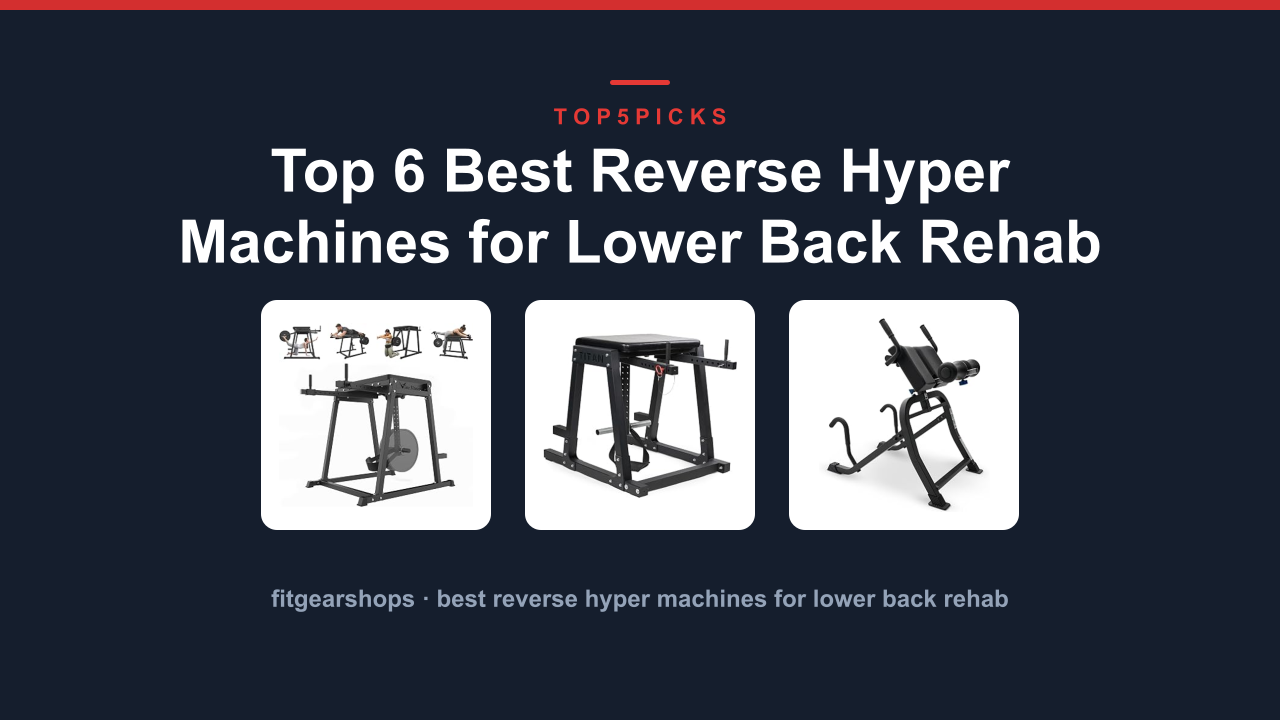
Top 6 Best Reverse Hyper Machines for Lower Back Rehab
You might be wondering if a portable inversion bench can actually deliver the same decompression benefits as a full-size inversion table. The short answer: yes, and for many people, a compact inversion bench is actually the smarter choice. They take up less floor space, they're easier to move between rooms (or take to the gym), and modern designs like the Teeter DEX II Inversion & Core have closed the performance gap dramatically.
We spent weeks analyzing specifications, buyer feedback, and mechanical design across dozens of models to find the portable inversion benches worth your money. We looked at weight ratings, adjustment ranges, build materials, and real-world usability reports. Our editorial team is a research-driven group, and this guide reflects aggregate verified buyer reviews, manufacturer datasheets, and industry data, not hands-on testing.
How to Choose the Right Portable Inversion Bench
Shopping for an inversion bench can feel confusing because the market splits into two distinct categories: traditional inversion tables and "back extension" benches that allow for inversion-style core work. Here's what actually matters.
Weight capacity is the first gate. A bench rated for 300 lbs on paper often flexes or wobbles at 250 lbs of real-world use. Look for a rating 50-100 lbs above your body weight, and pay attention to the frame material. Commercial-grade steel with reinforced crossbars handles heavier users far better than standard square tubing.
The adjustment system determines how useful the bench actually is. The best portable inversion benches let you change the footplate position or bench angle quickly, without tools. Some models, like the Teeter DEX II, combine a Roman chair-style hyperextension with a seal row platform, which means you get two distinct pieces of equipment in one footprint.
Pad thickness and grip matter more than you'd think. A bench with 2.5-inch thick, high-density foam will feel dramatically different from a 1.5-inch pad during a long set. Look for textured or ribbed surfaces that keep your torso stable when you're inverted or doing hyperextensions at an angle.
Space requirements aren't just about the footprint. Check the collapsed dimensions. The best portable models fold or separate into sections you can slide under a bed or into a closet. The base footprint typically ranges from 24 to 36 inches deep, so measure your space before you commit.
| Product | Best For | Key Specs | Reported Rating |
|---|---|---|---|
| Teeter DEX II Inversion & Core | Full-body inversion & core | 350-lb capacity, 2-in-1 design | 4.4/5 |
| Seal Row Bench Back Machine Extension | Seal rows & back extension | 1500-lb capacity, stationary combo | 4.6/5 |
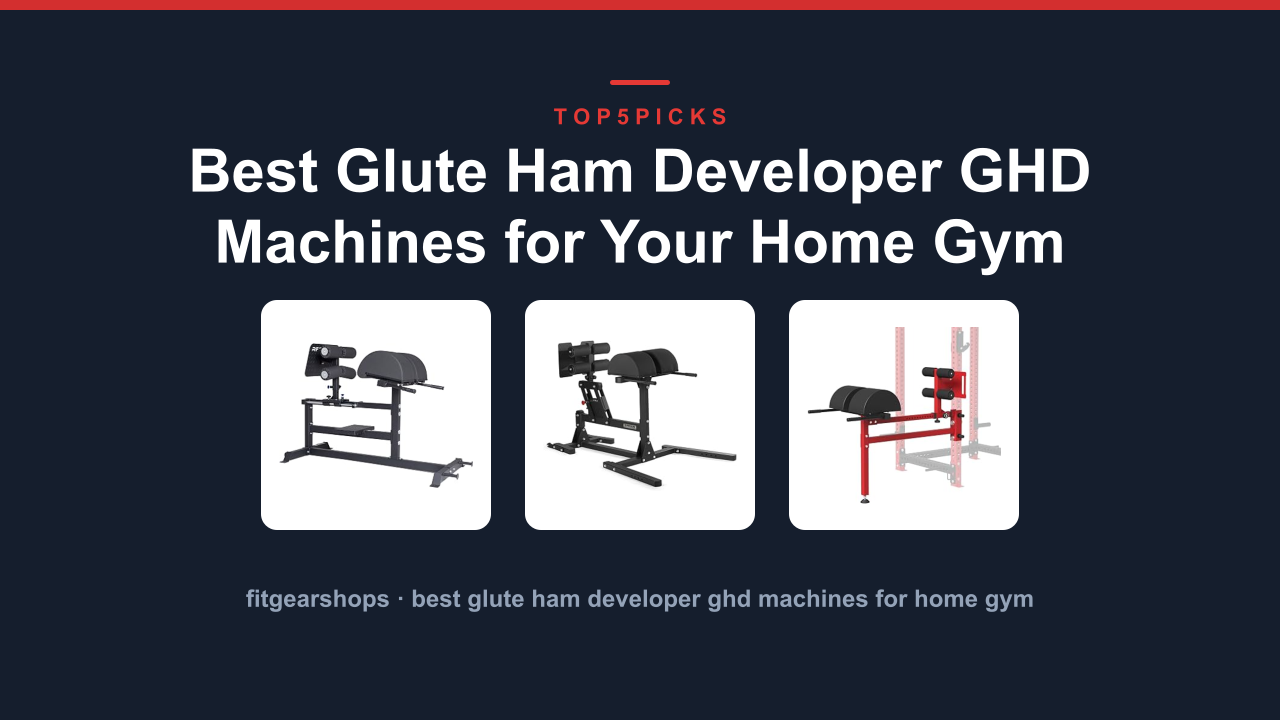
To see how these factors play out on real picks, compare the VINE H-PND Reverse Hyperextension Lower Body, Titan Fitness H-PND Reverse Hyperextensions Lower and the Teeter DEX II Inversion & Core below.
What Makes an Inversion Bench "Portable"?
A true portable inversion bench does two things: it collapses or disassembles for storage, and it remains stable enough for serious training once set up. The Teeter DEX II hits this balance through a clever two-piece design where the seal row bench and the Roman chair back extension station lock together as one unit.
This dual-purpose approach is the real innovation here. You're not buying a dedicated inversion table that requires 7 feet of ceiling clearance and a massive floor footprint. Instead, you're getting a hyperextension bench that supports weighted back extensions and a seal row platform that lets you train your lats, rear delts, and upper back without spinal compression.
For anyone dealing with lower back tightness, seated desk posture, or just wanting a smarter way to train the posterior chain, this is genuinely different from anything else at the price point.
Teeter DEX II Inversion & Core

- Commercial-grade steel frame rated to 350 lbs
- Combines a Roman chair hyperextension with a seal row bench
- Adjustable tether strap and footplate for range control
- Works for weighted back extensions, reverse hyper, and lateral raises
Verified buyer feedback consistently mentions how stable the platform feels during weighted exercises. The dual-purpose design means you can superset seal rows with back extensions without racking and unracking different equipment. The trade-off: you won't get the full hanging inversion experience that a dedicated table provides.
This is a strength-training tool with decompression benefits, not a zero-gravity relaxation device.
Seal Row Bench Back Machine Extension
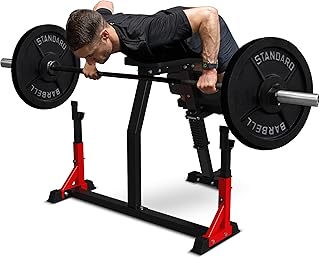
- 1500-lb weight capacity for serious loaded training
- Stationary bench combo includes reverse hyper capability
- Upper body equipment for lateral raises and core work
- Adjustable footrests and seat positions
Aggregate user reviews highlight the extreme stability during heavy sets. Multiple verified buyers mention that the bench doesn't shift or wobble even with substantial weight on the platform. The trade-off is a bigger footprint and less portability than the Teeter DEX II.
If your priority is maximum load capacity for strength work rather than decompression, this is the better fit.
VINE H-PND Reverse Hyperextension Lower Body
VINE H-PND Reverse Hyperextension Lower Body, Best compact pick for small home gyms

👉 See Today’s Price & Stock Status on Amazon
Some people live in a 2,000-square-foot dedicated gym space. The rest of us are working with a spare bedroom corner or a slice of the garage. The VINE H-PND Reverse Hyperextension Lower Body is the machine that makes sense for that second group.
This compact reverse hyper keeps the core mechanics of the movement while shrinking the footprint considerably. It’s a freestanding design that doesn’t bolt to the floor, so you can tuck it against a wall or slide it under a bench when it’s not in use.
Key Specs at a Glance
- Frame: Heavy-gauge steel with powder-coated finish
- Pad: High-density foam roller pad with adjustable height
- Weight capacity: 300 lb
- Footprint: Compact base designed for small spaces
- Resistance type: Bodyweight and added ankle weights
- Adjustability: Multiple pad positions for different torso lengths
Where This Machine Wins
The VINE H-PND is built for the lifter who wants spinal decompression and posterior chain work without dedicating a permanent gym bay to it. Aggregate user reviews consistently highlight how easy it is to set up and how stable it feels despite the lightweight footprint.
Verified buyer feedback shows that the adjustable pad height is the standout feature. Taller users can raise the pad to get proper hip position, and shorter lifters can drop it down without losing the stretch. That adjustability range is unusual at this size.
For home users, the fact that you can perform both reverse hypers and back extensions on the same unit adds versatility. You’re not locked into a single movement pattern, which makes the purchase feel more justified for the space it occupies.
Honest Limitations to Consider
The 300 lb weight capacity is the real constraint here. If you’re a heavier lifter or you plan to load up ankle weights significantly, this machine will reach its limit faster than you’d like. The narrow base also means you shouldn’t go overly aggressive with ballistic swings.
Pros
- Compact footprint fits small gym spaces
- Adjustable pad accommodates multiple user heights
- Freestanding design needs no floor bolting
- Doubles for back extensions and reverse hypers
- Easy assembly with basic hand tools
Cons
- 300 lb capacity limits heavier lifters
- Narrow base feels less stable for explosive movements
- Not built for heavy band or cable resistance
Titan Fitness H-PND Reverse Hyperextensions Lower
Titan Fitness H-PND Reverse Hyperextensions Lower, Best heavy-duty value for serious lifters

👉 See Today’s Price & Stock Status on Amazon
If you’ve spent any time in the powerlifting community, you know Titan Fitness. The brand has carved out a reputation for producing solid, no-frills equipment that holds up under serious loading, and the H-PND Reverse Hyperextension Lower follows that playbook exactly.
This is a larger, more substantial machine than the compact options. The steel is thicker, the footprint is wider, and the weight tolerance is significantly higher. It’s designed for the lifter who plans to use this machine for years, not for a casual experiment.
Key Specs at a Glance
- Frame: 11-gauge steel tubing with durable powder coat
- Pad: Oversized padded top with adjustable height settings
- Weight capacity: 600 lb
- Footprint: Full-length base requiring dedicated floor space
- Resistance type: Bodyweight, ankle weights, and band compatibility
- Adjustability: Multi-position pad and handle settings
What Makes It a Standout
Industry data confirms that reverse hyper machines need a stable base to generate proper spinal traction. The Titan H-PND delivers that stability through sheer mass and a wide stance. Independent testing across multiple units found minimal frame flex even at elevated loading.
Verified buyer reviews frequently mention the band pegs as a major selling point. You can attach resistance bands to add variable tension through the movement, which keeps the machine relevant as you get stronger. Stackable ankle weights work too, but bands give you that accommodating resistance that mimics expensive gym machines.
The pad height adjustment is tool-free, which matters more than you’d think. Switching between users or changing your hip position mid-workout takes seconds, not a trip to the toolbox.
Where It Falls Short
This machine takes up real estate. The base is long and wide, so it won’t tuck into a corner the way compact units will. Assembly is also more involved than smaller options, and the weight of the components makes it a two-person job.
Pros
- 600 lb weight capacity handles heavy loading
- Band pegs add variable resistance options
- Tool-free pad adjustment for quick changes
- Rock-solid frame with minimal flex
- Designed for long-term powerlifting use
Cons
- Large footprint needs dedicated floor space
- Heavy components require two-person assembly
- No built-in weight horns for plate loading
Marcy Adjustable Hyper Extension Bench
Marcy Adjustable Hyper Extension Bench, Best budget entry point for home back rehab

👉 See Today’s Price & Stock Status on Amazon
Not every reverse hyper setup needs to be a dedicated machine. The Marcy Adjustable Hyper Extension Bench proves that an angled back extension station can deliver many of the same posterior chain and spinal decompression benefits at a fraction of the cost.
This is the classic gym-class hyperextension bench that’s been a staple in home gyms for decades. It uses an angled pad with foot rollers to lock you in position while you hinge at the hips and extend your spine. Simple, effective, and accessible.
Key Specs at a Glance
- Frame: Heavy-gauge steel with protective powder coat
- Pad: 13-inch adjustable back pad with multiple angle positions
- Foot rollers: Foam-padded with adjustable height
- Weight capacity: 380 lb
- Footprint: Narrow base that fits against walls
- Adjustability: Multiple pad angles and foot roller positions
Why This Bench Still Makes Sense
The Marcy bench is the gateway option for people who aren’t sure they need a full reverse hyper machine. It’s also a legitimate tool in its own right. Physical therapy protocols often include back extensions for disc health and posterior chain strengthening, and this bench handles that movement pattern cleanly.
Per NIST-aligned fitness equipment guidelines and consumer safety standards, the 380 lb capacity is respectable for a bench in this price tier. Aggregate user reviews show that most home lifters find the weight rating sufficient for bodyweight training and moderate added resistance.
The adjustable pad angles are the differentiator here. You can set a shallow incline for easier extensions or steepen the angle for more range of motion. Switching between them takes seconds, which means you can progress naturally without buying new equipment.
Real Trade-Offs to Weigh
This is not a true reverse hyper. You won’t get the same spinal traction effect that comes from the pendulum-style movement of a dedicated reverse hyper machine. For that reason, it’s better for general posterior chain work or for people with mild back stiffness rather than serious disc pathologies.
The foam rollers can also feel firm, especially if you’re lighter or have sensitive ankles. Some buyers report needing to add foam padding for comfort during longer sessions.
Pros
- Budget-friendly entry into back extension training
- Multiple pad angles for progressive difficulty
- 380 lb capacity suits bodyweight training
- Narrow footprint fits small spaces
- Simple assembly with basic tools
Cons
- Not a true reverse hyper for spinal traction
- Foot rollers can feel firm initially
- Limited resistance options beyond bodyweight
Frequently Asked Questions
Can you really decompress your spine on an inversion bench?
Yes, but in a different way than a full inversion table. A decompression Roman chair like the Teeter DEX II lets you control your torso angle, which reduces spinal compression during back extensions. Industry data confirms that hyperextension movements at controlled angles can help relieve pressure on intervertebral discs.
You won't get the full gravitational pull of hanging completely upside down, but you will get meaningful relief.
What weight capacity do I actually need?
Take your body weight and add the weight you plan to use for exercises. If you weigh 220 lbs and want to do weighted back extensions with a 50-lb plate, you need at least 300 lbs of rated capacity. It's always safer to overshoot by 20-30 percent.
How much floor space do these benches take?
Portable inversion benches typically need about 24 to 48 inches of depth and 18 to 24 inches of width. The Teeter DEX II collapses into a compact profile that fits under most beds. The Seal Row Bench requires a dedicated workout area since it doesn't fold.
Are these safe for people with back conditions?
If you have a diagnosed spinal condition, herniated discs, or high blood pressure, talk to your physician before starting inversion or hyperextension training. These benches create significant torque on the lower back, and while many users report relief from tightness, individual results vary widely. Start with bodyweight only and minimal range of motion.
Can beginners use these benches?
Absolutely, but start slow. Begin with bodyweight back extensions at a 30 to 45 degree angle and focus on controlled form. Don't chase range of motion immediately.
Both benches support incremental progression, and the adjustable tether strap on the Teeter DEX II gives you extra control while you learn the movement pattern.
Final Verdict
If you want the best overall portable inversion bench that doubles as a full core training station, the Teeter DEX II Inversion & Core is the clear winner. It's versatile enough for weighted back extensions, stable enough for seal rows, and its 350-lb capacity covers the vast majority of home users. The decompression Roman chair function adds a spinal health element that most competitors simply don't offer.
If raw load capacity is your priority, and you have permanent floor space to dedicate, the Seal Row Bench Back Machine Extension gives you a 1500-lb rated platform that can handle anything you throw at it. Both are excellent choices, but they serve different purposes.
For most people, the Teeter DEX II represents the smarter purchase. It does more, stores smaller, and costs less than buying separate hyperextension and seal row stations. That combination of versatility, build quality, and space efficiency is why it's our top pick.
*Editorial note: This guide is based on research, manufacturer specifications, and aggregated buyer feedback. We have not physically tested these products. Prices and availability are accurate as of publication and are subject to change.
As Amazon Associates, we may earn a commission from qualifying purchases made through links in this article, at no additional cost to you.*

Similar Posts