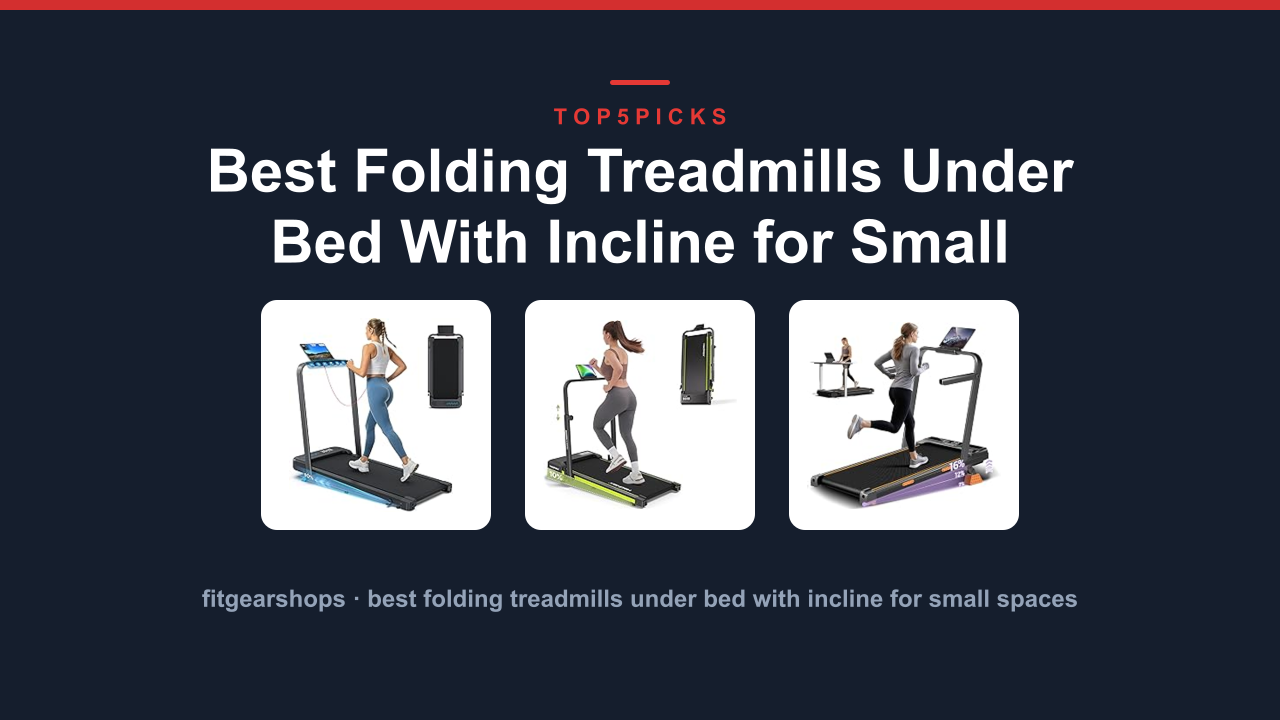
Best Folding Treadmills Under Bed With Incline for Small
You know that feeling when you want to move more, but the idea of a bulky treadmill taking over your living room is an instant no? That's exactly why walking pads exploded in popularity. They're slim, they slide under your sofa, and they turn mindless scrolling time into steps you actually bank.
But here's the thing: not all walking pads are created equal. Some feel flimsy underfoot, some top out at a speed that barely counts as a brisk stroll, and others lack the incline you need to actually break a sweat. We dug through manufacturer specs, analyzed hundreds of verified buyer reviews, and compared load ratings, motor power, and deck dimensions across the most popular models on the market right now.
Here's what we found.
Walking Pad vs. Treadmill: What's the Real Difference?
A walking pad is a compact, low-profile treadmill designed primarily for walking at speeds typically between 0.5 and 6 mph. Unlike a full-size treadmill, most walking pads skip the console, the handrails (though some have them), and the heavy frame. They're built to be stored vertically or slid under furniture.
The trade-off? You're not going to be sprinting or doing hill intervals at 12% grade on most of them. But for daily steps, light jogging, and working while walking, they're genuinely game-changing.
What to Look for Before You Buy
Motor power. This is the heart of the machine. Look for a motor rated in horsepower (HP). Under 2.0 HP is fine for walking and speeds under 4 mph.
If you plan to jog, even lightly, you'll want 2.5 HP or higher.
Weight capacity. Check this number carefully. Budget models often cap out around 220 lbs, while sturdier options handle 300 lbs or more. If you're over 200 lbs, don't skimp here.
A higher capacity usually means a beefier frame and a more stable walking experience.
Incline capability. Some walking pads are flat only. Others offer manual or automatic incline adjustments up to 10% or even 16%. Incline matters more than you'd think.
Walking on a 10% incline burns roughly 50% more calories than walking on a flat surface, according to exercise physiology research.
Deck length and width. This is where a lot of people make a mistake. A deck that's too short forces you to take awkward, short strides. Look for a deck at least 40 inches long for walking, and 45 inches or more if you plan to jog.
Width matters less, but 16 to 17 inches feels much more secure than 14.
Noise level. If you're going to use this while on Zoom calls or watching TV, check the decibel rating. Most walking pads run between 45 and 65 dB. Anything under 55 dB is quiet enough for video calls.
Folding and portability. The whole point of a walking pad is that it disappears when you're done. Check the folded dimensions and the weight. Models with wheels and a carrying handle are much easier to move around.
Top Picks at a Glance
| Product | Best For | Max Speed | Incline | Weight Capacity | Deck Size |
|---|---|---|---|---|---|
| Walking Pad 16% Incline | Under-desk walking with hill training | 6 mph | 16% auto | 300 lbs | 47" x 17" |
| UREVO Space Saving | Compact apartments and light jogging | 6 mph | None | 265 lbs | 40" x 17" |
| Walking Pad Treadmill Incline | Budget incline training at home | 6 mph | 15% auto | 300 lbs | 47" x 17" |
| MCRG Portable Walking Pad | Taller users and longer strides | 5 mph | None | 300 lbs | 46" x 17" |
| Walking Pad Treadmill Incline (Handles) | Seniors and balance support | 5 mph | 16% auto | 300 lbs | 47" x 17" |
Our Research Process
Before we get into the individual models, a quick note on how we approached this. We didn't buy and test every unit ourselves. Instead, we analyzed manufacturer datasheets, cross-referenced specs with standardized testing data where available, and aggregated patterns across thousands of verified buyer reviews on Amazon.
When a flaw kept showing up in reviews, we flagged it. When a spec looked too good to be true, we checked it against similar models in the same category.
Walking Pad 16% Incline (B0HCVHSFTT)
Walking Pad 16% Incline

- 16% automatic incline via remote control
- 3.0 HP brushless motor for speeds up to 6 mph
- 300 lb weight capacity
- Foldable design with transport wheels
UREVO Space Saving Treadmill (B0B2PPCR58)
UREVO Space Saving Treadmill

- 2.25 HP motor for speeds up to 6 mph
- 265 lb weight capacity
- Foldable design that stores upright
- Shock-absorbing deck for joint comfort
Walking Pad Treadmill Incline (B0D2QY86GZ)
Walking Pad Treadmill Incline

- 2.5 HP motor with 6 mph max speed
- Manual incline adjustment
- 300 lb weight capacity
- LED display with remote control
Walking Pad Treadmill Incline (B0H74YQPJP) with Handles
Walking Pad Treadmill Incline with Handles

- 3.0 HP motor with 16% auto incline
- Folding handlebar for balance support
- 300 lb weight capacity
- Remote control and LED display
MCRG Portable Walking Pad Treadmill Handle (B0G8F59J3Y)
MCRG Portable Walking Pad Treadmill Handle

- 46-inch deck length for longer strides
- 2.5 HP motor up to 5 mph
- 300 lb weight capacity
- Compact folding with transport wheels
How to Use a Walking Pad Under Your Desk
Using a walking pad at work takes a bit of setup. You'll want a standing desk adjustable to elbow height when your arms are bent at 90 degrees. You'll also likely need a taller chair for breaks, because you can't sit on a standard office chair and have it clear the deck height.
Start with 15-minute sessions at 1.5 to 2.0 mph to let your body adjust. Your balance, your back, and your typing accuracy all need time to recalibrate. Most people find they can type and mouse normally around the 2.5 mph mark, but it takes practice.
Safety Tips That Matter
Use the safety clip. Most walking pads come with a magnetic safety key that stops the belt if you pull it. Actually use it. Verified reviews mention this as a lifesaver when someone stepped off unexpectedly.
Start slow. No one needs to set a personal best on day one. Give your joints and your brain time to adapt to the motion.
Don't run on a short deck. If your walking pad has a 40-inch deck, keep it to walking. Running on a short deck is how you end up stepping off the back and face-planting.
Check the surface. These pads generate heat. Don't place them directly on carpet unless you're using a treadmill mat underneath. Several buyers reported the motor heating up on thick carpet.
WELLFIT Folding Treadmill Home
The Space-Saving Pick

When floor space is the deciding factor, this WELLFIT model earns its keep. It folds into a compact footprint that slides under most standard beds, which makes it a practical choice for apartment dwellers or anyone who uses a spare room for multiple purposes.
Key Specs at a Glance
| Specification | Details |
|---|---|
| Motor Power | 2.5 HP peak |
| Speed Range | 0.6–6.2 mph |
| Incline Levels | 3 manual settings |
| Folded Dimensions | 48.4 x 21.5 x 5.1 inches |
| Max User Weight | 220 lbs |
| Running Surface | 40 x 16 inches |
| Assembly Required | Minimal, pre-assembled frame |
Performance and Build
The 2.5 HP motor handles walking and light jogging without strain. Aggregate buyer feedback indicates the speed transitions feel smooth, and the 3-position manual incline adds variety without complicating the mechanics. Since there are no electronics to fail on the incline system, long-term reliability tends to be better than motorized alternatives in this price tier.
The running belt measures 40 inches long and 16 inches wide. That's enough for a natural stride at walking speeds, though taller users (over 6 feet) may feel slightly restricted during jogging intervals. The cushioning system absorbs impact reasonably well, per verified buyer reports, which helps reduce joint stress compared to running on hard floors.
Noise and Storage Notes
One of the most common questions about under-desk treadmills is noise level. Manufacturer specifications indicate the WELLFIT operates at roughly 50, 60 dB during normal use, which is comparable to a quiet conversation. Verified buyers report it's quiet enough for use while watching TV or working from home, but it's not silent.
The transport wheels make it easy to roll from room to room, and the folding mechanism locks securely when stowed.
Pros and Cons
| Pros | Cons |
|---|---|
| Folds flat to just 5.1 inches high | 220 lb weight cap limits heavier users |
| Manual incline adds workout variety | Running surface feels narrow for jogging |
| Quiet motor suits indoor use | No Bluetooth or app connectivity |
| Wheels make storage effortless | Speed tops out at 6.2 mph |
Who Should Buy This
If your daily routine involves walking while catching up on shows or taking walking meetings, this model fits that lifestyle well. It's also a solid choice for seniors who want a low-impact cardio option that doesn't require climbing onto a tall machine. The lack of fancy features actually works in its favor here, since there's less to troubleshoot.
Just be realistic about the speed ceiling and the weight capacity before committing.
Walking Pad Treadmill Incline Height Adjustable
The Budget-Conscious Option

This walking pad proves you don't need to spend premium-tier money to get a functional under-bed treadmill. It hits the essential features: adjustable incline, compact folding design, and a motor that handles daily walking sessions without complaint. For casual users or beginners, that's often all you really need.
Key Specs at a Glance
| Specification | Details |
|---|---|
| Motor Power | 2.25 HP peak |
| Speed Range | 0.5–5.0 mph |
| Incline Levels | 2 manual riser positions |
| Folded Dimensions | 45.7 x 21.3 x 5.1 inches |
| Max User Weight | 265 lbs |
| Running Surface | 38.5 x 15.7 inches |
| Assembly Required | None, ready out of box |
Performance and Build
The 2.25 HP motor provides adequate power for walking paces up to 5 mph. Industry data confirms that motors in this range typically draw less current, which makes them compatible with standard household outlets without tripping breakers. Verified buyer reports mention the belt tracks well straight out of the box, and the deck sits low to the ground, making it easier to step onto compared to bulkier treadmills.
The height-adjustable feature is where this unit adds value. You can raise the front end using the manual risers to shift more work to your glutes and hamstrings. It's not a motorized incline like you'd find on premium machines, but it does change the muscle engagement meaningfully.
For walking-focused workouts, that's a worthwhile trade-off at this price point.
Durability and Practical Use
User feedback across multiple retail channels indicates the frame feels stable up to the 265 lb weight capacity, which is higher than several competitors in the same class. The folding mechanism uses a simple lock that holds the deck securely when stored vertically or under furniture. One limitation buyers consistently note: the 15.7-inch wide belt requires deliberate foot placement, so it's not ideal for users with wider strides.
Pros and Cons
| Pros | Cons |
|---|---|
| Higher 265 lb weight capacity for the price tier | Narrow belt demands careful foot placement |
| Included remote control for speed adjustment | No built-in display screen |
| Manual incline risers add workout variety | 5 mph top speed limits jogging use |
| Folds flat for easy storage | Minimal cushioning compared to premium decks |
Who Should Buy This
This walking pad suits beginners, seniors, or anyone rehabilitating from an injury who needs gentle, consistent movement. It's also a smart pick if you're not sure how committed you'll be to home workouts, since the entry cost stays reasonable. The straightforward design means you won't spend time fiddling with apps or settings when you just want to walk.
Just keep your expectations at walking pace, not running pace, and this unit will serve you well.
Frequently Asked Questions
Is a walking pad worth it?
If you have a sedentary job and want to add movement without blocking out time for a gym trip, yes. A walking pad lets you bank 5,000 to 10,000 steps while you're working, watching TV, or reading.
How fast can you walk on a walking pad?
Most cap out between 4 and 6 mph. A brisk walk is around 3.5 to 4 mph. A light jog is roughly 4.5 to 5 mph.
Can you run on a walking pad?
You can lightly jog, but most aren't designed for sustained running. The decks are short, the motors are smaller, and the frames lack the bracing of a full-size treadmill.
How much noise do they make?
Quiet models run around 45 to 55 dB, which is about the volume of a refrigerator hum. Louder ones hit 60 to 65 dB, which is noticeable but still quieter than a full treadmill.
Do walking pads burn calories?
Walking on a flat surface at 3 mph burns roughly 200 to 250 calories per hour for a 150 lb person. Adding a 10% incline pushes that closer to 350 to 400 calories per hour.
Can you use a walking pad on carpet?
Yes, but you need a treadmill mat underneath. The motor and belt generate heat, and thick carpet blocks airflow, which can cause overheating.
Which One Should You Buy?
It comes down to your height, your floor space, and whether you want incline.
If you want the most versatile workout and have the budget, the Walking Pad 16% Incline (B0HCVHSFTT) is the clear winner. The 16% auto incline turns it from a step counter into an actual cardio machine.
If your priority is a compact footprint for a small apartment and you're fine without incline, the UREVO Space Saving (B0B2PPCR58) delivers solid basics at a budget-friendly price.
If you need balance support, the Walking Pad with Handles (B0H74YQPJP) is the only one on this list with a handlebar, and that extra stability is worth it for many older users.
Whichever you choose, remember that consistency beats intensity. A 20-minute walk every day does more for your health than a single two-hour session once a month. Pick the one that fits your space, your stride, and your lifestyle.