Revenue Cycle Management Best Practices to Optimize Financial Outcomes
Disclosure: As an Amazon Associate, FitGearShops earns from qualifying purchases. Product availability and pricing are verified on Amazon and subject to change.
Revenue Cycle Management (RCM) ensures healthcare providers get paid correctly and on time. Effective RCM reduces errors and boosts financial health.
Managing revenue cycles can feel confusing and complex. Clear processes help prevent delays and denied claims. This guide shares key best practices to improve billing accuracy, patient communication, and claim processing. Focusing on each step—from patient registration to final payment—helps healthcare staff work smoothly and avoid common pitfalls.
Strong RCM also improves patient satisfaction by making payments clear and easier to handle. Using simple tools and clear strategies can help providers keep their finances steady and support better care. Applying these best practices creates a reliable system that benefits both healthcare workers and patients alike.
| Rank | Product | Availability |
|---|---|---|
| #1 | Revenue Cycle Management | Check Price on Amazon → |
| #2 | Revenue Cycle Management | Check Price on Amazon → |
| #3 | Revenue Cycle Management | Check Price on Amazon → |
| #4 | Revenue Cycle Management | Check Price on Amazon → |
| #5 | Humanizing Revenue Cycle Management | Check Price on Amazon → |
| #6 | No Money – No Mission: Best Practices Of Healthcare Revenue Cycle Management | Check Price on Amazon → |
| #7 | Reinventing Revenue Cycle Management | Check Price on Amazon → |
| #8 | Medical Revenue Cycle Management – The Comprehensive Guide | Check Price on Amazon → |
| #9 | Revenue Cycle Management | Check Price on Amazon → |
| #10 | Predictable Revenue | Check Price on Amazon → |
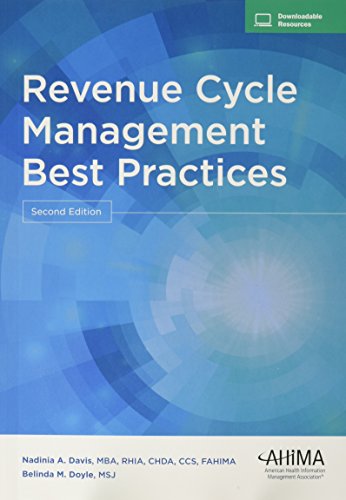
Revenue Cycle Management

The Revenue Cycle Management Best Practices is ideal for healthcare professionals, medical billing specialists, and healthcare administrators who aim to optimize their organization’s revenue cycle processes. Those looking to enhance efficiency, reduce errors, and improve financial outcomes within healthcare settings will greatly benefit from this comprehensive guide.
Pros:
- Provides detailed insights into effective revenue cycle management strategies.
- Published by the reputable AHIMA Press, ensuring authoritative content.
- Concise yet comprehensive with 199 pages of practical guidance.
- Includes updated practices relevant as of its 2016 edition.
- Helps streamline billing, coding, and collections processes for better cash flow.
Cons:
- The lack of physical dimensions information may be inconvenient for some buyers.
- Edition published in 2016 may not cover the latest industry changes or regulations.
- Primarily targets healthcare industry professionals, limiting appeal to a broader audience.
This book offers an in-depth exploration of the key components involved in successful revenue cycle management. It covers essential topics such as patient registration, medical coding, billing procedures, and payment collections. By following these best practices, users can significantly reduce claim denials and accelerate reimbursement cycles, ultimately improving the financial health of their organizations.
The guide’s structured approach allows readers to implement systematic improvements, fostering greater transparency and accountability throughout the revenue cycle. Its practical advice supports healthcare entities in adapting to evolving industry standards, ensuring compliance, and leveraging technology for optimized operations. This makes it a valuable resource for anyone seeking to enhance revenue performance and operational efficiency in healthcare settings.
Revenue Cycle Management

The Revenue Cycle Management: Don’t Get Lost In The Financial Maze is ideal for healthcare administrators, medical office managers, and financial professionals who seek to optimize their practice’s financial performance. This resource is perfect for those wanting to navigate the complexities of medical billing, coding, and revenue processes efficiently while minimizing errors and maximizing reimbursements.
Pros:
- Comprehensive coverage of revenue cycle management concepts and best practices.
- Published by the reputable Medical Group Management Association (MGMA).
- Detailed, illustrated edition that simplifies complex financial processes.
- Extensive content spanning 482 pages, providing in-depth insights.
- Compact and manageable size for easy reference (Height: 9.0 inches, Width: 0.95 inches, Length: 6.0 inches).
Cons:
- May be overwhelming for beginners due to its comprehensive nature.
- Publication date is from 2020, so some regulatory updates may need supplementing.
- Primarily focused on the US healthcare system, limiting international applicability.
This book offers a thorough exploration of the entire revenue cycle management process, from patient registration to final payment. Its illustrated format makes complex topics more accessible, enabling users to grasp essential financial workflows and compliance requirements easily. By following the guidelines presented, healthcare professionals can reduce claim denials and improve cash flow efficiency significantly.
Additionally, the insights provided by the Medical Group Management Association (MGMA) ensure that readers are receiving expert advice grounded in industry standards. The practical tools and strategies help streamline administrative tasks and foster better communication among billing teams, ultimately contributing to a more financially stable medical practice.
Revenue Cycle Management
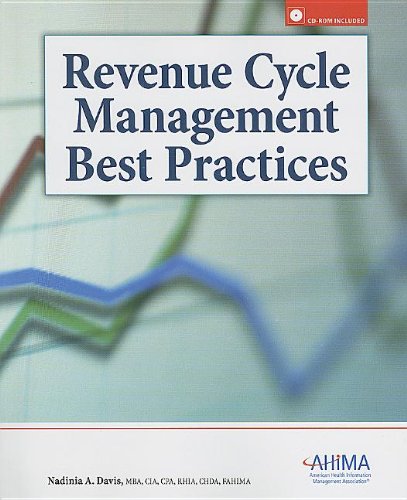
The book Revenue Cycle Management: Best Practices is ideal for healthcare professionals, medical billing specialists, and administrators seeking to optimize their organization’s financial processes. Those involved in managing patient billing, insurance claims, and revenue collection will find this resource especially valuable for improving efficiency and reducing errors.
Pros:
- Comprehensive coverage of revenue cycle management strategies and best practices.
- Published by the reputable American Health Information Management Association (AHIMA).
- Provides detailed guidance suitable for both beginners and experienced professionals.
- Compact and easy-to-handle dimensions (10 x 8 x 0.5 inches, 1.1 pounds).
- Contains 211 pages packed with actionable insights and practical advice.
Cons:
- Publication date is from 2011, which may mean some content is outdated given the fast-evolving healthcare industry.
- Limited to a single edition, so newer developments may not be included.
This book offers a thorough exploration of the entire revenue cycle management process, from patient registration and insurance verification to billing and collections. By following the best practices outlined, users can streamline workflows, reduce claim denials, and improve overall financial performance. The clear structure and authoritative insights make complex concepts accessible for readers.
Additionally, the guidance provided supports compliance with industry standards and regulatory requirements, helping organizations avoid costly penalties. The practical examples and actionable recommendations empower healthcare professionals to implement effective strategies that enhance cash flow and operational efficiency. Overall, this resource serves as a valuable tool for those aiming to master the intricacies of revenue cycle management in healthcare settings.
Revenue Cycle Management

The Revenue Cycle Management: A Best Practices Toolkit is ideal for healthcare administrators, billing professionals, and financial managers seeking to optimize their organization’s revenue cycle. If you aim to improve cash flow, reduce errors, and enhance overall financial performance in healthcare settings, this comprehensive toolkit is designed for you.
Pros:
- Comprehensive guidance on best practices for revenue cycle management
- Concise and practical with 140 pages of focused content
- Compact size (11.0 x 8.5 x 0.25 inches) and lightweight for easy reference
- Published by reputable HCPro, Inc. ensuring industry-relevant information
- Provides actionable strategies to reduce claim denials and accelerate payments
Cons:
- Publication date (2006) may mean some information is outdated in rapidly evolving healthcare environments
- Lacks digital or interactive formats, available only as a physical toolkit
This toolkit offers detailed insights into the entire revenue cycle management process, from patient registration to final payment. By following the recommended best practices, users can streamline billing procedures, reduce administrative errors, and improve compliance with healthcare regulations. The well-structured content makes it easy to implement effective strategies that directly impact an organization’s financial health.
With its practical approach, the toolkit benefits users by enhancing revenue capture and minimizing delays in reimbursement. The physical dimensions and weight make it a convenient resource for frequent consultation in busy healthcare environments. Overall, it serves as a valuable reference for professionals looking to strengthen their knowledge and skills in managing healthcare revenue cycles efficiently.
Humanizing Revenue Cycle Management

The Humanizing Revenue Cycle Management workbook is ideal for healthcare professionals, administrators, and financial managers seeking to enhance patient engagement and improve both the patient experience and financial outcomes. Those involved in revenue cycle management who want practical strategies and tactics to build stronger patient relationships and optimize revenue collection will find this resource invaluable.
Pros:
- Provides actionable patient engagement strategies tailored for healthcare settings.
- Compact and easy-to-use format with 71 pages of focused content.
- Published by an independent source, offering unbiased insights.
- Helps bridge the gap between patient satisfaction and financial efficiency.
- Includes practical tactics that can be implemented immediately.
Cons:
- Relatively short length may limit depth on some complex topics.
- Published in 2019, some data may require cross-referencing with current trends.
- Specific to healthcare revenue cycles, so may not apply to other industries.
This workbook provides a comprehensive approach to revenue cycle management by focusing on the human element — patient engagement. It breaks down effective communication techniques and process improvements that can lead to enhanced patient satisfaction and reduced billing errors. By following these strategies, healthcare providers can foster trust and transparency, which often translate into better payment compliance and fewer disputes.
Additionally, the workbook’s compact size makes it a convenient reference for busy professionals. Its clear layout and practical advice help users implement changes efficiently without needing extensive prior knowledge. Overall, this resource supports organizations aiming to balance compassionate patient care with strong financial performance.
No Money – No Mission: Best Practices Of Healthcare Revenue Cycle Management

No Money – No Mission: Best Practices of Healthcare Revenue Cycle Management is ideal for healthcare administrators, financial officers, and revenue cycle management professionals who aim to optimize their organization’s financial performance. This comprehensive guide is perfect for those seeking to improve billing processes, reduce denials, and enhance overall revenue collection in healthcare settings.
Pros:
- Provides in-depth strategies for effective healthcare revenue cycle management.
- Comprehensive coverage with 475 pages of expert insights and practical applications.
- Published by Productivity Press, ensuring high-quality and reliable content.
- Includes best practices that help reduce claim denials and improve cash flow.
- Suitable for a wide range of healthcare organizations and professionals.
Cons:
- The weight of approximately 1.74 pounds may make it less portable for some readers.
- Published in 2016, some information may require updates to reflect recent industry changes.
- Dense content might be overwhelming for beginners without prior knowledge of revenue cycle management.
This edition offers a robust framework for understanding and managing the complexities of the healthcare revenue cycle. By focusing on best practices, it guides users through optimizing processes such as patient registration, coding, billing, and collections. This structured approach helps healthcare organizations maximize their revenue potential while ensuring compliance with regulatory requirements.
The detailed explanations and case studies provide actionable insights that translate directly into improved operational efficiency and financial outcomes. Users benefit from enhanced cash flow management and reduced administrative errors, which are critical for sustaining healthcare services. Overall, this book serves as an essential resource for those dedicated to mastering the financial aspects of healthcare delivery.
Reinventing Revenue Cycle Management

Ideal for healthcare administrators and financial officers seeking to enhance their facility’s billing processes, Reinventing Revenue Cycle Management: Delivering Next-Level Patient Experiences offers innovative strategies to optimize revenue flow while improving patient satisfaction. This resource is perfect for those aiming to integrate cutting-edge solutions in healthcare finance management.
Pros:
- Provides actionable insights into improving patient billing experiences.
- Published by the reputable Audible Studios on Brilliance, ensuring high-quality content.
- Focuses on modernizing and streamlining revenue cycle management processes.
- Offers strategies that can lead to increased revenue and reduced administrative burdens.
Cons:
- May require a baseline understanding of healthcare financial systems to fully benefit.
- Primarily targeted at healthcare professionals, limiting relevance for other industries.
This publication, released in April 2024, delves into the complexities of revenue cycle management with a focus on elevating the overall patient experience. It highlights the importance of integrating technology and patient-centric approaches to streamline billing and collections effectively. Users can expect to learn how to reduce errors and delays in payment processing, leading to improved cash flow.
By adopting the principles outlined in this work, healthcare providers can not only enhance financial performance but also build stronger patient trust and satisfaction. The resource emphasizes the dual benefit of operational efficiency and patient engagement, making it a valuable tool for institutions aiming to stay competitive in a rapidly evolving healthcare landscape.
Medical Revenue Cycle Management – The Comprehensive Guide

The Medical Revenue Cycle Management – The Comprehensive Guide is an essential resource for healthcare providers, medical office managers, and billing professionals seeking to optimize their financial processes. Ideal for those aiming to improve their understanding of the revenue cycle, this guide offers a clear roadmap for unlocking financial fitness within medical practices and allied health services. Whether you are new to the field or looking to enhance your proficiency, this book provides practical insights to streamline operations and maximize revenue.
Pros:
- Provides a detailed and easy-to-follow roadmap for managing the medical revenue cycle effectively
- Written by an independently published author with industry expertise
- Compact size with 163 pages, making it a convenient reference guide
- Focuses on unlocking financial fitness specifically tailored for healthcare providers
- Published recently in 2023, ensuring up-to-date information and practices
Cons:
- May be too specialized for readers outside the healthcare or medical billing sectors
- Lacks extensive visual aids or charts that could enhance comprehension
- At 0.56 inches thick, it might not cover extremely in-depth technical details some advanced users seek
This comprehensive guide covers all critical aspects of medical revenue cycle management, including patient registration, billing, coding, and payment collection processes. By following the strategies outlined, users can significantly reduce claim denials, improve cash flow, and increase overall operational efficiency. The book’s structured approach helps users identify bottlenecks and implement best practices tailored to the unique needs of healthcare providers.
Beyond the technical processes, the guide emphasizes the importance of aligning financial management with patient care goals. This dual focus ensures that users not only maximize revenue but also maintain compliance and enhance patient satisfaction. With clear, concise language and practical tips, this guide serves as an invaluable tool for anyone looking to achieve financial proficiency in the medical billing and revenue cycle domain.
Revenue Cycle Management

The Revenue Cycle Management A Complete Guide – 2020 Edition is ideal for healthcare professionals, medical billing specialists, and practice managers looking to deepen their understanding of the revenue cycle process. If you want to optimize your healthcare facility’s financial performance or enhance billing accuracy, this comprehensive guide is tailored for you.
Pros:
- Detailed explanations covering every stage of the revenue cycle management
- Authored by 5STARCooks, ensuring reliable and well-researched content
- Comprehensive with 250 pages packed with practical insights
- Up-to-date information as of its 2019-09-06 publication date
- Helps improve billing accuracy and reduce claim denials
Cons:
- Published in 2019, some regulatory updates after this date may not be included
- Lengthy content may be overwhelming for beginners
This guide meticulously covers the entire revenue cycle management process, from patient registration and insurance verification to claims submission and payment collection. By understanding each phase, users can identify bottlenecks and implement strategies to enhance cash flow efficiently. The well-structured format makes it easier for professionals to navigate complex procedures and compliance requirements.
Additionally, the book offers valuable tips for reducing claim denials and accelerating reimbursements, which are critical for maintaining a healthy financial status in healthcare organizations. The practical examples and case studies provided enable readers to apply concepts directly to their daily operations, resulting in improved operational efficiency and increased revenue.
Predictable Revenue

Predictable Revenue: Turn Your Business Into A Sales Machine with the $100 Million Best Practices of Salesforce.com is ideal for entrepreneurs, sales professionals, and business owners who want to build a scalable and consistent sales pipeline. If you are looking to transform your sales process using proven strategies from a highly successful company like Salesforce.com, this audiobook by PebbleStorm, Inc. is perfect for you. It is especially valuable for those who want to grow their revenue predictably and efficiently.
Pros:
- Offers proven sales strategies based on the success of Salesforce.com
- Provides actionable steps to build a scalable and repeatable sales process
- Delivered by Audible, ensuring high-quality audio experience
- Published in 2013, offering time-tested best practices
- Helps improve lead generation and conversion rates
Cons:
- Some strategies may feel outdated for rapidly evolving sales technologies
- Focuses primarily on B2B sales, which may limit applicability for B2C businesses
- Requires commitment to implement the detailed processes effectively
This audiobook delves into the core principles that made Salesforce.com a powerhouse in sales. It breaks down complex sales techniques into clear, manageable steps that can be adapted to almost any business. Listeners will benefit from understanding how to generate consistent leads, segment their sales efforts, and optimize outreach to maximize revenue. The methods are designed to reduce reliance on unpredictable sales tactics and instead focus on creating a repeatable and predictable sales system.
The benefits extend beyond just increasing sales figures; users will gain insights into building a sustainable sales infrastructure that supports long-term growth. By following the best practices outlined, businesses can expect enhanced team productivity, better alignment between sales and marketing, and ultimately, a stronger bottom line. This makes Predictable Revenue a valuable resource for anyone serious about transforming their sales approach into a scalable machine.
Frequently Asked Questions
What Are The Key Steps In Revenue Cycle Management?
The key steps include patient registration, insurance verification, charge capture, claim submission, payment posting, and denial management. Each step ensures accurate billing and timely reimbursement, improving cash flow and reducing errors in healthcare financial operations.
How Can Patient Engagement Improve Revenue Cycle Outcomes?
Engaging patients early improves communication and payment transparency. It reduces billing confusion and increases timely payments. Effective patient engagement enhances satisfaction and supports a smoother revenue cycle process, positively impacting financial outcomes.
Why Is Denial Management Important In Revenue Cycle?
Denial management helps identify and correct claim errors quickly. It reduces lost revenue and speeds up payment recovery. Efficient denial handling improves overall financial health and maintains compliance with payer requirements.
What Role Does Technology Play In Revenue Cycle Management?
Technology automates billing, coding, and claim submissions, reducing manual errors. It provides real-time data analytics for better decision-making. Advanced tools streamline processes and enhance revenue cycle efficiency.
How Can Healthcare Providers Reduce Claim Denials?
Providers can reduce denials by verifying insurance details upfront, coding accurately, and submitting clean claims. Training staff and using automated tools also help detect errors before submission, increasing first-pass claim approval rates.
What Are Best Practices For Improving Patient Financial Experience?
Clear communication about costs, flexible payment options, and easy billing access improve patient experience. Educating patients on insurance benefits and offering personalized support reduces financial stress and boosts timely payments.
Conclusion
Revenue cycle management is crucial for healthcare providers. It ensures financial health and improves patient experiences. By following best practices, organizations can streamline processes and minimize errors. Focusing on clear communication with patients is vital. It enhances trust and promotes timely payments.
Regular training for staff helps maintain efficiency. It also keeps everyone updated on the latest regulations and technologies. Implementing a robust data management system is essential. It aids in accurate billing and reduces delays. Analyzing key performance indicators (KPIs) can highlight areas for improvement.
This allows for targeted strategies to boost revenue. Collaborating with all stakeholders creates a cohesive approach. It fosters a supportive environment that benefits both staff and patients. Embracing these practices leads to sustainable financial success. It also improves the overall patient experience.
By prioritizing these methods, healthcare providers can navigate the complexities of revenue cycle management effectively and efficiently.

Similar Posts