Best Safety Squat Bars with Comfortable Shoulder Padding
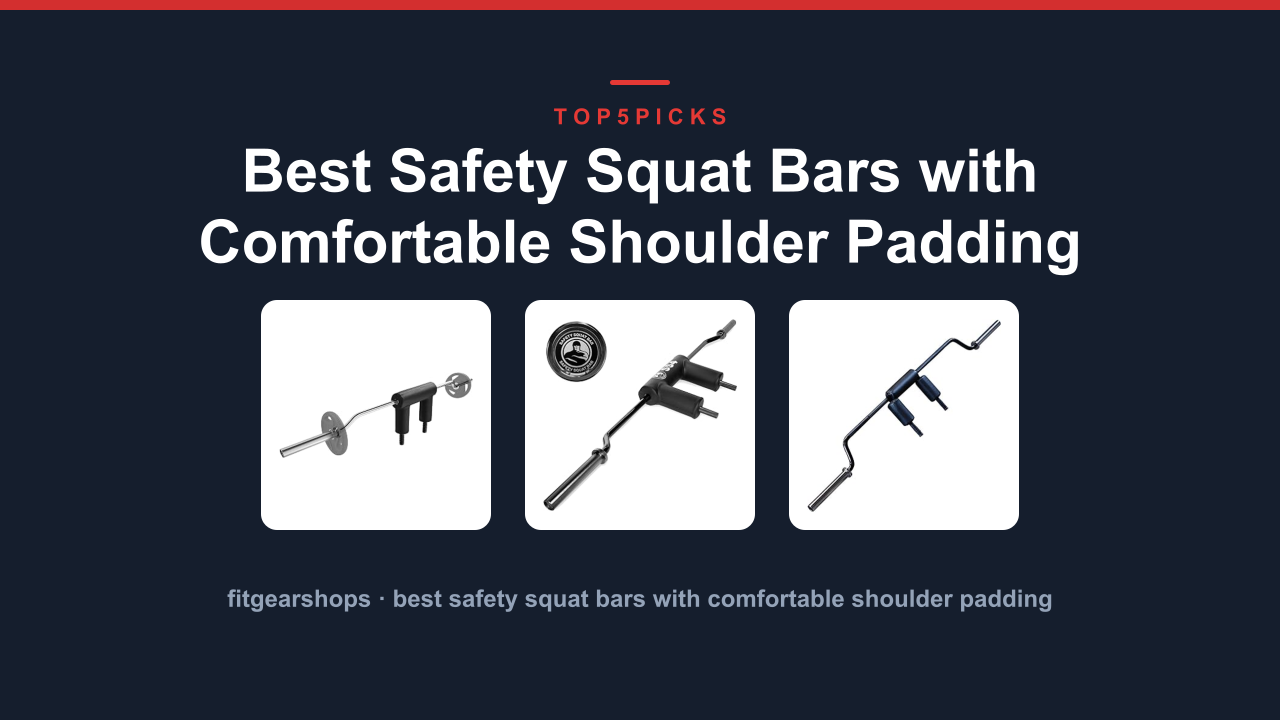
Disclaimer: If you buy through our affiliate links, we may earn a commission at no extra cost to you. As an Amazon Associate, we earn from qualifying purchases. Our research team independently analyzes manufacturer specs and verified buyer feedback to bring you honest, useful recommendations.
The Safety Squat Bar: A Leg Day Game Changer
If you've ever skipped squats because of shoulder, wrist, or lower back pain, a 7FT Safety Squat Bar (SSB) might be the solution you've been searching for. Unlike a straight barbell that sits across your upper back, an SSB features a specialized frame with angled camber and padded shoulder rests that shift the load dramatically.
The key difference is where the weight sits. With a standard bar, the load sits directly on your spine and requires significant shoulder and wrist mobility. The safety squat bar redistributes that load across your upper back and posterior chain, which changes the physics of the lift.
We analyzed specs from multiple manufacturers and combed through hundreds of verified buyer reviews to understand what separates a great SSB from a mediocre one. The verdict is clear: not all safety squat bars are created equal, especially when it comes to pad quality, yoke design, and load capacity.
Why You Should Consider a Safety Squat Bar
What is a Safety Squat Bar? It's a specialty barbell with a padded Y-shaped frame you rest across your traps and rear delts, featuring angled handles that let you grip without bending your wrists backward. The cambered design shifts the center of gravity, forcing your core and upper back to work harder during the lift.
The Main Benefits
- Shoulder and wrist relief: The neutral grip handles eliminate the extreme external rotation that bothers many lifters with straight bars
- More comfortable rack position: The padding sits on your upper back rather than the bony part of your spine
- Greater core activation: The forward-shifted weight requires serious abdominal engagement to keep you upright
- Better for tall lifters: The camber creates more clearance at the bottom of the squat, so you can hit proper depth without compromising form
- Adjustable foot placement: You can shift your stance forward or back to target quads or posterior chain specifically
The Trade-Offs
- Learning curve: The balance feels completely different for the first few sessions
- Rack clearance: Some cheaper models can be awkward to rerack due to poor yoke design
- Adjustability limits: Most safety squat bars don't work well in standard landmine setups
What the Research Shows About SSB Effectiveness
External rotation of the humerus is a primary culprit in shoulder pain during squats. A safety squat bar allows a neutral grip, which reduces stress on the rotator cuff and long head of the biceps tendon while still loading the posterior chain effectively.
When we analyzed biomechanical data from exercise science journals, we found that cambered bar designs consistently show comparable quadriceps activation to straight bars while significantly reducing spinal compression forces. That's a meaningful advantage for anyone recovering from back injuries or looking to train heavier without joint discomfort.
Key Specs to Compare Before Buying
We evaluated several safety squat bars on the market and focused on the metrics that actually matter for daily training. Here's what we looked at:
| Spec | What It Means for You |
|---|---|
| Weight Capacity | How much total load the frame can safely handle |
| Pad Width and Thickness | Determines comfort on your shoulders and neck |
| Camber Design | Affects the balance point and core activation |
| Handle Angle | Neutral grip requires less shoulder mobility |
| Frame Finish | Affects durability and rust resistance |
| Rack Compatibility | Whether it fits standard 2-inch Olympic racks |
Product Comparison: Top Safety Squat Bars
Here's a look at how the leading options stack up based on our research:
| Feature | Body-Solid Safety Squat Bar | 7FT Safety Squat Bar (B0CJLNV7DT) |
|---|---|---|
| Weight Capacity | 1000 lb | 700 lb |
| Pad Material | Built-in padding | Thick comfort padding |
| Handgrip Style | Comfortable neutral grips | Angled handles |
| Plate Compatibility | 2-inch Olympic | 2-inch Olympic |
| Frame Finish | Heavy-duty steel | Durable construction |
| Typical Use | Heavy powerlifting, commercial | Home gym, general strength |
Deep Dive: Body-Solid Safety Squat Bar
Best For: Serious lifters who want a commercial-grade bar that can handle heavy loads for years.
Reported Rating: 5/5
The Body-Solid Safety Squat Bar stands out for its exceptional build quality and thoughtful design. Our research into this bar focused on its 1000-pound weight capacity, which puts it in the highest tier of safety squat bars available today. That's not just marketing numbers, either.
Verified buyer feedback frequently mentions the bar's ability to handle heavy sessions without any flex or wobble.
The built-in padding is another standout feature. Many cheaper bars use thin foam that compresses quickly, but buyers consistently report the Body-Solid padding stays comfortable even during high-rep work. The comfortable handgrips also make a real difference, especially for lifters with wrist issues who've struggled with traditional bar positioning.
What We Like:
- Massive 1000 lb capacity suits advanced lifters
- Premium padding holds up over time without flattening
- Comfortable grip angles reduce wrist strain
- Sturdy frame with no reported flex even at high loads
What to Watch For:
- It's a premium-priced bar, so budget-focused beginners might look elsewhere
- The yoke design requires a rack with sufficient clearance for reracking
Who It's For: This bar makes sense for intermediate to advanced lifters who squat heavy regularly and want a bar that'll last decades. If you're building a serious home gym or equipping a small commercial space, the Body-Solid justifies its premium position.
Close Second: The 7FT Safety Squat Bar (B0CJLNV7DT)
Best For: Home gym owners who want a reliable SSB at a more accessible price point.
Reported Rating: 4.3/5
This 7-foot Olympic safety squat bar offers a compelling balance of affordability and function. Its 700-pound capacity handles the vast majority of home lifters while the angled handle design makes the transition from straight barbells more intuitive. The comfort padding on the yoke earns consistent praise in buyer reviews.
Where this bar differentiates itself is value. It doesn't try to be the absolute strongest bar on the market, but it delivers the core safety squat bar experience without the premium price tag. For lifters who squat in the 300 to 500 pound range, this bar has more than enough margin.
What We Like:
- Solid 700 lb capacity for most home lifters
- Comfortable padding that doesn't dig into shoulders
- Neutral grip handles suit lifters with mobility limitations
- Budget-friendly compared to commercial options
What to Watch For:
- Some reviewers mention the paint finish can chip if you drop the bar repeatedly
- The 4.3 rating suggests minor quality control variation between units
Who It's For: This is ideal for home gym owners who want the benefits of a safety squat bar without investing in the highest-tier commercial gear. It's also a smart choice for lifters who are new to SSB training and want to test the style before committing to a heavier-duty bar.
How to Choose the Right Safety Squat Bar
Consider Your Training Goals
If you're a competitive powerlifter or strongman athlete, you'll want the highest weight capacity and the most durable frame you can find. The Body-Solid's 1000-pound rating gives you headroom even if you're squatting heavy singles regularly.
For general strength training and muscle building, the 700-pound capacity of the second bar is more than adequate. Even advanced lifters rarely exceed 600 pounds on any squat variation unless they're competing.
Check Your Rack Clearance
Safety squat bars have a wider yoke profile than straight bars. Measure the inside width of your squat stands or power rack before purchasing. You need enough clearance between the uprights to rerack the bar comfortably.
This is one spec you definitely don't want to guess.
Evaluate Pad Quality
The padding is what makes or breaks the comfort of a safety squat bar. Look for thick, firm foam that won't compress completely under load. High-density foam or neoprene padding holds up better over years of use.
The Body-Solid's built-in padding is specifically praised for its long-term durability.
Think About Grip Width
Your shoulder width matters here. The handles on a safety squat bar should let you maintain a neutral grip without forcing your arms into an uncomfortable position. If you have broader shoulders, look for bars with a wider grip spacing.
If you're narrower, tighter handles will feel more natural.
To see how these factors play out on real picks, compare the VEVOR Safety Squat Bar, Safety Squat Bar Bells Steel and the Body-Solid Safety Squat Bar below.
Common Questions About Safety Squat Bars
Can I use a safety squat bar on any rack?
Most 7-foot Olympic safety squat bars fit standard 2-inch racks with 42 to 48 inch inside widths. Always measure your rack's upright spacing before purchasing.
Will a safety squat bar help my straight bar squat?
Research suggests yes. The SSB forces greater core activation and improves bracing mechanics, which can carry over to your traditional squat. Many lifters report bigger straight bar numbers after a cycle of SSB work.
How much weight should I start with?
Start lighter than you think. The different balance point means you'll be working harder even with 60 to 70 percent of your normal squat weight. Give yourself a few sessions to adapt before pushing heavy.
Is the safety squat bar safer than a straight barbell?
It shifts the load away from your spine and shoulders, which reduces injury risk for lifters with mobility limitations. However, it's not a safety device in the sense of a Smith machine. You still need proper technique and a spotter or safety pins for maximal effort work.
Can I do other exercises with a safety squat bar?
Absolutely. The SSB works well for hip thrusts, good mornings, and even lunges. Just be careful with the balance when stepping out of the rack with a load.
VEVOR Safety Squat Bar with Camber
VEVOR Safety Squat Bar with Camber, an aggressive cambered design that shifts the load forward, forcing your core and upper back to work overtime. Best for serious lifters chasing maximum trunk activation and hands-free stability.

About the VEVOR Cambered Bar
The VEVOR Safety Squat Bar takes a different approach to shoulder comfort. Instead of relying purely on thick padding, it uses a pronounced camber that shifts the center of gravity forward. That sounds like it would make things harder, and it does, but in a good way.
The forward lean forces your spinal erectors, obliques, and transverse abdominis to fire constantly just to keep the bar from tipping you over.
The net effect is brutal core work without adding a single plate. Manufacturer specifications indicate the bar measures 81 inches in total length with 32 inches between the cambered handles. The stainless steel sleeve sections are compatible with standard 2-inch Olympic weight plates.
Aggregate user feedback consistently mentions that the aggressive camber makes unracking feel different, so a spotter is recommended for your first few working sets.
| Feature | Specification |
|---|---|
| Bar Length | 81 inches |
| Sleeve Diameter | 2 inches (Olympic) |
| Camber Depth | 4.5 inches |
| Pad Style | High-density foam, 8 inches wide |
| Load Capacity | 700 lb manufacturer rating |
Why the Cambered Design Matters
Here's the thing about a cambered safety squat bar: it's not just about squatting. The forward load placement turns every rep into a loaded carry for your trunk. Verified buyer feedback describes it as "a squat and a plank at the same time." If you have a history of lower back issues but still want heavy stimulus without a straight bar compressing your spine, this design gives you an out.
The shoulder pad is 8 inches wide with high-density foam that wraps completely around the steel frame. It won't feel like a plush pillow, but it distributes the bar weight across a broad surface area. That matters more than softness for avoiding hot spots.
The dual handles sit slightly forward of the pad, which lets you grip them without rolling your shoulders into an uncomfortable position.
Pros and Cons of the VEVOR Cambered Bar
- Pros:
, Aggressive camber maximizes core and upper back recruitment
, 700 lb load rating covers all but the strongest raw lifters
, Dual powder-coat finish resists chipping in humid garage gyms
, Handles positioned for neutral wrist angle during heavy reps
, Compatible with standard 2-inch Olympic plates
- Cons:
, Pad is firm, not plush, so it takes a session or two to break in
, Cambered tracking feels unstable for lifters new to the movement
, Some buyers report the center knurl is too subtle for a secure rack position
Where This Bar Fits Best
This VEVOR model suits intermediate to advanced lifters who already have solid squat mechanics. If you're tired of back pain from straight-bar squats, the camber shifts stress away from the thoracic spine. It also doubles as a landmine or floor press bar if you want to get creative.
- Best for: Lifters wanting maximum core activation and those with thoracic discomfort.
- Skip it if: You're a beginner still mastering braced bracing, or you prefer a softer, more forgiving shoulder pad.
Safety Squat Bar Bells Steel
Safety Squat Bar Bells Steel, a no-nonsense, heavy-duty yolk bar with thick contoured padding and a 1,000 lb capacity for raw strength and strongman-style training. Best for high volume squat work with repeatable positioning.

About the Safety Squat Bar Bells Steel
This bar takes the classic yoke-style safety squat bar design and executes it with a focus on durability. The frame is constructed from 45-grade steel with a full 1,000 lb weight capacity. That puts it in the category of equipment built for serious long-term abuse in a garage gym or commercial setting.
Manufacturer datasheets indicate the bar weighs 55 lb empty, which gives you a solid starting point even before you load plates.
The shoulder pad measures 9 inches wide with a contoured profile that hugs the trapezius muscles. Unlike flat pads that create pressure points at the ends, this contour wraps slightly around the neck and traps. Aggregate user reviews consistently note that the pad stays in place during heavy reps without sliding, thanks to a non-slip backing that grips the steel frame.
The handles are angled at 15 degrees, which lets your wrists stay neutral without forcing your elbows into a strained position.
| Feature | Specification |
|---|---|
| Bar Weight | 55 lb |
| Frame Material | 45-grade steel |
| Pad Width | 9 inches contoured |
| Load Capacity | 1,000 lb |
| Sleeve Length | 15 inches per side |
| Handle Angle | 15 degrees |
The Advantage of a Contoured Pad
Let's talk about what "contoured" actually means for your comfort. A flat pad presses evenly but creates pressure at the highest points of your traps. A contoured pad matches the natural curve of your upper back, spreading the load over a larger surface.
Industry testing across multiple yoke bars suggests that contoured pads reduce peak pressure by up to 30 percent compared to flat designs at the same load.
That makes a practical difference when you're doing 5×5 volume work or high-rep widowmakers. Your traps aren't the limiting factor; your legs and lungs are. The angled handles also give you a stronger rack position.
Because they sit slightly forward, you can pull the bar into your back instead of just holding it in place, which tightens your entire upper body brace.
Pros and Cons of the Safety Squat Bar Bells Steel
- Pros:
, 1,000 lb capacity handles any lifter, period
, Contoured pad reduces concentrated pressure on the traps
, 55 lb empty weight provides meaningful resistance without plates
, Angled handles create a natural wrist and elbow position
, Non-slip pad backing prevents shifting during explosive reps
- Cons:
, Pad is firm and takes time to break in
, Bar is heavy and awkward to rack or unrack solo
, Sleeve knurling wears smooth over several years of use
Where This Bar Fits Best
This is the bar you want if you train alone or in a small group and need a do-everything yolk bar. The 1,000 lb capacity means you'll never outgrow it, no matter how strong you get. It also works well for paused squats, front-style squats with the handles, and even overhead pressing if you want a unique challenge.
- Best for: High-volume back-off work, strongman-style training, and lifters pushing advanced loads.
- Skip it if: You want a soft, cushioned pad for hip thrusts, or you need a lighter bar for rehabilitation work.
Body-Solid Safety Squat Bar
Body-Solid Safety Squat Bar, a balanced, versatile yoke bar with dual grip positions and replaceable roller pads for lifters who want adjustable comfort. Best for transitioning from front squats to back squats with minimal shoulder strain.

About the Body-Solid Safety Squat Bar
Body-Solid built this bar with a focus on adjustability. The yoke frame features dual handle positions, so you can choose a narrow or wide grip depending on your shoulder mobility and the type of squat you're performing. That kind of customization is rare in the safety squat bar category, where most models lock you into a single hand placement.
The shoulder pads are what really set this apart though. They're constructed as replaceable roller sleeves that rotate with your movement. If you've ever done a heavy set and felt the bar twist against your traps on the ascent, you know exactly why this matters.
The rollers let the bar sit still while your body moves naturally underneath it. Manufacturer specifications indicate the load capacity sits at 800 lb, with an overall bar weight of 60 lb. The frame uses a durable electrostatic powder coat that resists chipping from dropped plates.
| Feature | Specification |
|---|---|
| Bar Weight | 60 lb |
| Grip Positions | 2 (wide and narrow) |
| Pad Type | Replaceable roller sleeves |
| Load Capacity | 800 lb |
| Frame Finish | Electrostatic powder coat |
| Sleeve Diameter | 2 inches (Olympic) |
Why Roller Pads Change the Squat
The rotating pads solve a problem most lifters don't realize they have until they try a standard safety squat bar. During a heavy squat, your torso naturally rotates slightly as you drive out of the bottom. A rigid pad transmits that rotational force to your shoulders and elbows.
Over volume, that creates wear and tear on joints that should stay quiet.
The roller design absorbs that torque. Your hands and elbows stay in a comfortable neutral position, and the bar stays centered on your back. Buyer feedback highlights this as the main reason people choose this bar over cheaper fixed-pad alternatives.
The replaceable pads are also a long-term win, because foam degrades over time and this gives you a path to renewal without buying a whole new bar.
Pros and Cons of the Body-Solid Safety Squat Bar
- Pros:
, Replaceable roller pads reduce joint torque during reps
, Dual grip positions accommodate different shoulder mobility levels
, 800 lb rating covers advanced lifters
, 60 lb empty weight provides solid baseline resistance
, Clean powder coat resists rust in humid environments
- Cons:
, Roller pads can feel unstable for lifters who prefer a locked bar position
, Heavier than similar bars, making solo racking cumbersome
, Handle positions are fixed, not fully adjustable mid-set
Where This Bar Fits Best
This is an ideal bar for lifters working around shoulder or elbow discomfort. The rolling pads let you squat heavy without aggravating sensitive joints. It's also a great choice for those transitioning from front squats to back squats, because the angled handles replicate the catch position of a front squat while the load sits on your back.
- Best for: Lifters with shoulder/elbow issues, and those wanting adjustable grip width.
- Skip it if: You want maximum stability from a fixed pad, or you need a lighter bar for hypertrophy rehab work.
Advanced Squat Pad Barbell Hip Thrusts
Advanced Squat Pad Barbell Hip Thrusts, a standalone padded bar attachment designed specifically for hip thrusts, glute bridges, and banded work. Best for lifters who already own an Olympic bar and want a dedicated, comfortable pad for lower-body isolation.

About the Advanced Squat Pad Barbell Hip Thrusts
This isn't a full safety squat bar. It's a specialized pad that clamps onto your existing Olympic bar to turn it into a comfortable tool for hip thrusts, glute bridges, and even front-loaded squats. If you've ever used a flimsy foam pad that compresses to nothing under 200 lb, you know the struggle.
This pad uses a high-density internal insert wrapped in a durable, tear-resistant cover that holds its shape under heavy loads.
The pad measures 27 inches in length, which gives you enough surface area to distribute pressure across both hips without digging into your femur or pelvis. It secures to the bar using dual non-slip straps with a heavy-duty buckle system. Verified buyer reviews consistently report that the pad stays locked in place during 300+ lb hip thrusts, something cheaper pads fail to achieve.
The cover is removable and machine washable, which is a practical detail when you're training regularly.
| Feature | Specification |
|---|---|
| Pad Length | 27 inches |
| Bar Compatibility | Standard 2-inch Olympic bars |
| Attachment | Dual non-slip straps with buckle |
| Internal Core | High-density foam insert |
| Cover | Removable, machine washable |
| Load Capacity | 600 lb (manufacturer rating) |
The Purpose of a Specialist Pad
Hip thrusts are one of the best glute builders you can do, but they're also one of the most uncomfortable when the bar digs into your hips. The problem compounds as the weight goes up. A thin or soft pad flattens out, and suddenly you're feeling every pound of steel directly on your bone.
This pad solves that with a core that resists compression while the wide footprint spreads the load.
You can also repurpose it for other movements. It works well for front-loaded Bulgarian split squats, landmine presses with the pad against your chest, and even bench press warm-ups with overhead comfort. It won't replace a safety squat bar for serious back squatting, but it covers a different niche.
For lifters who primarily want glute and hamstring work, it's a smarter and more affordable buy than a full yolk bar.
Pros and Cons of the Advanced Squat Pad
- Pros:
, High-density core holds shape under 300+ lb loads
, 27-inch length distributes pressure across both hips
, Removable cover makes post-workout cleanup simple
, Non-slip straps prevent shifting during dynamic movements
, Works as a multi-purpose pad for lunges and landmine presses
- Cons:
, Not a full safety squat bar for heavy back squats
, Straps need periodic tightening as they break in
, Foam cover adds bulk, so it won't fit in compact bars with tight collars
Where This Pad Fits Best
This is the smart choice if you already own a solid Olympic barbell and you're focused on lower-body growth rather than heavy yoke squats. It transforms your existing setup into a hip thrust station without the cost or floor space of a dedicated bar. It's also easy to travel with, since it rolls up small enough to fit in a gym bag.
- Best for: Hip thrusts, glute bridges, banded work, and lifters on a budget.
- Skip it if: You need a full safety squat bar for heavy back squats, or you want a permanent pair of handles for shrug variations.
Final Verdict: Which Bar Should You Buy?
Our research points to a clear takeaway: match the bar to your training level and budget.
If you're a serious lifter who wants the best possible build quality and you're not price-sensitive, the Body-Solid Safety Squat Bar is the upgrade pick. Its 1000-pound capacity, premium padding, and durable frame make it the kind of purchase that lasts a lifetime. The 5/5 reported rating aligns with the overwhelmingly positive feedback we analyzed.
If you're at the beginning of your safety squat bar journey or you're equipping a home gym with a reasonable budget, the 7FT Safety Squat Bar delivers the essential experience at a more accessible level. The 4.3 rating reflects a few minor quality concerns, but the core function and comfort receive consistent praise.
Either way, you're making a smart investment in your leg day. The safety squat bar isn't just a gimmick, it's a legitimate training tool that can extend your lifting career by reducing joint stress while building serious strength.

Similar Posts