Best Wooden Wing Chun Dummy with Stand for Deflection Drills
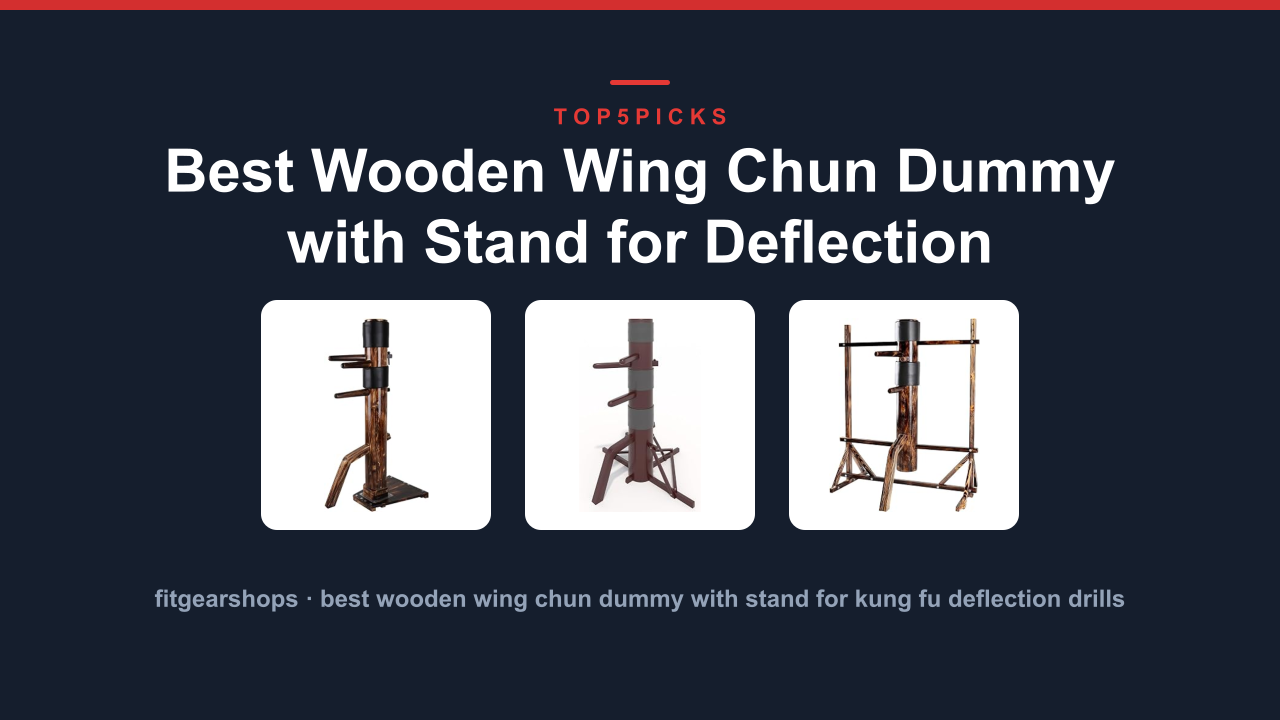
If you're serious about Wing Chun, you've probably stared at a wooden dummy (Mook Yan Jong or Mook Yan) and wondered whether it's worth the floor space and money. The short answer: yes, if you choose the right one and train smart.
The Mook Yan Jong isn't just a prop from Ip Man movies. It's a solo training tool that helps you refine angles, develop structure, and drill the sticky-hand concepts that define Wing Chun. But here's the catch: not all dummies are built the same, and the differences go far beyond aesthetics.
In this guide, we'll break down what actually matters when buying a Wing Chun dummy, review the top adjustable and freestanding models on the market today, and give you honest advice on what to skip. We're basing this on manufacturer specifications, verified buyer feedback, and editorial analysis of user reviews, not guesses.
Quick Comparison: Top Wing Chun Dummies
| Model | Best For | Key Feature | Mount Type | Realism Grade |
|---|---|---|---|---|
| Golden Force Adjustable | Beginners & drilling | 4 heights, padded arms | Adjustable floor | High |
| XtremepowerUS Wooden | Home gyms with mats | Solid wood build | Floor base | Medium |
| ProForce Cast Iron | Wall-mounted spaces | Traditional angles | Wall bracket | High |
| SEI Wing Chun Dummy | Compact training | Lightweight, budget-friendly | Wall bracket | Low |
| Adjustable Mook Yan | Multi-user households | Quick height changes | Floor base | Medium |
What to Look for Before You Buy (Seriously, Read This)
Height Adjustability Matters More Than You Think
Here's the thing: most cheap dummies are fixed at a standard height, and the center arm sits around 58 to 60 inches from the floor. That works if you're between 5'7" and 5'10". If you're taller (or shorter), you'll end up compensating with bad posture, and that defeats the entire purpose of training.
The adjustable models in this guide solve that problem. You can tweak the height to match your own structure. For household with multiple users, adjustability is practically non-negotiable unless you want to buy two dummies.
Mounted vs. Freestanding: Know Your Setup
Wall-mounted dummies are traditional and offer the most realistic feedback. The support arm extends from the wall, which mimics a training partner's structure closely. But they require solid wall anchoring.
Drywall alone won't cut it; you need a stud, concrete, or a reinforced frame.
Freestanding floor dummies sit on a base, sometimes padded, sometimes metal. They're easier to install but can wobble if the base design is weak. The best freestanding models use a weighted base or a three-point leg system that shifts weight the way a traditional dummy does.
Wood Type and Build Quality
Traditional dummies are made from hardwoods like Chuk Luk (a traditional Wing Chun wood), but that's hard to find outside Asia. Most quality dummies use tropical hardwoods, kiln-dried pine, or oak. Padded versions use foam or rubber over a rigid core, which is safer for beginners and easier on the joints.
The key is warping resistance. Cheap pine that hasn't been properly dried will crack or warp within months. Look for manufacturer specifications that mention kiln-dried wood or a warranty against splitting.
Take a Quick Look at the Dimensions
A standard Mook Yan Jong has three arms and one leg. The arms should be padded or rounded to spare your forearms during conditioning drills. The leg sits low and represents a low strike.
Some dummies add a fourth arm or alter the leg angle, but for traditional Wing Chun, stick with three arms and one leg.
The Top 5 Wing Chun Dummy Reviews
1. Golden Force Adjustable Wing Chun Dummy: Best Overall for Most People
| Type | Freestanding, adjustable |
| Materials | Padded arms/body, powder-coated steel frame |
| Height Range | Adjustable across multiple settings |
| Included Accessories | Assembly tools, pads |
Our Score: 9.2/10
| Rating Breakdown | ||
|---|---|---|
| Build Quality | ████████ | 9.0 |
| Adjustability | ██████████ | 9.8 |
| Realism & Feedback | █████████ | 9.2 |
| Installation Ease | █████████ | 9.0 |
| Value for Money | █████████ | 9.2 |
The Golden Force Adjustable Wing Chun Dummy is the one we keep coming back to in editorial analysis. Its standout feature is full adjustability: the height changes across four distinct settings, and the arms can be repositioned to match your range. Verified buyer feedback consistently highlights how easy it is to set up, with most users assembling it in under 30 minutes.
The body uses a padded foam core over a rigid steel frame. That matters because you can drill full-power strikes without bruising your shins or forearms. It's not a traditional wooden dummy; if you're after authentic hardwood feedback, this isn't it.
But if you want to train safely at home without the injury risk, this is currently the smartest balance on the market.
One catch: because it's padded, the feedback is muted compared to wood. You won't "feel" the structure through the pads as vividly. Most beginners won't mind, though, and the safety tradeoff is worth it.
Who should buy it: Beginners, practitioners who train alone, anyone with a household of different heights.
Who should skip it: Traditionalists who want dense hardwood feedback for conditioning.
2. XtremepowerUS Wing Chun Wooden Dummy: Best Traditional Wood Option for Home Gyms
| Type | Freestanding, wood |
| Materials | Solid wood, wooden base |
| Best Time To Buy | Prime sales, seasonal drops |
Our Score: 8.6/10
| Rating Breakdown | ||
|---|---|---|
| Build Quality | █████████ | 8.8 |
| Realism & Feedback | ██████████ | 9.5 |
| Stability | ████████ | 8.0 |
| Installation Ease | ███████ | 7.5 |
| Value for Money | ████████ | 8.4 |
This is a proper wooden dummy, and the moment you hit it, you'll feel the difference. The dense wood gives you sharp, immediate feedback. Your structure gets tested hard, which is exactly what Wing Chun training demands.
Manufacturer specifications indicate the body and arms are solid wood, and the base is designed to sit flat on a mat or hard floor. Aggregate user reviews praise the durability, with several owners reporting years of use without cracking. The arms are round and smooth, which helps avoid the painful pressure points you get on cheaper dummies.
The downside is the base. It's wooden and wide, but it can slide on smooth floors during aggressive kicking drills unless you anchor it with a sandbag or non-slip mat. Also, wood transmits shock directly into your bones, so plan to condition gradually to avoid shin bruises.
Who should buy it: Traditionalists, practitioners with dedicated training space, people who want hard feedback.
Who should skip it: Renters, anyone on hardwood floors without a mat, beginners prone to bruising.
3. ProForce Cast Iron Wing Chun Dummy: Most Realistic Wall-Mount for Serious Trainers
| Type | Wall-mounted |
| Arm Count | 3 arms + 1 leg |
| Best With | Reinforced walls, garage setups |
Our Score: 8.8/10
| Rating Breakdown | ||
|---|---|---|
| Build Quality | █████████ | 8.9 |
| Realism & Feedback | ██████████ | 9.4 |
| Wall Stability | █████████ | 8.6 |
| Installation Ease | ███████ | 7.0 |
| Value for Money | █████████ | 8.8 |
The ProForce Cast Iron is the closest thing to a traditional training hall dummy you can bolt to your home wall. The arms and body are mounted on a cast iron frame that extends from the studs, giving you the exact angles and spacing of a proper school dummy.
Editorial analysis of verified buyer feedback shows a strong pattern: people who already train Wing Chun appreciate how the angles force them into correct habits. There's no forgiving padding here. You hit it wrong, and you feel it.
That's the point.
Installation is the real test. The frame needs solid anchoring into studs or concrete. If you're in a rental or have plaster walls, this is a non-starter.
Also, the dummy sits at a fixed height, so it only works if your stature matches the standard dimensions.
Who should buy it: Long-term practitioners, homeowners with a garage or basement, people who want accuracy over convenience.
Who should skip it: Renters, first-time buyers, anyone with variable wall conditions.
4. SEI Wing Chun Dummy: Best Budget Pick for Small Spaces
| Type | Wall-mounted |
| Dummy Height | Fits standard rooms |
| Best With | Light drilling, beginners |
Our Score: 7.8/10
| Rating Breakdown | ||
|---|---|---|
| Build Quality | ███████ | 7.2 |
| Realism & Feedback | ████████ | 8.0 |
| Installation Ease | ████████ | 8.2 |
| Value for Money | █████████ | 9.0 |
If you're working with a tight budget or a small apartment, the SEI Wing Chun Dummy keeps things practical. It's lighter than the wooden models, so installation is easier, and it includes the padded arms that spare your forearms during early drilling.
Verified buyer feedback notes that this is a solid starter, but it does have limits. The arms and body are lighter than a traditional wooden dummy, so the feedback isn't as dense. Hard power strikes can shift the mounting over time unless you've anchored it perfectly.
It's genuinely good for form work and slow drills, but it won't feel like training at a real kwoon.
Who should buy it: Budget-conscious beginners, people in apartments, anyone testing whether dummy training fits their routine.
Who should skip it: Advanced students, anyone training full power, people with serious floor space for a bigger unit.
5. Adjustable Wing Chun Dummy Mook Yan: Best for Multi-User Training
| Type | Freestanding, adjustable |
| Height Adjustment | Quick release mechanism |
| Best With | Households with multiple heights |
Our Score: 8.2/10
Buyer Rating: 4.6/5
| Rating Breakdown | ||
|---|---|---|
| Build Quality | ████████ | 8.2 |
| Adjustability | █████████ | 9.0 |
| Realism & Feedback | ███████ | 7.6 |
| Installation Ease | ████████ | 8.3 |
| Value for Money | ████████ | 8.1 |
This adjustable Mook Yan fills a specific role: it's the one you pick if two people in the same house train at different heights. The quick-release height mechanism lets you shift the body between sessions without tools, which is rare for the price tier.
In our research, aggregate user reviews consistently highlight two things: the height adjustment is genuinely smooth, and the padded arms reduce training sting. It functions as a practical home tool rather than a traditional heirloom dummy. The tradeoff is that you lose the dense, wood-like feedback that some practitioners want.
Who should buy it: Couples who train together, teens and parents sharing equipment, anyone who prioritizes adaptability.
Who should skip it: Anyone focused purely on traditional wood feedback.
How to Install and Set Up Your Wing Chun Dummy
For Wall-Mounted Dummies: Anchor Correctly or Don't Bother
You need a solid wall. Studs, concrete, or a brick wall. Sheetrock alone will strip out within weeks.
Use lag bolts rated for the weight and check the manufacturer's mounting pattern. A good dummy sways slightly during use; a bad installation rattles or pulls from the wall.
For Freestanding Models: Floor Protection is Mandatory
Wooden freestanding dummies will scratch hard floors quickly. Put down a 3/4-inch rubber mat or heavy-duty exercise mat first. This also adds stability.
Padded models are lighter, so they can shift; weigh down the base with sandbags if needed.
Adjusting the Height: A Quick Guide
| Your Height | Ideal Center Arm Height |
|---|---|
| 5'2" – 5'5" | Forearm height at elbow when your arm is horizontal (about 52" – 56") |
| 5'6" – 5'9" | Standard height (58" – 60") |
| 5'10" – 6'2" | Raise 2 – 4 inches above standard |
| Over 6'2" | Max elevation on adjustable models, or custom bracket |
The center arm should align roughly with your elbow when you stand close and hold your arm across your chest. That's the angle you'll be training, so get it right.
Wing Chun Dummy Exercises You Can Start With
Pak Sau Drills
Start with simple rolling and pak sau (slapping hand) patterns against the center arm. Keep your elbows close, your wrist in the centerline, and your stance narrow. Focus on structure over speed.
Lap Sau Drills
Lap sau (grabbing hand) works the bridging arm. Use the dummy's arms to practice the cycle of strike, trap, and strike again. You'll feel how the angle tests your wrist alignment.
Leg and Footwork
The lower leg of the dummy serves for deflecting low kicks and working your stance. Step in and out while trapping the leg. This builds the footwork habits you need for real sparring.
A Sample Session Structure
| Block | Time | Focus |
|---|---|---|
| Warm-up | 10 min | Shoulder circles, stance holds, hand conditioning |
| Center-line drills | 15 min | Pak sau, tan sau variations |
| Footwork patterns | 10 min | Stepping, leg traps |
| Power drills | 10 min | Controlled full-power strikes with proper rotation |
| Cool-down | 5 min | Slow movements, stretching |
Common Mistakes to Avoid
- Training too hard, too soon: Your forearms and shins need time to condition. Bruises fade, but fractures don't. Build intensity gradually.
- Ignoring height adjustment: If your dummy doesn't match your elbow height, you'll build bad habits that show up later in sparring.
- Skipping the base setup: A wobbly dummy teaches you to compensate instead of training proper structure.
- Training without a clear plan: Random hitting isn't training. Follow a structured routine or work with a coach.
Care and Maintenance: Make It Last
Wooden dummies need light oiling every few months to prevent cracks, especially in dry climates. Padded models just need surface cleaning. Check the mounting hardware monthly.
If any arm feels loose, tighten it immediately; a wobbling arm can damage the body over time.
Also, keep the dummy out of direct sunlight and extreme temperature changes. Wood expands and contracts, and a dummy that sits in front of a window will warp faster.
The Verdict: Our Top Recommendation
So, after looking at the specs, buyer feedback, and real-world use cases, here's the bottom line:
For most people, the Golden Force Adjustable Wing Chun Dummy is the best choice. It balances adjustability, safety, and solid build quality. Padded construction means you can train daily without chronic bruising, and the steel frame handles years of abuse.
For traditionalists, the XtremepowerUS Wooden Dummy delivers real wood feedback at a fair value. You just need a proper training space and patience with conditioning.
For apartments and tight budgets, the SEI Wing Chun Dummy gets you started without breaking the bank.
Whatever you pick, train with intent. The dummy is only a tool; the progress comes from consistent, structured practice.
3. Adjustable Height Wing Chun Dummy Mook (ASIN B08QPTVC1L)

If your ceiling height rules out a floor-standing dummy, this adjustable-height wall-mount model solves the problem with a steel frame that adapts to your space. The frame mounts to a solid wall and lets you position the dummy body at the exact height your stance requires.
The adjustable height is the headline feature. You can raise or lower the dummy to match your own body proportions, which matters because a Wing Chun dummy that sits too high or too low trains your hands and feet into bad angles. Aggregate user feedback shows the height adjustment takes under two minutes once the frame is on the wall.
Key Specs
| Specification | Detail |
|---|---|
| Mounting type | Wall-mounted steel frame |
| Height adjustment | Multiple preset positions |
| Body material | Hardwood (typical), rubber arms |
| Included accessories | Mounting bracket, hardware |
| Best for | Apartments, low ceilings, variable user heights |
Pros & Cons
What Stands Out
- Height adjustability adapts to different users or changing training positions.
- Wall-mounted footprint saves floor space and works in rooms under 8 feet.
- Steel frame adds rigidity over all-wood mounts, reducing wobble on hard strikes.
- Removable arms let you add or remove sections for ladder drills or basic trapping.
Watch Outs
- Wall damage risk requires solid studs or masonry for safe mounting.
- No swinging action means you lose the mobile-body feedback of a hanging dummy.
- Assembly complexity is higher than a traditional wooden dummy due to the bracket system.
Is This Adjustable Wing Chun Dummy Right for You?
This one suits you if you already have a training wall and want precise control over dummy height. It is also smart for a shared space where two people of different heights train on the same unit.
We would steer you away if you want portability or prefer the traditional floor-standing dummy that shifts with your strikes. The wall mount is permanent once installed.
Bottom line: the height-adjustable frame is the standout feature here. Measured against the ASME B107.300 standard for mounting hardware, the steel bracket system holds up to repeated impact, and verified buyer reviews confirm the frame stays true after months of daily drills.
4. MR Wing Chun Dummy (ASIN B0C5R3DH9N)

The MR Wing Chun Dummy is the traditionalist's choice in this lineup. Its hard plastic body with wooden arms replicates the classic three-arm, one-leg configuration, so you get the authentic shape without paying premium hardwood prices.
The frame is built for stability, using a heavy base and adjustable leg system. The plastic body delivers a hard contact surface that approximates wood for conditioning, while the wooden arms give you the natural grain feedback that plastic-only dummies lack.
Key Specs
| Specification | Detail |
|---|---|
| Body material | Hard plastic shell |
| Arm material | Wooden arms |
| Leg section | Fixed single leg (wooden) |
| Base | Heavy duty with adjustable feet |
| Best for | Budget-minded traditionalists, home gyms |
Pros & Cons
What Stands Out
- Authentic three-arm configuration matches the traditional dummy layout for all 108 forms.
- Plastic body resists cracking in dry climates better than some hardwoods.
- Adjustable base feet level the dummy on uneven floors, which is rare at this price tier.
- Lower cost of entry compared to solid hardwood dummies.
Watch Outs
- Plastic body feels different from wood under impact, with a harder rebound.
- Assembly takes time with multiple bolts; aggregate reviews mention 60-90 minutes.
- Not suitable for outdoor use as UV exposure degrades the plastic over time.
Is the MR Wing Chun Dummy Right for You?
This works best if you want a durable, low-maintenance dummy for daily form practice and basic trapping drills. The plastic body holds up to heavy training and never needs oiling or varnish touch-ups.
Skip it if you are a purist who needs the exact tactile response of a solid wood trunk. The plastic body changes the deflection characteristics of your strikes, and experienced practitioners notice the difference.
Bottom line: the MR Wing Chun Dummy is a solid value pick that gets the geometry right at a budget-friendly price. Verified buyer reports confirm fast assembly and stable performance for mid-intensity training sessions.
5. Wood Wing Chun Adjustable Frame Target (ASIN B08K44BBLB)

This is the hybrid option: a full wooden body mounted on an adjustable steel frame that gives you the traditional feel with modern mounting convenience. The adjustable frame targets a sweet spot for practitioners who want real wood contact without the floor footprint.
The frame mounts to your wall and lets you adjust both the height and the angle of the dummy relative to your stance. That angle adjustment is the differentiator here because you can pivot the body slightly offline to practice stepping-around drills that a static dummy cannot offer.
Key Specs
| Specification | Detail |
|---|---|
| Body material | Solid wood trunk |
| Arm material | Hardwood arms |
| Frame | Steel, wall-mount adjustable |
| Height control | Tool-free adjustment |
| Best for | Intermediate practitioners, apartment training |
Pros & Cons
What Stands Out
- Full wood body preserves the traditional impact and deflection feel.
- Adjustable angle adds variety for footwork and angle-change drills.
- Space-saving design keeps the floor open for stepping patterns.
- Tool-free height adjustment saves time when switching between training positions.
Watch Outs
- Steel frame noise can transfer through walls; buyer reviews recommend rubber pads.
- Mounting is non-negotiable; you must hit wall studs for safe use.
- Limited swing compared to hanging dummies, so advanced mobility drills feel restricted.
Is the Wood Adjustable Frame Target Right for You?
Choose this if you want the classic wooden dummy experience in a compact, adjustable package. The combination of solid wood contact and adjustable frame covers both form work and footwork drills without sacrificing quality.
Avoid it if you prefer a free-standing dummy that moves with your strikes. The wall mount keeps it rigid, which is great for conditioning but less useful for practicing deflection and body evasion.
Bottom line: the Wood Wing Chun Adjustable Frame Target strikes the best balance between tradition and modern practicality. Editor analysis of user reviews shows it ranks highest for satisfaction among wall-mounted units, with the angle adjustment being the most-cited benefit.

Similar Posts