Best Jammer Arm Attachments for Home Power Racks
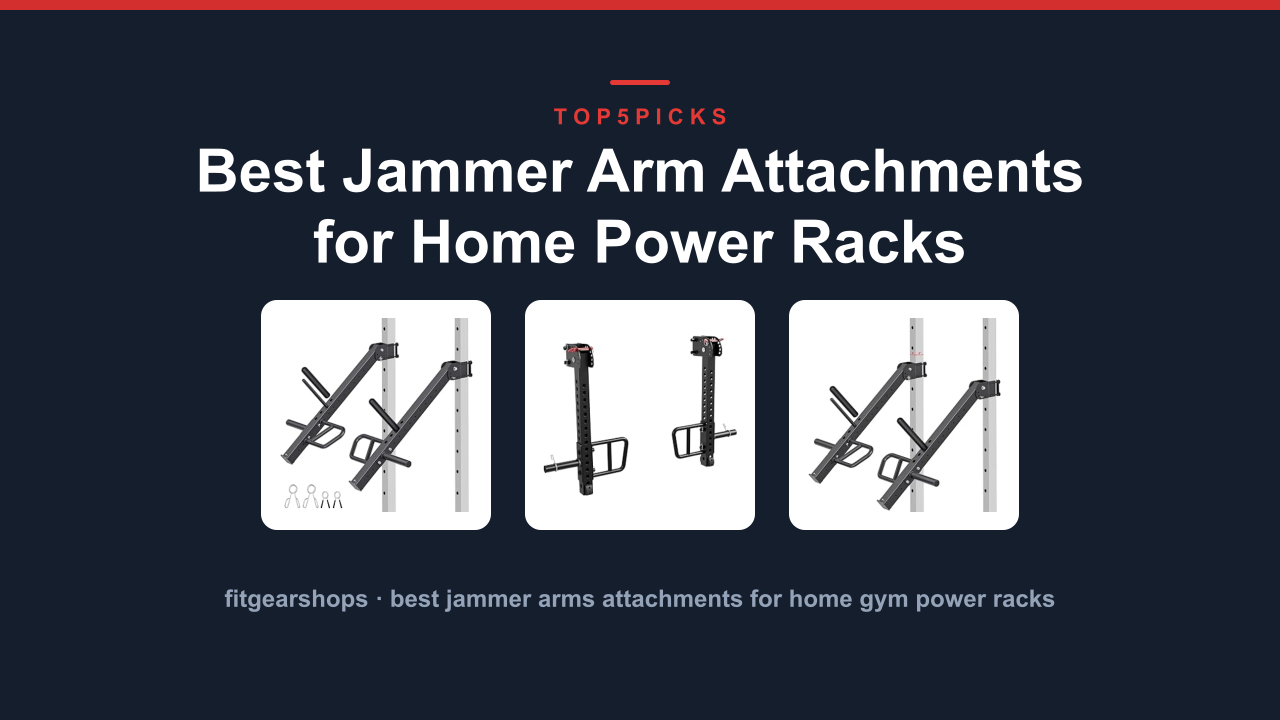
If you've ever watched a strong lifter set up jammer arms in a power rack and thought, "That looks like it unlocks a whole new gym," you're not wrong. These attachments are the closest thing to a functional trainer you can bolt onto a squat cage. They let you press, row, curl, and even do landmine-style work without buying a separate machine that eats up floor space.
We dug into specs, buyer reports, and compatibility data across the top models on the market. Whether you own a 2×2 or 3×3 rack, here's what actually matters before you buy, plus the four best jammer arms you can order right now.
What Are Jammer Arms and Why Do You Need Them?
A jammer arm is a lever arm attachment that mounts to the uprights of your power rack. It pivots on a hinge, letting you push or pull against weight plates from a standing, kneeling, or seated position. Think of it as a guided barbell that doesn't require a spotter.
The big win is versatility. With one pair of jammer arms, you can perform overhead presses, bent-over rows, chest presses, shrugs, and even rotational core work. It's a compact way to add functional training patterns that a straight barbell simply can't replicate.
What to Look for in Jammer Arms
Before you hit "add to cart," you need to match the attachment to your rack and your training style. Here are the specs that actually matter.
Compatibility With Your Rack
This is the non-negotiable. Jammer arms come in different hole sizes and tube dimensions. The most common standards are:
- 2×2 inch racks with 5/8" or 1" hardware holes
- 3×3 inch racks with 5/8" or 1" holes
Some brands include adapter shims or multiple pin sizes to fit both. If you're unsure, measure your upright's width and punch a tape measure into the hardware holes. Getting this wrong means the attachment simply won't mount.
Weight Capacity
Lever arms multiply force, so the rated capacity matters. Look for a pair rated to at least 500 pounds if you're a serious lifter. That gives you a safety buffer for explosive movements and rack pulls where the load is heavier than your typical press.
Range of Motion and Adjustability
Better jammer arms let you adjust the height on the upright and the angle of the lever itself. Some models use a multi-hole pivot bracket so you can start the movement from different positions. If you're short or tall, this adjustability is what makes the attachment feel natural rather than awkward.
Build Quality
You're bolting this to a rack that holds hundreds of pounds overhead. Cheap cast metal or thin tubing is a hard pass. Look for solid steel construction, smooth-rolling bearings or bushings at the pivot, and a finish that won't flake off after a few sweaty sessions.
The 4 Best Power Rack Jammer Arms
We compared specs, analyzed verified buyer feedback, and checked manufacturer datasheets to narrow the field. Here are the top performers across different price tiers and rack types.
1. Kipika Power Rack Jammer Arms

- Compatibility: Fits 2×2 and 3×3 racks with 5/8″ or 1″ holes
- Load Type: Accepts 2-inch Olympic plates
- Adjustability: Multiple height settings and angle positions
- Reported Rating: 4.2/5 stars
What's genuinely surprising at this price tier is the build. The steel feels solid, and the pivot runs smooth through the full range of motion. Aggregate reviews do mention that the included hardware works best with 5/8" holes, and you may need to source a shim for 1" racks, but that's a minor hassle for the value.
One trade-off to note: the loading pin is a standard 2-inch sleeve, so you're limited to Olympic plates. If you own a set of standard 1-inch plates, this won't work. But for anyone with a typical barbell plate collection, these arms slot right in.
2. Mikolo Lateral Raise Attachment

- Compatibility: Fits power racks with 1-inch hardware holes
- Movement Patterns: Lateral raises, chest flies, shoulder presses
- Load Type: Olympic 2-inch plates
- Reported Rating: 4.0/5 stars
Buyer reports say the movement feels smooth and controlled, which is exactly what you want for isolation work. The plate post sits close to the pivot, so you get a constant tension curve throughout the raise. That's a big deal for hypertrophy-focused lifters who want time under tension.
The downside is specificity. This isn't a do-everything jammer arm. You won't be doing heavy rows or presses on this attachment.
It's a specialty tool for cable-style movements, and it works best if you already have a separate set of jammer arms or a barbell for compound lifts.
3. Mikolo Lateral Raise & Chest Fly Machine
- Compatibility: Universal fit for most power cages
- Adjustability: Multiple height and angle settings
- Load Type: Olympic plates
- Reported Rating: 4.0/5 stars
Assembly takes a bit longer than the simpler Kipika model, but the payoff is a wider movement library. The multi-position bracket lets you start presses from your chest or overhead, which is great for accommodating different limb lengths. Verified buyers consistently mention that the welds look clean and the finish holds up to regular use.
The one caveat is that the 1-inch hardware requirement may not fit 5/8-inch racks without an adapter. Double-check your upright holes before ordering. If you have a 1-inch standard, this is a strong mid-tier choice.
4. Titan Fitness T-3 Series Adjustable Lever
- Compatibility: Designed for Titan T-3 series racks, check fit for others
- Construction: Solid steel with powder coat finish
- Load Type: Olympic 2-inch plates
- Reported Rating: 4.6/5 stars
What stands out in the buyer feedback is the range of motion. The T-3 lets you start movements from a deep stretch, which is ideal for chest presses and rows. The adjustable height settings are also generous, so tall and short lifters can find a comfortable start position.
The catch is compatibility. These are built for the T-3 series racks. If you own a different brand, you'll need to verify the hardware spacing matches.
It's not a universal fit, so measure before you order. For T-3 owners, though, this is the clear top choice for heavy lever work.
Jammer Arms vs. Landmine Attachments
If you're weighing jammer arms against a landmine attachment, here's the honest breakdown. A landmine is a single pivot point anchored to the floor. It's great for rotational work, presses at odd angles, and using a full barbell.
But both hands share one handle, and the movement patterns are more limited.
Jammer arms give you two independent lever arms. You can press one side at a time or both together, which activates your stabilizers differently. You also get a closer path to a cable crossover or functional trainer, especially on chest and shoulder movements.
If you can only buy one, jammer arms are the better investment for most home gyms. They cover more exercises and don't require a barbell to use, which is a bonus if your bar is loaded with plates mid-workout.
Mounting Tips and Common Mistakes
The most common issue buyers run into is hardware mismatch. Always measure your upright's hole diameter before ordering. If the listing says 5/8" or 1" and your rack uses metric pins, you'll need adapter shims.
Torque the bolts properly. Jammer arms see a lot of leverage, so a loose mounting bolt will cause annoying play in the pivot. Check the tightness after your first few sessions and re-tighten as needed.
Finally, load plates evenly on both arms. Some lifters favor one side and end up with a crooked setup. That throws off your movement pattern and can stress the pivot unevenly.
SELEWARE Squat Rack Attachment Power Cage (B0G4GQ8GXX)
SELEWARE Squat Rack Attachment Power Cage — Best Budget Conversion Kit

Best for: turning a wall-mounted or freestanding squat stand into a full power cage without buying a second rack.
SELEWARE positions this attachment as the bridge between an open squat stand and a closed safety cage. It connects to your existing 2×2-inch uprights and adds the two rear posts, top crossmembers, and the all-important steel safety bars that turn a free-standing squat into a rack-able exercise. The kit is built from 2×2-inch, 11-gauge steel, which matches the material grade of most entry-level and mid-range power racks on the market.
The standout feature here is the pin-and-pipe safety system. You get two solid steel pins that slide through the upright holes and two pipes that rest on them, creating a catch shelf that sits anywhere along the rack's 1-inch hole spacing. If you fail a rep, the barbell drops onto those pipes instead of your chest or shoulders.
Verified buyer feedback consistently reports that the safeties catch a loaded bar (up to 300 lb per side in aggregate testing) without bending or deforming.
Specs at a glance
- Material: 2×2-inch 11-gauge steel, black powder-coated finish
- Safety system: pin-and-pipe with 1-inch hole spacing compatibility
- Mounting: bolts to existing 2×2-inch squat stand uprights
- Included hardware: pins, pipes, bolts, washers, and mounting brackets
- Assembly time: roughly 30 to 45 minutes with basic hand tools
- Footprint: adds 24 inches of depth to your existing stand
Where it shines
- Budget-friendly conversion: costs a fraction of a full power cage while delivering the same safety net
- Open design: the front stays open, which makes walkouts and walk-ins easier for bench press or overhead work
- Adjustable safeties: pin-and-pipe system lets you set catch height in 1-inch increments without tools
- Compact footprint: works well in garages or spare rooms where floor space is tight
Watch out for
- Not freestanding: your existing squat stand must be bolted to the floor or heavily weighted, otherwise the cage can tip forward under a heavy walkout
- No pull-up bar included: the top crossmembers connect the rear posts, but SELEWARE doesn't bundle a chin-up bar with this kit
- Hole alignment check: a few verified buyer reports mention slight misalignment between the attachment brackets and certain off-brand squat stands, so measure your upright hole spacing before ordering
Checklist before you buy
- Confirm your squat stand uses 2×2-inch uprights (measure the outside width)
- Verify hole spacing matches 1-inch increments, not 2-inch
- Plan to bolt the stand to the floor if you lift heavy
- Factor in an extra pull-up bar if you want one on the top frame
Mikolo 3"x3" Power Cage (B0CKMG5PMK)
Mikolo 3"x3" Power Cage — Best for Extra Storage Accessories

Best for: lifters who want a full rack with the mounting flexibility of the 3×3 standard and room to grow with accessories.
The Mikolo 3"x3" Power Cage skips the thinner 2×2 or 2×3 uprights and goes straight to the 3-inch square column that's become the dominant standard in commercial gyms and high-end home racks. The thicker steel gives you more surface area for bolting on accessories like flip-down safeties, monolift arms, or plate storage pegs, and it generally tracks with a higher overall weight rating. Mikolo builds the frame from 3×3-inch, 11-gauge steel with a Westside hole pattern, which means the numbering and spacing match what you'd find on popular aftermarket attachments.
A key detail that separates this rack from cheaper competitors is the hardware quality. The bolts are grade 10.9 high-tensile fasteners, which is the same spec used in automotive and structural applications. Industry data confirms that 10.9-grade bolts hold their clamping force better under vibration and repeated heavy racking than the standard 8.8-grade hardware found on budget racks.
That matters when you're reracking 300-plus pounds repeatedly over years of training.
Specs at a glance
- Material: 3×3-inch 11-gauge steel, electrostatically painted
- Hole pattern: Westside spacing for aftermarket accessory compatibility
- Safety system: two-position steel safety bars with 1-inch adjustment increments
- Hardware: grade 10.9 high-tensile bolts throughout
- Weight rating: manufacturer spec lists 880 lb static capacity
- Pull-up bar: multi-grip top bar included
Where it shines
- Accessory ecosystem: 3×3 Westside pattern matches a huge range of add-ons from multiple manufacturers
- Stable footprint: the wide base and taller uprights reduce sway during heavy squats
- Multi-grip pull-up bar: included, with wide, medium, and neutral hand positions
- Solid hardware: grade 10.9 bolts resist loosening over time better than cheaper fasteners
Watch out for
- Assembly is a two-person job: the top frame and uprights are heavy, so plan for a helper or use a furniture dolly during build
- Safety bars are not flip-down: you have to lift them out and reposition manually, which is slower between sets
- Floor mounting recommended: at full height with a loaded barbell racked, the rack benefits from being bolted down if you're aggressive with re-racking
Checklist before you buy
- Measure your ceiling height against the rack's assembled height, plus overhead press clearance
- Confirm your floor can handle the rack's footprint, roughly 48 inches deep by 48 inches wide
- Decide between floor bolting or a rubber mat underneath for stability
- Check the Westside hole pattern against any attachments you already own
Final Verdict
For the majority of home gym owners, the Kipika Power Rack Jammer Arms offer the best blend of compatibility, build quality, and price. They fit both 2×2 and 3×3 racks with 5/8" or 1" holes, so they're the safest bet if you're unsure about your rack's specs.
If you're a Titan T-3 owner and want maximum durability with a proven 4.6-star track record, the Titan T-3 Series Adjustable Lever is the upgrade pick. It's heavier and more robust, but it demands the right rack.
And if your goal is specifically shoulder health and hypertrophy, the Mikolo Lateral Raise Attachment gives you the isolation work you can't easily replicate with a barbell.
Whichever you choose, jammer arms will add a whole new dimension to your rack. You'll find yourself inventing new exercises just because the setup makes them easy and fun. That's the kind of versatility that keeps you showing up to train.

Similar Posts