A Best Fit in Statistic: Top Books for Mastering Statistical Theory
Disclosure: As an Amazon Associate, FitGearShops earns from qualifying purchases. Product availability and pricing are verified on Amazon and subject to change.
A best fit in statistics helps describe how well a model matches data. It shows the closeness between observed values and predictions.
Understanding best fit is key to analyzing data accurately. It guides decisions in research, business, and science. Many books explain this concept, such as *Theory of Statistics* and *Regression Analysis: Theory, Methods and Applications*. These resources cover methods like regression, hypothesis testing, and nonparametric statistics.
They also explore goodness-of-fit tests, which check how well models fit multivariate data. Learning these ideas helps improve data interpretation and model selection. Clear knowledge of best fit supports better insights and stronger conclusions in various fields. This introduction sets the stage to explore important statistical tools and theories that explain the best fit concept.
| Rank | Product | Availability |
|---|---|---|
| #1 | Theory Of Statistics | Check Price on Amazon → |
| #2 | Goodness-of-fit Statistics For Discrete Multivariate Data | Check Price on Amazon → |
| #3 | Asymptotic Theory Of Statistics And Probability | Check Price on Amazon → |
| #4 | Theory Of Statistics | Check Price on Amazon → |
| #5 | Regression Analysis: Theory, Methods And Applications | Check Price on Amazon → |
| #6 | Regression Modeling Strategies | Check Price on Amazon → |
| #7 | Testing Statistical Hypotheses | Check Price on Amazon → |
| #8 | Numerical Linear Algebra For Applications In Statistics | Check Price on Amazon → |
| #9 | Testing Statistical Hypotheses | Check Price on Amazon → |
| #10 | Introduction To Statistics: The Nonparametric Way | Check Price on Amazon → |
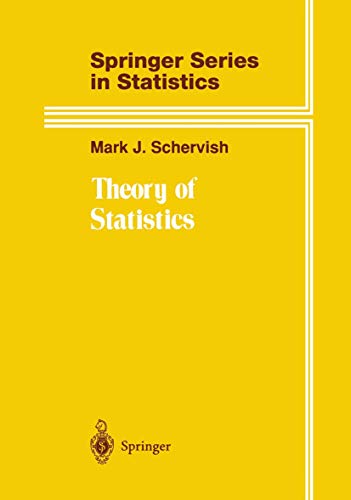
Theory Of Statistics

The Theory of Statistics (Springer Series in Statistics) is ideal for advanced students, researchers, and professionals in the fields of statistics, mathematics, and data science who seek a comprehensive and rigorous understanding of statistical theory. Those looking for an authoritative reference book that delves deep into the fundamentals and advanced topics of statistics will find this edition invaluable.
Pros:
- Comprehensive coverage of both basic and advanced statistical theories.
- Published by Springer, ensuring high academic quality and credibility.
- Extensive 732 pages providing detailed explanations and examples.
- Durable physical dimensions suitable for academic libraries and personal collections.
- Ideal for long-term reference due to its thorough and structured content.
Cons:
- Published in 1995, so some content might not include the latest developments in statistics.
- Hefty weight of over 2.5 pounds, making it less portable.
- May be challenging for beginners due to its advanced and theoretical approach.
This edition of the Theory of Statistics stands out due to its meticulous presentation of statistical theories, backed by detailed proofs and examples. The book’s structured approach facilitates a deeper understanding of complex topics such as estimation theory, hypothesis testing, and asymptotic methods. Users benefit from the clarity and precision that Springer is known for, making it an essential tool for mastering statistical concepts.
The physical attributes of the book, including its size and weight, reflect its comprehensive nature and abundance of content, making it a reliable resource for study and reference. While it may not cover the latest statistical techniques developed after 1995, its foundational content remains highly relevant for academic and professional use. Overall, this book offers significant value for those dedicated to gaining a robust theoretical background in statistics.
Goodness-of-fit Statistics For Discrete Multivariate Data

The book Goodness-of-Fit Statistics for Discrete Multivariate Data from the Springer Series in Statistics is ideal for statisticians, data scientists, and researchers who work extensively with discrete multivariate data. It is particularly suited for professionals and academics looking to deepen their understanding of statistical methods for assessing model fit in complex datasets. Those involved in advanced statistical modeling and hypothesis testing will find this resource invaluable.
Pros:
- Comprehensive coverage of goodness-of-fit statistics tailored to discrete multivariate scenarios.
- Published by Springer, ensuring high-quality and peer-reviewed content.
- Concise yet detailed with 224 pages, providing thorough explanations without unnecessary filler.
- Compact and manageable dimensions (9.55 x 6.31 x 0.6 inches) making it easy to carry and reference.
- Historical significance as a foundational text published in 1988, useful for understanding the evolution of statistical techniques.
Cons:
- Some content may be outdated given the publication date of 1988, potentially lacking recent advancements.
- Highly specialized, which might be challenging for beginners or those without a strong statistical background.
- Limited to discrete multivariate data, so not suitable for users seeking methods for continuous data or other statistical areas.
This book delves into various statistical techniques designed to evaluate how well a statistical model fits discrete multivariate data. The author presents theoretical foundations alongside practical applications, allowing readers to appreciate both the math and its implications in real-world data analysis. The clear explanations of goodness-of-fit tests help users identify discrepancies between observed and expected data distributions, which is crucial for validating models.
Readers will benefit from the book’s structured approach to complex topics such as contingency tables, multinomial distributions, and hypothesis testing frameworks. By mastering these concepts, users can improve the reliability of their data interpretations and develop more robust models. The concise format ensures that even dense material remains accessible, making it a valuable addition to any statistician’s library.
Asymptotic Theory Of Statistics And Probability

The Asymptotic Theory of Statistics and Probability by Springer is ideal for advanced students, researchers, and professionals in the fields of statistics, probability, and mathematics who seek a comprehensive and rigorous exploration of asymptotic methods. This book is especially suitable for those who require a deep theoretical understanding to support their academic work or applied research.
Pros:
- Comprehensive coverage of asymptotic methods in statistics and probability
- Published by the reputable Springer brand ensuring quality and reliability
- Extensive content with 749 pages providing in-depth explanations and proofs
- Suitable for graduate-level study and professional reference
- Well-structured edition from 2008 with up-to-date theoretical insights
Cons:
- Highly technical content may be challenging for beginners or casual readers
- Relatively heavy and bulky with a weight of nearly 6 pounds, not ideal for portability
- Limited practical examples, focusing more on theoretical aspects
This book’s substantial length and detailed exposition make it a valuable resource for those committed to mastering the asymptotic theory in statistics and probability. Readers will benefit from the rigorous mathematical treatment that clarifies complex concepts, enhancing their analytical skills and theoretical foundation. The format and depth of the content enable users to apply these principles in advanced research or academic settings confidently.
Additionally, the physical dimensions and quality of the publication reflect its status as a serious academic text, designed for long-term use as a reference. While it may not cater to beginners, the book’s thorough explanations and comprehensive scope provide significant benefits to its target audience, making it a worthwhile investment for those seeking to deepen their expertise in asymptotic statistical theory.
Theory Of Statistics
The Theory of Statistics (Springer Series in Statistics) is ideal for advanced students, researchers, and professionals seeking a comprehensive understanding of statistical theory. Those who require an in-depth resource for academic study or practical application in statistics, data analysis, or related fields will find this book particularly valuable.
Pros:
- Extensive coverage with 732 pages of detailed content.
- Published by the reputable Springer brand and manufacturer.
- Softcover reprint of the original 1st edition (1995), ensuring classic and authoritative material.
- Dimensions and weight make it a durable yet portable reference.
- Includes rigorous theoretical explanations suitable for higher education and research.
Cons:
- Lengthy and dense content may be overwhelming for beginners.
- Softcover format may be less durable compared to hardcover editions.
- Publication date (2011) means some contemporary developments in statistics may not be included.
This edition of Theory of Statistics provides a thorough exploration of fundamental statistical concepts, making it an essential resource for those who want to deepen their knowledge in the field. The book’s comprehensive approach covers both theoretical foundations and practical applications, allowing readers to build a solid understanding of statistical inference, estimation, and hypothesis testing. Its detailed explanations help users develop the skills needed to tackle complex statistical problems with confidence.
With its substantial 732 pages, the book is a rich repository of knowledge that supports long-term study and reference. The dimensions and weight indicate a well-bound volume that balances portability with durability, ideal for students and professionals who need a reliable academic companion. Despite being a reprint of the original 1995 edition, the material remains relevant and authoritative, reflecting the timeless principles of statistical theory that continue to underpin modern statistical practice.
Regression Analysis: Theory, Methods And Applications

Ideal for students, researchers, and statisticians seeking a comprehensive understanding of regression analysis, this book, Regression Analysis: Theory, Methods and Applications, offers a detailed exploration of both theoretical and practical aspects of the topic. Those interested in advanced statistical methods and their applications in diverse fields will find this text particularly valuable.
Pros:
- Comprehensive coverage of theory, methods, and applications in regression analysis
- Published by reputable Springer, ensuring high-quality content
- Detailed explanations suitable for both beginners and advanced users
- Compact size with 363 pages, making it a manageable read
- Provides practical examples to enhance understanding
Cons:
- Edition from 1990, which might not include the latest advances
- Physical dimensions may make it less portable for some users
- Primarily focused on theory which might be dense for casual readers
This book’s 9.25-inch height and 6.1-inch width make it a solid reference work that fits well on any bookshelf. The detailed approach taken by the author helps readers grasp the fundamental principles of regression analysis, while also delving into more complex statistical models. Its publication by Springer lends credibility and ensures that the content is rigorous and well-vetted.
With a total of 363 pages, the book balances depth and accessibility, allowing users to progress through topics systematically. Its structured presentation of both theory and real-world applications equips readers with the tools to apply regression techniques effectively across various disciplines. Despite its age, the core concepts remain relevant, making it a valuable resource for those serious about mastering regression analysis.
Regression Modeling Strategies
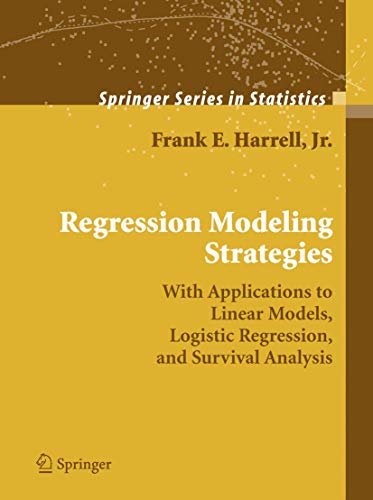
Regression Modeling Strategies: With Applications to Linear Models, Logistic Regression, and Survival Analysis is ideal for statisticians, data scientists, and researchers who seek a comprehensive guide to advanced regression techniques. This book is especially suited for those who want to deepen their understanding of statistical modeling methods and apply them effectively in various fields such as biostatistics, epidemiology, and social sciences.
Pros:
- Comprehensive coverage of linear models, logistic regression, and survival analysis.
- Detailed explanations with practical applications and examples.
- Authored by experts, ensuring authoritative and reliable content.
- Softcover edition with a manageable size of approximately 10 inches in height and weighing just over 2 pounds, making it portable.
- Extensive content spanning 596 pages that covers both theory and practice.
Cons:
- Complex material that may be challenging for beginners without a strong statistical background.
- Softcover reprint edition may lack some updated examples compared to newer publications.
- Relatively thick and dense, which might be overwhelming for casual readers.
This book offers a thorough exploration of regression modeling strategies with a focus on practical applications. Readers will find in-depth discussions on how to build and validate models, interpret results, and handle various types of data. The inclusion of logistic regression and survival analysis provides valuable tools for dealing with categorical and time-to-event data, respectively. By mastering these techniques, users can significantly enhance their analytical capabilities and apply them to real-world problems effectively.
The clear structure and extensive examples make complex concepts more accessible, allowing readers to gain confidence in applying these methods. Additionally, the book’s focus on both theory and application ensures that users not only understand the mathematical foundations but also appreciate the practical benefits. Overall, this Springer publication is a valuable resource for anyone serious about advancing their expertise in statistical modeling.
Testing Statistical Hypotheses

Ideal for advanced students, researchers, and professionals in statistics, mathematics, and related fields, Testing Statistical Hypotheses: Volume I by Springer is a comprehensive resource for those seeking a deep understanding of statistical hypothesis testing. This book is perfect for individuals who want to master both theoretical foundations and practical applications of hypothesis testing in various scientific domains.
Pros:
- Extensive coverage with over 1027 pages of detailed content
- Published by the reputable Springer brand, ensuring high-quality academic standards
- Latest 4th edition (2022) incorporating recent developments in the field
- Clear explanations of complex concepts suitable for graduate-level study
- Comprehensive examples and exercises to reinforce learning
Cons:
- Lengthy and dense, which might be overwhelming for beginners
- Physical dimensions and weight may make it less portable
- Focused primarily on theory, with less emphasis on software implementations
This volume provides a rigorous treatment of statistical hypothesis testing, starting from fundamental principles and progressing to advanced topics. The book’s large page count allows for thorough explanations and a variety of examples that help users grasp difficult concepts. The inclusion of the latest research and methodologies in the 2022 edition ensures readers are learning up-to-date techniques applicable in modern statistical analysis.
By mastering the material in this book, readers can enhance their ability to design and interpret hypothesis tests correctly, leading to more robust and reliable conclusions in research. Its thorough approach makes it a valuable reference for both academic study and professional use, especially for those involved in experimental design, data analysis, and statistical modeling.
Numerical Linear Algebra For Applications In Statistics

The book Numerical Linear Algebra for Applications in Statistics is ideal for statisticians, data scientists, and researchers who require a deep understanding of numerical methods to solve statistical problems. It is particularly suited for those who want to enhance their computational skills and apply advanced linear algebra techniques in statistical computing. If you are looking to improve your ability to handle large datasets or complex mathematical models, this book is an excellent resource.
Pros:
- Comprehensive coverage of numerical linear algebra tailored for statistical applications
- Published by the reputable Springer brand, ensuring high-quality content
- Concise yet detailed with 234 pages packed with relevant theory and practical examples
- Compact dimensions (Height: 9.51 inches, Width: 0.65 inches, Length: 6.39 inches) make it easy to carry
Cons:
- Published in 1998, so some computational methods might be outdated
- May require prior knowledge of linear algebra and statistics for full comprehension
- Limited to applications in statistics, not covering broader numerical linear algebra topics
This edition of Numerical Linear Algebra for Applications in Statistics provides a focused exploration of linear algebra techniques specifically designed for statistical computing. It covers essential algorithms and numerical methods that help users solve complex statistical problems efficiently. The book’s structure allows readers to grasp theoretical concepts while also applying them in practical scenarios, enhancing their computational proficiency.
By integrating numerical linear algebra into statistical applications, this book empowers users to perform matrix computations, eigenvalue problems, and regression analyses with greater accuracy and speed. The detailed explanations and examples facilitate a deeper understanding of how linear algebra underpins many statistical procedures, making it a valuable tool for anyone involved in data analysis and statistical modeling.
Testing Statistical Hypotheses

Testing Statistical Hypotheses (Springer Texts in Statistics) is ideal for advanced students, researchers, and professionals in the fields of statistics, data science, and applied mathematics who seek a comprehensive and rigorous understanding of hypothesis testing. Those who require a detailed theoretical foundation combined with practical approaches to statistical inference will find this book especially valuable. It is also suited for educators looking for a well-structured resource for advanced courses.
Pros:
- Comprehensive coverage of hypothesis testing theory with clear mathematical rigor
- Includes numerous examples and exercises to reinforce understanding
- Published by Springer, a reputable academic publisher ensuring quality content
- Extensive 800 pages providing in-depth treatment of topics
- Third edition with updates and corrections enhancing accuracy and relevance
Cons:
- May be challenging for beginners due to its advanced and technical nature
- Physical weight of approximately 2.65 pounds makes it less portable
- Primarily focused on theory, so practical applications might require supplementary materials
The book’s dimensions (Height: 9.21 inches, Width: 1.69 inches, Length: 6.14 inches) and substantial page count underscore its role as a detailed academic reference rather than a quick read. Its third edition status, published in 2005 with a corrected second printing in 2008, reflects ongoing efforts to keep the content current and reliable. Readers benefit from a structured approach that balances formal statistical theory with illustrative examples, making complex concepts more accessible.
By delving deeply into the principles of statistical hypothesis testing, this book equips users with the tools necessary to critically evaluate data and make informed decisions based on statistical evidence. Its thorough explanations and rigorous proofs support a solid conceptual foundation, enabling readers to apply these methods confidently in research or professional practice. Overall, it stands out as a definitive resource for those committed to mastering statistical inference.
Introduction To Statistics: The Nonparametric Way

The book Introduction to Statistics: The Nonparametric Way from the Springer Texts in Statistics series is ideal for students, researchers, and professionals who seek a comprehensive understanding of nonparametric statistical methods. It is particularly suitable for those who prefer robust statistical techniques that do not assume underlying data distributions, making it valuable for fields like social sciences, biology, and economics where data may not meet parametric assumptions.
Pros:
- Comprehensive coverage of nonparametric methods in statistics.
- Published by the reputable Springer brand and manufacturer.
- Detailed explanations suitable for both beginners and advanced readers.
- A substantial number of pages (427) ensuring in-depth treatment of topics.
- Compact dimensions and manageable weight for easy handling and portability.
Cons:
- Edition dates back to 1991, which may lack the most recent developments.
- Some readers may find the technical language challenging without prior statistics background.
- Physical copy might be bulky for some due to its size and weight.
This book offers a thorough introduction to nonparametric statistical techniques, focusing on methods that do not rely on traditional parametric assumptions. Its detailed approach helps readers grasp complex concepts with clarity, supported by examples and practical applications. The publication by Springer ensures high academic standards and credibility. The dimensions and weight make it a tangible, durable resource for libraries and personal collections.
Readers will benefit from its structured layout that gradually builds knowledge, making it easier to apply nonparametric methods in real-world data analysis. While the edition is from 1991, many foundational principles remain relevant, providing a solid base for further study or application in research. Overall, it serves as a valuable educational tool for anyone looking to deepen their understanding of statistical analysis beyond traditional parametric frameworks.
Frequently Asked Questions
What Is The Theory Of Statistics?
The theory of statistics involves understanding data collection, analysis, interpretation, and presentation. It provides a framework for making inferences about populations from samples. This field is essential for ensuring accurate and reliable results in statistical studies.
How Do Goodness-of-fit Statistics Work?
Goodness-of-fit statistics assess how well a statistical model fits observed data. They compare expected and observed frequencies to determine model accuracy. This is crucial for validating models in discrete multivariate data analysis.
What Is Asymptotic Theory In Statistics?
Asymptotic theory studies statistical methods as sample sizes approach infinity. It helps in understanding the behavior of estimators and tests. This theory is fundamental for ensuring robust and reliable statistical inferences.
What Are Regression Analysis Applications?
Regression analysis is used to model relationships between variables. It is applied in linear models, logistic regression, and survival analysis. This analysis helps in predicting outcomes and understanding variable impacts.
What Is Numerical Linear Algebra’s Role In Statistics?
Numerical linear algebra involves computational techniques for solving linear equations and matrix operations. It is vital for statistical computing and data analysis. This field supports efficient and accurate statistical calculations.
Conclusion
Choosing the best fit in statistics helps to understand data clearly and make good decisions. Different methods work for different types of data and questions. Books like “Theory of Statistics” and “Regression Analysis” offer strong tools to find the right fit.
Testing hypotheses and using goodness-of-fit statistics show how well a model matches real data. Numerical methods also support accurate results, especially with complex data. Learning these concepts makes it easier to analyze and explain information. Simple models sometimes work best, but knowing advanced techniques is helpful too.
Overall, a good fit improves confidence in results and guides better conclusions. Keep exploring statistical methods to find what suits your data best. The right choice leads to clearer insights and stronger evidence in research or business.

Similar Posts