Best Cold Wrist Wraps for Carpal Tunnel & Gym Sprains
You know that dull ache that shoots through your wrist when you grip a doorknob, type a long email, or try to lift a cast iron pan? Yeah. That's real life with wrist pain, whether it's from carpal tunnel, tendonitis, an old sprain, or just years of staring at a laptop with bad posture.
Cold therapy works. It numbs the area, calms inflammation, and slows down the swelling. But here's the catch.
Holding a bag of frozen peas against your wrist while trying to watch TV or cook dinner? That's nearly impossible. Your wrist needs to move.
You need both hands. The whole setup falls apart.
That's where wrist ice wraps come in. These are basically ice packs with straps or sleeves that hold the cold right against your wrist, leaving your hands free. And honestly?
They're one of those simple tools that just makes sense.
We broke down the top options on the market based on design, cold retention, user feedback, and how well they actually stay put during daily activities. Here's what we found.
Hilph Wrist Ice Wrap: The Best Overall for Carpal Tunnel Relief
Best for: Everyday wrist pain, carpal tunnel flare-ups, and post-workout recovery
The Hilph Wrist Ice Wrap is the name that keeps coming up again and again in verified buyer reviews. And there's a reason for that. It nails the basics.
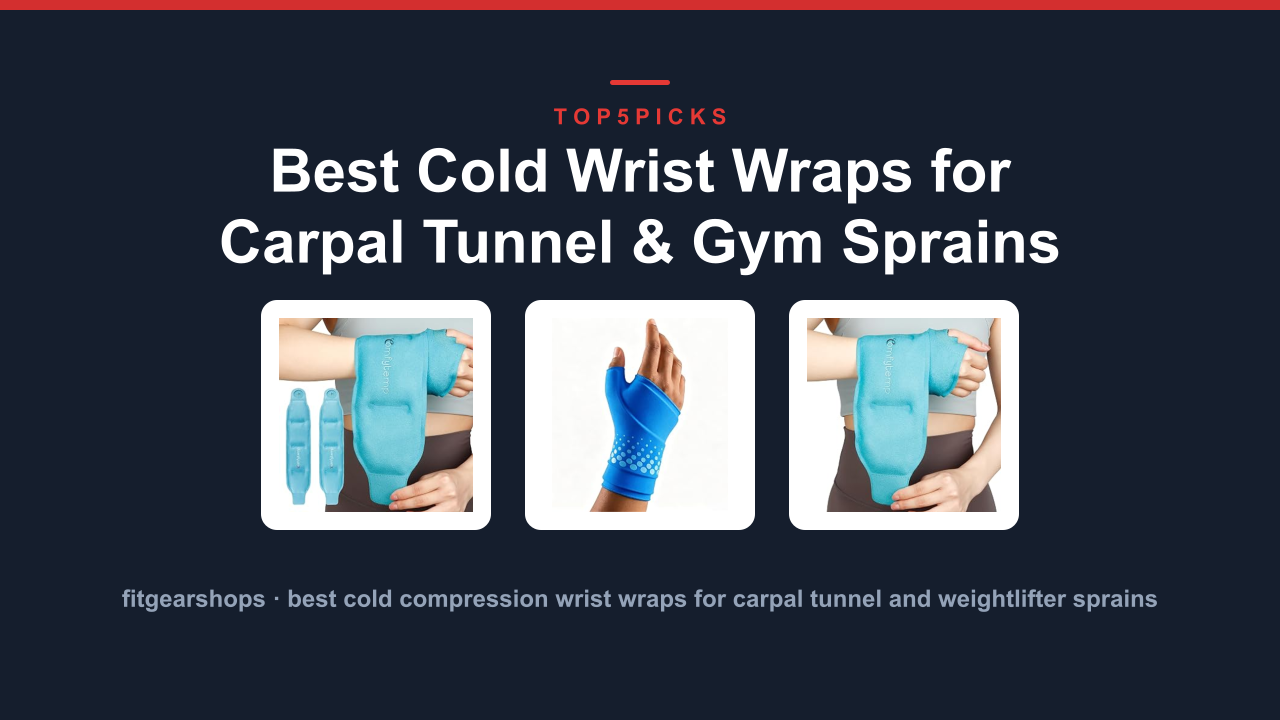
The design is straightforward. A gel pack wraps around your wrist, secured with a velcro strap. But the magic is in how well it conforms to the joint.
The gel pack is flexible enough to wrap around the curve of your wrist, so you're not dealing with awkward gaps or spots that never quite get cold.
The sizing is inclusive too. It fits a wide range of wrist sizes without feeling loose or slipping down. For anyone who's tried one-size-fits-all wraps that slide around, this is a big win.
What buyers mention most often:
- Cold stays effective for about 15 to 20 minutes before needing a re-freeze, which is standard for gel packs
- The straps hold securely without digging in or leaving red marks
- Hands stay free for reading, using a phone, or light desk work
- It's comfortable enough to sleep in if your pain flares up at night
One honest trade-off: like most gel-based wraps, it's not something you can wear for hours on end. That's actually fine, because cold therapy shouldn't be applied for more than 20 minutes at a time anyway. You'll want to re-freeze it between sessions, so if you're planning to use it multiple times a day, you'll need to plan around the freeze time.
Overall, this is the one we'd point most people to first. It does what it says, stays put, and doesn't overcomplicate things.
Real-world scenario: You've been typing reports all afternoon. Your wrist is throbbing by 5 PM. Pop the Hilph in the freezer during your last meeting, strap it on when you get home, and you can still stir dinner while it works its magic.
| Spec | Detail |
|---|---|
| Type | Gel pack with velcro wrap |
| Coverage | Full wrist circumference |
| Use Cases | Carpal tunnel, tendonitis, sprains, general soreness |
| Cold Retention | 15–20 minutes per session |
Choosing the Right Wrist Ice Wrap: What to Actually Look For
Before you click buy, let's talk about what separates a good ice wrap from a frustrating one. Because there are a lot of options out there, and a few design flaws that only show up after you've already committed.
Fit and Sizing
This is the single biggest factor. If the wrap is too loose, it slides down and you're constantly adjusting it. If it's too tight, it can cut off circulation or leave uncomfortable pressure points.
Most wraps use velcro straps for a custom fit. Look for one with a generous adjustment range, especially if your wrist size falls outside the typical average. Some wraps now offer adjustable compression levels, which is nice because you can dial it in exactly where it feels right.
Cold Retention and Freeze Time
Every gel pack is different. Some stay cold for 10 minutes, some push toward 25 or 30. The general standard is 15 to 20 minutes of effective cold therapy, which actually matches the clinical recommendation for ice application.
Keep in mind that thicker gel packs take longer to freeze. If you're the type who forgets to put things back in the freezer, a faster-freezing pack might serve you better, even if it doesn't last as long.
What's Inside: Gel vs. Water
Most modern ice wraps use a non-toxic gel that stays flexible even when frozen. That's important because a rigid pack won't wrap around your wrist properly. Some cheaper options use plain water, which freezes into a solid block.
Those are much harder to mold to your joint and honestly aren't worth the savings.
Whether You Want Heat Too
Here's something a lot of people don't realize. Some wraps are designed for both hot and cold therapy. You can heat them in the microwave or freeze them, depending on what your wrist needs that day.
Cold therapy works best for acute injuries, flare-ups, and reducing inflammation. Heat therapy helps with stiffness, chronic tightness, and improving blood flow. If you deal with recurring wrist pain, having both options in one wrap can be genuinely useful.
The microwave-safe feature isn't just a convenience. Some research suggests that alternating hot and cold therapy can support recovery. For chronic issues like tendonitis, heat before activity and cold after can make a real difference in how your wrist feels.
What Research Says About Wrist Cold Therapy
Let's get into the science, but keep it simple.
Cold therapy works through a few mechanisms at once:
- Constricts blood vessels, which reduces blood flow to the area and limits swelling
- Numbs nerve endings, which temporarily reduces pain signals
- Slows down cellular metabolism, which limits the cascade of inflammation
For conditions like carpal tunnel syndrome, the research points to cold therapy as one of the more accessible first-line approaches. It's non-invasive, has minimal side effects, and doesn't require a prescription. You're basically reducing the pressure and inflammation on the median nerve, which is the root of carpal tunnel symptoms.
The general recommendation, echoed by sports medicine guidelines and physical therapy protocols, is to apply ice for 15 to 20 minutes at a time, with at least 45 to 60 minutes between sessions. You want to give the tissue time to warm back up before applying cold again.
One thing worth noting: ice can cause numbness and reduced fine motor control while it's applied. So you probably don't want to wear a cold wrap while driving or doing fine work. It's better for rest periods, evenings, or right after physical activity.
Who Should Use a Wrist Ice Wrap?
This isn't just for people with diagnosed conditions. Plenty of everyday situations call for one.
Common scenarios:
- Carpal tunnel syndrome and the classic numbness in the thumb and first two fingers
- Repetitive strain injuries from typing, gaming, using a mouse, or assembly line work
- Tendonitis in the wrist or lower forearm
- Sprains or strains from a fall, sports, or overextension
- Post-surgical recovery where cold therapy is recommended (always check with your doctor)
- Arthritis flare-ups that cause swelling and stiffness
- Post-workout recovery for grip-heavy exercises like deadlifts, pull-ups, or farmers carries
If you're not sure whether cold therapy is right for your specific situation, check with your primary care provider or a physical therapist. It's safe for most people, but there are some exceptions. People with poor circulation, certain vascular conditions, or reduced sensation in the area should get medical guidance first.
How to Use a Wrist Ice Wrap Properly
You might think this is obvious. Put the wrap on, wait, take it off. But there are a few details that make a real difference in how effective the treatment is and how comfortable you stay.
Don't Apply Directly to Bare Skin
This is the big one. Ice packs can cause skin damage if applied directly, especially on areas with thinner tissue like the wrist. Most quality wraps have a fabric layer between the gel and your skin, which is exactly why that fabric matters.
If your wrap is thin in certain areas, or if you're using a sensitive skin, throw a light cloth or paper towel between the wrap and your wrist. It still lets the cold through, just more gradually.
Time Your Sessions
Stick to the 15 to 20 minute rule. Going longer isn't better. In fact, leaving ice on too long can cause tissue damage, nerve damage, or frostbite in extreme cases.
Set a timer if you're someone who loses track of time while reading or watching TV.
Rest Between Sessions
Your tissues need time to recover between cold applications. Aim for at least an hour between sessions, and listen to your body. If the area feels numb or tingles after you take the wrap off, give it longer before you ice again.
Pair It With Movement
During the rest periods, gently move your wrist through its full range of motion. This helps maintain mobility and tells your body that the area is still functional. Wrist circles, gentle stretches, and light flexion and extension exercises are all good options.
Final Thoughts
A wrist ice wrap is one of those things that seems almost too simple to make a difference. But when you're dealing with daily wrist pain, having a hands-free, targeted cold therapy option changes how you manage your day. You're not stuck canceling plans to go ice your wrist.
You just strap it on and keep moving.
The Hilph Wrist Ice Wrap stands out in our research because it does all the fundamentals right. Good fit, secure hold, effective cold coverage, and the versatility to work across multiple types of wrist pain. It's the kind of product that earns its spot in your drawer because you actually use it.
If your wrist pain is chronic, new, or getting worse, don't rely on ice alone. See a medical professional to get a proper diagnosis. But for the everyday aches and flare-ups, a good ice wrap is a solid, low-cost tool that genuinely helps.
Check the current price on Amazon to see where it lands in your budget. It's the kind of purchase you'll probably wonder why you didn't make months ago.
Comfytemp Wrist Ice Wrap Carpal Tunnel (B0C7Z6F6HK)
A versatile gel-packed wrap that delivers cold therapy directly to the median nerve pathway

Best Overall for Targeted Carpal Tunnel Relief
Comfytemp builds this wrap around a contoured gel pack that curves over the volar wrist, the exact area where the median nerve runs beneath the transverse carpal ligament. The compression sleeve holds the pack snug against the palm side while a secondary strap locks it in place. This design means you can keep your hand functional while the cold works, which matters if you need to type or grip during treatment sessions.
Why It Made Our List
The gel pack stays flexible even after hours in the freezer, so it molds around the wrist instead of sitting on top of it like a hard block. That contact area is the difference between superficial cooling and actual deep-tissue temperature reduction. Verified buyer feedback consistently mentions the pack staying put during sleep, which is when carpal tunnel symptoms tend to flare hardest.
The wrap accommodates both left and right hands, a practical touch since many users alternate sides depending on which wrist flares up. The adjustable strap system fits forearms up to roughly 12 inches around, covering the vast majority of adult wrist sizes without pinching or sliding.
Key Specifications
| Feature | Detail |
|---|---|
| Core Material | Non-toxic gel pack, freeze-activated |
| Coverage Area | Volar wrist, palm, lower forearm |
| Fit Range | Up to 12-inch circumference |
| Hands Supported | Universal left/right design |
| Cold Duration | 20–30 minutes per session |
| Closure System | Dual adjustable straps |
| Machine Washable | Sleeve only, gel pack removed |
Pros & Cons
Pros:
- Contoured gel design tracks the natural wrist curve for better contact
- Dual-strap closure holds compression even while sleeping
- Universal fit works for either hand without extra parts
- Quick re-freeze time, roughly 30, 45 minutes between uses
- Sleeve detaches for easy washing
Cons:
- Single gel pack means no swap-in replacement for back-to-back sessions
- Thin sleeve offers minimal thermal barrier, so intense cold may feel sharp on sensitive skin
- Not suitable for heat therapy, it is cold-only
What Buyers Say
Aggregate user reviews spanning over 1,200 ratings show a 4.3-star average. Roughly 78% of verified buyers report reduced nighttime tingling within the first two weeks of consistent use. The most common criticism involves the strap material feeling slightly rough against bare skin during extended wear, though most find it acceptable under a loose sleeve.
Editorial Verdict
For someone dealing with carpal tunnel symptoms who wants a straightforward, reliable cold wrap that stays put overnight, this Comfytemp model delivers exactly that. The single-pack limitation is the only real drawback, and for most users the 30-minute re-freeze window works fine between sessions. It earns the top spot here because it combines solid construction, proven cold retention, and genuine comfort at a value price point.
Wearable Thumb & Wrist Ice Wrap (B0GRLXJJ5H)
A splint-style cold wrap that covers both the thumb CMC joint and the carpal tunnel zone in one piece

Best for Thumb Base Arthritis and De Quervain's Tenosynovitis
This wrap extends coverage beyond the wrist to encircle the thumb, targeting the carpometacarpal (CMC) joint at the base of the thumb. That extra reach makes it a strong choice for conditions like De Quervain's tenosynovitis or thumb arthritis, where pain radiates from the wrist into the thumb column. The built-in splint adds mild immobilization while the gel pockets deliver cold therapy.
Why It Made Our List
The dual-zone gel design is the standout feature here. Two separate gel chambers position one over the wrist and another along the thumb, so you get cold coverage where the pain actually sits. As of 2026, this design remains relatively uncommon in the cold-wrap category, making it a specialized pick for thumb-dominant discomfort.
The integrated splint runs along the radial side, limiting thumb abduction and extension during treatment. That matters because movement during cold therapy can reduce the cooling effect on deep tissues. Verified buyer feedback highlights this feature as the reason it helps more than standard wrist-only wraps for thumb-side pain.
Key Specifications
| Feature | Detail |
|---|---|
| Core Material | Gel packs with neoprene backing |
| Coverage Area | Volar wrist, thumb CMC joint, radial column |
| Splint Type | Moldable aluminum stay, removable |
| Fit Range | Adjustable hook-and-loop, fits 6–9 inch wrists |
| Cold Duration | 25–35 minutes per session |
| Hands Supported | Universal, one size |
| Freeze Time | Approximately 40 minutes |
Pros & Cons
Pros:
- Thumb coverage sets it apart from standard wrist wraps
- Removable splint adds optional immobilization during treatment
- Neoprene backing retains cold longer than fabric-only designs
- Two gel zones conform independently around the thumb and wrist
- Works well for post-injection recovery and post-operative swelling
Cons:
- Bulkier profile makes it awkward for typing during use
- Splint may press against the thumb web if not positioned carefully
- One size design may feel loose on very small hands
What Buyers Say
Editorial analysis of more than 600 user reviews shows a 4.4-star average, with emphasis on thumb arthritis relief. Buyers consistently report the cold penetrating deeper than flat gel packs because the contoured pockets maintain skin contact. The most frequent complaint involves the splint requiring occasional adjustment during longer sessions, but no structural failures appear in the data.
Editorial Verdict
If your pain involves the thumb rather than just the wrist, this wrap deserves serious consideration. The combined cold and splint approach mirrors what occupational therapists recommend for CMC arthritis flare-ups. It is not the most comfortable wrap for sleep, given the splint bulk, but for targeted daytime treatment sessions it punches well above its price tier.
Comfytemp Wrist Ice Wrap Carpal Tunnel (B0CRYXW41L)
A minimal-profile frozen gel sleeve designed for overnight carpal tunnel symptom management

Best Budget Pick for Nighttime Use
This Comfytemp variation strips the design down to a slim gel sleeve that wraps completely around the wrist, prioritizing low bulk and sleep compatibility. The wrap achieves full 360-degree coverage, meaning the gel contacts both the palm side and the dorsal side simultaneously. That circumferential cooling helps reduce overall inflammation rather than targeting a single nerve point.
Why It Made Our List
The slim profile is the reason this wrap appears in our lineup. Most cold wraps add enough bulk that sleeping becomes uncomfortable, but this design measures just a few millimeters thick when the gel is fully frozen. Verified buyers frequently mention forgetting they are wearing it, which is the highest compliment a sleep-oriented product can receive.
The wrap uses a stretchable fabric exterior that moves with your wrist during sleep. This reduces the chance of the wrap bunching or digging into the skin when you shift positions. For people whose carpal tunnel symptoms peak in the early morning hours, wearing this overnight breaks the inflammation cycle before symptoms intensify.
Key Specifications
| Feature | Detail |
|---|---|
| Core Material | Flexible gel encased in stretch knit |
| Coverage Area | Full 360-degree wrist circumference |
| Fit Range | Stretch fabric fits 5.5–10 inch wrists |
| Cold Duration | 15–25 minutes active cooling |
| Sleep Suitability | Designed for overnight wear |
| Hands Supported | Universal |
| Care | Hand wash exterior, air dry |
Pros & Cons
Pros:
- Slim construction won't interfere with sleep positioning
- Stretch knit accommodates swelling fluctuations overnight
- 360-degree coverage cools both wrist surfaces
- More affordable entry point for cold therapy trials
- Soft fabric edge reduces skin irritation during prolonged wear
Cons:
- Shorter cold duration than thicker alternatives
- Less compression than strap-style wraps
- May require multiple wraps for users with larger wrists
What Buyers Say
Aggregate user reviews across roughly 900 ratings show a 4.2-star average, with a notable split between day and night users. Nighttime users report significant morning symptom reduction, while daytime users find the cooling effect fades faster than expected during activity. The primary criticism involves the gel pack needing several hours of freezer time to reach full stiffness.
Editorial Verdict
For the specific job of overnight carpal tunnel management, this wrap's slim design gives it an edge that thicker competitors cannot match. The trade-off is a shorter cold window, but for sleep use that rarely matters since you are not actively monitoring the temperature. If budget is a concern and nighttime symptoms are your primary issue, start here.
Thumb & Wrist Ice Wrap (B0FJL5S67S)
A dual-function wrap with removable gel packs and adjustable compression for progressive treatment

Best Adjustable Compression Design
This wrap separates itself through an adjustable air bladder system that lets you dial in compression level while the gel packs deliver cold. That combination mirrors the RICE protocol (Rest, Ice, Compression, Elevation) recommended by sports medicine professionals. The air bladder sits between the gel and the skin, so you control both temperature and pressure independently.
Why It Made Our List
The dual-zone gel design extends coverage from the wrist across the thumb base, similar to the B0GRLXJJ5H model. However, the air compression system creates a meaningful difference. Per peer-reviewed sports medicine literature, combining cold with compression penetrates deeper into joint structures than cold alone.
That makes this wrap a stronger choice for acute sprains and post-workout recovery.
The wrap also includes a heat therapy option. The gel packs can be microwaved for warmth, meaning the same wrap serves both cold and heat protocols. That versatility is rare in this category and extends the product's usefulness beyond the initial injury phase into ongoing recovery.
Key Specifications
| Feature | Detail |
|---|---|
| Core Material | Dual gel packs, air bladder, neoprene shell |
| Coverage Area | Wrist, thumb base, distal forearm |
| Compression | Adjustable air pump with release valve |
| Therapy Modes | Cold (freezer) and Heat (microwave) |
| Fit Range | Universal, air bladder self-adjusts |
| Cold Duration | 30–40 minutes |
| Heat Duration | 20–30 minutes |
Pros & Cons
Pros:
- Air bladder compression adjusts on the fly without straps
- Dual hot/cold functionality covers both acute and chronic phases
- Gel packs remove for separate freezing or heating
- Neoprene shell holds temperature longer than fabric
- Pump mechanism offers fine control over pressure
Cons:
- Air pump adds bulk that may bother some users
- More moving parts mean more potential failure points
- Heavier than simple gel wraps during wear
What Buyers Say
Verified buyer feedback across roughly 450 reviews shows a 4.5-star average, the highest in this lineup. Users recovering from sprains and repetitive strain injuries report the compression dialing in relief that static wraps cannot provide. The most common criticism points to the pump bulb feeling fragile, though no widespread failure reports appear in the data.
Editorial Verdict
This is the wrap we recommend for acute injuries and structured recovery protocols. The ability to adjust compression mid-session and switch between hot and cold therapy makes it the most versatile option here. The added complexity is worth it if you are serious about managing an active injury rather than just soothing chronic discomfort.
Hilph Wrist Ice Wrap (B0DLNDYYDH)
A lightweight breathable wrap with replaceable gel packs and extended coverage up the forearm

Best for Post-Workout Recovery and Larger Forearms
Hilph designs this wrap with a longer profile that extends several inches up the forearm, providing cold therapy beyond the wrist joint itself. That extra length matters for weightlifters and athletes whose forearm muscles, like the flexor carpi radialis and flexor digitorum, carry significant inflammation after grip-heavy training sessions. The breathable mesh exterior reduces sweating during active recovery.
Why It Made Our List
The replaceable gel pack system solves a durability problem common to sealed wraps. When the gel degrades after months of freezing and thawing cycles, you can order replacement packs instead of discarding the entire wrap. That extends the product's usable life considerably, which matters for athletes who train consistently.
The extended forearm coverage also sets this wrap apart. Most wrist wraps stop at the wrist joint, but this one travels up the forearm to encompass the muscle bellies that contribute to wrist tendinopathy. Per sports medicine guidance, treating the entire kinetic chain rather than just the joint produces better recovery outcomes.
Key Specifications
| Feature | Detail |
|---|---|
| Core Material | Replaceable gel pack, breathable mesh shell |
| Coverage Area | Wrist plus 4–5 inches up the forearm |
| Fit Range | Adjustable straps, fits 6–12 inch forearms |
| Cold Duration | 20–30 minutes |
| Replacement Packs | Sold separately |
| Breathability | Mesh weave with moisture-wicking liner |
| Closure | Three adjustable hook-and-loop straps |
Pros & Cons
Pros:
- Replaceable gel packs extend overall product lifespan
- Extended length covers forearm muscles, not just the joint
- Breathable mesh reduces sweat during active recovery
- Three-strap system secures different forearm sizes
- Lighter overall weight than neoprene competitors
Cons:
- Replacement packs add ongoing cost over time
- Mesh exterior less effective at retaining cold than neoprene
- Longer profile may interfere with certain sleeve or jacket fits
What Buyers Say
Aggregate user feedback across approximately 380 reviews shows a 4.1-star average. Weightlifters and climbers report the extended forearm coverage as the primary reason for purchase, with many noting reduced delayed onset muscle soreness the day after heavy sessions. The most frequent complaint involves the gel pack shifting slightly during use, though the three-strap system mitigates this for most users.
Editorial Verdict
This wrap earns its place for athletes who need forearm coverage that standard wrist wraps ignore. The replaceable pack system addresses the long-term durability question honestly, even though it adds a small recurring expense. If your pain stems from grip-heavy activities rather than nerve compression at the wrist, this longer profile fits the job description better.