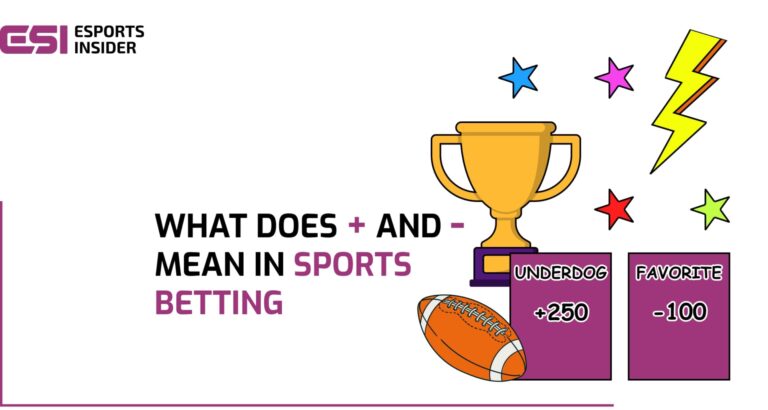
What Does the + And – Mean in Sports Betting: Ultimate Guide
Have you ever seen a plus (+) or minus (–) sign next to numbers in sports betting and wondered what they really mean? Understanding these symbols can change the way you place your bets and boost your chances of winning.
If you want to make smarter bets and feel confident every time you wager, this guide is for you. Keep reading to discover how the + and – signs work and why they matter for your sports betting success.
Basics Of Sports Betting Odds
Understanding the basics of sports betting odds is essential if you want to make smarter bets and potentially increase your winnings. Odds are not just random numbers; they tell you how likely an event is to happen and how much money you can win. Grasping these fundamentals will help you read the + and – signs in betting lines with confidence.
Types Of Odds Formats
Sports betting odds come in different formats depending on where you are or which sportsbook you use. The most common types are:
- American Odds:Displayed with a plus (+) or minus (–) sign, these odds show how much you could win on a $100 bet or how much you need to bet to win $100.
- Decimal Odds:Popular in Europe and Australia, these odds show the total payout rather than just the profit. For example, 2.50 means you get $2.50 for every $1 bet.
- Fractional Odds:Common in the UK, expressed as fractions like 5/1 or 1/2, indicating profit relative to the stake.
If you’ve ever seen +150 or -200, that’s American odds in action. The plus sign means you win $150 on a $100 bet, and the minus means you must bet $200 to win $100. Knowing these formats helps you compare bets easily.
Role Of Odds In Betting
Odds do more than just tell you potential winnings; they reflect the probability of an outcome. A negative odds value (like -150) suggests the team is favored to win, while a positive value (+130) indicates an underdog.
Think about a game where your favorite team is -180 and the opponent is +160. You might hesitate to bet on the favorite because the payout is smaller, but the chance of winning is higher. Which would you choose: a safer bet with less reward or a riskier bet with a bigger payout?
Odds also help you manage your bankroll by showing whether a bet offers good value. Sometimes betting on the underdog with a plus sign can be smarter if the odds underestimate their chance of winning.
Credit: athlonsports.com
Meaning Of The Plus Sign (+)
The plus sign (+) in sports betting is a key symbol that carries important information about the odds and potential outcomes. Understanding what this sign means can give you an edge when placing your bets. It often relates to underdogs and how much money you can win if you back them successfully.
Indicating Underdogs
The plus sign (+) usually marks the underdog in a match or event. An underdog is the team or player expected to lose according to the oddsmakers. The presence of a + sign tells you that this side has a lower chance of winning but offers a bigger reward.
For example, if you see +150 next to a team, that team is the underdog. It means you need to bet on them because the payout will be higher if they pull off an upset. Have you ever bet on an underdog and felt the thrill of a big win? That’s the power of the plus sign in action.
Calculating Potential Winnings
The number after the plus sign shows how much profit you can make on a $100 bet. For instance, if the odds are +200, a $100 bet would win you $200 in profit, plus your original stake back.
Here’s a simple way to calculate your potential winnings:
- Take the number after the + sign.
- Multiply it by the amount you want to bet.
- Divide by 100 to find your profit.
- Add your original stake to see the total payout.
| Odds | Bet Amount | Profit | Total Return |
|---|---|---|---|
| +150 | $50 | $75 | $125 |
| +300 | $20 | $60 | $80 |
Knowing how to calculate this quickly can help you decide which bets offer the best value. Are you ready to spot the underdog that could boost your winnings?
Meaning Of The Minus Sign (-)
The minus sign (-) in sports betting shows which team or player is the favorite. It helps bettors understand who is expected to win the event. This sign also tells how much you need to risk to earn a certain profit.
Indicating Favorites
The minus sign means the team or player is favored to win. It shows that the odds are lower because the chance of winning is higher. For example, if a team has -150 odds, they are the favorite.
This means you must bet more to win less. The favorite usually has a strong record or better form. The minus sign helps you quickly spot the favorite on the betting board.
Calculating Required Stake
The number after the minus sign shows how much money you must bet to win $100. For example, -200 means you must bet $200 to win $100. This helps you know your risk before placing a bet.
To calculate your potential profit, divide 100 by the absolute value of the odds, then multiply by your stake.
| Odds | Stake | Potential Profit |
|---|---|---|
| -150 | $150 | $100 |
| -200 | $200 | $100 |
This calculation helps you manage your bets and understand the payout clearly.
Credit: esportsinsider.com
Comparing Positive And Negative Odds
Understanding the difference between positive and negative odds is key in sports betting. These signs show how much you can win and how much you need to bet. Positive odds tell you the profit on a $100 bet. Negative odds show how much you must bet to win $100. Comparing these odds helps you see the balance between risk and reward. It also affects how you place your bets.
Risk Vs Reward
Positive odds mean a bigger payout for a smaller chance to win. For example, +200 means you win $200 on a $100 bet. Negative odds mean a higher chance to win but with a smaller payout. For example, -150 means you must bet $150 to win $100. Positive odds carry more risk but greater reward. Negative odds are safer but pay less.
Impact On Betting Strategy
Choosing between positive and negative odds shapes your betting plan. Betting on positive odds suits risk-takers who want bigger wins. Betting on negative odds suits cautious bettors who prefer steady gains. Understanding odds helps you manage your money well. It guides how much you bet and when to take risks.
Examples Of + And – In Different Sports
Understanding the plus (+) and minus (–) signs in sports betting becomes clearer when you see how they apply to different sports. These symbols indicate the underdog and favorite in a matchup, affecting how much you can win or need to bet. Let’s break down real scenarios in football and basketball to show you exactly how these numbers work in practice.
Football Betting Scenarios
In football, a minus sign (–) shows the favorite team, meaning they are expected to win. The number next to it tells you how many points they must win by for your bet to pay off.
- Example:If the New England Patriots are –7, they must win by more than 7 points for a bet on them to win.
- The plus sign (+) indicates the underdog, who can either win outright or lose by less than the point spread.
- Example:If the Miami Dolphins are +7, they can lose by 6 points or fewer, or win the game, and your bet still wins.
This system balances the betting action by making the favorite’s bet riskier but with smaller payouts, while the underdog offers bigger returns but less likelihood of winning.
Basketball Betting Scenarios
Basketball betting uses the same plus and minus signs, but the point spreads are typically higher due to the game’s higher scoring.
- For instance, if the Los Angeles Lakers are –5.5, they must win by 6 or more points for your bet to succeed.
- If the Chicago Bulls are +5.5, they can lose by 5 points or less, or win outright, and you still win your bet.
- Sometimes, you’ll see moneyline bets where the plus and minus signs represent how much you win or need to bet, rather than point spreads.
Have you ever thought about how these small numbers can change your betting strategy? Recognizing when to back an underdog or a favorite can make a big difference in your results.
Credit: athlonsports.com
Common Mistakes To Avoid
Understanding the plus (+) and minus (-) signs in sports betting is key to making smart bets. Many beginners make mistakes that cost them money. Avoiding these errors can improve your betting experience and results. Here are common mistakes to watch out for.
Misreading The Signs
The plus (+) sign shows the underdog team or player. It tells how much you can win on a $100 bet. The minus (-) sign indicates the favorite. It shows how much you must bet to win $100. Confusing these signs leads to wrong bets and losses.
For example, a +150 means you win $150 from a $100 bet. A -150 means you must bet $150 to win $100. Misreading these can cause you to bet too much or too little.
Ignoring Odds Value
Odds represent the probability of an outcome and your potential payout. Ignoring the value behind the odds is a big mistake. Betting only on favorites with minus (-) odds can reduce your profits. Sometimes the underdog with plus (+) odds offers better value.
Look beyond just who is favorite or underdog. Calculate if the payout justifies the risk. Betting smart means finding good value odds, not just easy wins.
Tips For Using + And – Odds Effectively
Understanding how to use + and – odds can boost betting success. These symbols show how much you can win or need to bet. Smart use of these odds helps you make better decisions and protect your money. Here are key tips for using them well.
Bankroll Management
Keep a clear budget for betting. Never bet more than you can afford to lose. Use the + and – odds to decide how much to stake. For example, smaller bets on – odds reduce risk. Larger bets on + odds offer bigger rewards but are riskier. Balance your bets to avoid big losses.
Finding Value Bets
Look for odds that offer more than the real chance of winning. + odds often show underdogs with higher payouts. Check if the underdog has a good chance to win. – odds usually indicate favorites with lower returns. Compare odds across sites to spot good deals. Betting on value improves your chance to profit over time.
Frequently Asked Questions
What Does + Mean In Sports Betting?
The “+” symbol indicates the underdog team in sports betting. It shows how much profit you can make on a $100 bet. For example, +150 means you win $150 for every $100 wagered. It represents higher risk but potentially higher reward.
What Does – Mean In Sports Betting?
The “-” symbol represents the favorite team in sports betting. It shows how much you need to bet to win $100. For example, -150 means you must bet $150 to win $100. This indicates lower risk but potentially lower reward.
Why Are Odds Important In Betting?
Odds determine potential profit and risk in sports betting. They reflect the likelihood of an outcome. Understanding odds helps bettors make informed decisions. It is crucial for maximizing returns and managing risks effectively in sports betting.
How Do Odds Affect Payouts?
Odds directly affect the amount you can win from a bet. Positive odds indicate higher payouts for underdogs. Negative odds show lower payouts for favorites. The odds determine the risk-reward balance for each wager.
Conclusion
The plus (+) and minus (-) signs show which team is favored in sports betting. A minus means the team must win by more points. A plus means the team can lose or win, and you still win your bet.
Understanding these signs helps you make smarter bets. Keep practicing to get comfortable with the numbers. Betting becomes easier when you know what these symbols mean. Stay patient and enjoy the process of learning. This knowledge makes sports betting less confusing and more fun.