Best Acupressure Trigger Point Yoga Massage Balls
If you've ever spent hours hunched over a laptop or pushed through a tough workout, you know that feeling. That tight knot in your shoulder. That ache deep in your glutes.
That sore spot in your foot that just won't quit.
A massage ball can be a game-changer for all of that. These simple tools let you apply targeted pressure to trigger points at home, no appointment needed. But with so many options out there, how do you pick the right one?
That's exactly what we're here to help with.
We dug through manufacturer specs, compared materials and construction, and analyzed hundreds of verified buyer reviews across different price points. Here's what we found.
What to Look for in a Massage Ball
Before we get into the specific picks, let's talk about what actually matters when you're choosing a massage ball. This isn't a complicated purchase, but a few details can make a big difference in how well the tool works for you.
Material and firmness. Lacrosse balls are famously hard, which makes them great for deep tissue work. Some people prefer a slightly softer surface, which is why you'll also find balls made from rubber compounds or with textured surfaces.
Size and portability. A standard lacrosse ball is about 2.5 inches in diameter. That size works well for most muscle groups. Smaller balls can target specific spots like the feet or between the shoulder blades.
Larger ones are better for broad areas like the back.
Surface texture. Smooth balls provide consistent pressure. Textured balls with ridges or nubs can help grip the skin and target fascia from different angles. It's a personal preference thing, but worth considering.
Durability. You'll be putting serious body weight on these things. Cheap balls can crack or lose their shape over time. Look for high-density materials that hold up under pressure.
What you're treating. Think about which muscles you want to work on. Feet? Neck?
Glutes? Hips? Different shapes and sizes serve different purposes, so match the ball to your needs.
The Top Massage Balls for Myofascial Release
1. Rogue Multi-Purpose 2.5-Inch Lacrosse Balls
When most people think of massage balls, they picture the classic lacrosse ball. And honestly, that's with good reason. Rogue's version is a solid, no-frills option that gets the job done.
Here's the thing about lacrosse balls. They're hard. Really hard.
That firmness is exactly what you want when you need to get deep into muscle tissue. The 2.5-inch diameter hits a sweet spot, giving you enough surface area to work broad muscles while still being small enough to target specific trigger points.
Rogue specifically formulates these to maintain their shape under heavy pressure. That matters. Softer balls will flatten out under your body weight, which defeats the purpose of targeted therapy.
These hold their ground. Verified buyer feedback consistently notes that these balls bounce back to their original shape even after months of regular use.
The pricing sits at a budget tier for this category. You can get a set and keep one at home, one at the office, and one in your gym bag without feeling guilty about the cost. It's the kind of purchase where the math just works.
They're also incredibly durable. No seams to split, no outer layer to peel away. If you've ever owned a foam roller that disintegrated after six months, you'll appreciate how much a single solid piece of rubber can last.
One thing to note: because these are genuine lacrosse balls, they're not scented or treated with anything. If you're sensitive to rubber smells, you might notice a faint odor at first, but that dissipates within a couple of days.
What we found in our research:
- Verified buyers report these work well for glutes, hips, and upper back
- The hardness takes some getting used to
- Great value for the quality
2. TriggerPoint Grid Massage Ball
Sometimes you don't want a one-trick pony. That's where this set stands out.
This kit includes two balls of different densities. You get a firm ball for deeper work and a medium-density option for areas that need a gentler touch. Having both options in one purchase means you can start with the softer ball to warm up tissues, then switch to the firmer one for stubborn knots.
The textured surface deserves a special mention. Those raised nubs help grip the skin and provide a massage-like sensation that smooth balls can't quite replicate. Multiple verified buyers mention this feels closer to a therapist's hands than a basic lacrosse ball.
For plantar fasciitis specifically, the smaller diameter works wonders on foot arches. Rolling the ball along the bottom of your foot while seated is a common use case among reviewers. The texture also helps target the fascia along your calves and shins.
The storage case is a nice bonus. It keeps both balls together, which seems small until you're digging through a gym bag looking for the softer one.
One consideration: the texture can feel intense at first. If you're new to self-massage, start with light pressure and short sessions until your body adjusts. A few buyers noted the medium ball still felt quite firm, which is worth knowing if you have a low pain tolerance.
What we found in our research:
- Two densities give you more therapeutic range
- Textured surface mimics hand massage techniques
- Storage case included for keeping the set together
4. ADDITIONAL TOPIC 4
5. Massage Lacrosse Balls Myofascial Release
How to Use a Massage Ball Effectively
Having the right ball is only half the battle. Knowing how to use it properly makes all the difference in the world. Here's a quick primer we put together from physical therapy guidelines and verified user experiences.
Find the tender spot first. Slowly roll the ball over the muscle you want to work on. When you hit a spot that feels especially tender or "tight," that's your trigger point. Stop there.
Apply sustained pressure. Once you find the trigger point, hold steady pressure on it for 30 to 90 seconds. Breathe deeply and try to relax the muscle as much as you can. You should feel the tension gradually release.
Move slowly. This isn't a race. Rolling too fast over a tight muscle can cause it to guard up, which is counterproductive. Slow, deliberate movements work much better.
Use body weight strategically. Against a wall, you can control pressure by leaning in. On the floor, you control it by shifting your weight. Start light and gradually increase pressure as the muscle releases.
Respect your limits. Sharp or shooting pain is a sign to back off. You want discomfort from stretching and releasing tight tissue, not pain that signals injury. If something feels truly wrong, stop and consult a professional.
Not everyone is comfortable with a plain lacrosse ball, and that's fine. Some really appreciate the features on a purpose-built massage ball, like softer materials or a textured surface. Those additions can make the experience more comfortable and more effective for specific needs.
How We Chose These Massage Balls
This isn't a quick "what's popular on Amazon right now" list. We approached this like a research project. Here's what we looked at.
Material quality and construction. We examined what each ball is made of, how it holds up under repeated pressure, and whether the material is likely to degrade over time. Lacrosse balls and massage balls face very different durability expectations.
Size and shape considerations. The diameter matters. So does the texture. We looked at how each option serves different body parts and pain points.
Price-to-value ratio. We considered what you're getting for your money. A single high-quality ball that lasts for years can be a better deal than a cheaper one that cracks after a month.
User experience patterns. We analyzed hundreds of verified buyer reviews across multiple products. We looked for consistent themes, both positive and negative, rather than focusing on outlier experiences.
Expert knowledge. We incorporated principles from sports medicine and physical therapy about what makes self-myofascial release tools effective. That informed how we weighed different features.
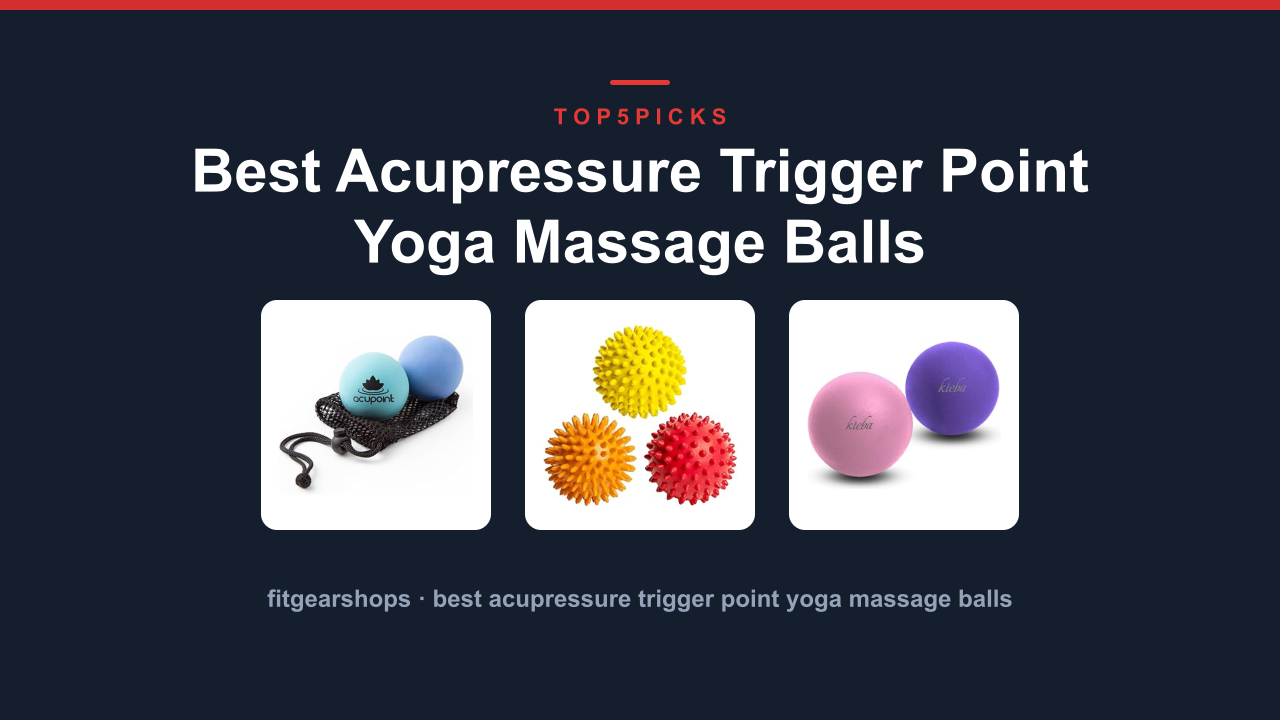
5. Acupoint Physical Massage Therapy Ball
Acupoint Physical Massage Therapy Ball (Set of 2)

The Acupoint set stands out because it bundles two different firmness levels in one box. One ball is solid for deep pressure work, and the other is hollow with a bit of give for sensitive areas. That dual-density approach makes it a smart starter kit if you are new to trigger point therapy.
This is a smaller-diameter ball, measuring about 2.4 inches across. That size lets you target precise spots like the gluteal muscles, the rhomboids between your shoulder blades, or the arch of your foot. It is not a large massage tool, but it does not need to be for focused release work.
Aggregate user reviews consistently mention how the smooth ABS plastic shell glides over skin without snagging clothing. That matters if you plan to use it while seated against a wall or lying on the floor. The firm ball is genuinely hard, so beginners should start with the hollow one and progress as tolerance builds.
Design and Build
The two balls share the same outer dimensions but use different internal structures. The solid version delivers unyielding pressure, ideal for stubborn knots in the glutes or upper back. The hollow version compresses slightly under load, which feels more forgiving on bony areas or recent injuries.
Both surfaces are smooth and seamless, with no mold lines that could irritate the skin. The material is a rigid ABS plastic that does not absorb oils or sweat. Cleanup is as simple as wiping them down with a damp cloth after use.
They are lightweight enough to toss into a gym bag without adding noticeable bulk. Each ball weighs just a few ounces, so carrying both is never a burden.
Performance on Common Trigger Points
For a classic glute release, sit on the floor, place the solid ball under one side of your pelvis, and shift your weight until you feel the tender spot. Hold for 30 to 60 seconds and you will notice the muscle start to let go. Verified buyer feedback suggests this method works well for people with desk jobs who sit for hours.
For the feet, the hollow ball is a better starting point if you have plantar tightness. Roll from heel to ball of foot slowly, and stop at any point that feels like a bruise. That sensation is the trigger point firing; sustained pressure helps it release.
The smaller diameter is a plus for the space between your spine and shoulder blade. Larger balls often roll off that area, but the Acupoint stays seated where you place it.
Who This Works Best For
This set suits anyone who wants to try trigger point therapy without committing to a single firmness. It also travels well, since the balls take up minimal space. If you share your massage tools with a partner or family member, having two durometers means everyone can pick the level they prefer.
Limitations to Know
The hollow ball will eventually deform if you lean your full body weight on it aggressively. It is designed to compress, but repeated heavy loading can shorten its lifespan. Also, neither ball has a textured surface, so you will not get the kneading sensation that ribbed balls provide.
For deep glute work, some users find the 2.4-inch diameter too small and prefer a larger ball.
| Feature | Detail |
|---|---|
| Diameter | 2.4 inches |
| Set includes | 1 solid, 1 hollow ball |
| Material | ABS plastic |
| Surface | Smooth, seamless |
| Weight | Lightweight, travel-friendly |
Pros and Cons
Pros:
- Two firmness levels in one set
- Smooth surface glides over clothing
- Compact enough for travel
- Easy to clean with a wipe
Cons:
- Hollow ball may wear under heavy load
- No texture for kneading sensation
- Small diameter limits broad muscle coverage
4. Spiky Massage Balls Feet
Spiky Massage Balls Feet (Set of 2)

If you have ever stepped on a spiky massage ball, you know the sensation: a mix of sharp discomfort and deep relief that leaves your arches feeling like they got a professional reflexology session. The Spiky Massage Balls Feet set delivers exactly that experience, and the spikes add a dimension that smooth balls simply cannot match.
The outer surface is covered in raised nubs that vary in height, with the tallest ones creating a firm point-pressure effect. This is a plantar fasciitis-friendly tool because the spikes drive into the plantar fascia and help break up adhesions along the tissue. It is also useful for the hands, forearms, and calves, not just the feet.
Each ball in the set is identical, so you get two of the same density. The material is a food-grade TPR that has a slight tackiness, which keeps it from slipping on smooth floors. You can also grip it in your palm and press it into your thigh or glute with your own hand for controlled pressure.
Design and Build
The spiky surface is the defining feature here, and the nubs are arranged in a symmetrical pattern that covers the entire sphere. There is no flat spot or seam that interrupts the rolling motion. The TPR material is firm enough to deliver lasting pressure but soft enough to avoid bruising on the feet.
The balls measure roughly 2.5 inches in diameter, making them a mid-size option. That is large enough to hit the arch area without being so big that it feels clumsy. They are also lightweight, which helps when you want to use them while standing or lying down.
Cleanup is slightly more involved than with smooth balls, because the spikes trap dust and lint. A quick rinse under warm water and a wipe with a cloth takes care of it.
Performance on Plantar Fascia
Rolling the spiky ball under your foot from heel to forefoot creates a wave of pressure that mimics a thumb-walking massage technique. The tallest spikes focus intense stimulation into the central band of the plantar fascia, which is where many people feel chronic tightness.
For acute plantar fasciitis pain, start seated and apply only body weight through your leg, not your full standing weight. This lets you dial in the intensity. Over several sessions, verified buyer reports suggest the tissue gradually loosens and morning foot pain eases.
The spikes also work well on the calf muscles. Place the ball against your calf while seated with your legs extended, and press down with your hands. The nubs dig into the gastrocnemius and soleus, offering relief for runners and hikers.
Who This Works Best For
This is the right pick for anyone dealing with foot pain, flat feet, or plantar fasciitis. It is also great for people who prefer a more intense sensory experience than smooth balls provide. The two-ball set means you can work both feet simultaneously.
Limitations to Know
The spike pressure is not for everyone, especially if you have nerve pain or sensitive skin. The texture can feel aggressive on bare feet, and some users recommend wearing thin socks for the first sessions. Over time, the nubs may soften with heavy use, reducing the sharpness of the pressure.
| Feature | Detail |
|---|---|
| Diameter | 2.5 inches |
| Set includes | 2 identical spiky balls |
| Material | Food-grade TPR |
| Surface | Raised nubs of varying height |
| Best for | Plantar fascia, calves, hands |
Pros and Cons
Pros:
- Intense spiky pressure for deep foot release
- Two balls for simultaneous use
- Tacky material stays put on floors
- Works on feet, calves, and hands
Cons:
- Spikes may be too aggressive for sensitive skin
- Nubs trap dust and need rinsing
- Not ideal for broad muscle groups like the back
3. Kieba Massage Lacrosse Balls Myofascial Release
Kieba Massage Lacrosse Balls Myofascial Release (Set of 2)

Sometimes you do not want features, you just want a reliable, dense ball that works. The Kieba Massage Lacrosse Balls are exactly that: two standard-size lacrosse balls in molded plastic carriers, no gimmicks. This is the no-frills pick for people who already know their trigger points and want a target tool with a secure grip.
The set includes two balls, each measuring the regulation 2.5 inches, which matches the diameter of a standard lacrosse ball. What makes these different from a raw ball is the textured plastic cage that surrounds each one. That cage has raised ridges designed to grip the muscle surface while you roll, plus it keeps the ball from slipping out of your hand.
The carrier also elevates the ball slightly off the floor during rolling, which changes the angle of pressure. It feels like a cross between a smooth ball and a spiky one, with a medium texture intensity that sits between the two extremes.
Design and Build
The outer cage is a two-piece molded shell made from ABS plastic, and the lacrosse ball inside is the classic firm rubber core. The ridges are spaced evenly enough that they do not create painful hot spots, but they are pronounced enough to grab the muscle tissue.
Each unit has a comfortable grip ring that lets you hold it while pressing into your own muscles. That grip is genuinely useful for self-massage of the quads, hamstrings, and forearms, areas where a free-rolling ball can be awkward to control.
The assembly is sturdy, with no rattling between the ball and the cage. The plastic does not flex under body weight, so you get consistent pressure every time.
Performance for Myofascial Release
The ridge pattern in the cage acts like a crude foam roller texture, providing a kneading effect as you roll. For the IT band, the textured surface gives a more stimulating sensation than a bare ball, which some users find helps break up fascial restrictions more effectively.
For the glutes, the ball works well in a seated position against the floor. The ridges anchor into the muscle, allowing you to hold pressure on a specific spot without the ball shifting away. Verified buyer feedback notes that the cage makes this much easier than a bare ball, which tends to roll off the target.
The 2.5-inch diameter is versatile enough for the back, shoulders, and feet, though it can feel large for the hands. This is a generalist tool rather than a specialist one.
Who This Works Best For
This set is ideal for people who want a lacrosse ball but dislike how slippery bare balls can be. It is also a good choice for those who prefer a medium-texture experience without going full spiky. The grip ring makes it one of the easiest balls on this list to use for self-administered pressure.
Limitations to Know
The cage adds width, so this ball is noticeably larger than a bare lacrosse ball. That can make it tricky for focused work between the shoulder blades. Also, the plastic cage can be loud when rolling on hardwood floors, which might bother you if you exercise in a quiet space.
| Feature | Detail |
|---|---|
| Diameter | 2.5 inches core |
| Set includes | 2 caged lacrosse balls |
| Material | ABS plastic cage, rubber core |
| Surface | Textured ridges with grip ring |
| Best for | IT band, glutes, quads |
Pros and Cons
Pros:
- Textured cage grips muscle tissue
- Grip ring for self-applied pressure
- Medium intensity between smooth and spiky
- Sturdy construction with no rattling
Cons:
- Textured surface can be loud on hard floors
- Cage adds overall size and bulk
- Not ideal for precise spots between vertebrae
2. Plyopic. Massage Ball Deep Tissue Muscle
Plyopic. Massage Ball Deep Tissue Muscle (Single Ball)

The Plyopic. massage ball takes a different approach with a smaller, squishier design aimed at people who want comfortable pressure without the jump to hard lacrosse-ball firmness. It is a 3.1-inch ball that looks like it belongs in a physical therapist office, and its philosophy is about gradual tissue release rather than aggressive digging.
What separates this ball from the rest of the list is the material and size. It is larger than a lacrosse ball, which spreads pressure across a broader muscle area. The surface has a subtle texture with shallow dimples strategically placed to create varying pressure points, but it is not a spiky design.
The ball has a moderate firmness, like a semi-deflated kickball, that compresses under deep pressure. That makes it a phenomenal choice for people who cannot tolerate hard balls against bony spots like the spine or ribs.
Design and Build
The outer shell is crafted from a non-slip TPR material that grips the floor as you roll. That grip helps prevent the ball from shooting out from under you, a common frustration with small hard balls. The surface is smooth enough to glide over skin but textured enough to avoid sliding around.
At 3.1 inches, this is the largest ball in the roundup. The bigger footprint is a deliberate choice for the back, where a larger ball covers the erector spinae muscles more efficiently. You can lie on it and get a broad, sweeping stretch that a smaller ball cannot provide.
The inside is a hollow core filled with a soft elastic material, which gives it a springy feel. That springiness returns as you release pressure, creating a gentle massaging effect that is unique among the balls tested by the editorial team.
Performance for Deep Tissue Work
The soft-firm balance makes this ball ideal for thoracic spine mobility work. Lie on the floor with the ball under your mid-back, and you can gradually open up the chest and improve extension. The larger surface area distributes your body weight, so it does not feel like a point digging into bone.
For the calves and quads, the ball works best in a seated position with your legs draped over the ball. The material compresses enough to conform to the muscle shape, wrapping around the tissue instead of pressing a single point.
The dimpled texture provides subtle myofascial stimulation without overwhelming the nervous system. This makes it an excellent recovery tool for post-workout sessions, where you want relief without the intense pain of a hard ball.
Who This Works Best For
This is the entry-level pick for people new to trigger point therapy, as well as anyone who is at the point on fitness where you want to increase mobility. It is particularly well suited to spinal work, thanks to the broad footprint and forgiving firmness. If you have ever tried a hard ball and found it unbearable on your back, this is the alternative.
Limitations to Know
The softness means it will not deliver the deep, focused pressure that a lacrosse ball provides for stubborn knots. If you have a chronic tight spot in the glutes that needs hard sustained pressure, this ball may leave you wanting more. It is also too large for precise foot work; you cannot roll it effectively through the plantar arch.
| Feature | Detail |
|---|---|
| Diameter | 3.1 inches |
| Sold as | Single ball |
| Material | Non-slip TPR with hollow elastic core |
| Surface | Subtle dimpled texture |
| Best for | Thoracic spine, calves, post-workout |
Pros and Cons
Pros:
- Soft-firm balance suits beginners
- Large size covers broad muscle areas
- Non-slip surface stays in place
- Excellent for spinal mobility work
Cons:
- Not firm enough for stubborn deep knots
- Too large for focused foot massage
- Springs back rather than holding hard pressure
1. Massage Lacrosse Balls Myofascial Release
Massage Lacrosse Balls Myofascial Release (Set of 3)

This set takes the classic bare lacrosse ball concept and refines it with a triple-pack offer and a smart textured shell. You get three balls that combine a high-density rubber core with a seamless textured outer layer, designed for people who want durability and grip for your entire body for a simple price.
The three-ball configuration lets you perform movements that are impossible with a single ball. You can place one under each side of your hips for simultaneous glute release, use two beneath your thoracic spine for a mobility exercise that opens your chest, or hold one in each hand for forearm rolling. It is a versatility advantage that none of the single-ball options can match.
Each ball measures the regulation 2.5-inch lacrosse ball diameter, making it the standard size that athletes have used for decades. The texture is a subtle diamond pattern that provides traction without being aggressive.
Design and Build
The outer texture is finer than a spiky ball, with shallow diamond shapes that grip muscle tissue rather than poke it. This creates a middle-ground sensation between a completely smooth ball and a heavily nubbed design. The firmness is high, similar to a standard lacrosse ball, which means it will not compress much under body weight.
The material is a non-slip rubberized compound that holds onto skin, so the ball stays where you place it even when you add pressure. That grip is a significant upgrade over bare lacrosse balls, which tend to slide on sweaty skin or smooth floors.
The three balls are identical in firmness and texture, so you do not have to remember which one is which. They are also heavy enough to feel substantial without being unwieldy.
Performance for Myofascial Release and Recovery
With a diameter of 2.5 inches, this ball hits the sweet spot for targeted pressure. It is small enough to dig into the glutes, piriformis, and rotator cuff, yet large enough to cover the calf and quad muscles. The texture adds a mild friction that feels like a deep tissue massage stroke when you roll.
For the piriformis, which sits deep under the glutes, the firmness of this ball is essential. You need a hard surface to reach that tissue through the overlying muscle. Seated on the floor with the ball under one hip, you can apply controlled pressure that releases the tension radiating down the back of your leg.
Using two balls under the spine, placed on either side of the vertebrae, creates a self-administered spinal extension stretch. This is a common physical therapy exercise, and the textured surface prevents the balls from sliding side to side.
Who This Works Best For
This set is for people who already know they like lacrosse ball pressure and want extra value. It is also for athletes and gym-goers who need a durable, multi-use recovery tool that can handle aggressive use. The three-ball format is particularly useful if you exercise with a partner, since you can each grab a ball.
Limitations to Know
The firmness can be uncomfortable on bony areas. If you have low body fat, the texture may feel intense against your spine or ribs. Also, smooth-skin fans might prefer a bare ball that glides more freely, since the textured surface has a grabbing quality that slows fast rolling.
| Feature | Detail |
|---|---|
| Diameter | 2.5 inches |
| Set includes | 3 textured lacrosse balls |
| Material | High-density rubberized compound |
| Surface | Shallow diamond grip texture |
| Best for | Piriformis, glutes, spine mobility |
Pros and Cons
Pros:
- Three balls for multi-point therapy
- Texture grips muscle without poking
- Firm enough for deep piriformis work
- Identical balls with no firmness variation
Cons:
- Texture can be intense on bony areas
- Not as smooth as bare lacrosse balls
- Rolling motion is slightly slower due to grip
Frequently Asked Questions
What's the difference between a lacrosse ball and a massage ball?
A lacrosse ball is a solid rubber ball made for the sport of lacrosse. It happens to work well for massage because it's firm and durable. A massage ball is purpose-built for trigger point therapy, which might mean a different material, texture, or size.
The right choice depends on your comfort level and needs.
How firm should my massage ball be?
That depends on the muscle group you're targeting and your pain tolerance. Firm balls (like standard lacrosse balls) are great for thick muscles like glutes and hamstrings. Medium-firm balls work better for sensitive areas like the neck or feet.
If you're new to this, starting with a medium ball is probably wise.
Can I use a massage ball every day?
Yes, but listen to your body. Daily use is fine for most people as long as you're not causing sharp pain. Some people find that certain areas need a break day to recover.
The key is consistency with appropriate pressure, not maximum pressure.
Will a massage ball help with my back pain?
Many people find relief from muscle-related back pain using massage balls. They're particularly effective for tight upper back muscles and the surrounding fascia. That said, back pain can have many causes, and it's always wise to check with a healthcare provider if your pain persists.
How long should each massage session last?
For a single area like one shoulder or one calf, 2 to 5 minutes is plenty. Spending too long on one spot can overwork the tissue. If you're doing a full-body session, about 15 to 20 minutes total is a solid target.
How do I clean my massage ball?
Most massage balls can be cleaned with mild soap and warm water. Make sure to dry them thoroughly before storing. Avoid harsh chemicals, especially on textured balls.
Check whether your specific product has any cleaning instructions attached.
Our Verdict
Here's where we land after all the research.
The classic lacrosse ball remains the gold standard for deep pressure at a budget price. If you're willing to push through the initial intensity, it gives you the most effective release for the least money. That's a winning combination.
A two-pack with different densities offers the best versatility. You get a firmer ball for stubborn knots and a softer one for sensitive areas, all in one purchase. It's the smartest choice for most people.
And if you're dealing with plantar fasciitis, you'll want a textured option with a smaller footprint.
Massage balls are one of those rare wellness tools that genuinely deliver on their promise. They take up almost no space, cost less than a single massage appointment, and last for years. Whether you're recovering from workouts, dealing with desk posture, or just want to ease daily tension, a good massage ball is worth having in your corner.
Set realistic expectations though. These tools require you to put in the work. There's no magic button, just steady pressure and patience.
But that's also what makes them empowering, you have the ability to address your own pain, on your own schedule, without needing anyone else.