Who Created the Sport of Basketball: The Untold Story Revealed
Have you ever wondered who created the sport of basketball? You might think it just appeared one day, but there’s a fascinating story behind its origin.
Knowing who started this game can change the way you see every dribble, pass, and shot. This isn’t just history—it’s the key to understanding the heart of basketball. Keep reading to discover the surprising creator of this beloved sport and how their invention has shaped your favorite game today.

Credit: officialnbarefs.medium.com
Origins Of Basketball
Basketball is a popular sport played worldwide today. Its origin traces back to the late 19th century. The sport was created to offer a new way to stay active during cold months. The story of basketball’s beginning involves creativity, necessity, and the desire for fun.
Early Sports Influences
Before basketball, many ball games existed. Sports like soccer and rugby involved running and kicking. Other games focused on throwing and catching. These sports influenced the rules and style of basketball.
Basketball combined ideas from different games. Dribbling the ball and shooting it into a target were key elements. The sport’s creator took inspiration from physical education and team sports of that time.
Need For Indoor Games
In winter, outdoor sports were hard to play. Cold weather stopped many athletes from practicing. Schools and gyms needed a game to keep people active indoors.
The new sport had to be simple and safe. It needed few players and little equipment. The goal was to keep players moving and engaged inside a gym.
James Naismith: The Visionary
James Naismith was more than just the creator of basketball; he was a true visionary who reshaped how people engage in sports and physical activity. His ability to think beyond traditional games led to the birth of a sport that millions enjoy today. Understanding his background and innovative ideas can inspire you to see how creativity and purpose can lead to lasting impact.
Biographical Background
James Naismith was born in 1861 in Ontario, Canada. From a young age, he showed a strong interest in sports and physical education. His passion led him to study at McGill University, where he excelled both academically and athletically.
Later, Naismith moved to the United States to work at the International YMCA Training School in Springfield, Massachusetts. It was here, in 1891, that he was tasked with creating a new indoor game to keep athletes active during winter. This challenge set the stage for his groundbreaking invention.
Innovative Ideas
Naismith’s approach was simple but effective. He wanted a game that required skill, teamwork, and minimal physical contact. To achieve this, he wrote down 13 basic rules that focused on fairness and safety.
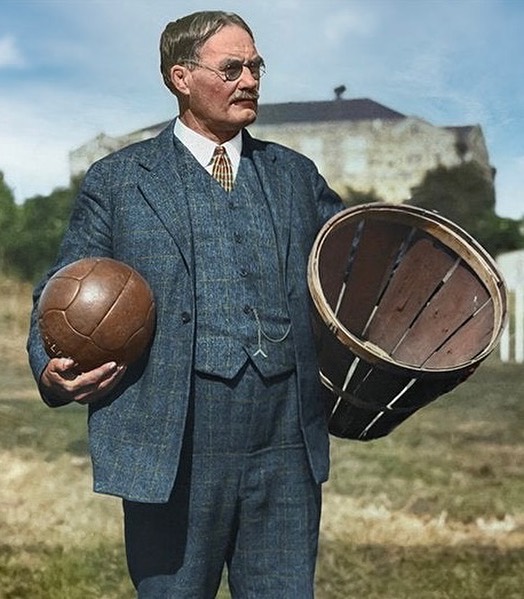
He used a soccer ball and two peach baskets as goals, which may sound odd today but perfectly fit the idea of an indoor game. His rules encouraged passing and shooting, making the game fast-paced and exciting.
Think about your own challenges—how can you apply Naismith’s strategy of clear, simple rules to solve problems or create something new? His example shows that innovation often starts with a clear purpose and practical solutions.
Development Of Rules
The development of basketball rules shaped the sport’s identity. Dr. James Naismith created the first set of guidelines in 1891. These rules helped players understand the game and keep it fair. Over time, changes made basketball faster and more exciting. The rules grew with the sport’s popularity and player needs.
The Original 13 Rules
- The ball could be thrown in any direction with one or both hands.
- Players could not run with the ball but had to throw it from the spot.
- No physical contact was allowed to stop an opponent.
- The game started with a toss-up between two players.
- Goals were scored by putting the ball into a peach basket.
- When the ball went into the basket, the game stopped to retrieve it.
- Players could not strike the ball with the fist.
- No holding or pushing opponents was permitted.
- The court was divided into sections, and players stayed in their zones.
- Fouls were called for personal contact or unfair play.
- Each team had nine players on the court.
- The game lasted two 15-minute halves.
- The team with the most points won.
Adaptations Over Time
Rules changed to improve flow and safety. Peach baskets were replaced by open hoops with nets. This allowed the ball to pass through easily without stopping play.
Dribbling became part of the game, letting players move while controlling the ball. The number of players on the court dropped from nine to five for more space.
Time limits were added for possessions to speed up the game. Fouls became more defined, and free throws were introduced as penalties.
Today’s rules aim to balance skill, speed, and fairness. The game continues to evolve with new ideas and technology.
The First Game
The first basketball game marked the beginning of a sport loved worldwide. It was not just a match but a new way to play indoors. The game started as a solution for a winter activity that could keep athletes active inside.
This initial game was simple but laid the foundation for future rules and play styles. It showed how a few basic ideas could turn into a popular sport.
Location And Participants
The first basketball game happened in Springfield, Massachusetts. It took place inside a gymnasium at the International YMCA Training School. James Naismith, the game’s creator, organized the match.
There were 18 players split into two teams of nine. These players were students at the school. The game was meant to test the new sport’s basic rules and excitement.
Game Dynamics
The game used a soccer ball and two peach baskets as goals. Players had to throw the ball into the baskets to score points. There was no dribbling; players passed the ball to move it.
The pace was slower than modern basketball. Physical contact was limited to keep the game safe. Scoring was rare, with only one point per basket.
- The court was smaller than today’s basketball courts.
- There were no backboards behind the baskets.
- Players focused on teamwork and passing.
This first game set the rules that evolved with time. It proved that indoor sports could be fun and competitive.
Basketball’s Early Popularity
Basketball’s early popularity grew fast after its invention in 1891. The sport quickly caught attention beyond its origin. Simple rules and minimal equipment helped spread it widely. People loved the fast pace and team play. It became a favorite in schools and communities. The game’s appeal crossed age and gender lines. It fit well into indoor spaces, perfect for colder months. This allowed continuous play year-round, boosting its growth. Basketball soon became a major part of physical education programs.
Spread Across Universities
Universities played a key role in basketball’s rise. Colleges adopted the sport to attract students and promote fitness. Teams formed quickly, and intercollegiate games began. These matches drew crowds and created excitement. Schools organized leagues and tournaments to boost competition. Basketball helped universities build school spirit and pride. Coaches refined strategies and improved player skills. The sport’s popularity at universities influenced nearby communities. This helped basketball move from a simple game to a structured sport.
Impact On Physical Education
Physical education programs welcomed basketball for many reasons. The game promotes teamwork, speed, and endurance. It teaches coordination and quick thinking. Teachers found basketball easy to include in lessons. It required little space and few tools. Students enjoyed the active, fun nature of the sport. Basketball also helped improve overall health and fitness. Schools saw better student participation in PE classes. The sport’s inclusion helped shape modern physical education methods. Its influence is still clear in many school programs today.
Challenges And Criticisms
The creation of basketball did not come without its challenges and criticisms. Many people questioned the new sport’s rules and its place in the world of physical activities. The journey from invention to acceptance was filled with doubts and obstacles. Understanding these challenges helps us appreciate how basketball grew into the sport we know today.
Initial Reactions
At first, basketball faced many doubts. Some thought it was too simple or not exciting enough. Critics said the sport was just a passing trend. Others worried it might be too rough or unsafe for players. Schools and sports clubs hesitated to adopt the new game. Some preferred traditional sports like football or baseball instead.
Many players found the new rules strange. Passing a ball without running across a field was unfamiliar. The idea of scoring points by throwing a ball into a basket seemed odd. These early reactions created a barrier to the sport’s growth.
Overcoming Skepticism
The sport’s inventor and supporters worked hard to prove basketball’s value. They showed how it promoted teamwork and quick thinking. Demonstrations and matches helped people see the sport’s excitement. Slowly, schools began to include basketball in their programs.
Rules were adjusted to make the game safer and more enjoyable. Coaches taught players new skills and strategies. Over time, fans and players started to appreciate basketball’s fast pace and energy. This change in attitude helped the sport spread across the country and beyond.
Legacy Of James Naismith
James Naismith left a lasting mark on sports history. He created basketball in 1891 as a simple indoor game. His invention grew into a global sport loved by millions. Naismith’s legacy reaches far beyond the court. It influences how sports develop and how athletes train today.
Influence On Modern Sports
Naismith’s idea introduced teamwork and quick thinking. Basketball’s fast pace inspired other sports to speed up their play. The sport’s focus on skill and strategy shaped coaching methods worldwide. Physical education programs adopted basketball for its health benefits and social lessons.
Many modern sports borrow basketball’s rules and spirit. The game’s global spread helped sports become more inclusive. Naismith’s vision created a model for fair play and respect. His work influenced professional leagues, college sports, and youth programs.
Tributes And Honors
- The Naismith Memorial Basketball Hall of Fame honors his achievements.
- Numerous schools and gyms bear his name across the world.
- Statues and plaques commemorate his contribution in various cities.
- Annual awards celebrate players and coaches inspired by Naismith’s values.
These tributes keep his memory alive for new generations. They remind us of the simple idea that grew into a worldwide sport. Naismith’s legacy continues to inspire players, coaches, and fans every day.
Basketball’s Global Expansion
Basketball’s journey from a simple game invented in a small gymnasium to a global phenomenon is nothing short of remarkable. This sport has crossed borders, cultures, and languages, uniting millions with its fast pace and dynamic play. Understanding how basketball expanded worldwide can help you appreciate its impact beyond just being a game.
International Adoption
Basketball quickly traveled outside the United States after its creation. Schools and sports clubs in countries like Canada, the Philippines, and China embraced the game early on. This rapid spread was due in part to its simple equipment needs and easy-to-understand rules.
What makes basketball stand out is how accessible it is. You don’t need a full stadium or expensive gear to start playing. This accessibility helped it become a favorite in urban areas and communities with limited resources.
Today, the sport has official leagues and organizations in nearly every continent. The International Basketball Federation (FIBA) plays a crucial role in standardizing rules and organizing competitions, making it easier for players around the world to compete on a level playing field.
Cultural Impact
Basketball has influenced cultures in ways that go beyond the court. It has shaped fashion trends, music, and even language. You might have noticed how basketball sneakers and jerseys are popular streetwear items in cities worldwide.
Many communities use basketball as a tool for social change and youth development. It offers a constructive outlet, teaching teamwork, discipline, and leadership. Have you ever thought about how a simple game can change someone’s outlook on life?
Furthermore, basketball has created global icons who inspire millions. Players like Michael Jordan, Yao Ming, and Giannis Antetokounmpo bridge cultural gaps, showing you that talent and hard work know no borders. Their stories prove that basketball is more than just a sport; it is a shared language for dreams and determination.
Modern Innovations
Modern innovations have shaped basketball into the sport loved worldwide today. Changes in technology and rules improved how players perform and how fans enjoy the game. These developments keep basketball fresh and exciting for everyone.
Technological Advancements
Technology plays a big role in basketball’s growth. Video replay systems help referees make accurate calls during games. Advanced sensors track player movement and ball speed, offering coaches new ways to train teams.
Broadcast technology brings games to millions of viewers globally. High-definition cameras and instant replays make watching basketball thrilling and clear. Fans can now see every detail from their homes.
Changes In Gameplay
Basketball rules have evolved to boost excitement and fairness. The introduction of the three-point line changed scoring strategies. Teams now focus more on outside shooting and spacing.
The shot clock forces players to move fast and avoid stalling. Defensive rules also shifted to allow more contact, making the game more physical. These changes create faster, more dynamic matches.
Credit: www.facebook.com

Credit: en.wikipedia.org
Frequently Asked Questions
Who Invented The Sport Of Basketball?
Basketball was invented by Dr. James Naismith in 1891. He created the game to keep athletes active indoors during winter. Naismith designed simple rules and used a soccer ball and peach baskets as goals.
When And Where Was Basketball Created?
Basketball was created in December 1891 at the International YMCA Training School in Springfield, Massachusetts. Dr. James Naismith developed it as an indoor sport to engage students during winter months.
Why Did James Naismith Create Basketball?
Naismith created basketball to provide a safe, indoor activity for students. He wanted a team sport that promoted physical fitness without rough contact, suitable for winter training.
How Did Basketball Evolve After Its Invention?
Basketball quickly spread across the U. S. and internationally. Rules were refined, and professional leagues formed. Today, it is a global sport with major events like the NBA and Olympics.
Conclusion
James Naismith created basketball in 1891 to keep players active indoors. He used simple rules and a ball to start the sport. Since then, basketball has grown worldwide and brings joy to millions. Knowing its origin helps us appreciate the game more.
The sport continues to inspire teamwork, skill, and fun. Basketball’s history shows how one idea can change sports forever.


