Is Weightlifting an Olympic Sport: Facts You Need to Know
Are you curious if weightlifting is part of the Olympic Games? You might have seen athletes lifting incredible weights and wondered if this sport stands on the same stage as running or swimming.
Understanding whether weightlifting is an Olympic sport can change how you see the strength and skill involved. Keep reading to discover the exciting truth about weightlifting’s place in the Olympics—and why it matters to you.
Credit: iwf.sport
History Of Weightlifting In The Olympics
Weightlifting has a rich history within the Olympic Games, reflecting its evolution from a basic test of strength to a highly technical and competitive sport. Understanding this history helps you appreciate how weightlifting became a symbol of athletic prowess on the world stage.
Early Appearances Of Weightlifting In The Olympics
Weightlifting first appeared at the 1896 Athens Olympics, but the event was quite different from what you see today. Back then, the competition focused mostly on one-handed lifts, and rules were not standardized.
This early phase was experimental, and weightlifting did not feature in every Olympic Games initially. It returned sporadically before becoming a regular event.
Standardization And Growth In The 20th Century
The sport gained structure with the introduction of weight classes in 1920, making the competition fairer for athletes of different sizes. This change allowed more competitors to participate and made the events more exciting to watch.
During this period, the lifts themselves evolved to include the snatch and the clean and jerk, which are still used today. These lifts require not only strength but also technique and speed.
Women’s Weightlifting Joins The Olympics
For decades, weightlifting was a male-only sport at the Olympics. Women’s weightlifting made its Olympic debut only in 2000, marking a significant step toward gender equality in sports.
Since then, female weightlifters have shown incredible skill and power, inspiring many to take up the sport. Have you noticed how this inclusion has changed public perception of weightlifting?
Weightlifting’s Role And Challenges In Modern Olympics
Today, weightlifting remains a core Olympic sport, but it faces challenges like doping scandals and calls for reform. These issues affect how the sport is governed and perceived globally.
Despite these challenges, weightlifting continues to test the limits of human strength and technique. What do you think the future holds for this dynamic Olympic sport?
Categories And Classes
The world of Olympic weightlifting is divided into specific categories and classes to ensure fair competition. These divisions are based mainly on gender and weight, allowing athletes to compete against others with similar physical characteristics. Understanding these categories helps you appreciate the sport’s structure and the incredible feats athletes achieve within their classes.
Men’s Weightlifting
Men’s weightlifting features several weight classes, each designed to group competitors of similar body mass. These classes range from lighter divisions such as 61 kg to heavier ones like 109+ kg. This system makes you realize how strategy plays a role—not just strength but choosing the right class to maximize your potential.
Each weight class has two main lifts: the snatch, and the clean and jerk. The combined total of these lifts determines the winner. Watching athletes in the 81 kg class lift almost three times their body weight can inspire you to reconsider what’s possible for your own limits.
Women’s Weightlifting
Women’s weightlifting also has several weight classes, starting from 49 kg and extending up to 87+ kg. These categories have evolved over time to promote inclusivity and fairness, reflecting the growing global participation in the sport. You might find it surprising how much power and technique female athletes bring to the platform.
Just like the men, women compete in the snatch and the clean and jerk lifts. The sport demands not only raw power but also precision and timing. If you’re thinking about starting weightlifting, noticing how female athletes balance strength and form can provide valuable lessons for your own training.
Weightlifting Events
Weightlifting at the Olympics is more than just lifting heavy weights. It’s a test of speed, strength, and technique wrapped into two main events. Understanding these events will give you a clearer picture of what athletes face on the platform and what you might focus on if you want to try weightlifting yourself.
Snatch
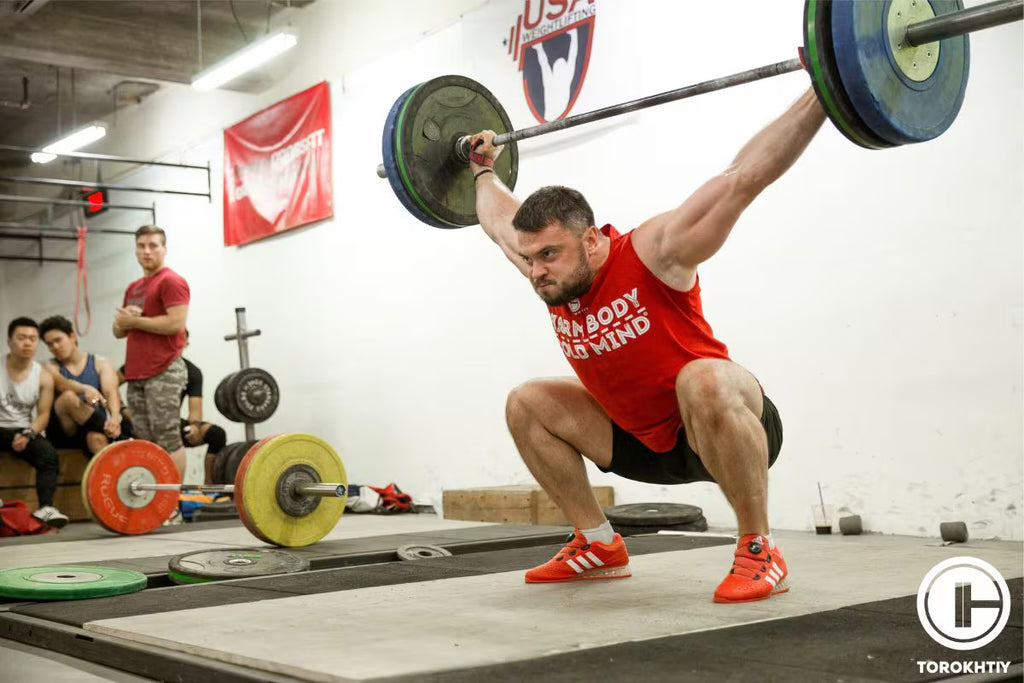
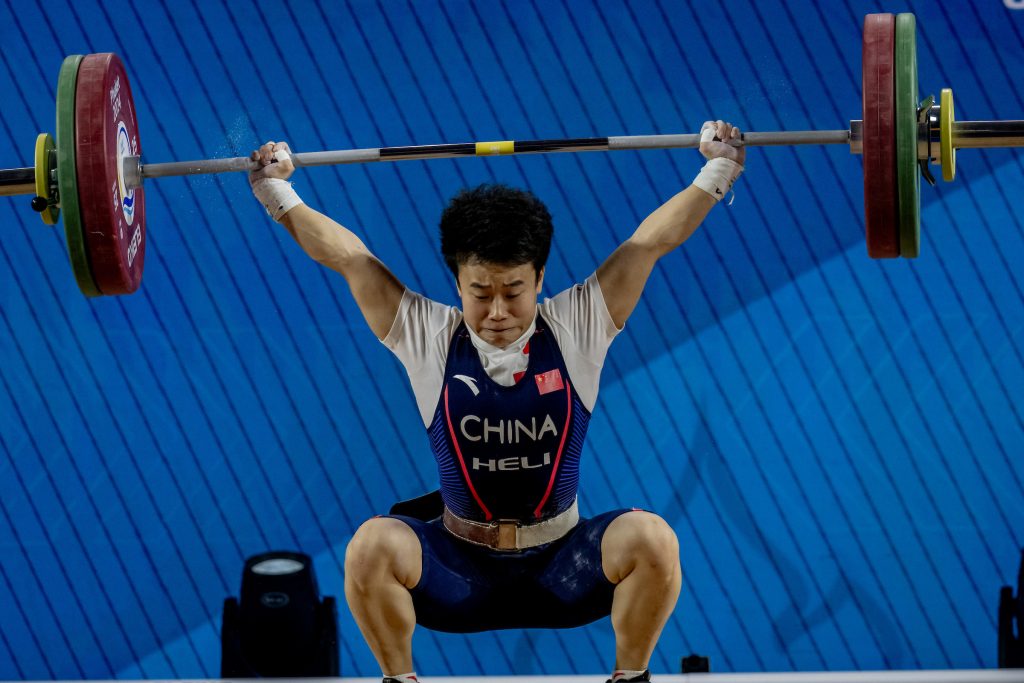
The snatch demands a single, explosive movement where the lifter lifts the barbell from the ground to overhead in one smooth motion. It requires a great deal of speed and balance, as you must catch the barbell with fully extended arms while dropping into a squat position.
Imagine the precision it takes to coordinate your entire body to make that lift in just a second or two. Have you ever tried lifting something heavy quickly and felt your body tense up? The snatch trains you to overcome that hesitation and move with confidence.
Clean And Jerk
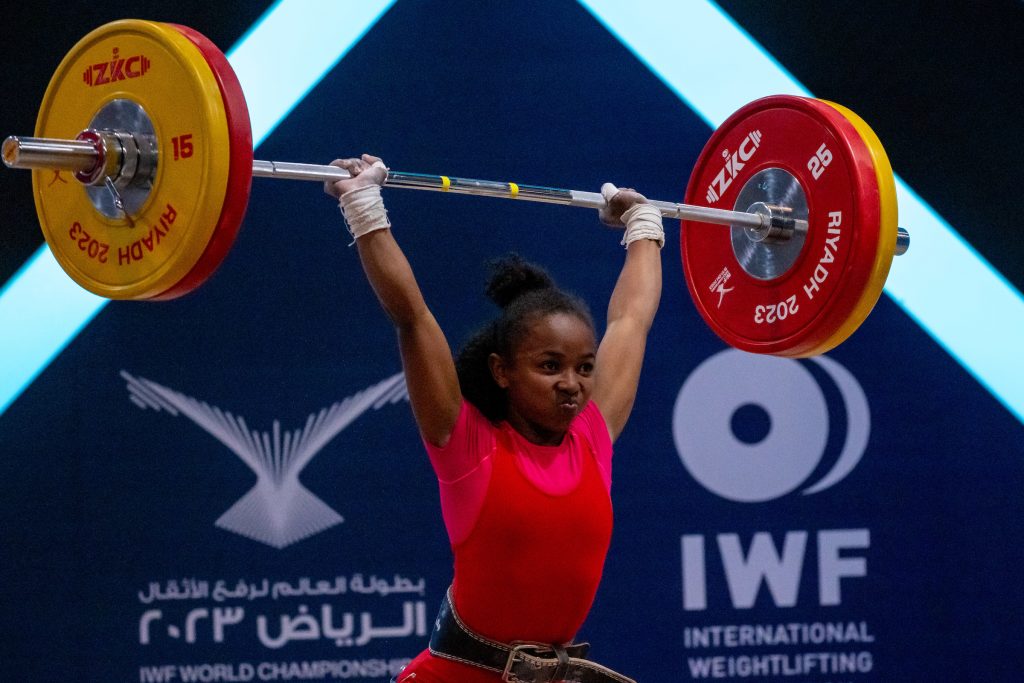
The clean and jerk is a two-part lift. First, you pull the barbell from the floor to your shoulders—the “clean.” Then, after a brief pause, you thrust it overhead—the “jerk.”
This event tests not only strength but also endurance and timing. Many lifters find the clean and jerk more manageable than the snatch because they can reset between movements. How would breaking a big challenge into smaller steps change your approach to tough goals?
Credit: iwf.sport
Qualification Process
The qualification process for weightlifting at the Olympics is rigorous and designed to ensure that only the best athletes reach the world’s biggest stage. It tests not just raw strength but also consistency, technique, and competitive spirit across multiple events. Understanding this process can help you appreciate the dedication behind every Olympic lift.
International Competitions
To qualify for the Olympics, weightlifters must compete in international events recognized by the International Weightlifting Federation (IWF). These competitions include World Championships and Continental Championships, where athletes earn ranking points based on their performance.
The points system is crucial because it determines an athlete’s world ranking. Higher rankings increase your chances of Olympic qualification. This means every competition counts, not just the final one.
Have you ever wondered how athletes keep up their performance across so many events? It requires careful planning, recovery, and mental focus. Missing one event or underperforming can seriously impact your Olympic dream.
Olympic Trials
In addition to international competitions, many countries hold their own Olympic trials. These trials serve as a final selection stage to choose which athletes represent their nation.
During trials, competitors lift under strict conditions that simulate Olympic pressure. This experience helps selectors see who performs best when the stakes are highest.
- Trials test consistency:Can you lift your best when it matters most?
- National quotas apply:Each country has a limited number of spots available.
- Strategy matters:Athletes and coaches plan attempts carefully to outlift rivals.
Imagine training for years only to face one critical day deciding your Olympic fate. Does this pressure bring out your best or your worst? It’s a true test of an athlete’s character and preparation.
Rules And Regulations
Understanding the rules and regulations of Olympic weightlifting is key to appreciating the sport’s complexity and fairness. These guidelines ensure that every athlete competes on a level playing field. Whether you’re a beginner or an enthusiast, knowing how the sport is structured can deepen your connection to the lifts you see on the platform.
Weight Classes
Weightlifting is divided into specific weight classes to make competitions fair and competitive. Each athlete competes only against others in the same class, which means your body weight directly affects who you face.
The current Olympic weight classes are carefully chosen by the International Weightlifting Federation. Men and women have different categories, ranging from lighter to heavier divisions. This system lets athletes focus on optimizing their strength relative to their body weight.
If you’ve ever wondered why some lifters seem small but incredibly strong, it’s because they excel within their weight class. This setup encourages athletes to find a balance between muscle mass and agility. Are you curious about which weight class fits your body type?
Judging Criteria
Judges play a crucial role in deciding the outcome of each lift. Their job is to ensure every lift follows strict technical standards. The lifter must demonstrate control, proper form, and complete the movement without any faults.
Each lift is assessed based on three main criteria:
- Successful Lift Completion:The barbell must be lifted overhead and held steady until the referee signals completion.
- Proper Technique:No pressing out of the elbows or dropping the bar prematurely is allowed.
- Clean Execution:The lifter should avoid any visible mistakes like stepping out of bounds or touching the platform with anything other than their feet.
Judges use a system of white and red lights to indicate whether a lift is valid or not. Having watched several competitions, I noticed how even a slight wobble can turn a successful lift into a failed attempt. This makes every second on the platform intense—do you think you could keep your form perfect under that pressure?

Credit: globalnews.ca
Notable Olympic Weightlifters
Olympic weightlifting has a rich history filled with remarkable athletes. These weightlifters have shaped the sport and inspired many worldwide. Their dedication and strength highlight the spirit of the Olympics.
Historic Figures
Many early Olympic weightlifters set records that stood for decades. These pioneers helped popularize the sport globally. Their achievements still influence weightlifting today.
- Vasily Alekseyev from the Soviet Union broke multiple world records.
- Paul Anderson from the USA was known for his incredible power.
- Naim Süleymanoğlu, the “Pocket Hercules,” dominated in the 1980s and 1990s.
Recent Champions
Recent Olympic games feature athletes pushing limits further. They combine technique with strength to win medals.
- Lasha Talakhadze from Georgia holds current world records in super-heavyweight.
- Shi Zhiyong of China excels in the 73 kg category.
- Mattie Rogers from the USA is a rising star in the women’s division.
Challenges And Controversies
Weightlifting as an Olympic sport faces several challenges and controversies that affect its reputation and future. These issues spark debate among fans, athletes, and officials. Understanding these challenges helps to see the sport’s complex nature beyond just strength and skill.
Doping Issues
Doping has been a major problem in Olympic weightlifting. Some athletes use illegal substances to boost their performance. This harms the sport’s fairness and integrity. Testing and penalties are in place, but cheating still occurs.
Repeated doping scandals have led to suspensions of entire teams. The International Weightlifting Federation works to improve testing methods. Clean athletes demand stricter rules and better enforcement.
Gender Equity
Gender equity is another challenge in Olympic weightlifting. Women were only included in the Olympics starting in 2000. Since then, the sport has worked to offer equal opportunities and categories.
Prize money and media coverage still show gaps between men and women. Efforts continue to promote female participation and recognition. Equal treatment is essential for the sport’s growth worldwide.
Future Of Weightlifting In The Olympics
The future of weightlifting in the Olympics holds many possibilities. The sport has faced challenges but continues to evolve. Changes in rules and global interest shape its path forward. Understanding these shifts helps appreciate weightlifting’s role in upcoming Games.
Potential Changes
Weightlifting may see adjustments to weight classes and scoring systems. These changes aim to increase fairness and excitement. New technology could improve judging accuracy and reduce errors. Efforts to fight doping will grow stronger to ensure a clean sport. The International Weightlifting Federation plans reforms to attract more fans worldwide.
Impact Of Global Trends
More countries show interest in weightlifting, expanding its global reach. Rising health awareness boosts participation at grassroots levels. Social media helps athletes connect with fans and build support. Gender equality efforts push for equal events for men and women. These trends influence how weightlifting develops and stays relevant in the Olympic program.
Frequently Asked Questions
Is Weightlifting An Official Olympic Sport?
Yes, weightlifting is an official Olympic sport. It has been part of the modern Olympics since 1896, showcasing strength and technique.
What Are The Olympic Weightlifting Categories?
Olympic weightlifting includes two main lifts: the snatch and the clean and jerk. Competitors are divided by weight classes.
How Is Olympic Weightlifting Scored?
Athletes get three attempts for each lift. The best successful lift in snatch and clean and jerk are combined for the total score.
Has Weightlifting Always Been In The Olympics?
Weightlifting was included in the first modern Olympics in 1896. It has evolved, with some years missing but now a permanent event.
Conclusion
Weightlifting is a recognized Olympic sport with a rich history. Athletes lift heavy weights in two main events: the snatch and the clean and jerk. This sport tests strength, technique, and discipline. It remains popular worldwide and continues to grow.
Many countries compete for medals and records. Watching weightlifting shows power and skill in action. It inspires many to stay fit and strong. The Olympic stage highlights the best weightlifters. This sport truly deserves its place among Olympic events.