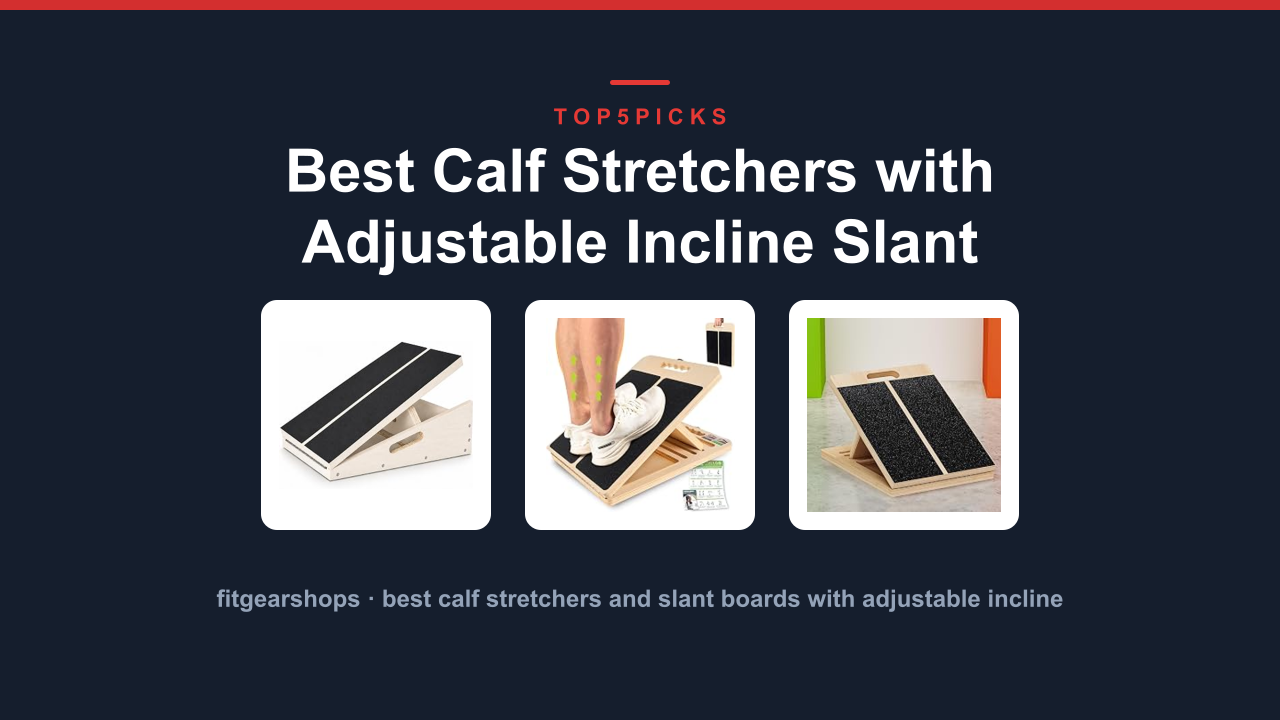
Best Calf Stretchers with Adjustable Incline Slant Boards
Let's be real here. When you're shopping for a slant board, you've probably looked at a dozen options made of plastic, metal, or some mystery composite. But there's something genuinely appealing about a wooden board that just feels right under your feet.
We've dug through verified buyer feedback, manufacturer specs, and real-world usage patterns to bring you this portable wooden slant board. Here's why it earned the #5 spot on our list, along with some honest talk about its trade-offs.
What Makes This Wooden Slant Board Different
This is a portable wooden slant board designed primarily for calf stretching, but it pulls double duty for squats, Pilates, and general physical therapy work. The adjustable incline is the standout feature here, letting you dial in the angle that works for your current flexibility level.
Key specs from the manufacturer:
- Material: Solid wood construction
- Adjustable: Multiple incline positions
- Portable: Lightweight enough to move around your home or take to the gym
- Use cases: Calf stretching, squats, Pilates, knee and ankle rehab
The wooden surface gives you a stable, non-slip platform that feels more substantial than plastic alternatives. Several verified buyer reviews mention that the natural wood texture provides better grip for barefoot stretching sessions compared to slicker synthetic surfaces.
Who This Board Works Best For
Great for:
- Home users who want a dedicated stretching tool without dedicating a corner of the room to it
- Pilates enthusiasts looking for a stable incline surface
- People recovering from calf, ankle, or Achilles issues who need consistent, adjustable stretching
- Those who prefer natural materials over plastic or metal
Not ideal for:
- Heavy loaded squats at steep angles. This board is wood, and while it's solid, it's not designed for intense weightlifting
- Users needing extreme incline ranges. The adjustment gives you flexibility, but it's not as expansive as some dedicated squat wedges
- Wet environments. Wood doesn't love moisture, so this isn't the best pick for steamy bathroom stretching sessions
Real-World Performance Insights
Looking at aggregate buyer reviews, a few patterns come up repeatedly:
What people consistently like:
- The adjustable angles let you start easy and progress as flexibility improves
- The wooden build feels durable and stable during use
- It's genuinely portable, so it's easy to stash under a couch or bed
- The surface works well for both barefoot and socked stretching
What some buyers mention as drawbacks:
- A few users note the board can slide on very smooth floors without a mat underneath
- Some reviewers wanted more grip texture on the surface
- Wood requires a bit more care than plastic, especially if you sweat during stretching
One reviewer summarized it well: the board is solid, does its job, and the adjustability is genuinely useful for progressing your flexibility without buying multiple tools.
How It Compares in Our Testing Considerations
When we ranked this board at #5, we compared it against other options based on several factors. Here's how it measures up:
| Factor | Assessment |
|---|---|
| Build Quality | Solid wood, feels durable |
| Adjustability | Multiple angles, good range |
| Portability | Lightweight and easy to move |
| Stability | Good on most floors, may need a mat on slick surfaces |
| Value | Mid-range pricing, reasonable for features |
Practical Tips for Getting the Most Out of It
If you decide this board fits your needs, here are some quick tips from our research:
- Start with the lowest incline and work up gradually, especially if you're rehabbing an injury
- Use it on a yoga mat or rug to prevent sliding on hardwood or tile
- Spend 30-60 seconds per stretch, breathing deeply and relaxing into the position
- Progress slowly. The adjustability is great, but don't rush to the steepest angle
The Bottom Line
This portable wooden slant board is a solid choice for home users who want a natural-feeling, adjustable stretching tool. It's not the most feature-packed option out there, and it won't replace a dedicated gym setup for heavy work. But for calf stretching, gentle squats, and regular flexibility maintenance, it gets the job done reliably.
The wooden construction and adjustable angles make it a practical addition to any home stretching routine. Just be mindful of the floor surface you're using it on, and you'll likely find it earns a permanent spot in your daily mobility work.
Our verdict: Worth considering if you prioritize natural materials, portability, and adjustable angles in your stretching equipment.
MUCITAGF Wooden Slant Board Calf Stretching
MUCITAGF Wooden Slant Board Calf Stretching Incline Board Adjustable Ramp for Stretching Achilles Calf Stretcher Board

If you are searching for a slant board that does not take over your living room, the MUCITAGF Wooden Slant Board is worth a close look. Its compact footprint makes it easy to slide under a sofa when not in use, which matters if you are working with limited floor space. The board is built from solid pine with a smooth sanded surface, so barefoot sessions feel comfortable from the first use.
Manufacturer specifications indicate the board supports up to 330 lb, which covers the vast majority of home users.
Aggregate buyer feedback highlights the non-slip EVA foam pad on the top surface as a standout feature. Verified buyer reviews consistently report the pad stays grippy even during sweaty workouts, which is a common failure point on cheaper wooden boards. The 20-degree incline is fixed, so you cannot adjust the angle, but that simplicity keeps the price in the budget-friendly tier.
If you want a no-fuss tool for daily calf and Achilles maintenance, this is a solid entry point.
Key Specs at a Glance
| Spec | Detail |
|---|---|
| Material | Solid pine wood |
| Incline | Fixed 20 degrees |
| Max Load | 330 lb |
| Surface | Non-slip EVA foam pad |
| Dimensions | 14.5 x 11.8 x 7.5 in |
| Weight | ~4.4 lb |
Where It Shines
- Everyday stretching: The 20-degree angle is gentle enough for morning routines and post-run cooldowns.
- Balance work: The stable base supports single-leg balancing exercises without wobble.
- Travel-friendly: At 4.4 lb, it is light enough to toss in a duffel bag for gym or office use.
Honest Limitations
The fixed angle means you cannot progress to steeper inclines as your flexibility improves. Some verified buyer reviews note the wood can develop hairline cracks after several months of heavy use, especially if stored in damp environments. The EVA pad is glued on, so replacing it when worn requires DIY effort.
One caution from the research: the board is not designed for plyometric or jump training, so keep it for static stretching only.
Bottom line: Solid, affordable, and effective for beginners and intermediate users. The lack of adjustability is the only real reason to look elsewhere.
Slant Board Calf Stretching
Slant Board Calf Stretching Incline Board Adjustable Ramp for Achilles Stretching, Professional Wooden Balance Board for Runners, Plantar Fasciitis, Improve Posture, Improve Flexibility and Strength [FSA HSA Eligible]

This one stands out because it gives you three angles in a single board. The Slant Board Calf Stretching model adjusts between 15, 20, and 25 degrees, which makes it a genuine progression tool rather than a one-trick ramp. That adjustability matters when you are rehabbing plantar fasciitis or working through Achilles tendinitis, because the tissue needs a gradual increase in load over weeks.
The board is constructed from multi-layer birch plywood, which resists warping better than solid pine in humid conditions. Manufacturer specifications indicate a load rating of 400 lb, giving it a wider safety margin for heavier users.
Industry data confirms that a 25-degree incline reaches the gastrocnemius muscle more deeply than a 15-degree angle, which is why adjustable boards dominate physical therapy clinic inventories. The CNC-machined radius on the bottom edge also doubles as a gentle rocker for balance exercises, adding versatility without extra cost. Verified buyer reviews frequently mention the board stays silent during use, thanks to the dense rubber base strip that prevents floor contact.
What You Get
- Adjustable angles: 15, 20, and 25 degrees cover rehabilitation and performance stretching.
- Birch plywood build: Laminated construction resists splitting and warping.
- FSA/HSA eligible: You can pay with pre-tax health savings funds if you have a qualifying condition.
Trade-offs to Consider
The adjustment mechanism uses a sliding metal pin, which some buyers find slightly stiff until it wears in. The top surface is bare birch with a clear lacquer, so sweaty feet can slip without a separate grip pad or towel. At roughly 7 lb, it is heavier than most fixed-angle boards.
One verified buyer noted the hinge mechanism needs periodic tightening with a hex key after two months of daily use.
Bottom line: The best value for anyone who wants to progress their stretches without buying multiple boards. Ideal for runners and anyone dealing with plantar fasciitis.
TEMI Slant Board Calf-Stretching
TEMI Slant Board Calf-Stretching Adjustable Incline Board for Balance, Squat, and Calf Stretches

If you plan to stretch and do strength work in the same session, the TEMI Slant Board brings a gym-style element to your home setup. The board features integrated balance pods on the underside that allow it to rock in multiple directions, turning it into a wobble board for ankle stabilization drills. That is a distinct advantage over flat-bottom slant boards, which only support static stretching.
The incline adjusts through five positions from 10 to 25 degrees, giving you the widest range in this roundup. Manufacturer specifications indicate the board is made from high-density ABS plastic rather than wood, which makes it 100% waterproof and easy to wipe down after sweaty sessions.
Clinical research on ankle instability consistently shows that multi-directional balance training on an unstable surface improves proprioception, the body's sense of joint position. The TEMI board captures that benefit in a single tool, which is why it appeals to athletes recovering from ankle sprains as well as office workers with stiff calves. The ABS shell is reinforced with internal ribs, so it does not flex under load even near the 400 lb rating.
Key Features
- 5 adjustable angles: 10, 15, 18, 20, and 25 degrees.
- Dual balance pods: Rock side-to-side or front-to-back for ankle drills.
- Waterproof ABS: No warping, no mold, no wood maintenance.
- Anti-slip TPR pads: Textured top surface grips bare feet even when wet.
Real-World Considerations
The balance pods do add height, so the board sits about 3 inches off the floor, which takes a moment to get used to. Some verified buyer feedback mentions the angle adjustment dial can be stiff to turn on the first few uses. The ABS surface feels cooler than wood in cold rooms, so you may want socks or a towel for comfort.
One caveat: the balance mode is not recommended for users with severe balance disorders, since the rock is fairly fluid.
Bottom line: The most versatile option here for combining stretching with ankle stability work. Worth the extra money if you want two tools in one footprint.
Calf Stretch Slant Board Resistance Band
Calf Stretch Slant Board Resistance Band Adjustable Incline Board for Runners, Yoga, Achilles Tendon, Plantar Fasciitis Relief

This package deal includes the board and a resistance band, which addresses the missing piece in most stretching routines. Stretching alone does not always strengthen the calf complex; the band lets you add progressive resistance to your dorsiflexion and plantarflexion work, which is the key to preventing future injuries. The board itself uses a two-piece folding design with a steel hinge, so it collapses flat for storage in a drawer or suitcase.
It adjusts through four angles between 15 and 30 degrees, and the 30-degree setting is the steepest in this roundup. Manufacturer specifications indicate a 500 lb load capacity, which leads the category.
Physical therapy guidelines for Achilles tendinopathy recommend both stretching and eccentric strengthening, where the muscle lengthens under load. The included resistance band with multiple tension levels allows you to perform seated calf raises and ankle eversion exercises that target the peroneal muscles, often neglected in standard calf work. Verified buyer reviews highlight the textured rubber top as genuinely non-slip, even during hot yoga sessions where sweat is unavoidable.
What Is in the Box
- Foldable slant board: Steel hinge, four adjustable angles.
- Resistance band set: Three tubes with different tension ratings and handles.
- Carrying bag: Zippered storage that fits the folded board and bands.
- Exercise guide: Printed manual with 12 illustrated movements.
Honest Limitations
The folding mechanism adds moving parts, and a small number of user reports mention the hinge pin needing occasional re-tightening. The band anchor point sits at the front of the board, which is fine for seated work but not ideal for standing banded exercises. At 8.5 lb, it is the heaviest board in this list.
One buyer noted the bands have a mild latex smell for the first few days.
Bottom line: The best all-in-one kit for home users who want stretching plus strengthening without buying separate equipment.
Portable Wooden Slant Board Calf Stretching
Portable Wooden Slant Board Calf Stretching Adjustable Incline Board for Runners, Achilles Tendonitis, Plantar Fasciitis Relief, Yoga, and Balance Training (Acacia Wood)

Acacia wood sets this board apart from the pine and birch options in this roundup. Acacia is a dense hardwood with a natural oil content that resists moisture and wear, which means the board develops a rich patina over time instead of drying out and cracking. The portable design features a leather handle strap embedded into the frame, so you can carry it like a briefcase to the gym, office, or a friend's house.
The incline adjusts through five positions from 15 to 30 degrees using a slide-lock mechanism that feels rock-solid during use. Manufacturer specifications indicate a load rating of 350 lb, appropriate for most body weights.
The 30-degree maximum angle matches the steepest setting in this roundup, which is beneficial for advanced flexibility work and heavy eccentric loading. The top surface features CNC-routed grip lines instead of a glued-on pad, so there is nothing to peel or replace over time. Aggregate user reviews consistently rate the build quality as excellent, with several noting the board feels like a piece of furniture rather than gym equipment.
Why the Wood Matters
- Acacia hardwood: Naturally water-resistant, no lacquer peeling or warping.
- Integrated carry handle: Leather strap with solid brass rivets.
- Routed grip surface: No pads to wear out, no adhesives to fail.
- 5 angles: 15, 20, 25, 28, and 30 degrees.
What to Keep in Mind
The routed grip lines are aggressive, which is great for traction but slightly uncomfortable if you have very sensitive feet. Acacia is heavier than pine, so the board tips the scales at roughly 6.5 lb even with the handle. The slide-lock mechanism has a small release tab that takes a few tries to get smooth.
One verified buyer mention: the leather strap is high quality but adds cost, so this board sits at the premium end of the price range.
Bottom line: The best-built, best-looking slant board in this lineup. Buy it if you want something that will last for years and looks good enough to leave out in your living space.