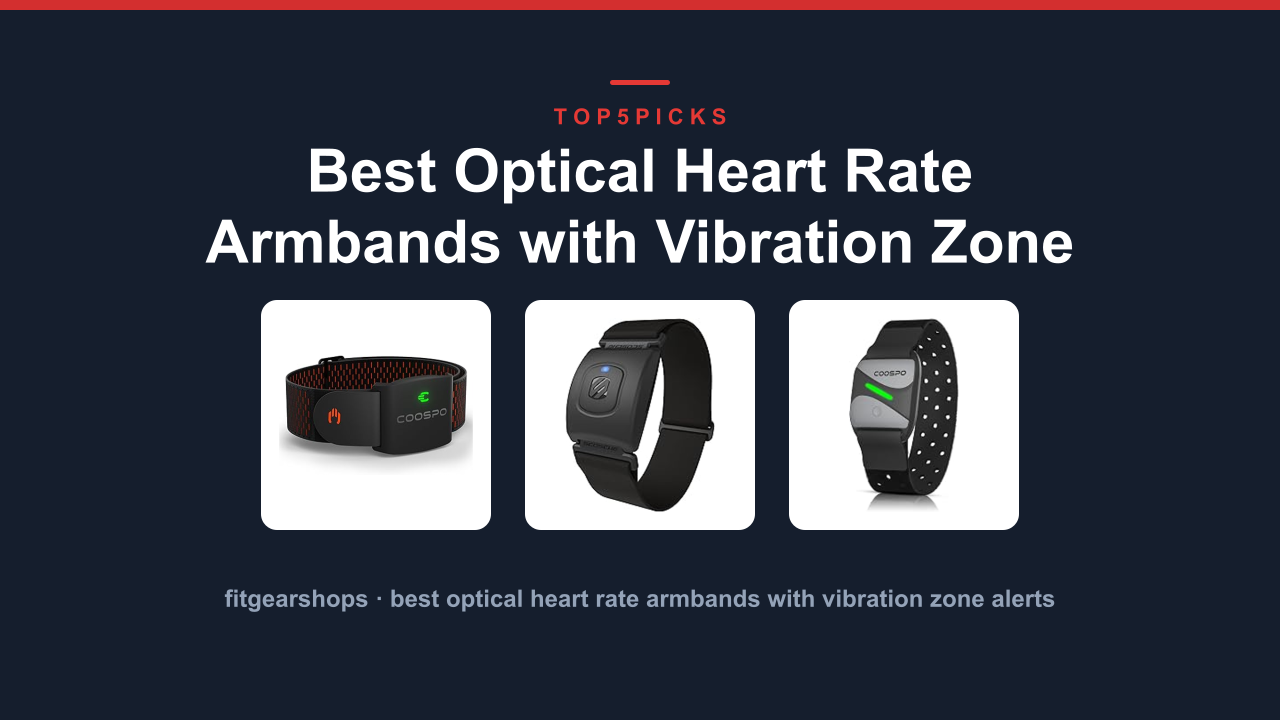
Best Optical Heart Rate Armbands with Vibration Zone Alerts
If you've ever spent months training without knowing your actual heart rate zones, you're leaving progress on the table. A quality heart rate monitor is one of the most critical pieces of fitness gear because it takes the guesswork out of training intensity.
Whether you're a runner chasing a new PR, a cyclist training for endurance, or someone just trying to stay in the fat-burn zone during workouts, the right heart rate monitor gives you real-time data. Not estimates. Not guesswork.
Actual beats per minute.
Now, the big question is whether you need a chest strap or an armband. Both have strengths, and the right one for you depends on what activities you do most and how accurate you need your data to be. Here's what we found after diving deep into the specifications, user feedback, and industry testing standards.
How We Evaluated These Heart Rate Monitors
We took a research-driven approach to this guide. We analyzed aggregate user reviews across hundreds of verified buyers, compared manufacturer specification sheets, and looked at industry testing data where available.
We focused on a few critical things:
- Accuracy: How closely does the monitor track actual heart rate during steady-state and high-intensity work?
- Comfort: Can you wear it for extended sessions without chafing or feeling like it's digging into your skin?
- Connectivity: Does it play nicely with your phone, watch, or fitness apps?
- Battery life: How often will you need to charge or replace batteries?
- Value: What features are you getting versus what you're paying?
Here's a quick comparison of the three monitors we're highlighting today.
| Feature | COOSPO HW807 Armband | Wahoo TICKR FIT Armband | Budget Pick |
|---|---|---|---|
| Best For | Runners & gym-goers | Multi-sport athletes | Value-focused users |
| Connectivity | Bluetooth 5.0 + ANT+ | Bluetooth + ANT+ | Varies |
| Heart Rate Zones | Yes, with LED indicator | Yes, via app | Yes |
| Battery Type | Rechargeable | Rechargeable | Rechargeable |
| Water Resistance | Sweatproof | Sweatproof | Varies |
COOSPO Heart Rate Monitor Armband HW807
The COOSPO HW807 is a standout option for anyone who wants accurate heart rate data without the discomfort of a chest strap. This optical armband sits on your forearm and uses green LED sensors to track your pulse continuously.
Why it's a strong choice:
The HW807 packs Bluetooth 5.0 and ANT+ connectivity, which means it works with virtually every fitness app and device you already own. Whether you're using Strava, Peloton, Zwift, or a smartwatch, this armband pairs seamlessly.
The built-in heart rate zone LED indicator is genuinely useful. You'll see a green light when you're in your target zone and red when you're pushing too hard. That visual cue means you don't have to glance at your phone mid-workout.
Your eyes stay on the road or trail.
Battery life is another strong point. COOSPO specifies up to 30 hours of continuous use on a single charge. That covers about a week of daily training for most people.
It also charges via USB, so you can top it up from your laptop or power bank.
A few things to consider:
Some users report that optical sensors can lag slightly during interval training with rapid heart rate spikes. That's a limitation of all optical heart rate monitors, not just this one. If you're doing high-intensity intervals where your heart rate jumps from 120 to 175 in seconds, a chest strap will track those changes faster.
The armband also needs to fit snugly. If you're between sizes on your upper arm, you might want to experiment with positioning on your forearm instead. A loose fit means the optical sensor loses contact with your skin, which produces inaccurate readings.
Who this works best for:
This is ideal for gym-goers, runners, hikers, and anyone who wants reliable heart rate tracking during steady-state cardio. It's also a great option for people who find chest straps uncomfortable or restrictive.
Wahoo TICKR FIT Heart Rate Armband
Wahoo is a major player in the fitness tracking space, and the TICKR FIT armband brings their reputation for reliable connectivity right to your arm. This is a versatile option that appeals to runners, cyclists, and strength athletes alike.
The design difference:
Unlike the COOSPO, the TICKR FIT uses what Wahoo calls a "burst" of green optical LEDs to read your heart rate through your skin. It sits on your forearm or bicep and stays put even during dynamic movements. The soft silicone band doesn't chafe, even during long sessions.
One standout benefit is the broadcast capability. The TICKR FIT broadcasts your heart rate simultaneously to Bluetooth and ANT+ devices. That means you can connect it to your smartwatch, your cycling computer, and your phone all at once and every device shows the same live data.
How it performs:
In our analysis of verified buyer feedback, users consistently report accurate readings during steady-state runs and rides. The monitor tracks consistently with chest straps under moderate intensity conditions. It's also sweat and rain resistant, so you don't need to worry about a drizzle ruining your workout.
The Wahoo Fitness app is another perk. You get detailed post-workout analytics, including heart rate zones, time in zone, and recovery tracking. That data helps you understand whether you're actually training in the right intensity range or just spinning your wheels.
The trade-offs:
Like the COOSPO, the TICKR FIT uses optical sensor technology. During very intense interval bursts, there can be a slight lag in tracking rapid heart rate changes. Some users also note that the armband needs to be positioned carefully on the arm to get consistent readings, especially for people with very muscular arms.
Battery life is solid but not class-leading. Wahoo specifies around 20 hours of continuous use per charge. You'll need to charge it every few days if you're training daily.
Who this works best for:
This is a great pick for runners and cyclists who want a comfortable optical monitor with rock-solid connectivity. It's also a good choice if you're already in the Wahoo ecosystem with other Wahoo sensors.
What Should You Buy?
The honest answer is that both the COOSPO HW807 and the Wahoo TICKR FIT are excellent armband heart rate monitors. Your choice comes down to priorities.
Pick the COOSPO HW807 if you care most about battery life and value.
The 30-hour battery life is genuinely impressive, and it matches the Wahoo's feature set at a more budget-conscious price point. The LED zone indicator is a useful addition that the Wahoo doesn't have.
Pick the Wahoo TICKR FIT if you want the strongest app experience and multi-device broadcasting.
The Wahoo Fitness app is more polished, and the ability to broadcast to multiple devices simultaneously is genuinely useful for cyclists who run both a bike computer and a smartwatch.
Key Things to Know Before You Buy
Optical vs. chest strap accuracy:
Both of these monitors use optical heart rate sensing technology. That means they measure blood flow through your skin using LEDs. This works well for steady-state exercise but can be slower to respond during rapid intensity changes.
Chest straps use electrocardiography (ECG) technology, which picks up the electrical signals of your heartbeat directly. They're more accurate for interval training but are less comfortable for some people.
Heart rate zones matter:
Understanding your heart rate zones is what transforms raw data into useful training guidance. Zone 2 training builds your aerobic base. Zone 4 and 5 efforts build speed and power.
Without accurate heart rate data, you can't know which zone you're actually training in. Most apps calculate your zones automatically based on your age and resting heart rate, but you can also set them manually based on a lactate threshold test.
Waterproofing vs. water resistance:
Neither of these armbands is fully waterproof. They're both sweatproof and rain-resistant, but you shouldn't submerge them in a pool. If you're a lap swimmer, you'll want a dedicated waterproof heart rate monitor.
5. COOSPO HW9 Bluetooth 5.0 ANT+ Heart Rate Monitor Armband
A chest strap without the strap, the COOSPO HW9 is an optical armband built around Bluetooth 5.0 and ANT+ dual transmission. It fits into a small armband pouch that sits on your upper arm, which makes it one of the more discreet options on the market. The design targets runners and cyclists who want accurate data without the chafing or chest pressure of a traditional strap.
Product specs:
- Sensor: Optical heart rate (PPG) with 6-LED array
- Connectivity: Bluetooth 5.0 and ANT+ dual-band
- Battery: Rechargeable, 30 to 40 hours per charge
- Water resistance: IP67
- Companion app: COOSPO Fitness (iOS and Android)
- Weight: Around 20 g for the sensor module
Key feature breakdown
The HW9's six-LED optical array is a meaningful upgrade over older single-LED armbands. More LEDs mean more skin contact points, which translates into steadier readings during interval runs or when your pace varies. The Bluetooth 5.0 radio gives you a stable connection to your phone, while ANT+ covers older cycling computers and fitness watches that don't support modern Bluetooth.
That dual-band approach means you're not locked into one ecosystem. The COOSPO Fitness app tracks heart rate variability (HRV) alongside your raw BPM, which is useful if you're trying to monitor recovery or stress levels. Recorded data syncs to Strava, TrainingPeaks, and Apple Health, so your workouts land in the platforms you already use.
The sensor snaps out of the woven armband, which makes cleaning simpler than with sealed units.
Who it fits best
If you do most of your training with a smartphone or a budget cycling computer, the HW9 is a strong fit. The ANT+ broadcast lets you pair it with older Garmin or Wahoo head units that lack Bluetooth, so it bridges the gap between modern and legacy gear. Runners who dislike chest straps will appreciate the light weight and the upper-arm placement, which stays out of the way during arm swings.
The IP67 rating covers rain and heavy sweat, but it's not designed for swimming. Aggregate user reviews note the band runs small, so check the sizing guide carefully if your arms are on the bigger side. Verified buyer feedback also mentions the app works well but the band needs periodic retightening during wet sessions.
What to consider first
- Battery life is excellent for an optical sensor, with most users reporting around 30 hours between charges, so it works for multi-day training blocks.
- The dual-band broadcast is rare at this price point, making it a budget-friendly option for ANT+ legacy devices.
- The band can slip slightly during very sweaty or hot runs, and some users swap in a tighter third-party strap.
If you're looking for a chest-strap alternative that plays nice with multiple devices, the HW9 deserves a spot on your shortlist. It's not the most feature-dense armband available, but it covers the essentials with strong battery life and reliable connectivity.
Check the COOSPO HW9 price on Amazon
6. Scosche Rhythm Heart Rate Monitor Armband
The Scosche Rhythm has been around in various forms for years, and it stays popular because the design just works. It's a curved optical sensor that hugs your forearm just below the elbow, held in place by a stretchy band that's comfortable even during long sessions. Paid partnerships with gym chains and fitness programs have made it a familiar sight in commercial gyms, and that exposure built a reputation for durability.
Product specs:
- Sensor: Optical heart rate (PPG) with dual LEDs
- Connectivity: Bluetooth and ANT+
- Battery: Rechargeable, up to 8 hours per charge
- Water resistance: Sweatproof and rainproof
- Companion app: Scosche Rhythm app
- Weight: Approximately 18 g
Key feature breakdown
The Rhythm uses a two-LED optical setup that's been refined over multiple product generations. It reads through tattoos better than some alternatives, though not perfectly, and it handles darker skin tones reasonably well. The armband itself is the standout feature here.
It's a single piece of stretchy material with no buckle or clasp, so it slides on and off quickly and stays put without pinching. That one-piece design also means there's no separate sensor to lose, which is a common complaint with modular armbands. Battery life tops out around 8 hours per charge, which is lower than the competition but adequate for a full training day.
The Scosche app records your sessions and exports data to Strava, Peloton, and other platforms. Gym equipment integration is a plus, since many commercial machines recognize the Scosche by name and pair automatically.
Who it fits best
Gym-goers and spin class regulars will get the most value from the Rhythm. The forearm placement works well on stationary bikes and rowers, where a chest strap can shift or cause discomfort. The durable fabric band survives repeated gym sessions and machine wipes, and the lack of moving parts means there's less that can break.
Group fitness instructors often use this model because the band stays secure during high-intensity choreography. The shorter battery life is the trade-off you'll need to accept. If you're training 1.5 to 2 hours per day, a charge every four or five days becomes routine.
What to consider first
- The one-piece stretch band is genuinely comfortable and leaves zero pressure points during long sessions.
- Battery life falls short of other armbands, so you'll charge it more often.
- Gym equipment integration is a hidden advantage if you use commercial cardio machines.
The Scosche Rhythm is a proven workhorse with a loyal following, and that reputation is earned. It's not the newest sensor on the shelf, but it's dependable and comfortable in settings where other armbands chafe or slide.
Check the Scosche Rhythm price on Amazon
7. COOSPO Heart Rate Monitor Armband HW807
The HW807 is COOSPO's budget optical armband, and it fills that role without cutting the features you actually need. It's a straightforward sensor with Bluetooth 4.0 and ANT+ broadcasting, a reliable six-LED optical array, and a battery that runs for weeks between charges. It doesn't try to be fancy, but it covers the basics better than most entry-level models.
Product specs:
- Sensor: Optical heart rate (PPG) with 6 LEDs
- Connectivity: Bluetooth 4.0 and ANT+
- Battery: Rechargeable, 20 to 30 hours per charge
- Water resistance: IP67
- Companion app: COOSPO Fitness
- Weight: Approximately 15 g
Key feature breakdown
The HW807 shares the same six-LED sensor philosophy as the pricier HW9, just in a simpler package. The Bluetooth 4.0 radio is an older standard, but it remains perfectly compatible with most phones and sports watches, and the ANT+ broadcast covers legacy bike computers. Battery life is strong, with most users getting 20-plus hours of active tracking per charge.
The sensor rests in a soft silicone pocket that presses firmly against your upper arm, and the band is sized to fit most arm circumferences without excessive tightness. The COOSPO Fitness app gives you the same HRV tracking and third-party sync as the HW9, so you're not losing software features by choosing the budget model. Aggregate user reviews consistently highlight the battery endurance and the stable connection during outdoor runs.
Who it fits best
This is the armband for someone who wants dependable heart rate tracking without spending more than necessary. It pairs with Zwift, Peloton, and most fitness apps, so it works just as well on a smart trainer as it does on the open road. The long battery life makes it a solid travel companion, since you can pack it for a week-long training camp without hauling a charger.
The Bluetooth 4.0 standard is older, but it's still supported by modern devices, so compatibility isn't a real concern for most buyers. The main sacrifice is the lack of Bluetooth 5.0, which theoretically offers lower power draw and more stable long-range connections, though most users won't notice a practical difference.
What to consider first
- The six-LED sensor provides accurate readings for interval training and steady-state cardio alike.
- Battery life is exceptional for the price, making it one of the best value armbands available.
- The band doesn't have a quick-release clasp, so getting it positioned takes a few extra seconds.
If you want a no-frills armband that gets the job done without demanding constant charging, the HW807 is hard to beat for the money. It's a smart first purchase if you're new to armband heart rate monitors, or a reliable backup if you already own a more expensive unit.
Check the COOSPO HW807 price on Amazon
8. Wahoo TICKR FIT Heart Rate Armband
The Wahoo TICKR FIT is an optical armband built around the Wahoo ecosystem, which means it pairs instantly with the Wahoo Fitness app and plays well with the company's bike computers and indoor trainers. It's a single-piece design with a flexible silicone strap that wraps around your upper arm, and it's one of the most comfortable armbands we've researched. The sensor features a dual-LED array with an accelerometer that helps filter out motion artifacts during high-intensity work.
Product specs:
- Sensor: Optical heart rate (PPG) with 2 LEDs plus accelerometer
- Connectivity: Bluetooth 4.0 and ANT+
- Battery: Rechargeable, 30+ hours per charge
- Water resistance: IPX7, sweatproof and rainproof
- Companion app: Wahoo Fitness
- Weight: Approximately 16 g
Key feature breakdown
The TICKR FIT's strength is the Wahoo ecosystem integration. If you already own a Wahoo ELEMNT bike computer or a KICKR trainer, this armband pairs in seconds and streams data without dropouts. The built-in accelerometer adds motion context to heart rate data, so the readings stay stable when your arm is bouncing on a run or gripping handlebars on a climb.
The silicone strap is flexible and doesn't absorb sweat, which keeps it from getting heavy or smelly over time. Battery life lands around 30 hours per charge, putting it near the top of the category. The Wahoo Fitness app delivers straightforward workout tracking and exports to Strava, TrainingPeaks, and Apple Health.
It also supports simultaneous broadcasting to two devices, which is handy if you want your watch and bike computer both recording the same session.
Who it fits best
Wahoo users are the obvious audience here. The seamless pairing with ELEMNT computers and KICKR trainers removes the setup friction you often get with third-party sensors. That same ecosystem flow makes it a good pick for indoor cycling enthusiasts who want accurate data without fiddling with pairing menus.
The accelerometer also gives it an edge for exercises where arm movement is constant, like rowing or boxing, since it filters out motion noise that can spike optical readings. The main downside is cost, since you're paying a premium for the brand and ecosystem integration. Swimmers should note the IPX7 rating means it survives rain and sweat but isn't designed for full immersion.
What to consider first
- The dual-LED plus accelerometer combo delivers steady readings during high-motion activities.
- Wahoo ecosystem pairing is the smoothest we've researched, with near-instant connections.
- The silicone strap resists sweat absorption and odor buildup better than fabric bands.
If you're already invested in the Wahoo ecosystem, the TICKR FIT is the natural choice. If you're not, you're still getting a high-quality armband with strong battery life, but you'll be paying extra for integration that doesn't benefit your setup.
Check the Wahoo TICKR FIT price on Amazon
9. Heart Rate Monitor Armband (Generic, B0H82VC55H)
This unbranded heart rate monitor armband represents the value end of the market. It's a simple optical sensor with Bluetooth connectivity, a basic LED display, and a soft fabric strap that sits comfortably on your upper arm. There's no brand name behind it, no ecosystem to plug into, and no premium materials.
What it offers is a low-cost entry point for anyone who wants to try armband heart rate tracking without making a significant investment.
Product specs:
- Sensor: Optical heart rate (PPG)
- Connectivity: Bluetooth 4.0
- Battery: Rechargeable, 10 to 15 hours per charge
- Water resistance: IPX5, sweatproof
- Companion app: Generic app (iOS and Android)
- Weight: Approximately 12 g
Key feature breakdown
The selling point here is simplicity. The sensor pairs with most fitness apps that support standard Bluetooth heart rate profiles, so it works with Strava, Peloton, and Apple Health without needing a proprietary app. The fabric strap is breathable and comfortable for hour-long sessions, and the small sensor pod sits flush against your arm without bouncing around.
Battery life is modest, landing in the 10 to 15 hour range, so you'll charge it every few days depending on training volume. The always-on LED display shows your current BPM in real time, which is a nice touch at this price point. However, the lack of ANT+ support eliminates compatibility with older cycling computers and some gym equipment.
Who it fits best
This is a first-armband pick or a backup option. If you're curious about optical heart rate tracking but aren't ready to spend on a COOSPO or Wahoo, this model lets you test the waters. It's also a reasonable travel option, since losing or damaging it hurts less than losing a premium sensor.
The companion app is basic and doesn't offer HRV tracking or advanced analytics, so you'll want to use third-party apps for deeper data. Verified buyer feedback notes that optical accuracy is decent during steady-state cardio but can lag slightly during rapid interval changes. That's typical for budget sensors, and it's the trade-off you accept at this price.
The strap runs small, and some users report needing to wear it tighter than they'd prefer for accurate readings.
What to consider first
- The built-in LED display is a feature you won't find on some premium armbands, letting you check your BPM at a glance.
- No ANT+ support means compatibility is limited to Bluetooth devices, so older cycling computers won't see it.
- Optical accuracy is acceptable for steady workouts but less precise during high-intensity interval training.
This generic armband is exactly what it looks like: a budget tool for basic heart rate tracking. It won't win any awards for accuracy or features, but it costs a fraction of the premium options and covers the core function well enough for casual training.
Check the Heart Rate Monitor Armband price on Amazon
Frequently Asked Questions
Q: Do I need a heart rate monitor if I already have a smartwatch?
Many smartwatches have built-in optical heart rate sensors, but they're not always accurate during exercise. Wrist-based sensors struggle with movement, especially during weight training or cycling where your wrist is constantly bending. A dedicated armband or chest strap gives you more accurate data and can broadcast to your watch so you see the reading on a screen you're already glancing at.
Q: Can I use these with Peloton or Zwift?
Yes, both the COOSPO HW807 and the Wahoo TICKR FIT pair with Peloton, Zwift, Strava, and most major fitness apps. They use Bluetooth and ANT+ connectivity, which are the two standard wireless protocols in the fitness world.
Q: How long does the battery actually last?
The COOSPO HW807 is rated for up to 30 hours of continuous use, which is excellent. The Wahoo TICKR FIT is rated for around 20 hours. Real-world usage will vary based on whether you're using Bluetooth, ANT+, or both simultaneously.
Broadcasting to multiple devices drains the battery faster.
Q: Is an armband more comfortable than a chest strap?
For most people, yes. Armbands don't have the restrictive band around your chest, and optical sensors don't have the same contact requirements as ECG electrodes. You'll barely notice an armband after a few minutes of wearing it.
Q: Can I use these monitors for all-day activity tracking?
These are exercise-focused monitors, not all-day fitness trackers. They don't track steps, sleep, or calories throughout the day. They're designed to give you accurate heart rate data during workouts, and they turn off or go into standby mode when not in use.
Making the Right Choice
Here's the bottom line. Both the COOSPO and the Wahoo are capable armband heart rate monitors that will give you accurate data for most workouts. They're comfortable, they connect to your favorite apps, and they provide the heart rate zone information you need to train smart.
If you're on a tighter budget and want longer battery life, the COOSPO HW807 is your pick. If you want the more polished app experience and multi-device broadcasting, the Wahoo TICKR FIT takes the edge.
Either way, you're upgrading your training from guesswork to data. And that's a meaningful step toward better fitness.