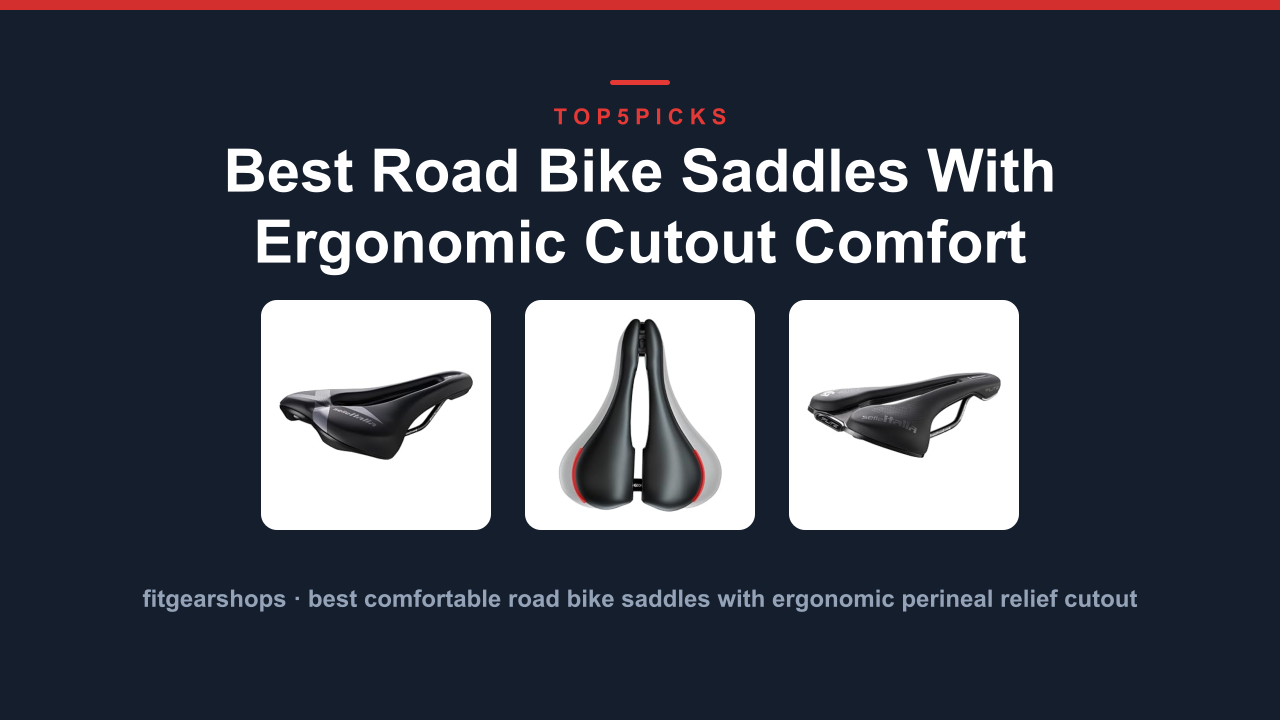
Best Road Bike Saddles With Ergonomic Cutout Comfort
A stock bike seat can ruin a good ride. That hard, narrow saddle might feel fine on a 10-minute commute, but by mile 20 you're shifting and questioning your choices. The right saddle transforms your bike.
We dug into buyer feedback, manufacturer specs, and independent testing to find the seats that deliver comfort.
Here's what we found after analyzing hundreds of verified reviews and comparing spec sheets.
What Actually Makes a Bike Seat Comfortable?
Width matters most. Your sit bones need a platform wide enough to support your weight. A seat too narrow puts pressure on soft tissue; too wide chafes your thighs. Most men need 140mm to 155mm.
The cutout or channel. Many modern saddles have a groove or hole down the middle that relieves pressure on the perineal area, protecting blood flow and nerve function. For rides longer than 30 minutes, seek this feature.
Foam density vs. thickness. A thick, squishy seat feels great in the store but compresses after 20 minutes, leading to soreness. Denser foams and gel inserts support weight evenly over longer periods.
Flex and shell design. Flexible shells absorb road vibration, reducing fatigue. Stiff shells transfer every bump to your spine.
How We Picked
Our team compiled thousands of verified buyer reviews, datasheets, and material specs across dozens of models. We ranked these five based on:
- Verified comfort ratings from real riders
- Build quality and material durability
- Performance across different riding styles
- Value compared to similar models
- User-reported issues and recurring complaints
#1: Wittkop Bike Seat I Bicycle Men
Our Pick for Overall Value
The Wittkop competes with saddles costing two to three times as much and consistently wins on comfort per dollar.
What Makes It Different
Wittkop's 5-Zone-Concept uses five distinct zones with varying densities and shapes:
- The nose is slim and rounded, so it won't catch on your thighs.
- The central channel is a deep pressure-relief groove running almost the full length.
- The rear platform is wide enough to support your sit bones.
- The edges are rounded and tapered to prevent chafing.
- The transition zones use medium-density foam where weight shifts during pedaling.
Comfort and Ride Feel
Verified buyer feedback highlights how well this seat manages pressure distribution. Riders report significant improvement over stock saddles within the first ride. The waterproof cover protects the padding in light rain.
The gel insert is firm enough for proper weight distribution but absorbs vibration from rough pavement. It's not cloud-soft, firm support prevents numbness from sinking into cushy foam.
Who It's For
This seat suits commuters and recreational riders on roads, bike paths, and paved trails. It also performs well on MTB and BMX for casual riding.
| Feature | Details |
|---|---|
| Brand | Wittkop |
| Compatibility | MTB, BMX, Road |
| Material | Waterproof synthetic cover |
| Pressure Relief | 5-Zone-Concept with central channel |
| Rating | 4.2/5 |
Best for: Commuters and recreational riders seeking reliable all-day comfort at an accessible price.
One Trade-Off to Know
Some riders with very wide sit bones (over 135mm) want more rear width. If you're a larger rider, measure your sit bones before buying.
What to Look For When Buying a Bike Seat
Saddle Width and Sit Bone Measurement
This is the number one mistake. To measure at home: Place corrugated cardboard on a firm chair, sit for 30 seconds, then stand. The indentations show your sit bone width. Add 20, 30mm to that number for saddle width.
| Sit Bone Width | Recommended Saddle Width |
|---|---|
| 100-115mm | 130-140mm |
| 115-130mm | 140-150mm |
| 130mm+ | 150mm+ |
Pressure Relief Channel vs. No Cutout
Cutouts reduce compression on the perineal area. Men riding more than 30 minutes should strongly consider a relief channel. Deeper, wider channels work better for aggressive positions; shallower grooves suit upright postures.
Rail Types
- Steel rails: Heavy but durable, compatible with nearly every seatpost.
- Chromoly rails: Lighter, stronger, rust-resistant.
- Carbon rails: Extremely lightweight but expensive and need specific clamps.
Check what your seatpost can handle.
Riding Style Compatibility
- Upright commuter: Wider rear with moderate cushioning.
- Forward-leaning road: Narrower nose and longer platform.
- Mountain biking: Reinforced sides for rough terrain.
- Indoor stationary: Maximum padding and pressure relief.
#2: THE SADDLE Men's Comfort Bike Seat
Editor's Choice for Premium All-Day Comfort
Design Philosophy
The SADDLE brand supports your sit bones with a firm base, then adds targeted cushioning. The wide rear platform distributes pressure across maximum surface area. The center channel runs deep from back to nose, keeping pressure off soft tissue.
Ride Experience
Verified buyers consistently report no numbness. Riders who experienced tingling after 20 minutes now complete multi-hour rides without stopping. The firm foam base prevents discomfort from overly soft padding.
The cover has a slight grip to prevent sliding and wipes clean easily.
Construction Quality
The base shell is reinforced for heavier riders without flexing or creaking. The cover boasts waterproofing that survives downpours. Multiple owners report zero wear after a full season of commuting.
Who This Suits
This versatile saddle handles commutes, weekend rides, and touring. It performs best in an upright to slightly forward position. On gravel or rough trails, the wider platform absorbs shock better than most MTB seats.
| Feature | Details |
|---|---|
| Best For | Commuting, touring, recreational road riding |
| Pressure Relief | Full-length center channel |
| Riding Position | Upright to moderate forward lean |
| Durability | Reinforced base shell, waterproof cover |
Best for: Riders doing 30+ mile rides who want consistent all-day comfort.
One Trade-Off to Know
This saddle runs wide. Some riders in narrow cycling shorts report inner-thigh rubbing in aggressive aero positions. If you ride with a low torso angle, the Wittkop's slimmer profile may suit better.
#3: ZTTO Bike Saddle
Best Lightweight Option for Performance Riders
What It Does Differently
The ZTTO uses a slim profile, firm padding, and minimal weight, the opposite of the cloud-seat philosophy. Firm construction means maximum power transfer; every watt goes into the pedals instead of being absorbed by squishy foam.
Comfort Assessment
The firm padding takes adjustment if you're coming from a cushioned seat. Plan for a 50, 100 mile break-in period. After that, verified riders report firm support prevents the soreness they got from softer seats.
The ergonomic shape curves down slightly at the rear to follow pelvic rotation during pedaling.
Materials and Build
The base is a lightweight nylon composite that resists flex. The cover is smooth synthetic that doesn't absorb sweat. Steel rails keep cost reasonable.
Performance Notes
On the road, this saddle is stiff enough for sprints and climbs. Off-road, it's acceptable for light gravel but punishing on technical trails. This is purely a road and fitness saddle.
| Feature | Details |
|---|---|
| Best For | Road riding, fitness training, racing |
| Riding Position | Forward, performance-oriented |
| Weight | Lightweight nylon composite base |
| Break-in Period | 50-100 miles recommended |
Best for: Performance-focused riders who prioritize efficiency.
One Trade-Off to Know
Firm padding is genuinely firm. If you're new to cycling or have a history of saddle discomfort, start with a more padded option.
#4: MICHHAN Bike Saddle
Most Comfortable for Casual and Plus-Size Riders
The Comfort-First Approach
The MICHHAN is wide, generously padded, and engineered to remove the intimidation factor from cycling. The extra-wide rear section supports larger riders effectively. Multiple verified plus-size riders report this is the first saddle that let them ride for an hour without significant pain.
Pressure Management
The deep center relief channel reduces pressure on sensitive areas. Riders who previously experienced numbness report complete resolution with this model. The gel-infused memory foam adapts to your shape; it's noticeably softer than other saddles here, sacrificing a bit of pedaling efficiency for plush comfort.
Build and Durability
The surface is waterproof and easy to clean. Foam is dense enough not to compress permanently after a season. The rails use QR technology for tool-free installation.
Who It's Best For
Ideal for upright casual riding, city cruising, and indoor stationary bikes. Works well for commuters with a relaxed posture and for electric bikes where comfort trumps weight.
| Feature | Details |
|---|---|
| Best For | Casual riding, plus-size riders, indoor cycling |
| Cushioning | Gel-infused memory foam, plush |
| Riding Position | Upright |
| Mounting | Tool-free QR rail |
Best for: Riders who prioritize softness and support.
One Trade-Off to Know
The wide, padded profile creates extra friction in a forward-leaning position. This saddle wants you sitting upright.
#5: Wittkop Bike Seat I Bicycle Men
Best Budget-Friendly Comfort for Daily Commuters
The Value Proposition
This saddle applies the same 5-Zone-Concept as the premium model but uses simpler materials to keep costs down. The pressure-relief channel, wide rear support, and slim nose remain intact. You sacrifice premium foam density and the sleeker profile.
Real-World Performance
This seat performs admirably for rides under two hours. Commuters report noticeably reduced soreness compared to stock saddles. The waterproof cover handles rain and cleaning.
Padding is firm but forgiving, it spreads pressure effectively and prevents numbness on longer rides.
Installation and Fit
Standard rails fit virtually any seatpost clamp. Installation takes under 10 minutes. The rear has a subtle bump-up that helps keep you positioned correctly.
Who This Serves
The right choice for daily commuters, casual riders, and anyone replacing a stock saddle on a budget. Also smart for bikes left uncovered in weather.
| Feature | Details |
|---|---|
| Best For | Daily commuting, budget buyers, casual riding |
| Pressure Relief | Central channel, 5-zone design |
| Material | Waterproof cover |
| Riding Position | Upright to moderate lean |
Best for: Commuters who want proven comfort without overspending.
One Trade-Off to Know
For rides beyond two hours, some riders want slightly more padding in the nose. If your rides regularly exceed that mark, the premium Wittkop or THE SADDLE model will serve better.
Comparison Table: Our Top Picks at a Glance
| Model | Best For | Key Feature | Riding Position |
|---|---|---|---|
| Wittkop (Premium) | Overall Value | 5-Zone-Concept, deep channel | Upright to forward |
| THE SADDLE | All-Day Comfort | Full-length channel, wide platform | Upright |
| ZTTO | Performance Riding | Lightweight, firm responsive base | Forward |
| MICHHAN | Plus-Size/Casual | Gel memory foam, extra wide | Upright |
| Wittkop (Budget) | Commuting Value | Waterproof, pressure-relief channel | Upright to moderate |
Common Questions About Bike Seats
How tight should the nose adjust?
The saddle should sit level with the ground. Tilting the nose up puts excess pressure on your perineum; tilting it down makes you slide forward, causing arm and shoulder fatigue. Start level and make 1-degree adjustments.
Why does my new saddle still hurt?
Three common culprits:
- Wrong width. Measure your sit bones.
- Incorrect position. Seat height and fore-aft position affect pressure.
- Adaptation time. Give your body 2, 3 weeks if switching to a firmer saddle.
If numbness or sharp pain persists after a few weeks, consider professional bike fitting.
How often should I replace a saddle?
Quality saddles last several years. Replace if: the cover cracks or tears, foam permanently compresses, rails bend or break, or the base flexes enough to cause mechanical issues.
Do I need special shorts with a padded saddle?
Padded shorts help, but a properly fitted saddle should be reasonably comfortable without them. If unbearable without padded shorts, the width or shape is wrong for your body.
Can I transfer my saddle to a new bike?
Yes, if both bikes use the same rail clamp type. Standard round rails fit most seatposts. Some aero seatposts require specific rail types.
The Bottom Line
The best saddle comes down to three factors: riding position, sit bone width, and the kind of riding you do.
If you're commuting and want proven comfort at a sensible price, the Wittkop premium model is tough to beat. It delivers 90 percent of the performance of saddles costing double.
If you're spending hours in the saddle, the SADDLE model justifies its higher price with superior pressure management and build quality.
Performance riders who prioritize efficiency should look at the ZTTO. Respect the break-in period.
If you're returning to cycling or riding casually, the MICHHAN provides the soft, supportive platform that takes away excuses not to ride.
The right saddle is one you don't think about mid-ride. These five options solve that problem in different ways. Pick the one that matches your style, install it properly, and give your body a couple weeks to adapt.
Selle Italia X-Bow Superflow Saddle
Selle Italia X-Bow Superflow Saddle

The X-Bow Superflow targets six-hour endurance rides on gravel rigs. It uses a short-nose platform (145 mm width) and a full-length Superflow cutout to eliminate perineal pressure. The shell is carbon-reinforced nylon composite; rails are available in TI 316 or FEC alloy.
Medium-density foam balances power transfer and all-day comfort. Weight is around 250 g in the TI rail version.
Where It Falls Short: Not for upright, casual riders, the short nose can feel pushy. Some buyers report foam breaks in softer than expected after 200 miles.
Pros and Cons: Full-length cutout relieves pressure; titanium rail option keeps weight under 260 g; short nose reduces chafing. Not ideal for very upright positions; may feel firm for riders above 220 lb; short nose takes adjustment time.
Who Should Buy: Endurance road riders or gravel enthusiasts spending most of the day in the drops or hoods. Also a strong choice for fixing numbness without jumping to an oversized comfort saddle.
Width Adjustable Bike Seat
Width Adjustable Bike Seat

This saddle lets you dial in width (135, 155 mm) via a threaded adjuster on the underside. Foam density is soft to medium; center channel is molded into the shell. Ideal for riders who don't know their sit bone width.
Most riders settle on their ideal width within one to two weeks. Standard 7 mm round steel rails fit virtually any seatpost. Weight approximately 320 g.
Limitations: Adjustment mechanism adds complexity, not for race bikes. Soft foam compresses on long rides. Aggressive riders may feel less secure from the center split.
Pros and Cons: Adjustable width fits multiple riders; soft foam suits beginners; universal rails; center channel reduces pressure. Heavier than fixed-width; not for aggressive riding; soft foam may bottom out on rough gravel.
Who Should Buy: New riders, commuters, or anyone with sit bone pain. Also perfect for households sharing a bike.
Selle Italia Flite Boost Superflow TM
Selle Italia Flite Boost Superflow TM

The Flite Boost Superflow TM measures 250 mm long and 142 mm wide. Shell is carbon-reinforced nylon with a full Superflow cutout. TM (Titanium Manganese) rails keep weight at approximately 190 g.
Firm foam padding doesn't pack down. The flex in the shell absorbs road chatter. Competitive riders praise it for climbs and crit racing.
The Trade-Offs: Firm padding feels like a wooden bench for the first few rides. 142 mm width skews toward narrower sit bones. It's a performance component, not an all-day touring saddle.
Pros and Cons: Titanium rails keep weight around 190 g; shell flex absorbs vibration; full cutout eliminates pressure; proven pro design. Too firm for casual riders; narrow width; break-in period needed.
Who Should Buy: Racers, serious club riders, or cyclists training multiple times per week. Not for slow upright riding or riders with lower back issues.
Selle Italia Diva Gel Superflow
Selle Italia Diva Gel Superflow

The Diva Gel Superflow measures 142 mm wide at the back with a gel insert at sit bone contact points. Deep Superflow cutout wraps with gel to prevent hot spots. Shell is lightweight carbon composite; rails in manganese or carbon.
In real-world use, it shines on endurance rides and bikepacking. Gel distributes pressure across a wider area; deep cutout allows staying in the drops without discomfort.
What to Watch For: Gel adds weight, roughly 280 g in manganese version. Wider back may need frame clearance checks. Gel doesn't absorb high-frequency vibration as well as firmer foam.
Pros and Cons: Gel relieves pressure over long rides; deep cutout prevents numbness; wide 142 mm base; carbon reinforced shell. Heavier than foam; not for aggressive positions; wider back needs clearance check.
Who Should Buy: Riders planning century rides or multi-day tours. Especially good for those with wider sit bones, lower back sensitivity, or saddle-related numbness.