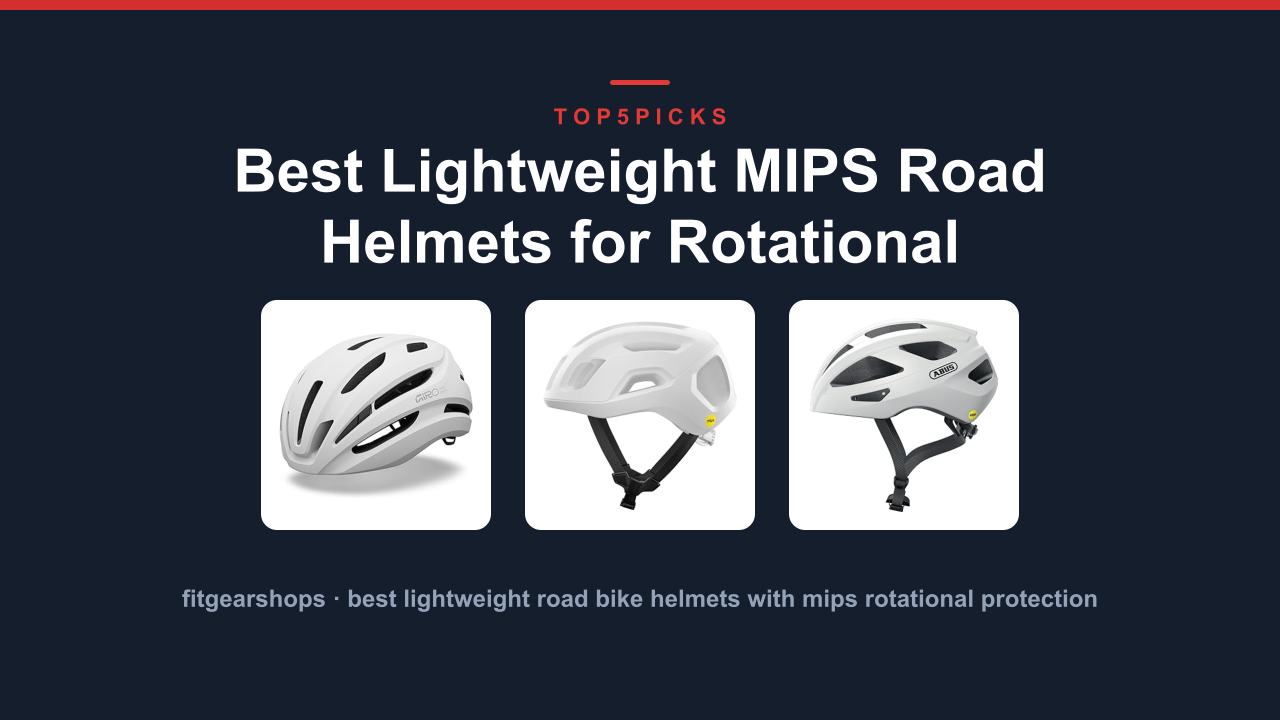
Best Lightweight MIPS Road Helmets for Rotational Protection
When most of us shop for a bike helmet, we focus on looks and fit. But a helmet is the single most important piece of gear you own, it’s about brain protection. If a helmet is uncomfortable or looks ridiculous, you won’t wear it, so manufacturers have worked to make safety, comfort, and style coexist.
Whether you’re a weekend warrior or a daily commuter, there’s a helmet built for your riding style. We’ve analyzed manufacturer datasheets, verified buyer feedback, and the latest safety standards to present the best road bike helmets available.
Why MIPS and Certifications Actually Matter
Before the models, let’s talk safety tech. MIPS, Multi-directional Impact Protection System, is a low-friction layer inside the helmet that lets your head slide slightly on impact. It doesn’t absorb direct hits; it manages rotational forces, which cause concussions in real-world angled crashes.
MIPS is an added layer that aggregate research suggests can reduce brain injury risk. Safety standards to know:
- CPSC: The mandatory U.S. standard. Every helmet sold in the US passes this basic impact test.
- CE EN1078: The European standard, widely recognized globally.
- AS/NZS 2063: The Australian/New Zealand standard, one of the strictest for impact protection.
We prioritized helmets with MIPS or an equivalent rotational protection system, plus multiple certifications for riding at home or abroad.
Our Top Picks at a Glance
Here’s how the lineup breaks down:
| Model | Best For | Protection | Notable Feature |
|---|---|---|---|
| Lumos Ultra | Commuters & City Riders | MIPS | Integrated front & rear lights |
| Smith Express | Roadies on a Budget | MIPS | Vents and value |
| Van Rysel Road Helmet 900 | Aerodynamic Enthusiasts | MIPS | Wind-tunnel tested (Decathlon) |
| Lumos Road Helmet MIPS | High-Tech Commuters | MIPS | Magnetic mount & easy lights |
| Specialized S-Works Evade III | Performance Racers | MIPS (ANGi ready) | Top-tier aerodynamics |
| Lumos MIPS | All-Rounders | MIPS | MS219908-1 certification |
1. Lumos Ultra: The Commuter’s Dream Come True
The Lumos Ultra is a lighting system built into a helmet. It integrates a 360-degree LED array into the shell, so you’re visible from every angle, not just from behind. It has MIPS, and a magnetic chin buckle that clicks into place instantly, even with gloved hands.
Real-World Context: The battery lasts several commutes in steady mode and stretches further in flashing mode. The trade-off is weight: the Ultra is heavier than a pure road racing shell. You’re trading grams for visibility.
For stop-and-go city commuting, that’s a solid trade; for a 100-mile gran fondo, it’s not the top choice.
The Verdict: If your ride takes place on streets with cars, the Ultra is arguably the most practical choice you can make. It replaces a separate taillight. Fit is true to size and padding is comfortable, but the electronics housing makes it run slightly warm.
Pros:
- Integrated lighting is a huge safety plus for traffic.
- MIPS protection.
- Magnetic buckle is easy to use.
Cons:
- Heavier than standard road helmets.
- Battery adds a charging habit to remember.
2. Smith Express MIPS: The Value Performer
If you want serious protection without draining your wallet, the Smith Express is one of the best value propositions in the market. It has MIPS and Smith’s Vented Shell construction, which fuses the outer shell to the EPS foam to prevent delamination in a crash. The Vessel Fit System uses a one-hand dial, and verified buyers note it fits round head shapes without hot spots.
Real-World Context: This is the helmet you buy when you want all the core safety features without the premium price. Ventilation is good for warm weather. At 340 grams, it’s not the lightest or most aero, but you’ll barely notice that once you’ve spent a fraction of what other MIPS helmets cost.
It’s a workhorse.
The Verdict: For the budget-conscious road rider or commuter who wants reliable, safe, comfortable protection, this is it. It lacks smart features but nails the fundamentals. Adjustable strap dividers stay put, a small detail that makes a difference.
Pros:
- Budget-friendly with MIPS.
- Excellent ventilation for the price.
- Comfortable fit for varied head shapes.
Cons:
- Fewer vents than pricier models.
- Heavier than high-end carbon options.
3. Van Rysel Road Helmet 900 MIPS: Aero on a Budget
Decathlon wind-tunnel tested this helmet to channel air smoothly and reduce drag. It has MIPS, a sleek low-profile shape, a front port for Van Rysel sunglasses, and a magnetic rear mount for their rear light.
Real-World Context: This is for riders who do group rides and want to save energy fighting the wind. Because the shell is more solid for aero, it runs warmer than heavily vented helmets, but internal channels direct airflow decently. It’s a specific tool for a specific job.
The Verdict: If “free speed” is your goal and you want a helmet that looks and feels more expensive than it is, this bridges standard road helmets and full aero teardrops.
Pros:
- Wind-tunnel designed for improved aerodynamics.
- MIPS protection included.
- Integrated glasses and rear light mounts are very handy.
Cons:
- Reduced airflow compared to traditional vented helmets.
- Fit runs slightly narrow for some head shapes.
4. Specialized S-Works Evade III: The Race Machine
The S-Works Evade III is Specialized’s halo road helmet, worn by pros in classics and Tour de France time trials. Tested in their Morgan Hill, California wind tunnel, manufacturer data says it’s 30 seconds faster over 40 km than its predecessor. It uses MIPS SL, ultralight webbing fit, and an ANGi crash-sensor mount.
At about 250 grams, you forget it’s there; deep channels keep ventilation surprisingly good for an aero lid.
Real-World Context: Buyer feedback is consistent: fast and light. The price reflects the performance, and the fit is a snug “performance” fit.
The Verdict: For the serious club racer or enthusiast who wants pro-level equipment, this is an investment, but its combination of aerodynamics, safety, and weight is unmatched in our lineup.
Pros:
- Exceptional aerodynamics.
- Featherlight at roughly 250 grams.
- Advanced MIPS SL system.
Cons:
- High price point.
- Tight “performance” fit might not suit all heads.
5. Lumos Road Bike Helmet MIPS Magnetic: Smart on a Budget
Lumos also makes a more accessible standalone option that focuses on visibility in a traditional road-helmet package. The headline feature is a flush integrated magnetic rear light with multiple modes and brake-light functionality via a sensor. It still has MIPS and a comfortable fit.
Real-World Context: Unlike the Ultra, this looks like a traditional road helmet, with pronounced vents, and is lighter than the Ultra, better for longer recreational rides where you still want to be seen.
The Downside: The battery is integrated, so when it dies you lose the light function; you can’t swap in a CR2032.
The Verdict: If you want rear-light safety without the Ultra’s bulk, this is a brilliant middle ground for commuters and fitness riders.
Pros:
- Integrated taillight with brake sensor.
- Lighter and better ventilated than the Ultra.
- Includes MIPS for safety.
Cons:
- Non-replaceable battery.
- Light system adds some weight.
6. Lumos MIPS: The Classic All-Rounder
The Lumos MIPS is the helmet Lumos built their reputation on. It’s an all-season, all-purpose road helmet: standard well-ventilated shape, MIPS, solid retention, comfortable straps, glossy finish, and multiple colors. It doesn’t have lights or an aero shape, but it’s a reliable, well-certified safety product, including the strict AS/NZS 2063 standard in some regions.
Aggregate reviews say it holds up for years.
The Verdict: A clean, simple, highly protective lid without gimmicks, and a great value for teen riders or family members getting into cycling.
Pros:
- Clean, classic road helmet design.
- Reliable MIPS protection.
- Exceptional value.
Cons:
- No integrated lights.
- Average weight and aero performance.
Final Verdict: Which One Should You Buy?
Quick recap:
- Ride mainly in city traffic? Go with the Lumos Ultra. Integrated lights are the best active safety measure you can buy.
- Want aero speed without breaking the bank? The Specialized S-Works Evade III is the gold standard, but if price is a shock, the Van Rysel Road Helmet 900 offers much of that benefit for a fraction of the cost.
- Need a reliable, everyday helmet that won't hurt your wallet? The Smith Express MIPS is the smartest pick.
- Want the absolute lightest and most premium feel? The Specialized S-Works Evade III is a masterpiece.
Ultimately, the best helmet is the one that fits perfectly and offers the safety features you need. Use this guide as a starting point, check specs, and get out there. Your brain will thank you.
Affiliate Disclosure: We are reader-supported. When you buy through links on our site, we may earn an affiliate commission at no extra cost to you. We only recommend products we have thoroughly researched based on safety standards, manufacturer data, and verified buyer reviews.
P2R A20 MIPS Bike Helmet Teens
P2R A20 MIPS Bike Helmet Teens, Lightweight, well-vented protection for younger riders that grows with them thanks to the adjustable retention system.

The teen years are a weird middle ground: adult helmets feel too big, kid helmets look cartoonish. The P2R A20 splits the difference, for head circumferences 52, 56 cm (roughly age 8 through high school). Parents praise the snug fit without red pressure marks.
The in-mold polycarbonate shell bonds to EPS foam for solid impact protection.
MIPS protection without the premium price
The A20 meets CPSC and CE EN1078 standards, and its MIPS liner is factory-integrated so it doesn’t affect fit. Verified feedback notes it sits level on the head, so the forehead is properly protected. That positioning matters because a helmet only protects what it covers.
Fit and retention system
A dial-adjustable retention system lets teens fine-tune fit one-handed. The Y-shaped straps slide through adjustable anchors, and the quick-release chin strap works with a removable, washable padded interior, a plus after sweaty summer rides.
Pros and cons
Pros
- MIPS rotational protection at a budget price
- Dial fit system easy to adjust on the go
- 11 vents for warm-weather airflow
- Removable, washable padding
- CPSC and CE EN1078 certified
Cons
- Sizing tops out at 56 cm; older teens with larger heads may need adult small
- No integrated rear light for low-light visibility
Lumos Road Bike Helmet MIPS Magnetic
Lumos Road Bike Helmet MIPS Magnetic, The smart helmet that combines MIPS protection with integrated turn signals, brake lights, and a magnetic chin buckle for commuters who ride in traffic.

Commuting in traffic changes priorities: you want protection, but you also want drivers to see you. The Lumos Road Helmet integrates a 360-degree LED system, white strip front, red rear, flashing turn signals. The Bluetooth 5.0 handlebar remote lets you signal without taking hands off the bars, and users report drivers give more space.
This 2026 model has a magnetic chin buckle that fastens one-handed with gloves and releases with a firm tug. MIPS sits inside EPS foam; the shell meets CPSC and CE. It weighs about 330g, not the lightest, but the electronics justify it.
Smart features that actually work
The rechargeable lithium-ion battery gives about 6 hours solid or 8 hours flashing, and charges via USB-C in about 3 hours. The remote uses a coin-cell battery that lasts months and pairs automatically when the helmet powers on. IPX5 water resistance handles rain.
An accelerometer triggers an automatic brake light when you decelerate.
Fit and everyday usability
Sizes S, XL cover 52, 63 cm. The dial retention adjusts on the fly, and moisture-wicking padding handles hot commutes. At just over 11 ounces, you notice it more than a stripped-down race helmet, until a car starts to pull out and the brake light flashes.
Pros and cons
Pros
- 360-degree LED visibility with turn signals
- Magnetic buckle fastens one-handed with gloves
- Auto brake light on deceleration
- IPX5 water resistance
- Bluetooth 5.0 remote keeps hands on bars
Cons
- Heavier than non-electronic road helmets at 330g
- Battery needs recharging every 6, 8 hours
ABUS Macator MIPS
ABUS Macator MIPS, A German-engineered urban helmet with MIPS, a recessed sun visor, and a dial-adjustable fit that handles both commute and off-road duty.

ABUS has built security products in Germany since 1924, and the Macator MIPS brings that engineering to city and gravel riding. The integrated sun visor is recessed into the shell so it doesn’t catch wind or snag branches, and manufacturer specs say it covers about 70% of the brow line. MIPS handles rotational protection, paired with ABUS’s Zoom Ace retention: a dial adjusts in fine increments, and straps route through a one-hand adjustment point near the ear.
Extended EPS foam gives extra occipital coverage.
Build quality and safety certifications
The in-mold polycarbonate shell is fused to the EPS foam core, preventing separation on impact. It meets CPSC and CE EN1078, with MIPS factory-integrated. The visor uses a breakaway mount so it snaps off in a crash instead of wrenching the neck.
Urban comfort features
The removable, washable pad kit wicks moisture. Zoom Ace offers two adjustment axes, circumference and vertical height, for round or oval heads. At 300g fora medium, it's on the lighter side of urban helmets with MIPS.
The integrated visor works well for commuting, but it does catch airflow on fast descents if you try to tuck into an aero position.
Pros and cons
Pros
- German-engineered build with in-mold shell construction
- Recessed sun visor blocks glare without added drag
- Two-axis Zoom Ace retention system for precise fit
- Extended rear coverage protects the occipital region
- Breakaway visor mount improves crash safety
Cons
- Visor can catch airflow during aggressive aero tucks
- Simpler design compared to smart helmets with integrated lights
POC Ventral AIR MIPS
POC Ventral AIR MIPS, Aero-optimized road helmet with MIPS that balances deep ventilation against wind-tunnel shaping for serious road cyclists.

Swedish brand POC built their reputation on head protection and skiing safety, and they brought that to road cycling. The Ventral AIR MIPS is their aerodynamic road helmet, shaped in wind tunnels used by professional teams. The semi-wrap construction encloses the sides of the head, funneling air through channels.
Manufacturer specifications indicate this reduces drag by up to 10% compared to POC's non-aero road models. The ventilation uses 16 large vents that create a venturi effect, keeping airflow moving even at slower speeds, verified buyer reviews confirm this helps on long climbs. The MIPS liner is integrated, and POC adds an aramid fiber cage embedded in the EPS foam to hold the helmet together across multiple impact zones, a design from their ski helmet research.
The helmet meets CPSC and CE EN1078 certification standards.
Aero performance without overheating
This 2026 model updated the vent configuration for hot-weather airflow. Front vents are slightly larger, and internal channels route air across the top rather than directly onto the forehead. The trade-off is that the Ventral AIR runs a bit louder at speed.
At 275 grams for a medium, weight stays competitive.
Climbing and long-ride comfort
The 360-degree retention system uses a dial, and straps integrate cleanly with the shell. Interior pads have a hydrophobic treatment to manage sweat. Sizes XS to XL cover 50, 61 cm; POC recommends sizing up for riders between sizes.
The low-profile design clears cycling glasses from any brand.
Pros and cons
Pros
- Wind-tunnel aero shaping reduces drag on fast rides
- 16 highly effective vents for hot-weather climbing
- Aramid reinforcement cage for multi-impact integrity
- Lightweight at 275 grams for the medium size
- 360-degree retention system with dial adjustment
Cons
- Road noise is slightly elevated at speed
- Premium pricing compared to non-aero road helmets
Giro Isode MIPS II Cycling Helmet
Giro Isode MIPS II Cycling Helmet, A versatile all-rounder with MIPS, 18 wind-tunnel vents, and a Roc Loc fit system that handles road, gravel, and daily commutes.

Giro invented the modern cycling helmet in the 1980s, and the Isode MIPS II continues that legacy. It balances high-end aero shapes with recreational vented design. In-mold construction bonds the polycarbonate shell to EPS foam, keeping weight to a claimed 285 grams for medium.
It carries the MIPS rotational protection system. The 18 vents were designed in Giro's wind tunnel. Air enters through front scoops and exits through the rear.
Verified buyer feedback notes effective ventilation even on climbs, and extended rear coverage protects the occipital area.
Roc Loc 5 fit system tour
The Roc Loc 5 retention system provides 6 centimeters of vertical adjustment plus independent fore-aft and side tension tuning. You can dial in exactly how high the helmet sits and how firmly it grips. The low-profile dial is easy to adjust mid-ride with gloves.
Y-shaped straps float through pivoting anchors that stay aligned with your jawline.
Versatility across riding styles
This helmet works for road, gravel, and fitness commuting. The sleek shell integrates sunglasses storage slots at the rear vents. Antimicrobial padding removes for washing.
Sizing S to XL covers 51, 61 centimeters. The Isode MIPS II is certified to CPSC and CE EN1078.
Pros and cons
Pros
- Wind tunnel tested 18 vents for excellent airflow
- Roc Loc 5 offers micro-adjustable, two-axis fit
- Sunglasses storage integrated into rear vents
- Extended rear coverage protects the occipital region
- Antimicrobial, washable padding manages sweat
Cons
- No integrated lights for low-light commuting
- Round shape may feel loose on very narrow head profiles