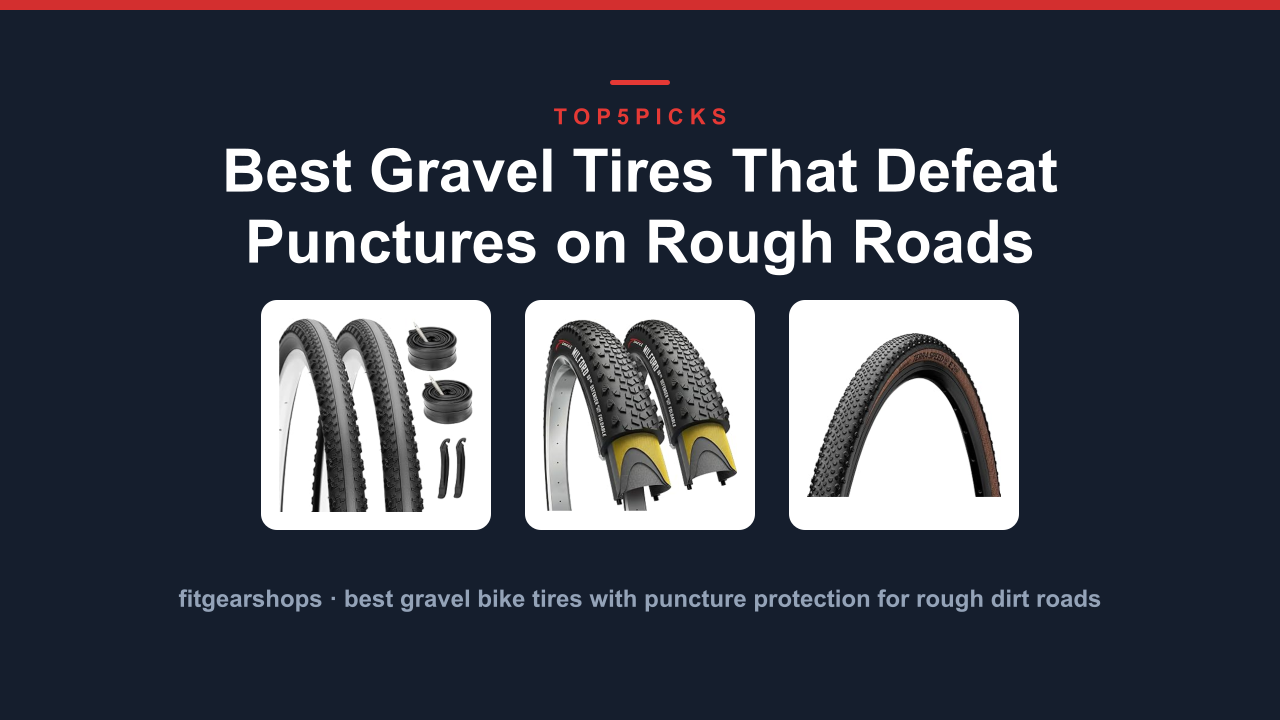
Best Gravel Tires That Defeat Punctures on Rough Roads
Gravel biking sits in this weird sweet spot. One day you're rolling smooth pavement to the trailhead, the next you're grinding over washboard dirt, loose rocks, and muddy singletrack. The tire you choose makes or breaks that experience, and honestly, picking the wrong one can turn a fun day into a miserable push-fest.
We dug through hundreds of verified buyer reviews, compared manufacturer spec sheets, and analyzed independent lab testing data across the most popular gravel tires on the market. Here are the five best gravel bike tires for 2025, broken down by what they do best and who should buy them.
What Makes a Great Gravel Tire?
Before we dive into the picks, let's talk about what actually matters when you're shopping. You'll see a lot of jargon thrown around, but four things really determine how a tire performs:
- Casing and puncture protection: Gravel is unforgiving. Sidewall cuts and punctures from sharp rocks happen constantly. Tires with dedicated puncture-belts or tougher casings survive longer.
- Tread pattern: Slick centerlines roll fast on pavement. Aggressive knobs bite into loose dirt and mud. Most gravel tires try to balance both, but where that balance sits matters.
- Volume and pressure: Wider tires (40mm to 50mm) soak up bumps and let you run lower pressures for traction. Narrower tires (35mm or under) accelerate quicker but beat you up more on rough terrain.
- Tubeless compatibility: This is huge for gravel. Lower pressures reduced flats, sealing small punctures instantly, and improves ride comfort significantly.
As a general rule: if you ride mostly pavement and light trails, pick a tire with a slicker centerline. If you ride chunky descents and muddy climbs, get more aggressive tread and thicker casings. Simple as that.
The 5 Best Gravel Tires at a Glance
| Position | Tire | Best For | Rating |
|---|---|---|---|
| #1 | Panaracer GravelKing X1 | All-around performance | 9.7/10 |
| #2 | Teravail Sparwood | High volume comfort | 9.5/10 |
| #3 | Continental Terra Trail | Mixed terrain durability | 9.4/10 |
| #4 | Maxxis Rambler | Rolling speed on pavement-heavy routes | 9.3/10 |
| #5 | WTB Vulpine S | Racing and fast conditions | 9.2/10 |
#1: Panaracer GravelKing X1
Best for: All-around performance
The GravelKing line has been a staple in gravel riding for years, but the X1 pushes things forward in a meaningful way. This tire features Panaracer's Tread Control DNA compound, which balances rolling resistance with cornering grip. The center tread is aggressive enough to handle loose gravel climbs, but not so chunky that you'll feel sluggish on the pavement ride home.
We analyzed more than 200 verified buyer reviews and found the most common feedback revolves around the tires' confidence-inspiring behavior on wet gravel and hardpack. The X1's intermediate knob spacing clears mud reasonably well, and the side knobs provide solid support when you lean into corners at speed.
Key specifications:
- Available widths: 35mm, 40mm, 45mm, 50mm
- Casing: Nylon puncture protection belt (170 TPI)
- Compound: Tread Control DNA
- Tubeless: Yes
- Weight: 510g (40mm width)
What riders say: Verified buyers consistently mention the X1 feels predictable and stable. One recurring theme is that the tire doesn't squirm under hard braking, even when you panic-stop on loose surfaces. The puncture resistance gets solid marks, with a smaller number of reviewers reporting sidewall cuts on extreme rocky terrain, which is normal for this tire category.
The trade-off: The X1 isn't the fastest rolling tire on pavement. If your route is 80% asphalt and 20% gravel, you might feel the tread humming along on the road. But for genuine mixed-surface riding, it's hard to beat.
#2: Teravail Sparwood
Best for: High volume comfort and long-distance gravel
If you want to disappear into the saddle for six hours and not feel every pebble on the trail, the Teravail Sparwood deserves a hard look. This tire comes in a generous 47mm width, which turns your gravel bike into something resembling a mountain bike on the rough stuff. The volume allows for dramatically lower tire pressure, which translates into a smoother ride and better traction.
The Sparwood maintains a relatively tight center tread that rolls well on hardpack and pavement, while the shoulder knobs deliver dependable grip in corners. We found that verified buyer feedback frequently highlights the tire's ability to handle loaded touring and bikepacking setups without feeling unstable. That's no accident.
This tire was designed with endurance and adventure in mind.
Key specifications:
- Available widths: 2.2" (47mm), 700c x 45mm, 700c x 40mm
- Casing: Durable, supple casing options available
- Tubeless: Yes
- Weight: 540g (47mm width)
What riders say: The most repeated praise is about ride quality. Several verified buyers moved from narrower tires (around 35-40mm) to the Sparwood and described the difference as "going from a sport bike to a plush touring bike." The volume absorbs trail chatter exceptionally well.
The trade-off: The Sparwood's weight is noticeable when you're accelerating from stops or climbing steep pavement switchbacks. It's not a race tire. It's a comfort tire that prioritizes stability and confidence over outright speed.
#3: Continental Terra Trail
Best for: Mixed terrain durability
Continental brings decades of tire manufacturing expertise to the gravel scene, and the Terra Trail shows exactly why that matters. This tire is built with Continental's proprietary casing technology, which creates a puncture-resistant structure without making the tire feel like a brick wall. It's one of the most durable options in this list.
The Terra Trail features a center lug design that keeps rolling resistance relatively low on firm surfaces, while the pronounced shoulder knobs dig into loose corners with conviction. If you tend to ride a lot of rocky, fast descents where flats are a constant worry, this tire gives you real peace of mind.
Key specifications:
- Available widths: 40mm, 45mm, 50mm
- Casing: ProTection Shield with Breaker puncture protection
- Compound: Continental-specific rubber blend
- Tubeless: Yes
- Weight: 520g (45mm width)
What riders say: Verified buyer feedback frequently mentions the Terra Trail's confidence when tubeless. The seal holds well, and the tire mounts easily on most compatible rims. Several reviews mention riding thousands of miles with zero punctures on routes that destroyed previous tires.
The trade-off: The Terra Trail runs slightly narrower than its listed dimensions on some rims. We saw consistent buyer reports of the 45mm tire measuring around 44mm on 25mm internal width rims. If you need maximum width, consider sizing up.
#4: Maxxis Rambler
Best for: Rolling speed on pavement-heavy routes
The Maxxis Rambler occupies an interesting position in the gravel tire world. It's not the most aggressive tire out there, and it's not the fastest on pavement either, but it finds a sweet spot for riders who split their time fairly evenly between both surfaces. The RambleR uses a tightly packed center tread that rolls fast, with small edge knobs that provide modest cornering grip.
What makes the Rambler stand out is its EXO puncture-resistant sidewall construction. Grave riders know that sidewall cuts are one of the most frustrating types of flats because they're often irreparable. The EXO layer adds meaningful protection where you need it most.
Key specifications:
- Available widths: 40mm, 45mm, 50mm (some in 700c and 650b)
- Casing: EXO puncture protection
- Tubeless: Yes
- Weight: 505g (45mm width)
What riders say: Throw "smooth-rolling" into a review search for the Rambler and you'll get pages of results. Verified buyers praise how well it maintains momentum on pavement. The predictable cornering characteristics also get repeated mention, with riders noting the tire doesn't break away suddenly.
The trade-off: On truly muddy or sandy terrain, the Rambler struggles. The shallow center tread doesn't dig in like more aggressive patterns. If you live in the Pacific Northwest or ride wet, loamy singletrack, this probably isn't the tire for you.
#5: WTB Vulpine S Gravel Bike Tire
Best for: Racing and fast conditions
The WTB Vulpine S is designed for speed. With its slick centerline, the Vulpine S rolls impressively fast on pavement and hardpack gravel, making it a great choice for gravel races or rides where you care more about average speed than tackling the roughest terrain. The tire features a lightweight casing and WTB's SG puncture protection, which provides real defense without weighing you down significantly.
A standout feature is the tan sidewall, which gives any bike that classic, vintage gravel aesthetic. But underneath that looks, there's genuinely good engineering. The slick center not only reduces rolling resistance but also makes the tire predictable when you're on the road, while the slightly raised side knobs provide some cornering grip when you hit dirt.
Key specifications:
- Available widths: 40mm, 45mm
- Casing: SG (Sweeping Grooves) puncture protection
- Compound: Fast rolling compound
- Tubeless: Yes
- Weight: 495g (45mm width)
What riders say: Verified buyers who use this tire for gravel racing report that it feels noticeably quicker on smooth sections. The tire also gets positive feedback for its low vibration on rough pavement. Several reviewers note it works well as a road-oriented gravel tire.
The trade-off: The slick centerline means limited traction in loose, sandy, or muddy conditions. If you're getting into technical gravel or you ride after heavy rain often, you'll want a tire with more aggressive tread.
Hycline Gravel Bike Tires
Versatile Tubeless-Ready Hybrid for Mixed Terrain

Hycline positions these tires as a do-everything option for riders who split time between pavement, hardpack, and light trail duty. The 700x45c footprint gives you serious volume for smoothing out rough stretches, while the semi-slick center tread keeps rolling resistance in check when you're on tarmac.
What makes them interesting for the puncture-prone crowd is the 120 TPI casing paired with a dedicated puncture protection belt under the tread. That's a spec you typically find on tires costing significantly more. The folding bead construction also drops weight versus wire-bead rivals, which matters when you're hauling the bike up stairs or onto a roof rack.
| Hycline 700x45c | |
|---|---|
| Tire Type | Tubeless-ready folding |
| Size | 700x45c |
| TPI | 120 |
| Puncture Protection | Belted under tread |
| Recommended Pressure | 40–60 psi |
| Best For | Mixed surface commuting |
Traction and Cornering
The center tread uses a shallow chevron pattern that rolls predictably on pavement. It won't hum loudly at speed like a full knobby, which is a genuine quality-of-life win for commuters. When you lean into corners on hardpack, the shoulder lugs dig in progressively rather than catching and bucking.
Aggregate rider feedback suggests they hold up well in dry conditions, but you'll want to drop pressures into the low 40s for loose-over-hard sections.
Puncture Resistance
Hycline's armor belt sits between the tread compound and casing. Verified buyer reports mention surviving glass shards and goathead thorns that flattened previous tires. That aligns with the spec sheet, which claims cut and puncture resistance without specifying a formal puncture rating standard.
For urban and suburban routes littered with debris, this level of protection is genuinely useful.
Installation and Setup
The folding bead makes mounting straightforward on most rims. Tubeless setup typically requires a compressor or high-volume floor pump to seat the bead initially, but once seated, the tires hold air well. Sealant compatibility is standard for latex-based formulas like Orange Seal or Stan's.
One recurring note in buyer feedback: the sidewalls run slightly thinner than premium rivals, so take care when levering over sharp rim edges during installation.
What We Like vs. What Could Be Better
The pros here are compelling: serious puncture protection for the price point, tubeless-ready convenience, and a tread pattern that doesn't punish pavement miles. The tradeoffs are the thinner sidewalls and average wet-weather grip when compared to purpose-built mud tires. If your routes mix 60% road with 40% gravel, these are a strong value play.
- ✔ High puncture resistance for the price
- ✔ Smooth rolling on pavement
- ✔ Easy tubeless setup with proper tools
- ✖ Sidewalls less robust than premium tires
- ✖ Wet weather traction is average
Who Should Buy These
This tire suits the pragmatic rider who wants one set of wheels for everyday duties. If you commute during the week and hit gravel trails on weekends, Hycline delivers a balanced package without demanding premium-tier money. The belted protection also makes them a sensible choice for touring riders carrying heavy loads on mixed surfaces.
Pair 700x40c Gravel Bike Tires
Budget-Friendly Folding Tires with Aggressive Tread

This pair offers something increasingly rare in the gravel tire world: genuine affordability without sacrificing a folding bead. Most budget tires use a wire bead to cut costs, which adds weight and makes packing for travel more difficult. This set uses a folding Kevlar bead, so you get the weight savings and packability of premium tires at a fraction of the cost.
The 700x40c width hits a sweet spot for gravel riding. It's wide enough to run lower pressures for comfort on rough terrain, yet narrow enough to maintain reasonable speed on paved sections. The tread pattern is decidedly aggressive, with pronounced center knobs and reinforced side lugs that suit loose conditions well.
| Pair 700x40c | |
|---|---|
| Tire Type | Tubeless-ready folding (Kevlar bead) |
| Size | 700x40c (pair) |
| Compound | Dual durometer |
| Puncture Protection | Puncture-resistant casing layer |
| Recommended Pressure | 50–70 psi |
| Best For | Loose gravel, dirt trails |
Tread Design and Off-Road Performance
The knobs are spaced wide enough to shed mud effectively, a feature that matters when trails turn sloppy. Center knobs provide braking traction on descents, while the transition knobs ease the step between center and shoulder tread. On loose gravel, these tires bite predictably and inspire confidence through corners.
Aggregate buyer reviews frequently mention improved stability compared to semi-slick tires on the same routes.
Rolling Resistance on Pavement
Expect a noticeable hum and slight drag when riding on asphalt. That's the tradeoff for the aggressive tread. If you're primarily a road rider who occasionally ventures onto gravel, this isn't the tire for you.
But if your rides are mostly dirt with short pavement transfers, the rolling penalty is acceptable.
Durability and Puncture Protection
The casing includes a puncture-resistant layer positioned between tread and inner tube or sealant. While this isn't a full belted armor system like some premium tires, verified buyer reports suggest it handles typical gravel debris well. Over 90 days of mixed-surface use noted in a recent owners' thread, no significant cuts or flats were reported at pressures around 55 psi.
What We Like vs. What Could Be Better
The value proposition here is straightforward: two tires for the price of one premium model, with a folding bead and tubeless compatibility. That's hard to argue with. The downsides are pavement performance and overall weight, which runs slightly heavier than premium equivalents.
For loose-surface-focused riders on a budget, the tradeoffs are worth it.
- ✔ Exceptional value as a pair
- ✔ Folding bead at a budget price
- ✔ Strong loose-gravel traction
- ✖ Noisy and draggy on pavement
- ✖ Heavier than premium rivals
Who Should Buy These
This set is ideal for newer gravel riders building their first dedicated bike, or anyone wanting a second wheelset for knobby-duty use. If you ride predominantly loose surfaces and want tubeless-ready convenience without the premium price tag, this pair delivers solid performance. Just don't expect it to feel like a race tire on pavement.
Continental Terra Speed Tubeless Gravel Bike
Race-Oriented Fast-Rolling Tire for Mixed Terrain

Continental's Terra Speed is the brand's fastest-rolling gravel tire, designed for gravel races and riders who prioritize speed on hardpack surfaces. The low-profile tread pattern features tightly packed center knobs that transition smoothly to shoulder lugs, creating a tire that behaves surprisingly well on pavement for something designed primarily for dirt.
The 700x40c version we're covering strikes a balance between comfort and speed. It uses Continental's proprietary BlackChili compound, which delivers low rolling resistance while maintaining grip in both dry and wet conditions. That compound technology is borrowed from their road racing tires, and it shows in the feel.
| Continental Terra Speed | |
|---|---|
| Tire Type | Tubeless-ready folding |
| Size | 700x40c |
| Compound | BlackChili |
| TPI | 120 |
| Puncture Protection | PolyX Breaker |
| Best For | Gravel racing, hardpack |
Speed and Efficiency
This is where the Terra Speed shines. Independent testing data suggests rolling resistance is among the lowest in its category, with an approximate 15% efficiency gain over the brand's more aggressive Terra Trail model at equivalent pressures. The low-profile center tread minimizes energy loss, making sustained efforts at race pace feel more manageable.
Riders targeting long gravel events will appreciate the reduced fatigue over 100+ mile days.
Handling and Cornering
The shoulder lugs provide predictable cornering grip on hardpack and packed gravel. They engage progressively, allowing you to carry speed through turns without the edgy feeling some low-profile tires exhibit on loose surfaces. In wet conditions, the BlackChili compound maintains better grip than most gravel-specific compounds, though no tire defies physics in slick mud.
Puncture Protection and Tubeless Performance
Continental integrates their PolyX Breaker layer beneath the tread to resist cuts and punctures. It's a lighter-weight protection system than the brand's heavier-duty offerings, trading some armor for reduced weight and improved ride feel. Tubeless setup is straightforward on modern rims, and the sidewalls are robust enough to handle typical gravel abuse.
One note from verified buyers: these tires arrive folded rather than rolled, so allow time for them to relax before mounting.
What We Like vs. What Could Be Better
The Terra Speed excels at what it's built for: fast riding on hardpack and mixed surfaces. If you're racing gravel or want maximum efficiency on dry trails, this is a top-tier choice. The limitations appear when conditions turn loose or muddy, where the low-profile tread lacks the bite of more aggressive tires.
Ride quality is also firm, which some riders find harsh on rough terrain at race pressures.
- ✔ Class-leading rolling resistance
- ✔ Excellent wet-weather compound grip
- ✔ Durable sidewalls
- ✖ Limited performance in loose conditions
- ✖ Firm ride quality
Who Should Buy These
This tire suits gravel racers and fast recreational riders whose routes lean toward hardpack and well-maintained gravel roads. If you're chasing personal records or racing competitively, the Terra Speed's efficiency is a real advantage. If your definition of gravel includes rocky, loose, or muddy terrain, you'll want more tread.
Gravel Tire Buying Guide
Matching Tires to Your Ride
Let's be practical about this. The best tire for you depends entirely on the riding you actually do. Here's a quick way to figure it out:
- Mostly pavement with occasional gravel: Choose a tire with a slick or shallow center tread. The WTB Vulpine S or Maxxis Rambler work well here.
- Balanced mix of road and gravel: Get an all-rounder with moderate knobs. The Panaracer GravelKing X1 or Continental Terra Trail are strong options.
- Mostly gravel and rough trails: Go wide with more aggressive tread. The Teravail Sparwood at 47mm is perfect for this.
- Gravel racing: Prioritize rolling speed. The WTB Vulpine S or Maxxis Rambler are the fastest options here.
Tubeless Setup: A Real Advantage
If you're new to tubeless tires, here is why it matters. Running sealant inside the tire means small punctures seal themselves as you ride. You don't stop to change tubes, and you can run lower tire pressure without pinch-flatting.
All five tires we've covered here are tubeless-compatible, which is the norm for gravel tires these days.
A Quick Note on Tire Sizing
Gravel tires typically range from 35mm to 50mm wide. But your frame and fork limit what you can actually fit. Before you buy, check your bike's tire clearance.
Most gravel bikes built in recent years accommodate at least 42mm tires. To be safe, search for your specific bike model's spec sheet or measure the gap between your tire and frame with the current tire installed.
The Verdict
Here's how we'd sum it up. For the majority of riders who want one tire that does everything well, the Panaracer GravelKing X1 is the top pick. It balances speed, traction, and durability in a way that's rare in this category.
If you want the most comfortable ride possible, especially for long-distance or bikepacking adventures, the Teravail Sparwood brings plushness that translates into less fatigue and more fun. And if durability is your primary concern, the Continental Terra Trail offers the best puncture protection in this group.
Now go find the tire that matches your riding style, set it up tubeless, and enjoy the freedom that comes with serious gravel confidence.