Is Pole Dancing a Sport: Unveiling Its Athletic Power
Have you ever wondered if pole dancing is really a sport? You might think of it as just a dance or a performance, but there’s much more behind those spins and climbs.
What if I told you that pole dancing demands strength, skill, and endurance just like any other sport? Stick with me, and you’ll discover why pole dancing could be the workout and challenge you’ve been looking for. Ready to see it in a whole new light?
Let’s dive in.
History And Evolution
Understanding the history and evolution of pole dancing helps you see why it’s gaining recognition as a sport. This journey shows how pole dancing moved from its early cultural roots to becoming a rigorous physical activity. You might be surprised by how much it has changed and what that means for your own fitness goals.
Origins Of Pole Dancing
Pole dancing began centuries ago with roots in various cultures around the world. In India, for example, Mallakhamb featured performers using wooden poles for acrobatic moves. Meanwhile, Chinese pole arts involved impressive climbs and holds on vertical poles.
These traditional forms were about strength, balance, and skill—not entertainment. Over time, pole dancing found its way into circus acts and nightclubs, which changed its public image. Do you realize how these early performances laid the groundwork for what you now see as a sport?
Transition To Fitness And Sport
The shift from entertainment to fitness started in the late 20th century. People began using pole dancing to build strength, flexibility, and endurance. It soon evolved into a serious workout with training programs and competitions.
Today, pole dancing demands athleticism similar to gymnastics or dance. It includes spins, climbs, and inversions that require intense physical conditioning. Have you tried any moves that challenged your body in new ways? This transformation proves pole dancing deserves recognition as a sport, not just a performance art.
Physical Demands
Pole dancing demands more than just rhythm and style; it challenges your entire body in unique ways. The physical effort required goes beyond what many expect, pushing your limits in strength, flexibility, and coordination. Understanding these demands can help you appreciate pole dancing as a serious physical activity.
Strength And Conditioning
Have you ever tried holding your body weight with just your arms? That’s a common move in pole dancing. This sport builds serious upper body and core strength as you pull, lift, and hold yourself on the pole.
Conditioning is key. Pole dancers train like athletes, focusing on exercises that improve muscle endurance and power. You’ll often see them doing pull-ups, planks, and leg raises off the pole to build the strength needed for complex spins and lifts.
Without strong muscles, even simple moves become impossible. So, the physical conditioning involved isn’t just for show—it’s essential to perform safely and effectively.
Flexibility And Coordination
Flexibility is not optional in pole dancing; it’s a necessity. You need to stretch and bend in ways that challenge your joints and muscles. This flexibility allows you to execute graceful poses and smooth transitions.
Coordination ties everything together. Your body must move fluidly while maintaining grip and balance on the pole. This requires precise timing and control, especially when performing spins or inversions.
Think about how you control your movements during everyday tasks. Now imagine doing that upside down or spinning at speed. Pole dancing pushes your coordination to a new level.
Technical Skills
Mastering the technical skills of pole dancing demands more than just strength—it requires precision, control, and a deep understanding of body mechanics. These skills define pole dancing as a sport because they challenge your coordination and physical abilities in complex ways.
Grip Techniques
Your grip is the foundation of every move on the pole. Without a solid grip, you can’t perform spins or holds safely and effectively.
There are various types of grips you’ll need to learn:
- Basic Grip:Using your hands to hold the pole firmly, often with chalk or grip aid to reduce slipping.
- Forearm Grip:Pressing the pole against your forearm for support during climbs or static holds.
- Leg Grip:Squeezing the pole between thighs or calves to maintain position during inversions or transitions.
Each grip requires different muscle engagement and balance. Have you noticed how your hands sweat during a routine? That’s a real challenge to maintain grip strength.
Spin And Inversion Moves
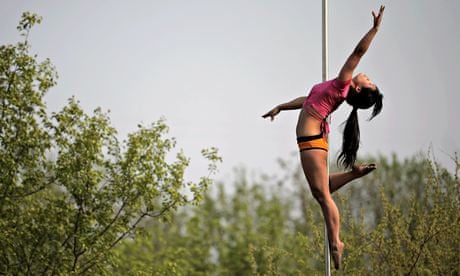
Spins and inversions are the signature moves that show the athleticism of pole dancing. They require body control, momentum management, and spatial awareness.
Spins involve rotating around the pole using momentum. Timing your push and body alignment can make a spin look effortless, but it takes practice to control speed and avoid injury.
Inversions flip your body upside down. This move demands upper body and core strength, plus the confidence to trust your technique. A common challenge is learning how to safely transition into and out of an inversion.
Think about the moment you finally hold an inverted pose—how does that accomplishment change your view on what your body can do?
Credit: www.theguardian.com
Competitive Scene
The competitive scene in pole dancing highlights its status as a sport. Athletes from around the world showcase strength, flexibility, and artistry. Competitions push performers to perfect their moves and routines. These events have grown rapidly in popularity and prestige. They offer a platform to display skill and creativity under pressure. Contestants train hard to impress judges and audiences alike.
International Competitions
International pole dancing competitions attract top talent globally. Events like the World Pole Sports Championships gather elite athletes yearly. Competitors represent their countries with pride and passion. These contests feature multiple categories based on skill and style. They provide opportunities for athletes to gain recognition and sponsorship. The competitive environment encourages continual improvement and innovation.
Judging Criteria
Judges evaluate performances on several clear criteria. Technical skill, such as strength and control, ranks high. Artistic expression and creativity also carry significant weight. Execution matters; clean and smooth movements score better. Difficulty level plays a role in the final score. Judges look for a balanced routine that combines power and grace.
Recognition As A Sport
Recognition of pole dancing as a sport has gained momentum, yet it still faces significant hurdles. Understanding how it is viewed by official bodies and the public helps clarify its status. This section breaks down the ongoing debates and the role of organizations working toward formal recognition.
Debates And Challenges
Many people question whether pole dancing qualifies as a sport or an art form. Critics argue that its origins in entertainment make it hard to classify alongside traditional sports.
On the other hand, pole dancing demands strength, flexibility, and endurance—qualities essential in any sport. Have you ever tried holding a pose on a pole for minutes? The physical effort involved is intense and often underestimated.
Judging criteria also complicate recognition. Should performances be scored like gymnastics or dance competitions? These unresolved questions slow down acceptance in mainstream sports communities.
Organizations And Federations
Several groups have formed to promote pole dancing as a legitimate sport worldwide. The International Pole Sports Federation (IPSF) is a leading body pushing for Olympic recognition.
- IPSF organizes global championships with standardized rules.
- They emphasize athleticism, safety, and fair judging.
- Many countries now have national federations affiliated with IPSF.
These organizations work hard to educate the public and sports authorities about the discipline and rigor involved. Their efforts are crucial if pole dancing is to gain full recognition on sports platforms.
Cultural Perception
Cultural perception shapes how people view pole dancing. Many see it only as entertainment or adult performance. This narrow view ignores pole dancing’s athletic and artistic sides. Over time, perceptions are slowly changing. More people recognize pole dancing as a serious physical activity and sport. This shift challenges old ideas and opens new doors for the art form.
Breaking Stereotypes
Pole dancing faces strong stereotypes. Some think it only belongs in nightclubs. Others believe it lacks skill or athleticism. These ideas harm the sport’s reputation. Athletes show pole dancing requires strength, flexibility, and endurance. It demands hours of practice and dedication. More schools and competitions highlight its athletic nature. Breaking these stereotypes helps the sport gain respect worldwide.
Media Representation
Media plays a big role in shaping views. Early media often focused on pole dancing’s sensual side. This limited portrayal affected public opinion. New shows and documentaries show the sport’s true nature. They highlight training, competition, and artistic expression. Positive media coverage improves understanding and acceptance. It encourages more people to try pole dancing as a sport.
Health Benefits
Pole dancing offers several health benefits that improve both mind and body. It challenges your strength and balance while lifting your mood. People enjoy this activity for fitness and mental relief. Let’s explore how pole dancing helps your health.
Mental Well-being
Pole dancing boosts confidence and reduces stress. Learning new moves sharpens focus and memory. The activity encourages self-expression and creativity. It creates a sense of achievement after mastering routines. Social interaction during classes improves mood and lowers anxiety. Many find pole dancing a fun way to relax.
Physical Fitness
Pole dancing builds muscle strength in arms, legs, and core. It improves flexibility and body coordination. The exercise burns calories, aiding weight management. It enhances endurance and cardiovascular health. Regular practice increases balance and posture. This full-body workout suits different fitness levels and ages.

Credit: poledancetrading.com
Future Prospects
The future of pole dancing as a recognized sport looks promising. Its evolution from a niche activity to a mainstream fitness and competitive discipline shows how much potential it holds. Understanding what lies ahead can help you appreciate why pole dancing might soon gain even more respect and visibility.
Potential Olympic Inclusion
Could pole dancing become an Olympic sport? The idea is gaining traction among athletes and fans alike. Organizations governing pole sports are working hard to meet the criteria set by the International Olympic Committee.
They focus on standardizing rules, improving judging systems, and promoting athlete safety. This effort aims to showcase pole dancing as a serious, skill-based sport. If successful, you might one day watch pole dancers compete on the Olympic stage alongside gymnasts and divers.
Growth In Popularity
Have you noticed how many people are turning to pole dancing for fitness and fun? Its popularity is growing rapidly worldwide. More studios, competitions, and online tutorials are making it accessible to a diverse audience.
This growth means more opportunities for you to join a community passionate about strength and artistry. It also opens doors for sponsorships, professional training, and career paths within the sport. With this momentum, pole dancing is no longer just a trend but a lasting movement.

Credit: londondanceacademy.co.uk
Frequently Asked Questions
Is Pole Dancing Considered A Competitive Sport?
Yes, pole dancing is recognized as a competitive sport with international championships. It requires strength, skill, and agility similar to gymnastics and dance.
What Physical Benefits Does Pole Dancing Offer?
Pole dancing improves strength, flexibility, coordination, and cardiovascular health. It engages multiple muscle groups and enhances overall fitness and body awareness.
How Is Pole Dancing Judged In Competitions?
Judges evaluate technique, difficulty, creativity, and performance quality. Scoring considers strength, control, fluidity, and artistic expression during routines.
Can Pole Dancing Help With Weight Loss?
Yes, pole dancing is an effective workout that burns calories and tones muscles. It boosts metabolism and supports sustainable weight loss through regular practice.
Conclusion
Pole dancing demands strength, skill, and endurance like many sports. It combines fitness, art, and competition in one activity. People train hard and compete worldwide. Judges score routines based on difficulty and style. This shows pole dancing fits sports criteria well.
It challenges both the body and mind deeply. Anyone can enjoy it for fitness or fun. Pole dancing proves itself as a serious sport today. It breaks old ideas and earns respect everywhere. Try it and see the power behind the pole.